
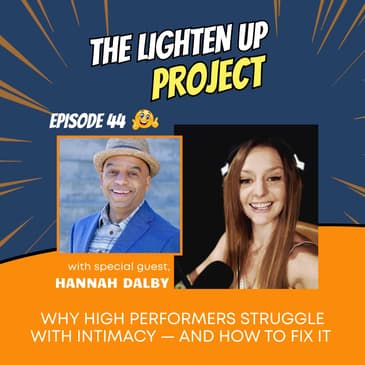
Former professional Muay Thai fighter Hannah Dalby spent a decade in the ring before discovering that success in one area of life doesn't automatically translate to another. Now a somatic practitioner and founder of Human Integration, she helps high-achieving leaders release the unconscious triggers driving their relationship patterns — trading reactivity and disconnection for real presence, intimacy, and connection.
What You'll Hear
- Why Hannah walked away from fighting for Australian titles to save the business she and her father built — and what she discovered in the space that fighting left behind
- How Human Integration developed almost by accident: what started as physical recovery work began dissolving addictions, healing relationships, and launching new businesses
- Why so many high performers succeed at work but struggle with intimacy — and how "doing" becomes a lifelong avoidance of feeling
- The real difference between control and true emotional regulation, and why forced play is just another item on the to-do list
- What actually happens in the body during a Human Integration session — and why getting the charge out matters more than understanding where it came from
- The surprising overlap between Hannah's somatic work and Malcolm's improv training — both get people out of their heads and back into honest, unscripted presence
- One simple pattern-interrupt you can use today: pause and ask your body what it's actually feeling
- Hannah's answer to what true connection really requires — becoming present with yourself first
Resources Mentioned on this Episode
- Integration Gap Assessment — Hannah's free AI-powered tool to help you identify your relationship patterns; visit integratedaf.com
- The Jungle — Hannah's business website: thejungle.net.au
- Follow Hannah Dalby on Instagram for more on Human Integration and somatic work
- Learn more about Malcolm's work at the World Laughter Organization™
Featured Guest:
If you are a high performer, founder or leader who has built success in business but keeps finding yourself stuck in the same relationship patterns, reacting from triggers you cannot control, or feeling more disconnected at home the more you achieve at work, you will love this episode. Hannah Dalby is a Human Integration Facilitator, CEO of The Jungle, and former professional Muay Thai fighter who spent a decade competing professionally before developing Human Integration, a precise somatic process that identifies and releases the unconscious triggers driving relationship patterns at the root. A decade clean, she works with leaders and founders globally to help them experience the intimacy, safety and genuine connection that their external success has never been able to buy them.
Connect with Hannah:
Website: https://thejungle.net.au/
Instagram: https://www.instagram.com/recoveryjungle/
https://www.instagram.com/hannah.dalby
https://www.instagram.com/intothejungle_podcast/
Youtube: https://www.youtube.com/@IntoTheJungle-HannahDalby
Gift: The Integration Gap Assessment - https://chatgpt.com/g/g-69cf265da4cc81919dd1cb332e11baf6-the-integration-gap-assessment-by-hannah-dalby
Meet the Host: Malcolm Grissom
Malcolm Grissom, affectionately known as "The Stand-up C.E.O.," is a team-building and employee engagement expert. Malcolm, an award-winning actor, comedian, International speaker, and best-selling author, masterfully blends humor, improv, and business acumen to enhance team dynamics and profitability. As a certified laughter leader, he leverages the power of positive psychology and his social work background to create engaging, results-driven experiences. Whether inspiring executives, strengthening teams, or energizing audiences, Malcolm’s unique approach fosters connection, creativity, and success. His ability to transform corporate culture with humor and insight makes him a sought-after speaker and consultant.
Follow Malcolm:
Website: malcolmgrissom.com
Facebook: facebook.com/malcolmgrissom
LinkedIn: linkedin.com/in/malcolmgrissom
Stressed, stuck, or leading on autopilot? It’s not a motivation problem—it’s a connection problem. Malcolm’s weekly virtual improv classes boost engagement, collaboration, and retention—all while having fun. Register now for a complimentary month: https://malcolmgrissom.thrivecart.com/everyday-encores/
We are proud to have The Lighten Up Project on the *High Vibe Podcast Network .* Grab your free gift from Malcolm in our Our High Vibe Gift Vault.
Love this show, check out the other shows on the High Vibe Podcast Network.
Share the Love
✨ If this episode lit something up in you… tag us on Instagram @HighVibeLeaders and let us know your biggest takeaway!
🦋 Don’t forget to rate & review — it helps us reach more conscious rebels like you.
🔊 Listen & Subscribe
🎧 Spotify
[00:00:03] Welcome to The Lighten Up Project, the show that reminds us that healing doesn't have to be heavy. I'm Malcolm Grissom, the stand-up CEO and founder of the World Laughter Organization. Let's explore how humor, heart, and play save the day and create spaces for healing and connection.
[00:00:33] So let's get ready to laugh, learn, and lighten up. Hello, my fellow light makers. It is I, Malcolm Grissom, the person with the frog in his throat right now. Just, you know, just enjoying life.
[00:01:02] But I'm also hosting another edition of The Lighten Up Project. And I'm so glad that you've joined me. Today on The Lighten Up Project, we are going to be talking about... That was a dramatic pause. Today we're going to be talking about performance.
[00:01:32] And if you're a high performer, if you're a founder, if you're a leader who's built success in business, then you're... And you're running into the same patterns over and over and over again. Well, this episode is for you. Because today, my guest is Hannah Dalby.
[00:01:58] Her work goes straight to the root of something that leaders don't like talking about, which is why success in one area of life doesn't automatically translate to other areas. Hannah is a professional Muay Thai fighter.
[00:02:24] She spent a decade in the ring before developing human integration. It's a precise somatic process that is designed to identify and release the unconscious triggers that drive relationship patterns. Now focusing with other founders and leaders around the world,
[00:02:53] she helps people move from reactivity and disconnection into real intimacy, safety, and connection. The kind of success that we're all looking for. So this conversation is about doing the work, the inner work, that work down deep.
[00:03:19] Doing that work that changes everything outside. So let's lighten up, let's get real, and let's welcome Hannah Dalby. Thank you so much, Malcolm Grissom. That was an amazing introduction. You are so welcome. Hey, Hannah, would you mind joining me in 20 seconds of spontaneous laughter? Sure thing.
[00:03:51] Okay. All right. We're going. Just continue. Just continue. Yeah. Yeah. Last three is connection. For everybody. For everybody. Oh, my goodness. I love it.
[00:04:21] Usually when I ask that question, I feel the need sometimes to ramp the guest up by counting down. But no, you just, yeah. Let's laugh. And you started right away. I loved it. Yeah. I loved it. So you, it sounds like you have a wonderful relationship with laughter.
[00:04:52] I think the world is hilarious most of the time. Yeah. It is. It is. It is. So let's talk about, before we delve into human integration and what you're doing, let's talk a little bit about your past. So, yeah.
[00:05:19] How does a Muay Thai fighter become involved with anything else but fighting? Okay. Well, I mean, while I was a fighter, I was also running a marketing business on the side. So my life was like, how can I do as much stuff as possible so I never have to feel anything or deal with any of my emotions or build any relationships? I can just do stuff endlessly. So, you know, I gave up fighting.
[00:05:49] It was like a choice point. I'd started the first iteration of the business that I have now, which I started so I could have my own cryotherapy machine and sauna and all this physical recovery stuff. And there became a choice point. Do I go and actually build the business that I spent all this money starting or do I punch people in the face? You know, like, I think I'm going to go and, you know, build the business that I spent all this money starting. My dad and I started it together. There was some loyalty inside of that.
[00:06:17] I'm not just going to let it burn to the ground because I want to go and punch people in the face for the rest of my life. And when I gave it up, I realized how much stuff I still hadn't solved. And I'd been in this kind of work for a long time. I'd been in psychotherapy. I'd done plant medicine. I'd done all of the healings. I'd done all this stuff, which I always use to how can I be a better fighter? How can I be a better athlete? That was the kind of purpose behind it.
[00:06:43] And even though I'd done all of that work, when I gave up the fight and there was all this space, I realized I was sick. I had no deep relationships in my life. I had all of these patterns that weren't serving me and that there was some serious work to do underneath of it. And over the last, I guess, five years, it's been, well, all the work that I did to bring myself out of the trauma that I've been running from, how do I bring that into the business?
[00:07:10] And I was already trained in a few different things. So a few years ago, me and a friend developed this particular modality, which when we integrated into the recovery business and were helping people with their training and fascia release and inflammation and things like that, once we actually dealt with the internal stuff, everything started shifting. So it wasn't just physical recovery anymore. It was like, oh, suddenly they've quit their jobs and started a business that they actually love. Oh, their relationship solved itself.
[00:07:39] Oh, their addiction has disappeared. Oh, wait, now they're actually leading their team better. All of this stuff magically started happening as an accident. I didn't mean to create something that did that, except it did. And then I honed hard in on it. And now that's what we do. Hmm. Okay. So do you feel that, let's see, what you were, so, how can I put this?
[00:08:09] You don't need to be nice about it. Oh, trust me. I'm not, it's not that I'm thinking about being nice. It's more of a brain processing. I don't know if you've seen other episodes, but I have a disability, a slight neurological disability. So it's more of a brain processing.
[00:08:40] Ah, there we go. Mm-hmm. But how, so you were, did you start doubling down? You were doing both the business and the fighting at one time. Did you start doubling down on the business before you quit fighting? No. So when I first started this business, I went really hard at it. It did really well in its first couple of months.
[00:09:08] And so I hired a manager and just went back fighting. And I was watching it crash without me. I didn't want to look because I wanted to keep fighting. And so I nearly burnt it to the ground. And it was like, okay, well, are you just going to let it die? Or are you just, are you going to give up fighting? So it, it, uh, I, I did it for a few months. I like, I went really hard. I put down the fight for a few months until it did really, really well. And then I just stepped out and went, oh, I don't need to manage this anymore. Look, it's doing amazing.
[00:09:38] Not true. Okay. So why then, if, if you were doing both at one, at once, uh, for a time, and then you used, you let this and you'll watch the business start failing. Why did you then quit? Why did you have to quit fighting to, to concentrate on the business?
[00:10:07] So fighting looked like this for me. Um, it was a weight making sport, so I couldn't eat very much food. I was in a pretty toxic gym environment, which was like, don't ever miss a day. Don't ever miss a training. Don't ever do anything wrong. Don't ever put on a kilo. And it was this, um, very strange kind of codependent relationship that I had with my coach. And for me to be able to have the energy to be able to manage my team that was working there
[00:10:35] to put in the effort, it had to be one or the other, because I would run 20 Ks in the morning and then I would train three or four hours at night and I wasn't allowed to eat enough food to sustain my brain, let alone, you know, run this business. And it, it needed my full attention. It's like this baby's trying to be born and trying to develop. And I'm putting all of my energy into getting Ks on the road and getting in sparring, getting
[00:11:00] in all of these, um, all of this time and energy being spent, which wasn't going into the business. Really? And it sounds, it sounds like that was actually the best choice for you at the time, because then now look what you've done. You've come into this business. You, not only did you reignite it, but as you've been describing, it has surpassed,
[00:11:29] um, all of your beliefs. Yeah. So that's wonderful. What, um, I'm, I'm curious, did laughter or play have anything to do with that transition? Look, I think it's something I've been relatively good at most of the time in my life is being able
[00:11:58] to look at what's happening and see it as it's happening for me and finding the silver linings and finding it a little bit hilarious. Not always in the exact moment. Of course, I will have my fair share of meltdowns and the world is dying and I need to set everything on fire and I'm quitting. I'm quitting right now. Like that happens, that happens pretty often. And also it's kind of funny. It's kind of funny when you look back and watch it and go, oh, that's why, that's why that was going on. And, oh, okay. Yeah.
[00:12:28] I was really screwing up there. And I think you get the, the lessons and you get the healing and you get the, um, the growth faster. The moment you can laugh at yourself about why it was happening. Um, you know, there's an example of it yesterday in, I got head butted by my dog and like really split face blood everywhere. And, uh, you know, this was out on a walk. It was really traumatic.
[00:12:56] And then he ended up attacking another dog. All of this stuff had happened in the morning. And I'm like, I'm like, okay, this is about me. I'm doing something wrong here. What is it? And I've been moving through this rescuer and being rescued. It's like two parts of myself. One rescues everyone else until I need rescuing. And it's this old, old, old pattern I've been playing out all of my life. And I've been playing it out in my team, rescuing my team rather than allowing them to rise up. And my dogs are literally rescue dogs.
[00:13:25] And then the drama had gotten so big. I'm bleeding. There's chaos everywhere that the entire street then comes out to rescue me. And, you know, I've gone home and once I've patched myself up, it's like, it's kind of funny. It's like, wow, Hannah, like that's how deep this runs that you have got these rescue dogs. You've set them no rules, no boundaries, no nothing. And so this is the kind of chaos that happens and it's playing out everywhere in your life. It's now kind of funny. It's like, all right, I'm done. Like, I'm done with this pattern. I'm done doing this thing. I won't rescue anyone anymore.
[00:13:54] It's like, I've got to lead and not rescue. So then no one else has to rescue me when I overgive. And from that perspective, like an hour into the day, it's like, it's kind of funny that there's blood everywhere in that. You know, my face is bruised and that there's butterfly clips while I've got to do all these podcasts. So I think it's like finding that really quickly and then having a laugh at yourself. It just, everything moves so much faster. Mm-hmm. Okay.
[00:14:19] So did fighting teach you anything in particular about control that has now shown up in your business or in other relationships that you have? A control in a good sense or control in a bad sense? Either way. Let's look. Yeah. Either way. I'll ask.
[00:14:47] You can answer the question from either perspective or both if you want it. Yeah. So I think it depends on how you look at the word control. I learned discipline. I learned very, very, very strong discipline. So I can do hard things endlessly. I can get up at three o'clock. I can do the big work. I can make sure I'm doing everything perfectly, which is really good to get stuff done, but
[00:15:12] not necessarily coming from a good place because I can force myself into getting stuff done. Really useful if there's fires to put out, if there's drama that happens, if there's something goes wrong, like I can show up for that and I can get the work done. Not so useful from a place of burnout. So when it's forced work like that, then I end up exhausted, fried, resentful, all of those sorts of things. So I think there's a, like, I had to undo a little bit of that and learn how to balance
[00:15:41] flow with force and flow with control and discipline. Like discipline can exist once you've got the awareness of what actually needs to happen, not just endlessly doing stuff all of the time. Um, I think control in a good perspective is a self-control and a self, um, you know, which kind of ties into the same thing. Like, yes, I can get up every day and do the thing. And that's important.
[00:16:08] Even if the results aren't showing yet, I know what it feels like to, you know, to go through something over and over and over again and kind of feel like you're getting worse. But knowing that consistency always ends up in results. So probably those two things. Um, how do you play? What is- How do I play? Yeah. What does that look like for you?
[00:16:33] Mostly it looks like rainforests and waterfalls and, uh, you know, running on mushrooms and whatever, whatever kind of, like that's most of my play. My play is my puppies, like hanging out with my puppies. My play is dancing, you know, turning on the music and dancing. But I, if, if I'm honest, like I actually love my work so much now as how can I integrate play into my work? How can I make the work day fun? How can I make sure that we're laughing with each other and at each other and allowing
[00:17:03] that to weave into it so I don't have to schedule the play so much. Right. Exactly. Exactly. So what does that look like, Rio? It's, it's laughing at all of the things that go right and laughing at all of the things that go wrong. It's like, you know, sharing the joy in when we do something really well and making sure the entire team knows about it. And maybe we're running around dancing about it and like super celebration. And when it goes wrong, we get able to laugh at each other.
[00:17:32] And, you know, we have cryotherapy and saw all this cool stuff here. And it's like, make it a big song and dance and scream and yell and like, let the energy out. Like as much as I can. It's all actually kind of funny. It's a big game that we're playing. As soon as we can take the seriousness out of it, like, yes, serious conversations need to happen. Yes. Serious emotions need to come up. Yes. All of this, like sometimes feels like life and death when we can take the seriousness out of it and see it as a little bit of a game. It's like, are we winning? Are we not winning?
[00:18:01] Like, what does winning actually look like? Can we reframe what winning looks like? Can winning look like, well, we all had an amazing day today. Can it look like I made money and I'm just sitting back doing nothing, hanging out in the grass and start reframing winning. So it all starts to be a little bit lighter. Mm-hmm. Okay. All right.
[00:18:20] So why do so many high performers succeed in business, but they struggle in the relationships? So I think it's something to do with this over-functioning. There's a few things that are going on. Sometimes high performers are addicted to the work and that's their version of not having
[00:18:49] to be with their feelings or be with their emotions or be inside of intimacy and connection. And I was that. I was this high performing, I can look at my six pack, fighting for Australian titles, running this business, doing all of this thing. And it was an avoidance of connection. It was an avoidance of my feelings. It was an avoidance of receiving love, of being able to give love actually back from reciprocation because I couldn't receive it in the first place.
[00:19:15] So I think high performers use that facade, but I'm doing really well. And it's actually an avoidance of what's going on underneath. I think also there's an over-functioning that happens in high performers where it's like, I've got to do the relationship or do the performance. Or like, look, I've bought the thing, I've showed up, I've done the dinner, I've done the date, but it's not actually in connection.
[00:19:40] And so the functioning needs to come back a little bit and then come back to their body where it's not doing the job of the relationship, it's falling back into presence, where you can actually be heard and hear your partner from your body, from your heart, without it being a performance, which we're all very good at.
[00:20:01] Now, at this point, I want to learn how to speak without chirping over my words. That's what I want to do. And I think I'm going to do it. I think I can. I think I can. I think I can. And so what I want to say is I am a teacher of improv.
[00:20:30] I teach virtual improv classes four times a week. And what you're describing is so a lot of people think they share improv. They think theater. They think comedy. You know, they had backgrounds with improv in college. And it was, again, in theater. And that's what they think.
[00:20:59] So in connection to what you just said, they think improv performance. However, improv, and especially the way I teach it and what it's done for me,
[00:21:20] it does help people find that connection, you know, with themselves, with others, with their team, with their emotions, without performing, you know. And that is, so improv is a wonderful tool for that.
[00:21:49] A wonderful tool for that. And I just needed to point that out to our listeners because that was a wonderful moment. Thank you very much for giving me that moment. Well, I wonder, I do wonder about that. Like if I was to look at it from what I'm doing when we're in session, you know, I'll get people to come to a feeling and then ask them, what does that feeling want to say? And it's the first thing that comes out. So what you're kind of speaking to is the first thing that wants to come out, right?
[00:22:18] And that starts to get closer and closer to truth and what's really sitting in the body and what really wants to be said because you don't have any time. It's like this is the first thing. You're not judging it. You're not looking at it. You're not trying to practice it. It's just here it is. Here it is. Here it is. Exactly. Exactly. Right. You're getting so improv is, it's like what you're describing.
[00:22:40] Improv is helping us get back to that. So here what I found is a lot of adults have forgotten how to play. They've had that, you know, society has beat that out of them.
[00:23:05] And improv is a safe way to really reconnect with learning how to play, learning how to give out those first emotions, get down to the root of the matter, and not perform. Yeah. Right? Not perform.
[00:23:29] One of the first exercises in improv is called word at a time story. And basically it's where as a group or, you know, how many ever. I get it. I get it. I get it. Yeah. Okay. And the thing about that is not trying to be creative,
[00:23:58] but listening and then saying the next logical word. The next logical word. And so it's the same concept as what you're describing. Really get down to what's the root of it. How can we get to the basis of our play,
[00:24:25] of our thoughts, of who we are and how we show up without feeling that we need to perform, without feeling that we need to be creative. Well, it's a, it's a very often a childhood pattern that's learned. If people have been over-parentified early, they didn't get a chance to play as a child. And so it was like, I just have to take care of everyone else. I just have to take care of everyone else. Like that pattern plays out a lot or it's,
[00:24:54] I'm only loved if I'm achieving. And when those patterns are kind of playing out, it's, there is no room for play. There is, it's not allowed. I won't be loved unless I'm only achieving or I'm taking care of everyone else, which is the over-functioning and the, I need the approval and the love by making all of this happen. So there's no space. It's not, there's no, there's no permission running in the system. So you've got to undo those patterns so that they can give themselves permission to just come out and play. Right. Exactly.
[00:25:23] And how, how does someone recognize their patterns? Well, I think it's, if you keep going through this, like hitting the same wall all the time, different people, same wall. And there's no matter what you do, no matter what awareness is kind of coming up, you can't get past it. That's now a you issue, not an external issue. Like as soon as something keeps repeating in your life, it's probably something to do with your own pattern and not the external
[00:25:53] world. So. So what is a trigger? Because patterns, there can be a trigger that pattern, that trigger that patterns. There could be something that triggers a pattern. So how can we want to recognize our patterns? patterns? How can we recognize then that trigger?
[00:26:23] And how does it feel so automatic and out of our control, that trigger? So it's happening like this. The trick, the trigger happens. Let's say if we're talking about business and teams and things like that, let's say you've got a staff member that just grinds your gears every time they come up and do a specific thing, or maybe it's a partner, you know, they say a specific word, they make a specific facial expression. It can be as small as that, right? You know,
[00:26:53] the way that they've said something and now your body is reacting. And so it feels automatic and that you can't do anything about it because you're in your head and the head has the protective parts and the habits of reacting in a specific way. So it's not your body, like your heart that's going, well, screw you and that's not fair. And you'll do as you're told or whatever kind of starts coming out.
[00:27:18] It's a protective part that you've learned to bring into your conscious mind to operate and to start attacking back or to start protecting you. And the answer is to actually get out of your head. And this is what we teach. And what we help people do is come out of the head and into the body. And when you actually notice the sensations that are happening in your body inside of that trigger, you might feel your solar plex clench up. You might feel your stomach get hot. You might feel adrenaline in your heart.
[00:27:48] And that's what we want to work with is, well, what's actually happening there? What actually wants to be said beneath the protective parts, beneath the parts that are trying to keep you safe, beneath the parts that have learned the habit of reacting in a way that's not helpful? What is actually happening inside of here? What are you not getting met? What need are you not having met? What are you scared of? What are you afraid of? And that will often track back to a very specific time in your life.
[00:28:17] And it could have repeated. It very often has repeated over and over and over again. So you could track back to last week, last year, all the way back to very, very often it starts early on in life. There's something that has created the pattern in the first place. And the awareness of that is helpful. Being able to get that energy out of your body is what solves it. So your body doesn't have the reaction anymore. You don't get the physical trigger.
[00:28:46] Okay. And, and so, and this is human integration. Yeah. That you're describing. Okay. So for the sake of our audiences, and once again, could you back up just a little bit and really describe the difference between
[00:29:11] this process and traditional talk therapy or coaching? Yeah. So traditional talk therapy and coaching stays in the mind. You learn about your patterns. You learn about why they came there. You remember where it happened from. And then you think, okay, great. I know where that pattern came from. I'll do better. The next time the thing comes up, you don't do better because you've got the awareness,
[00:29:38] but you've still got the emotions stuck in your system. So think about it like this. A dog gets anxious. Anxious. And then the thing that made it anxious goes away. It shakes out all the energy. Us silly humans, we hold onto it. We're like, oh, that may be really anxious or that may be really scared. And I'm not allowed to say, you know, what I need to say. And it's unsafe. And I need to, you know, protect everyone else around me. So I'll just hold onto this down here.
[00:30:05] And then you get this stored energetic charge in your system and it never gets to be released. And we do this our entire lives. So it's getting out of the head and actually doing a state change. Into the physical body where you're borrowing our nervous system. So we're keeping this very grounded, safe place with no projection, no pathologizing, whatever comes up is fine. Whatever comes up is fine. And tracking it through the sensation.
[00:30:32] So you may understand where it came from now. Like you might get a clenched up stomach that is full of guilt or rage or whatever it is. That sensation might have something that it needs to say. And you never got to get it out. And once we start speaking all these things, and like you're saying, almost like an improv, it just starts coming out. And then the sensation starts to lessen. It might not even make any sense what needs to come out. It's just that permission to say all of the things. And if that charge is still there,
[00:31:01] we go back in time until we find all of the moments where that sensation had been created or recreated and kept stuck and get younger versions of yourself to get all of this stuff out and ask for what he or she needed in that time. Feel what it feels like to have that need met. Feel what it feels like to say that thing out loud. Feel what it feels like to have all of the people around to take care of you or to repair it in yourself and give you exactly what you need
[00:31:30] so your body can feel the sensation of what it's like to not have that experience anymore. And we don't stop until the sensation is gone. And if we're still stuck there, we'll start moving the energy up or down our body to different energy centers. Again, getting it to speak, getting it to say things out loud where insights come up, all sorts of emotions start to come out. And we'll see shaking, we'll see crying, we'll see anger. I mean, I've had clients that have screamed their head off
[00:32:00] at their parents for 20 minutes straight and that just had to get out of the system. And so it's not just about the awareness, it's doing this work until the body is no longer holding it. And it takes a couple of days to integrate the physical side of it, the somatic side of it, and then the pattern starts to undo in life. You can go back into life and go, oh, like the normal trigger is here. Hang on a minute. There's nothing happening in my body. I can choose a new way now. Okay.
[00:32:29] So what happens in the body then? After we've released that trigger, after you've screamed about your parents for 20 minutes and that trigger, we've released it. I'm sorry.
[00:32:55] I'm just laughing at how I'm a speaker. I'm a keynote speaker. And how I don't say things concisively. I just keep repeating them over and over. I'm sorry. I was just laughing at that. Well, I mean, even laughing sometimes, right? Sometimes we'll take people into a session
[00:33:25] and they'll find the biggest, darkest, deepest thing and they'll laugh for 20 minutes straight and that's what gets it out. Uh-huh. Okay. So now it's out. Yeah. Now what's happening in the body? How does the body then, or how does your work then give them something else in the body to replace it? Well, it's not. I mean, we kind of bring in source energy and Martha Earth energy and do some grounding work
[00:33:53] and it's not necessarily about replacing it. It's letting go of that charge and then noticing what happens now. What does it want to say now? So what I notice is people will come up with their own insights. I never tell them what they have to do next. They will land in it. Oh my God, I know what I need to say now. Like as we're moving energy around, they'll land in a place. What does this want to say? Hey, these particular words. Right, I need to go home. That's exactly what I need to say. I need to go home and I need to say these words to my partner and they go and do it
[00:34:22] and it solves all the things because now they're starting to listen to what's actually happening in their body and over time, they build a relationship with their body. They build like a sovereignty within themselves where they can start to hear what's happening inside of them and speak these things out loud, speak the actual truth out loud. There is no replacing. We don't need to create something new. We need to allow what's underneath all of the old stories and all of the old traumas and all of the old stuff that's sitting there. We already have it.
[00:34:51] It's just covered up in a whole bunch of crap that's not useful. So now let's look specifically at high achieving, high performing individuals. why do you think that intimacy and being, you touched upon the lack of the emotional connection, but specifically, why do you think intimacy is so difficult?
[00:35:21] Because you're stuck in your head. Like you're doing high performing brain. I've got to solve the problems. I've got to use logic. I've got to do this. I've got to like, you know, be in my head all of the time. It's hard to have, and intimacy can be, you know, so many different things, but mostly it's presence and mostly it's honesty and mostly it's, hey, I'm actually here with you and I'm speaking from my heart and I'm being with you completely. And that's hard when you're in this constant state
[00:35:51] of doing, doing, doing, doing, achieve, achieve, achieve, got to get that done, got to get this done to actually be able to come back. I mean, I hear it regularly where business owners will say, yeah, I'll go on a holiday and it takes me like five days before I can actually come back to some kind of presence without the stress, the sitting there. So there's so much built up stress. There's so much built up emotion. If you think about a, you know, a business owners or a high performers week and they've got the whole week, you know,
[00:36:21] filled up with all of this stuff and there's no time to be emotional. There's no time to speak out the things that have happened. So it all kind of builds up and builds up and builds up. So by the time you go to have intimacy, you're kind of stuck in this rigid, I don't want to go there. I don't want to feel it. It's all too much. And I've got to, I've got to keep my head above water and into my brain so I can perform all of the time. And, you know, coming back to presence takes work. It takes,
[00:36:50] can I actually be present with myself first before I can be present with someone else? Can I actually accept what's going on underneath here so I can accept this person in front of me? And that starts to build intimacy when you're really like, I'm here with myself and then I can see you and hear you too. Okay. Okay. So what is the difference between control and again, good or bad? This is probably more along the lines
[00:37:20] of good control. The difference between control and then true emotional regulation. Well, one of them is keeping this locks down so you imagine all of the triggers that are happening in the day. This isn't being done well, staff's being, whatever they're being, fire over here and you go, right,
[00:37:50] I'll shove that down. I'm not going to deal with it and I'm going to control myself and just say the right things in the right time. But what's actually happening underneath that is little leaky resentment. I can't believe you did that. I hate you for that over here. This is really frustrating me. Say you've shoved all of this down. That generally happens when there is already so much unresolved stuff there that you have to keep control of it because if you let the emotions out now, all of it's going to come out all at once
[00:38:19] from all of the old stuff. Emotional regulation is I've actually spent time dealing with all of this stuff and I've released the old triggers, traumas, patterns so that when this happens I'm actually still really regulated and I'm like, okay, well, this is potentially not even about me. I'm not going to take it personally. I can see what's going on here. I'm pretty regulated. Let's just solve the problem. Okay. So, let's talk then about laughter
[00:38:48] or play, letting go, lightening up. let's look at that from both the control and then the true emotional regulation standpoints. What's the difference? How do you see the difference then? Okay, so I would see it as this. When you're in the state of control, you might perform play.
[00:39:17] You might go, well, yeah, I went outside and I danced and I did play so now that's done and I can take that off the list or I'm going to like, just go force myself to read this book or jump in the pool. I'm going to force that and you're not actually letting go. You're not actually falling into surrender and falling into play. So, it's just the thing you've got to tick off the list. Yes, did the play. I'm good. Let's move on to the next thing. When we're in emotional regulation and all of that stuff is kind of, you know, cleared out
[00:39:47] and you are actually regulated and you can go, you know what, this is an amazing time for you to take some space and go and do some play or it starts happening and weaving through your day anyway. You know, the fire can happen, the thing can go wrong, the beautiful thing can happen and because you don't have all of this unresolved stuff and these triggers that you're kind of sitting there in the system that you may not even be aware of, right? Like, when I talk about this, people mostly don't even know it's going on. They just know they can't relax. They just know they can't find it funny.
[00:40:17] They just know that it's kind of annoying for them. So it's not that most people in a high-performing state won't know this is happening. They're like, I'm fine, what are you talking about? Yes, I feel really stressed and burnt out and exhausted all the time, but I don't have any triggers because they're so disconnected from their body. And when we get to actual regulation, it starts becoming a natural thing, it's not a force. It actually is funny. It actually is kind of hilarious when all of this stuff is happening outside of you and you don't take it personally. It's like, all right, well, that's not about me, but I've got some stuff going
[00:40:47] on, you know, and then it can start to be a bit lighter. Then you can start to really play with it. So I think it's a natural state when you are regulated. Right. So another thing about me, I'm back to me. I'm terrible. We can make it all about you if we'd like. Exactly. It's all it's, it is all about me.
[00:41:16] So I'm also a certified laughter leader. So I, it, the way, the way that I look at it is laughter. Laughter can be, it can be forced. So I think laughter just laughing for the sake of laughing. so I'm So having a client
[00:41:45] say that's not used to laughing or not used to emoting at all very much and forcing them to laugh. Hey, try to laugh. And with laughter, laughter is part, it's part of the body. So it's not just something you can do up here, you know, from, from here up.
[00:42:15] It's really, it's something that, uh, life. um, they change. Yeah, the whole, the whole, um, circulatory system, the whole circulatory system, and breathing, and blood flow, and all that, that's all involved in laughter, and in different kinds of laughter. laughter. So I, the way I look at it is that
[00:42:44] laughter can also be in, in what you just described in the difference between controlling and, um, true, the true state. Uh, if you have someone that is controlling because they are, well, let's play, I'm going to play here, and they're not really letting go, and they're not as as you said, in their body, you know, if,
[00:43:14] then laughter, I think, is another quick way to get, get someone in their body, to, to wake them up, you know, to get them connected in a moment. Um, yeah, if you can get them to feel it. But even, even if they don't feel it, I think, wouldn't you then talk about it, though, as like, because I reckon you
[00:43:44] can laugh from here up. I can see her and go, ha, ha, ha, ha, ha, ha, I'm not feeling it, right? But like, when you can, because it's uncomfortable. If you've never laughed or you don't do emotives, it's uncomfortable. It's like, well, this is weird. I don't want to do this. Yeah, oh, you're so funny, Malcolm, no. like, so like, it's a bit of a, it's a bit of a job to really get him to be in that, right? It is, it is. But see, I think then, and it's, it sounds, it sounds
[00:44:14] that we're, sounds that we're agreeing. Yeah. I think we are. But I, I'm agree. Yeah. I, I think, I think that we can, and you're right. And I think the, if we keep forcing, I don't, for lack of a better word, I'll just use forcing, because I can't think of another word at this moment. But if
[00:44:44] we keep forcing the, the laughter and the, and now it's going, we're using different parts of our body to laugh and we're focusing on different parts of our body, eventually we are, we are looking at it holistically, which is the same thing that you're saying. You, you look at it holistically as well
[00:45:13] and get the body involved and break those patterns. patterns. So, I, I want to talk, I want to talk about, for a second, let's talk about gifts for our audience. Let's talk about gifts for our audience. Because our audience has been listening and I understand you have a gift for our audience. I do. I do. I do.
[00:45:42] It is an integration gap assessment which the URL is very long but basically it's a little GBT where you can jump in and start talking to it and find out where your gap is in your relationship in the way that you operate in relationships so where your internal operating system gap is which very, very helpful starts to actually show where these patterns are where you might need to start looking.
[00:46:12] Okay. So before I ask you about your contact information tell us one small step that we can take today that can interrupt a pattern a reactive pattern that we have. Ask what your body's feeling. Stop in the moment and ask what's happening in your body. Ask yourself what am I feeling right now and what does that feeling want to say?
[00:46:42] Yeah. Okay. All right. So I've put all your information in our show notes but I'd like to give you an opportunity to verbalize how can someone contact you and keep the conversation going and look into your coaching and human integration. Absolutely. So the best place to start right now is integrated af.com
[00:47:12] or you can go to the business's website which is thejungle.net.au and obviously you can find my Instagram Hannah Dalby that's probably the best way if you want to just have a chat that's the best place to start. Alrighty. Okay. Great. Love this conversation Hannah. Wonderful conversation. Would love to have you back and talk more. I know we've
[00:47:42] just barely touched the iceberg but there's a lot under the surface that we can delve into. Yeah. However I would like you please to finish this sentence true connections true true if if I can speak the first out of the sentence I hope
[00:48:10] so. Sorry. Okay. True connection begins when we become present with ourselves. Okay. When we become present with ourselves. That's how to truly connect people which is great and that is a great on the
[00:48:40] last words of this episode of Dana Howvey because wait did I say Dana Howvey I didn't talk about Rob is what oh gosh I used to know what that was called too where you switch the first letter afterwards
[00:49:10] and it'll come to me in a moment I'll stop thinking about it and it'll come what that's called but yes that is a wonderful word play I love word play if you couldn't tell anyway Hannah thank you very much audience thank you very much for tuning in we are
[00:49:40] we couldn't do this without you we really couldn't we're we're building a group a community we are we are the lighten up nation that is our community and we're building that global community to bring these ideas to bring the idea of power the power of laughter and play and joy and hope
[00:50:08] and connection because it's all connection laughter is connection everything we've been talking about today is connection but you know just different ways to go about it but we are trying to build this community where we can use this and where we can especially teach our younger generation differently this time so instead of the
[00:50:38] instead of my generation who have been taught you know differently however we've been taught we're we're we're wanting we're wanting the younger generation to just remember to take this laughter and play and this connection with them
[00:51:07] in everything they do and then when when they do there's less less problems with healing there's less problems with the personal development there's less problems with the mental health you know there's less suicides there's less bullying you know all all the things there's just less because
[00:51:37] we're just having fun and we could not have this community without you so please share this podcast with others please feel free to go on to our Facebook page or LinkedIn and start a conversation with us tell us what you like what you don't like about this podcast who you want to see
[00:52:07] and just keep coming back it's every Tuesday and Thursday we have a new episode and really we welcome you we could not do this without you and when you go about in your life remember this every smile can open the door every
[00:52:37] laugh can open a heart and every step can be your next victory thanks so much folks until next time you've been listening to the lighten up project with Malcolm Grissom dressed out stuck or leading on autopilot it's not a motivational
[00:53:07] problem it's a connection problem my weekly virtual improv classes boost engagement collaboration and retention all while having fun register now for a complimentary month details are in the show notes healing doesn't have to be heavy and facebook doesn't have to be boring find out about upcoming episodes
[00:53:36] suggest future guests and join in on the conversation like our facebook page lighten up project podcast if you've enjoyed today's episode share
[00:54:21] it if and when life gets heavy don't tough it out lighten up