
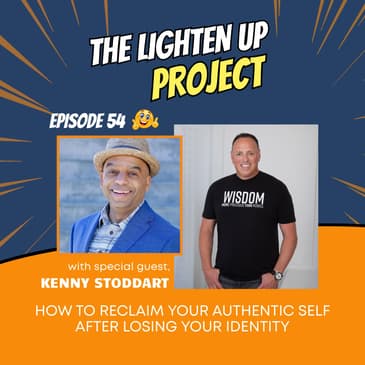
What happens when the life that looks successful on the outside no longer feels like you on the inside?
In this powerful and surprisingly playful conversation, Kenny Stoddart, founder of Iron Mind Advisors, shares his journey from high-performing cybersecurity professional to rock bottom—and ultimately to recovery, renewed purpose, and what he calls the Iron Mind Mentality.
From recovery and a career reinvention at 50 to becoming cancer-free and speaking at the Masters, Kenny's story delivers a simple message: where you are today doesn't have to be where your story ends.
What You'll Hear
- Why Kenny believes grace and gratitude are the starting point for every hard conversation, not just the easy ones
- How losing — and rebuilding — his sense of humor became one of the clearest signs of his own recovery
- The surprising connection between stand-up comedy, public speaking, and authenticity: nervousness fades when you stop performing and start being real
- What the Iron Mind Mentality actually means, and how Kenny adapted his Ironman triathlon training mindset into a blueprint for personal transformation
- Why recognizing you need help is a sign of strength, not weakness — and how long it took Kenny to make that first call
- A reminder that showing up imperfectly, without over-preparing the mask, is often the most powerful thing a leader can do
- Kenny's honest take on why so many high performers hide their vulnerability, and what it costs them long-term
A note to listeners: this episode includes an open discussion of addiction recovery and a serious health diagnosis. Kenny shares his own journey with honesty and hope — if anything in this episode resonates with you personally, please know that support is available and you don't have to navigate it alone.
Resources Mentioned on this Episode
- Iron Mind Advisors — ironmindadvisors.com
- Follow Kenny Stoddart — Instagram and TikTok: @ironmindskenny
- Learn more about Malcolm's work at the World Laughter Organization™
Featured Guest: Kenny Stoddart
Ken is the founder of IronMind Advisors and the creator of the IronMind Mentality—a transformational framework for mastering mental resilience, strategic clarity, and performance under pressure. After decades working with high-performing professionals across business, sport, and leadership, Ken distilled the most powerful tools for psychological strength into one adaptive mindset: the IronMind Mentality.
Through consulting, executive coaching, and confidential advisory work, Ken equips leaders to turn chaos into clarity, and stress into strategy. Known for blending neuroscience with actionable insight, he helps decision-makers access calm under fire, focus under fatigue, and conviction during volatility.
At the heart of Ken’s work is the belief that mental fitness is the final frontier of sustainable leadership—and the IronMind Mentality is the blueprint. His recovery journey became the catalyst for a life-changing pivot.
Connect with Kenny Stoddart:
- Website: www.ironmindadvisors.com
- Email: ken@ironmindadvisors.com
- Linkedin: linkedin.com/in/kenstoddart
- YouTube: https://www.youtube.com/@kstoddart
- Instagram: https://www.instagram.com/kendrickstoddart7/
- Tiktok: https://www.tiktok.com/@ironmindkenny
Meet the Host: Malcolm Grissom
Malcolm Grissom, affectionately known as "The Stand-up C.E.O.," is a team-building and employee engagement expert. Malcolm, an award-winning actor, comedian, International speaker, and best-selling author, masterfully blends humor, improv, and business acumen to enhance team dynamics and profitability. As a certified laughter leader, he leverages the power of positive psychology and his social work background to create engaging, results-driven experiences. Whether inspiring executives, strengthening teams, or energizing audiences, Malcolm’s unique approach fosters connection, creativity, and success. His ability to transform corporate culture with humor and insight makes him a sought-after speaker and consultant.
Follow Malcolm:
Website: malcolmgrissom.com
Facebook: facebook.com/malcolmgrissom
LinkedIn: linkedin.com/in/malcolmgrissom
Stressed, stuck, or leading on autopilot? It’s not a motivation problem—it’s a connection problem. Malcolm’s weekly virtual improv classes boost engagement, collaboration, and retention—all while having fun. Register now for a complimentary month: https://malcolmgrissom.thrivecart.com/everyday-encores/
We are proud to have The Lighten Up Project on the *High Vibe Podcast Network .* Grab your free gift from Malcolm in our Our High Vibe Gift Vault.
Love this show, check out the other shows on the High Vibe Podcast Network.
Share the Love
✨ If this episode lit something up in you… tag us on Instagram @HighVibeLeaders and let us know your biggest takeaway!
🦋 Don’t forget to rate & review — it helps us reach more conscious rebels like you.
🔊 Listen & Subscribe
🎧 Spotify
Hello, all my fellow light makers. It is I, Malcolm Grissom, the stand-up CEO and founder of the World Laughter Organization, and today on the Lighten Up ep the Lighten Up episode podcast thingy that we're doing today. This is me, folks. I trip up. I make mistakes, but we all do that, and it's about going forward when we make mistakes. And in fact, that's a great lead-in to today's episode because today we're going to be talking all about mental strength. Not being able to move forward when things are easy. We're going to be talking about moving forward when things are difficult, when we're making mistakes when we talk, when we're tripping on words and even things that get harder than that, but those are just examples. So today, my guest is Kenny Stoddart. He is the founder of IronMind Advisors and the creator of IronMind Mentality. It's a framework designed to help leaders stay clear and focused and decisive under pressure. After decades of working with high performers across businesses, sports, leaderships of all kind, Kenny has helped people turn chaos into clarity and stress into strategy using tools grounded in neuroscience and real-world experience. But what makes his work so powerful, though, is not just his theory; it's lived. He has lived it. He has his own recovery journey, and it shaped his past and his path going forward that just deepens the mission to help others reclaim the control and restore the identity that they need to lead with purpose. So if you've ever had to perform while everything around you still felt uncertain, like this morning, for instance, I had so many difficulties. Life was just not certain. Well, if you've had moments like that, you want to lead with clarity, this episode is for you. So let's lighten up, let's strengthen our minds, and let's welcome Kenny Stoddart.
Kenny Stoddart:Yes, thank you so much. That was amazing. Every time I hear the introduction, there's so many topics that I want to talk about because this journey that I'm on changes every single day, but I'm quickly reminded. The first thing that I want to point out is you started by apologizing and saying, Sometimes we make mistakes and we're, you know, we're running a minute or two behind because we've had a busy morning. And I'd like to say, Malcolm, you're just fine, my friend. Like, starting with a little grace and gratitude every morning. Like we don't apologize. You're giving back your time every day, my friend, so there's no mistakes. It's the authenticity that means the most, right? So I want to see you when you're scattered like that and how you gather yourself, and it's a beautiful thing, man. And I'm learning that myself. These are some of the messages that I talk about every day, like the boundaries of like, Yeah, we're we're busy. We're spreading We're trying to do things to help people. We love what we do. So sometimes we've overbooked or double committed, and we try not to because it's it's not the nature of what we're trying to do. We want to be present with everything that we do. But sometimes the computer doesn't boot up right or whatever. And you know what? It's amazing to be to watch you go through that and just like you know, in the past, I would have like been so I would have started this with like maybe in a negative mood or whatever. Like no, this is life, right? So we're going to give ourselves grace and gratitude. And that's the way I start with every conversation, because I typically meet people at dark moments, right? So they've beaten themselves up so much. This is a different, cuz your example was just a happenstance and it's so okay. But in the real world where I do work, even in the like when people are at their rock bottoms, it starts with grace and gratitude, too. And that's like stop, let's hug it out here and like
Kenny Stoddart:let's try to find a like we're going to one step at a time mentality, and I know that's cliché, but that's my background because I hit rock bottom a couple years ago. And you know, I didn't think that there was any future for me and now here I am and this is amazing, and I believe that grace and gratitude led the way. So it's great to join you. And that was my morning rant about grace and gratitude, but I just love those words together, so
Malcolm Grissom:No, that's beautiful. That is. I start my a a lot of times, well, almost every time, I start my episodes with laughter. And what you're saying, it reminds me a lot about laughter because laughter is laughter is a very intimate thing and so the the reason why stand-up clubs, for instance, they they work in the dark, they have the audience in the dark is because laughter is so intimate and a lot of people when they laugh, they don't want people to see them, because sometimes when you're really laughing, I mean a real genuine you know, laugh, not a
Kenny Stoddart:not a chuckle,
Malcolm Grissom:Not a chuckle. Not a chuckle, exactly, not a giggle, but just downright laughing like Belly laughing, like, That's funny. tears coming out sometimes, snot comes out sometimes. whatever You know. Yeah, people drink through the nose. Exactly. Yep, yep, yep, all of all of that. You know, sometimes people are embarrassed for other people to see that, and so they don't want to show it. They don't want to be real. And what you said is great because it's in this in these moments where we want to present ourselves with our best foot forward, right?
Kenny Stoddart:To who you are, my friend.
Malcolm Grissom:And exactly.
Kenny Stoddart:I want to tell you a funny story cuz I love, I love adding a little comedy to the message that I deliver, and I I would love to share a story with you and your your listeners. And last week, a real-world experience for me. I was invited to do to Augusta to the golf tournament, to The Masters, to do a speaking engagement in front of all these people that Actually, I didn't know what I was going to get what I was invited to, but that's kind of the funny part because just like, you know, you said, This is who we are. Like, I love delivering my message. Typically, no stage for me is too big or too grand because I love what I talk about. And then you mentioned the part about comedians, and I have such a massive respect for stand-up comedians because, first and foremost, I'm not funny. Two, that is one of the toughest, to have so many eyes and so many judges on you in a dark environment. Like, I would panic thinking about it, but I like the lights on, right? So I like the lights on because I have such a beautiful message, and I hope that I can influence people to see the positive message, not whether they're laughing at me, because I spent years hiding with the lights off, right? So that was my identity crisis. I was not who I wanted to be as a human being. I was, you know, I go by Kenny Stoddard now. There was a Ken Stoddard that was this professional in the cybersecurity space for 27 years, and I'm so grateful for every day that I had, and every moment and customer experience, but it wasn't Kenny Stoddard, this guy that you're hearing right now that was at The Masters last week. And I show up at this event, and I'm like, I don't know what the heck I'm doing here, because they certainly don't want to hear from me. But I had to remind myself that actually they did, and it was funny because of the way my life has become or has come full circle, where, you know, this was once a dream. You know, I'm presenting in front of athletes and coaches and
Kenny Stoddart:agents and representatives from big companies, and they want to hear from me. So I think that that's funny still to this day. Not funny in a bad way, funny in the most amazing way that I am on the stage in front of these people. So I show up at this event, and I'm like like a kid like at the first day of school, like, Hey, my name is Ken, and Kenny. And they're like, We know who you are, man. You're like the VIP guest here, you don't need to introduce yourself. And I'm like, No, man, I don't know. That's funny. But in reality, it was such a beautiful moment because here I am, like I'm still nobody. I'm showing up at this the Masters in Augusta, Georgia, to do a speaking event about transformation, about how to maximize your the next 20 years and whatever, and it's a beautiful thing. But and people want to hear it. And I'm thinking that this is great. This is funny. This is like, wow, I'm so proud. So the proud, funny, like just like you experienced, like you're doing this amazing podcast and you're trying to get your set up dialed in, and it's funny, man. It's a beautiful thing that we're actually here to be able to do this, right? Isn't it not? Isn't it hilarious?
Malcolm Grissom:It is.
Kenny Stoddart:I mean, come on! Like I want to tell this story at a stand up co- like who am I supposed to be at the Augusta? Like I don't know. It's hilarious and It's a story. redemption, and it's beautiful. And there's humor and beauty, and beauty and humor, and I could go on and on.
Malcolm Grissom:It's so true. So true. You are so very cruel. What is your relationship with laughter?
Kenny Stoddart:Well, as you can probably tell from the last 10 minutes or so, I welcome it. But you know, I lost it for a long time, Malcolm. I really did, because I struggled. My story, like we just heard the happy part of it, but because I'm on the flip side of a very challenging ride, but I lost laughter for a long time. And I consider myself a funny person. Not in a bad way, in a good way. Like my general self, my Kenny, my the person that I want to be is funny in such a beautiful way because it's intellectual. It's it's not It doesn't come off in the wrong way, if you will. Now, when I thought I was funny, when I was struggling with alcoholism, my funny that I thought was funny was not funny at all, quite frankly. So my relationship with humor is is deep because I don't ever want to be that version of funny anymore. Like that was not that's embarrassing. But that's one of the struggles that I face and I own up to and I've apologized for. But in reality, my you know, my story, the reason I'm podcasting, is a story of transformation from going from rock bottom to top moon, right? And I'm still on my journey, but I'm climbing every single day. But funny was not funny. And that was one of the learning lessons in my in my journey toward sobriety is that I got to a point where I thought I had myself under control and then I would, you know, I was thinking I'm being funny, but I was I was loud. Perhaps I was even vulgar. I used words that I don't Like, I wasn't me, right? And that was not funny at all. And that was a a sign that something else was kind of taking over in me and that was, again, I had lots of things, but alcoholism was one of them. And then I, you know, once I started to get help and then I got my humor, my identity back, my clarity back, now I'm back to being like funny like I don't even know if I'm funny, but I'm having fun doing it. You know, I showed up at a podcast the other day dressed like Eric Church because I was going to an Eric Church
Kenny Stoddart:concert. And then the social media put me, and was like, Oh, he thinks he's Eric Church. I'm like, No, I don't. I just like I'm I'm having fun. I'm going to a concert, man, and I like I love this dude in his leather jacket and his sunglasses and all like. So I was like, Yeah, I'm here for my podcast. And I'm like, that's funny. And that's my relationship, because I don't care anymore about I'm not trying to be funny. I'm not trying to be any of those things when I was loud and over the top, if you will. I'm just being who I am, and some people chuckle. Some people, actually, there's only some. You know, I'm in a smaller crowd nowadays, but it's just so much better. It's so more so much more authentic, right? You know what I'm saying.
Malcolm Grissom:Mm-hmm. I do, I do. It's So what what it sounds like that you're saying, it sounds like you're talking about again, to talk, to bring it back to stand-up, and to help some of the listeners understand, sounds like the difference between so someone's maybe a new stand-up, someone that's new to stand-up, they're trying too hard to be funny. They're not, they haven't found who they are.
Kenny Stoddart:Yeah.
Malcolm Grissom:So earlier when you, you know, before your sobriety, it sounds like you were you were what you thought was funny. You were what Right. Right. you thought other people wanted. You were over the top, you were not authentic, you were not you weren't the authentic Kenny Stoddart. You were the Kenny Stoddart that you felt was funny, that people wanted to see, the life of the party, that Kenny Stoddart.
Kenny Stoddart:Yes.
Malcolm Grissom:And
Kenny Stoddart:Seeking attention, thinking I'm funny, trying to get a a version of myself that I'm not proud of, but it it was a chapter that I fully take accountability for, but as I
Malcolm Grissom:Oh Oh, turn Go ahead.
Kenny Stoddart:No, I want you to go ahead. I just it's there's so much greatness in what you're saying and how it relates. So I have the utmost respect for anybody that's willing to take a microphone in the stand up room and try to make people laugh. And I don't want to discredit it by relating it to content creation. But for example, when I started creating content, when I started to deliver my message about transformation, about recovery, about pivot-you know, career pivoting at 50-about what I'm here to do-I had zero experience. So I walked on the stage, similar to a comic does, in a in a at a open mic night, and I said, My name's Kenny Stoddard, and this is my story. And it was ugly. It wasn't ugly. It was authentic, but it was my true version of instead of trying to put on a show, I had a message to deliver. And the same thing goes with comedy, like, people ask me all the time, Do you get nervous when you go on these massive stages? No, I don't. Should I? Should I be nervous? Because I'm not. I love it. But when I was working, like back in the day, when I was struggling with all the things that I was doing, when I wasn't being authentic, incredibly nervous. Yes, like freaking out. Not sure, like because I wasn't being who who I was. I wasn't my confidence wasn't there. I was trying to be a like so I was in that identity crisis at the moment, and this is part of the 27-year career in cybersecurity. But when I started content creation, it's almost like the same time you do your first standup, it's not going to be You're going to look back on it and say, Wow, but you're also going to say, You have to start somewhere, right? And that's what I did. So when I started TikToking, or if that's even a thing, but when I started creating content for TikTok, I had zero people, zero followers, didn't know what I was doing. It's gross, but I'm proud of it, because now I do it at still a amateur level, but much better than what it was. But it's all authentic. Like
Kenny Stoddart:I'm not I don't care if people say like, This guy's silly, or whatever. I don't care. My message is being authentic. When comics are authentic and they're like confident of their story, their humor, their people are going to laugh, right? But when they're nervous, they see right through it. And so I always say like, even in these big stage areas, like, are you nervous? No, I'm not, because I owe it to these people to deliver what I've been my message in a most beautiful way. I learned that at my like in the toughest moment, my dad's eulogy. Different, but again, I'm like am I going to get up there and cry all over the No, I'm going to get up there and respect this man by paying him a tribute. And then comedy's the same way. Am I going to get up there and fumble my jokes or forget my skit or this or that, or am I going to get give these people the money that they their money's worth, right? Yes, that's what I want to do. That's the confidence. It's not about me being nervous. I'm here, right? And I'm going to do it, and so that's how I approach my engagements with speaking, my I'm not a comedian and never probably never will be, but the world is my oyster, so I know I don't know. You know what I'm saying, Malcolm? It's like be authentic, and it's so funny or so great or so sad or whatever it is you're trying to be.
Malcolm Grissom:And so for people out there that that are listening to us and they want to show up authentically,
Kenny Stoddart:Yeah.
Malcolm Grissom:but they don't want to take They want to do it as quickly as possible.
Kenny Stoddart:Yeah.
Malcolm Grissom:That's our society now is let's do it yesterday, right? Let's do it yesterday. So, I'm I'm listening to your story and comparing it to stand-up, and where I was going with that is, so what I do now is I teach improv and applied improv. And applied improv is So this does not only apply to entertainers or, you know, speakers. Now we're we're talking about something that applies to everything. It applies to life. It applies to business. And it applies to sales, sales. And people keep asking me, How does this apply? And I think it Something that you're talking It helps get to our authentic self quickly,
Kenny Stoddart:Yeah. right? Yeah, I I I have worked on this for a long time and
Malcolm Grissom:helps us do it do it quickly and confidently. It builds our confidence while we do it as well, because we are, you know, we have to be authentic in order We can't A lot of things People get in trouble, I think. We all get in trouble when we think, when we overthink things. I think everybody agrees. Without a doubt. Everybody agrees. Yeah. Overthink things. And one thing with improv is you can't overthink things. You have to think You have to be in the moment, react in the moment, accept exactly what is going on. These, you know, if mistakes, you know, or something not perfect that is given to you, you have to accept that offer, you know, whatever that is, and then learn to build on it. So you can't overthink it when you're doing improv. And so doing improv is a great way to find your authenticity quickly, and to be confident with that authenticity. And I just wanted to, so
Kenny Stoddart:I want to chime in and just go with that because so authenticity is beautiful. It's it's what makes people laugh, it's what people it's what sells tickets, it's what's get clicks, likes, things. People love authenticity. We know that. Very very difficult place to achieve is being truly authentic, especially when you're nervous, or anxious, or, but and then you mentioned the preparation. So I do, you know, I would love to share this story with you. It's multifaceted, but so I mentioned that I feel comfortable getting on the biggest stages and, you know, I've done, I think, 9,000 people, 11,000 people in a auditorium, zero nerves whatsoever. Let's go. I I love it. I've been the best man in, I think, 10 10 weddings. I'm all my buddies best friends, which is an amazing, I love it. So I love that stage because those are some big speeches where we've all seen bad ones, we've seen good ones, and I've always made it a like, I've been asked to do something by a friend, and I'm going to do it right. So I've got a very good track record there. I don't have any like bumbling speeches that were should have gone differently. I I put a lot of effort. But then fast forward to my I mentioned my dad's eulogy, and I only use this because, you know, I was that's like one of the most emotional moments that you could ever partake is delivering a eulogy for my dad, who I truly adored, and amazing. But I felt in that moment when I was preparing for that that the preparation's key. And that, again, it's a it's an honor to him to give like to not stand up there and deliver this poorly prepared and overly emotional speech. It's the right way to do it is to to honor him. And that's how I went with it. And so I I made it a very big point. And then fast forward even more years now, and now I'm speaking in in very very emotional rooms of people, telling my story, which has like, I want to bawl every time because I'm super proud of my transformation, but I can't.
Kenny Stoddart:People are not there to see me bawl, right? So there is an authentic piece of emotion and, like, you're not going to tell me that it's not emotional because that's when I talk, like, I'm going to get emotional, but I still have an obligation. And this is when I do, you know, some of these more like tight-knit group things where I do talk about these my story, it's like, I'm going to get emotional, so I'm going to go ahead and get this out of the way. So I make I almost make a joke out of it, and I say like, you know, when I'm getting emotional doing an introduction and talking about some of the people that are in the room, and I'm just like, now the good news is, is that I'm I'm a trained professional speaker now, so I'm I'm taught to like wipe away the tears and get myself back together. But truly, what I'm doing is like, I'm going to get the emotions out, and then I'm going to deliver my message because that's what they want to hear, but it's coming from a place. I'm not working off of a script. Well, maybe I am, but it's it's coming from my heart that I've, you know, I'm very prepared for. I'm going to get emotional, I'm going to pull it together, and I'm going to give the I'm going to give me what I want to give, which is cuz I deliver a message now, right? Whether it's to make people laugh, or it's to raise money, or it's to simply say thank you, which is a lot of what I do now about my message and to be encouraging. So I get the emotions out because they're there, and I want them to be there. Like this story, my story has some sadness, but it's also got some amazing happiness to it, and so I I want to get through that, but I'm not gonna I cry every time I say it, man. I I changed my life, right?
Kenny Stoddart:You know, and now I tell the story to other people to change their lives, and then it happens, like you're darn right, I'm going to cry when I tell those stories. But I'm also going to compose myself, just like a comedian does. If it's not going well, I'm going to make these these people laugh. You just watch. Like that's composure, right? And then it starts flowing, and you know, it's part of the process of being professional at what you do and being grateful for what you do. Like I'm grateful to be on a stage with people looking at me and saying like, Wow, I'm happy to be here. So I'm going to get that out of the way, and I'm going to give them what they want to hear, which is my story, which is my message. I'm probably going to cry a little bit, but I'm going to be professional the entire time, and it's important, you know. That's the especially if we're delivering on stages where we want to be successful.
Malcolm Grissom:Mm, so what I'm hearing so far is that you're saying you're reminding us that high performers, especially high performers, it comes that in order to be a high performer, it takes authenticity, it takes willingness to show up however you're going to show up, and grateful to be grateful for the opportunity to show up. Even if things aren't perfect, even if things aren't going the way that you want to, you're showing up. You're grateful for it. Now, it also takes preparation. So you have
Kenny Stoddart:doubt,
Malcolm Grissom:yeah. Yeah, got a lot of preparation and authenticity and gratitude. And that's what I'm hearing. So,
Kenny Stoddart:yeah, and it doesn't just apply to, you know, we're not talking about high performers specifically here. We're talking about authenticity specifically, right?
Malcolm Grissom:Mhm.
Kenny Stoddart:So, you know, I referenced a one of the darkest moments, a a eulogy, but a or, you know, so one of the happiest moments, a best man speech. The idea is like we're not going to walk into this thing and it's going to do itself, right? So, there's preparation. I like to be prepared, so I've done my homework in whatever capacity, but I'm not walking up and saying, I'm going to wing this, ever. I like to Excuse me, I like to prepare and overprepare, but I don't want to prepare so much that I don't become authentic, right? And I'm not going to take the emotion out of my story. My story has a sad story, a a sad component to it, but it also has so many happy components to it as well. And whether you're trying to be funny for 35 minutes on stage or you're trying to inspire a room of executives, without authenticity and preparation and knowing your audience, it likely won't go well. I don't know of that natural talent, and I I love to speak, but I know I have to prepare. I know I have to give it thought, think about my audience, and then get over like do a pep talk, cuz I of course anxiety exists, but it's like talking yourself up to a big at-bat or a, you know, big game or a big speech or this or that. You got to like let's go, it's game time. And that's what true authenticity is, is like you've prepared for this moment. You've thought about it. Now the moment's here. How are you going to do it? And we're going to do it great. And that's like That's part of my IronMinds philosophy, which I'm not even talking about that. I'm talking about being authentic when in all aspects of life. This doesn't apply to just the stage, or the classroom, or the race. It applies to being prepared with how you show up to do your obligations, to be present, to set boundaries, to not be disengaged, to do your thing and being authentic. And I I'm huge about it because for 27 years, as much as I try to do that, I lost my identity. I became a software salesperson, and that's not who
Kenny Stoddart:I am. That's what I did. And it's unfortunate for a lot of people that spend so much time trying to be authentic and building these amazing careers, and they lose their identity and not get to a point where they're not truly able to enjoy their true, authentic self. And that's what I do for a living. But it applies to the speeches, to the best man speeches, to the room full of entrepreneurs or CEOs. I I don't change the way I go about it, and I keep getting invited back, so that's the good news, you know?
Malcolm Grissom:And I think you said, and we keep going around in circles, I think, but I think
Kenny Stoddart:probably
Malcolm Grissom:that is important in that it Yeah, we want we want to prepare. We want to show up great. You said we want to show up great, and sometimes we, and this is important for any overachievers out there, is we want to we something happens like today when we're not showing up great. We don't or we feel, because we're overthinkers, we feel that we're not showing up great. At least we're not showing up in like that image we have in our mind, like how we practiced it. And it's important to to still show up, to be grateful that we are able to show up at all and have this conversation, however it is, what however it looks, but we just have it and we are grateful for it. So we show up, and that I think that too is an important part of authenticity that I just want to highlight because we're talking about practicing and what happens when you practice and and all this preparation beforehand and you're talking about giving your speeches and with the emotions and everything, and it's important to be in that moment, to be authentic in that moment. And so, if things aren't going right or the way that you planned them, it's important to just be. It's important to just be. That's
Kenny Stoddart:You did it. You did it. You You just did a master class in it, Malcolm, because I hear you saying like you showed up all disheveled and whatnot, but it it certainly did not appear that way. And when I talk about practice and preparation, and you know, I I emphasize that not to over-practice or over-prepare. It's more about being present. Like when I saw that I was speaking with you today, like I didn't show up and wonder who Malcolm Grissom was. I I know who you are. I know the Lighten Up Project, I know your message and what you're trying to do, and that way, I, you know, there's that's out of respect, but also I can speak to what you're you're trying to accomplish, to your audience and whatnot, and be authentic, right? I want to know that like I'm not just here for the podcast and trying to take up your time and bear, you know, get content, like, no, I want to know what drives you and your audience. And I love the fact that humor is a huge portion of that, and also, I'm picking up on the fact that, and again, the counselor in me wants to kick in, and I don't want to do that, because, but the anxiety also needs to be there as your friend. We talk about, like you mentioned in my, I turn chaos into clarity, like we all are gonna We have anxiety, we have things going on in our life. But if we handle it the right way like you did this morning, it's just turning that little moment of chaos into clarity, and we Here we are. We're going to get a great podcast session, and no harm, no foul. It's great to go. That's what I'm talking about. Like we don't We want to see you at your best and not your necessarily worst, but like, you don't need to be like show up and like, Okay, the the clock starts 10:00, and here we go. Hit record. We want to be authentic, you know.
Malcolm Grissom:Yeah. Yeah. So what we're talking about is mental fitness. This is all just It's mental fitness. That's what I see.
Kenny Stoddart:It is. It is, very much so.
Malcolm Grissom:Now, you mentioned the Iron Minds mentality, and so I believe we've probably been explaining this, but could you explain this again for our audience?
Kenny Stoddart:I would love to.
Malcolm Grissom:What is that? I would
Kenny Stoddart:love to. Yeah. First and foremost, the Iron Minds mentality is sounds incredibly masculine and iron, and because the name of the this blueprint or mentality that I've come up with is I don't know if I've come up with it, but I've applied my own theories to it, and it's built on several different components. First and foremost, my faith, which iron sharpens iron, Proverbs 27:17, that's no secret to anybody. I love that proverb. That's the iron side of it. It's also, you know, I'm an Ironman triathlete, so that's also the iron side of it, but the mental side of it is what made me a successful triathlete, you know, getting my It's going to a place where you might not have known you had inside of you, right, during your darkest days, your toughest adversities, your marathon, your master's class, your bar exam. How am I going to get through this? And the reality of it is is like, okay, I I need to I need to buckle down and we're going to like, whatever it takes, I'm doing this. And then, so when I was struggling with my alcoholism, one of my best friends called me and said, Hey Kenny, whatever you do when you do your Ironman races and all that stuff, apply that to your to your recovery. And I was like, that's big. I'm like, what do I have to like, and I know, like I had to think about it, but when I quickly did that, I realized that when I'm racing in an Ironman or going through like The Citadel or doing some of this silly stuff that I've done, like No was not an option. I'm finishing this thing. And that is kind of like the core of The Iron Mind's mentality is like we're moving forward. We're going to get through this. Backwards is not an option. And all of that's cliché, but I I live it first and foremost. So I stuck my stake in the ground and decided to move forward almost two years ago with my sobriety and with my whole life transformation. I was at rock bottom. I was I was almost dead and now I'm fully alive and amazing. But it was through this
Kenny Stoddart:Iron Mind's mentality, this blueprints that I said, Watch me go. I'm ready. I'm prepared. I have a vision for what I want to be. This is, I want to get my identity back, which is kind of the bigger explanation of it. But some people are really struggling to find that. And I say with my Iron Mind's mentality that yes, it's possible. Look at me, I've just done it. It does require preparation, dedication, hard work. I don't have a magic wand. I do have a magic formula, and all those things are part of it. So I can't control your hard work, your dedication, but I can coach you, mentor you. These are the things that I'm working with when people truly have lost their identities like I did for 27 years. I became the Ken, the software sales person, not the Kenny that I am now that helps people. I fell into this because this is naturally where I needed to be, but this is where I should have been all along. I was, instead of selling identity protection in the cyberspace, I was losing my identity through becoming a quota chaser, Presidents Club recipient, a a millionaire, all whatever it is, that's not who I am. This is who I am. And that's what I help people do, and it's complicated. But if there's people out there listening that's that say like, I wish I just could get the old version of Kenny back, like, I feel you, man, because that's where I was. I was crying on the floor like a like a grown man crying on the floor, begging for myself back, and then I decided to do it. And that's what I work with my clients on because I'm done with it. Like I'm not, I don't accept excuses. I there's accountability. It's not easy, Malcolm. You know, especially when we're far gone, like I was at rock bottom, you know, so I had to do a lot of rebuilding.
Kenny Stoddart:And the less intense version of that is the Iron Mind blueprint that, you know, applies to first-time comics or that are going to the open mic night on Tuesday and just giving them a little bit of confidence, man. They have such great courage to go and do that. Like that's where I would start. Like good for you, just for committing to it and doing it. That's how the Iron Mind starts. We don't forget about the amazing things that we've already accomplished getting to this point, and then we figure out how we're going to build upon them, so that comic goes in, you know, goes through those pre- -skit warm-ups, nerves out, deep breaths, you know, go outside, get some fresh air. But truly, like, how about giving yourself some grace and saying, Good job, man! You earned this, and now here it is. The stage that you've been waiting on is like it's about to happen. And then going out and crushing it, and like, Yes! That was amazing. That's the feeling that I want to get from people. Like that's the feeling that I get with my recovery every day, is like I just crushed it, dude. They were all laughing. Amazing. I'm funny. I am funny. Holy shit, they want to book me for next week. This is amazing, right? That's what I'm talking about because that's what I need That's the Iron Mind's blueprint. I don't know how to explain it any better than that. It's like I did it. I crossed the finish line. I made people laugh. What's next?
Malcolm Grissom:Okay. Yeah. All right. So, let's talk about So let's say there's a listener out there who wants to get back to they want to get back to who they were or who they are authentically, right? What's the first step that someone should that someone should begin just in everyday life? They want to develop that mental fitness in everyday life. So what is the first step for them?
Kenny Stoddart:Well, I think the first step is recognizing that, right? So there's a lot of people that don't like don't want to give up their Like we're not By recognizing that, that is not a sign of weakness, which is has been the perception in the past. Like I need help, or I need guidance, or I need mentoring, or I need coaching. Like I'm here to tell you, that's a sign of great strength. That's not weakness. So, what's that person trying to get back? Recognizing that, yeah, I wouldn't mind being like changing the trajectory, right? Like cuz what I'm doing now is not getting me to where I want to be. I'm going to So, and then there's so many resources. That's why we do podcasts because maybe there's 100 people listening to this and one of them gets a message from it and gains from it. But then there's the next steps like reaching out to people that like so I'm I'm a therapist, I'm a coach, I'm an athlete, I'm a this, that, whatever. I don't care about any of that. I'm a resource for people to point them in the right direction because that's what I needed in my darkest moments. I, you know, I was scared of recovery. I was scared of admitting that I needed help. I was, you know, I was Superman. I can't admit any failure. And then I did, and it was life-changing. So, people have tough time hitting the send button on, you know, like, Hey, buddy. Can you chat? Like, I'm the guy that they should hit the send button on because I'm going to meet them with grace and dignity and we're not going to like beat each other up about like how awful this and that was because I like to move forward, not backwards. So, the past is the past. We have to recognize it. We have to deal with the circumstances, but we also have to give ourselves some credit that life on this Earth is not easy. We are all going to make mistakes just like Adam and Eve did. Is it the end? Is it who defines us? No, it's not. And I'm here to say by no means, because I was dead two years ago and now
Kenny Stoddart:I'm speaking at the Masters. Like, what is happening? And the answer is, I did what I needed to do. I asked for like I started listening to podcasts. I started reaching out to people that were inspiring to me. I saw that it wasn't that I had an issue that needed to be professionally addressed, I got help. Like, that's not the case for everybody. They might have a much easier route, but doing it alone is never good. And I learned that. I tried to do it alone forever, like cuz I'm I'm independent, I'm the Kenny Stabler, blah blah blah. No, mm-mm. No. When I got help, it was life-changing. And I went I went to the extremes. I went to rehab. I, you know, I and then I embraced it. I even went so much as becoming an advocate for the recovery centers that I went to because of the experience that I had there. And then, while I was there, I got cancer. And I don't care. I'm getting through this stuff. And I did. I'm I think I As of yesterday at 1:00, I'm cancer-free. 6 months was my, yesterday was my 6-month checkup. It was scary, man. It was awful, but I remained positive. I asked for help, I prayed, I talked to people, I didn't try to bury it under the carpet. I dealt with it, and now I help other people deal with it. So, it's amazing. See how that works? I mean, it's just truly amazing.
Malcolm Grissom:Congratulations on that. That
Kenny Stoddart:Thank you. I haven't even had a chance to celebrate it. I've been too busy talking about it, but I am super excited.
Malcolm Grissom:Yeah, that's awesome. Mhm. That is awesome. Cancer-free, and you got to speak at the Masters. So
Kenny Stoddart:It keeps happening, man, every day.
Malcolm Grissom:It does. It does. Wonderful. It does. And being authen- authen- Authentic, yeah. Authentic. Thank you. I don't know why I can't speak. Being authentic is You're
Kenny Stoddart:just so inspired by my by what I my words that you just Exactly. No, I'm kidding with you. I'm
Malcolm Grissom:tongue-tied. It's your fault, Kenny. It's your fault. You're tongue-tied. This
Kenny Stoddart:is the This is the effect I have. No, I would Right. But
Malcolm Grissom:Yeah. You're too amazing. You're even even This is who
Kenny Stoddart:I am, right? This is the authentic version of me, and it hasn't gotten me in trouble yet, right? And it's it shouldn't because I
Malcolm Grissom:No, it's In fact, it's bringing these wonderful things. That's what I was about to say is your this opportunity, you got to speak at the Masters. This being cancer-free, it's all coming from the authenticity, from the Kenny that's showing up every day.
Kenny Stoddart:Without a doubt, man. Like I can't believe it. It's There's no other explanation for it, you know. My faith is is incredibly strong. My journey was Like the people that reach out to me every day, the stages, like I said, yes, it's I have to pinch myself and I But the one thing that has not changed at all and will not is that, you know, I just being myself has been amazing, telling my story. Some people say, Blah blah blah. You talk about this too much. Okay, I'll go over here and talk about it if you don't like it, but I I'm just being who I am and the message, cuz I've seen not only myself, but I see too many successful people unable to enjoy their greatest years because they've lost their identity to the cause, to building their greatness, and I'm not okay with it. I want them to be back to being great and enjoying all their hard work and their efforts and what they've done in the past, whether it be taking the stage at a Tuesday night stand-up comedy tour, or, you know, running an Ironman or getting your master's at 51 years old. I don't care. I've done them all, and it's possible. That's the message, is what I'm trying to say, cuz I didn't think it was possible. Like I'm doing things that are truly amazing that I didn't think were even in my stratosphere less than a year ago. I mean, that's that's where this has taken me, and it's come from preparation, it's come from authenticity, it's come from discipline, it's come from hard work, commitment, it's come from what I call the now the Iron Mindset blueprint, but truly, it's the one thing that is a non-negotiable is my like incredible desire to do amazing things, not only with my life, but with impacting others now in the helping space. But and I'm I mean that like I I was called to do this, but unfortunately I ended up in cybersecurity sales instead of that, you know, being a therapist back in the day. And again, no regrets, this is my journey. With all my experience, I would not
Kenny Stoddart:be here, but it's just truly amazing and I was not here. And I I want to be that inspiration to people to that are they don't have to be going through all the challenges that I face. They could just simply being like, I'm not happy doing what I want to do and I want to think about a career change. And I'm here to say that that's a possible, that's very possible. There's, of course, I'm not going to say it's easy. It's not easy. It's risky. It's nerve-wracking. It requires hard work, but it's possible. And then I have the formula to like show you what it looks like, but and I'm didn't, I made up the formula on my way because that's what I'm doing. Like I'm trying to totally transform my life into from rock bottom to what I consider complete happiness, meaning with myself, and that is a complete transformation and it's been amazing.
Malcolm Grissom:Now, has your experience, your recovery journey, has that redefined resilience for you?
Kenny Stoddart:Sure. So, my recovery journey with regards to resilience, I was quickly reminded how resilient we are, not only as humans, but our bodies. And so my recovery journey started with the same way it typically starts, but you know, if a couple emotional days, a couple not so great days, and then the resilience starts to kick in, and clarity starts to come back, and healing starts to happen. And yes, absolutely. Those are all the things that started to get my desire back. And you know, within my recovery process, I started to you know, because I embraced it and I wanted to be better so bad, that's this huge component. Like some people are there like, I don't want to be here, but I have to be here. I didn't have to be anywhere. I wanted to be there, so I enjoyed the process. But that's where it fueled my passion, it fueled my resiliency. It fueled me so much that I changed my career. I retired from cybersecurity, just the only thing that I knew. And then I went back to school to become a therapist, which I know nothing about. But now I do, I know a lot about it because I've been in therapy my whole life, I've been coached by professionals both on the athletics side, on the business side. All that's valuable and now I'm bundling up what I learned along the way and I'm using my experience, and I'm applying it to other people that are high performing, struggling, wanting to, and, wow, it works. And that's the amazing part. That's the resiliency that is cuz it doesn't work until I see people smiling on the other end, like, Kenny, you're amazing. Well, I'm not amazing. You're amazing for doing But, Yeah, but without you Okay, that's lovely, but me seeing that is truly a sign of my life becoming full circle, resilience at its highest core, like battling to say that I am not who I was 2 years ago, I want to be the person that I had set out to be, and then doing that, which is who I am now, and being incredibly proud of it, and then
Kenny Stoddart:seeing other people be Like, I'm passing it on because it's a working model. It's it's amazing. I I just could go on and
Malcolm Grissom:on. So, now, you've been talking a lot about being authentic when we're struggling, and you've also mentioned preparation and strength and showing up and doing what you do now. So, what's the balance between being strong and being honest, especially when it comes to struggling?
Kenny Stoddart:Yeah, that's that's fair because, during the struggle stage, when we think that there's no there's no solution or there's no end to this, like I don't have the words for that, because I've been there, and you know, I've been there, and I don't want to hear what you have to say either, quite frankly. Now, I'm I'm on the flip side of it, so I've been there, done that, as well, and I can say that there is this too shall pass. I say that very lightly, cuz I don't I don't minimize people's storms that they're going through. They're very real moments, and the balance that you mentioned with regards to authenticity is very simple for me, because it was very difficult to be inauthentic for so long, right? So, to be that version, that Ken that showed up in in the sport coat at the boardroom and on Wall Street, and this and that, and then went to the dinners, and drank wine, and did it all over again, you know, 47 weeks of the year, that's not who I wanted to be. It's who I was, and it was beautiful. It looked amazing on the outside, like I was, you know, but it it was destroying me on the inside. So, being of this version of myself is much easier, and I think that that's worth noting that, you know, I don't have the weight of the world on my shoulders anymore. I'm not trying to impress, I'm not trying to gain or build or In a sense I am, but it's all within the right, it's the authentic. Like I'm I'm running a business, of course, but the goals are different. Like I don't report I don't I'm want to help people. The money will come, the opportunities, the masters, those are amazing things. I'm proud. It's amazing that my story has been picked up and wanting to be heard in those types of environments. And I'll continue to do that, of course, cuz I'm building and growing myself. But it's not hard anymore. It used to be so it used to suck, you know. It wasn't who I was. Trying to be fake, you know, trying to sell that things that I didn't believe
Kenny Stoddart:in, or and that wasn't always the case, but, you know, it just it took me out of my zone. Like it wasn't Kenny, and now I'm back, and it's easy, and that's that's what I want to help people get. Well, so how the boundaries are is they're a lot easier when you can live with passion and grace and gratitude and enjoy what the heck you're doing, and that's when it becomes a lot easier.
Malcolm Grissom:Okay, so why do you think that there are so many high performers, overachievers, leaders that often find it difficulty, often find it difficult to tap in and show that vulnerability, and instead they hide it? It's If they hide it, and as you're mentioning, it's strength, so why do you think that these people find it difficult and often turn to hiding that vulnerability?
Kenny Stoddart:Well, first and foremost, I have to give credit to so many of the amazing leaders out there that haven't succumbed to burnout or exhaustion or whatever it is, that have gotten the formula right, and that have taken proper care of themselves, and kept boundaries, and maintained their social lives and things outside of work that that are important to them. Cuz there are. There are people that are doing it every day. I have Some of my best friends are still doing this at the highest level because they did things the right way along the way, whereas, you know, I made some mistakes along the way. I I hit the road too hard, if you will. I did it for so long that it it beat me down. So I I think that the authenticity piece is so important. If you're doing it right, amazing. Continue to pass that on to the younger generations. Show them like Some of my
Malcolm Grissom:listeners
Kenny Stoddart:I'm not going to mention any names cuz I'm not sure, but like they're amazing, and now they're starting to retire. But I've watched how they've handled themselves over the years, and how they've prioritized, and how they've taken breaks, and when you're losing your identity, there is no break, right? You become so accustomed to keeping up with the Joneses, the imposter syndrome. You know, whatever you made last year, if you happen to go backwards a little bit, it's like failure when it should be celebrated. And these are the little things that, you know, this is what lands you on the, you know, like I was, down and out at 49 years old and burnt out and wondering what the next chapter was going to look like for me, if I was even going to make it to the next chapter. You know, I had the courage and wherewithal to say enough is enough, and I fixed myself. But I make it sound easy. It was not. It was it was the hardest it still is incredibly hard because I'm not only am I doing it on a day-to-day basis, but I'm also living it and preaching it and coaching people, except, you know, I'm talking people through this every single day. I love that kind of pressure because this is who I want to be. It's not something I'm not trying to do this for anybody else. I'm not trying to paint a picture of what it you know, this is only skin deep. This is who I am. So, those are the boundaries that I work through now. It's like, and I have boundaries still to this day, like I can't. I'm not going to get into the 15-hour workdays like they used to be anymore. Like that is what took me down. I became Now I'm like I love to talk about my what I'm doing, my mission. I love to work with clients. I love to speak. I'm in school. These are all time-consuming things, but I just simplify a little bit at a time, break it down, do what I need to do, prioritize, plan, you know, not over the top, just to make so I can maintain my authenticity, maintain my wellness, maintain my
Kenny Stoddart:quality of life, and be proud of what I'm doing. And it's possible for everybody to do that. We just need to figure out what the root cause is. Sometimes it's sometimes it's the job, sometimes it's the people in your head, sometimes it's your boss, sometimes whatever. I know. I've had all the things. But there is a solution.
Malcolm Grissom:Can laughter? Do you think laughter or play can improve performance or focus, resilience, authenticity, any of that?
Kenny Stoddart:Well, let's flip the script. How does a lack of laughter impact someone's well-being? And it's tremendous, right? So, if people are not happy, or not laughing, or not smiling, or not finding humor, not finding joy in the things that they once always did, that's a huge red flag for me in in my industry. But back to your question, yes, people need to be laughing. People need to be enjoying the things that that, you know. I don't know, I think I'm funny all the time, and it's not always the case. But I'm funny to myself, and some people get a chuckle out of it. But the point is, yes, we need to be surrounded by that level of energy. Laughter brings a great amount of positivity to it. It's you don't laugh about unless you have a nervous disorder like I do, like I try to laugh off some of my like, Oh my god, you should have saw me when I was at rock bottom. That's not funny. But the funny part about it is now I'm not, and I look back, and I'm like, I, there's so much, and it's still not funny. It's actually very, very serious. So laughter is such a key component to use in the right ways to make sure that you're finding joy in the things that make you happy. And without it, that's a big gap. That's a huge gap, right? And I I know what that is. Nothing made me laugh for years. Now I laugh at laughing at myself now, but I do that all the time.
Malcolm Grissom:Mhm. So in in our show notes, I have all your links how to get in touch with you and everything. But I'd like to give you an opportunity to actually voice that. How can someone get in touch with you and continue this conversation and work with you?
Kenny Stoddart:Yeah, thank you for allowing me that opportunity. So, my website is my my main resource, is public facing resource, which is at ironmindadvisors.com. I try to use that because I have like, and the other ones are my Instagram, which is @ironmindskenny, and my TikTok, which is also the same, @ironmindskenny. So, I I use those platforms to share helpful hints about what I'm trying to do. Simply just that, some of the challenges that I've faced and how I've gotten through them, so that's a great way to keep in touch with me on a day-to-day basis. But it's very easy to get a hold of me if if people want to explore working with me. Using those tools, my website has a a text line directly to me. I very responsive, but you know, I my working relationships are very, very sincere to me, and I'm very responsive, so I have resources to get a, you know, to reach out to me, and then I have resources to follow me. Everything can be found at Iron Mind Advisors. And I'm grateful for like, if I get one new Instagram follower, it's been a good day for me because that means I've impacted someone that might think I'm either, a, funny or meaningful. But I've started that from scratch, so it's super fun to see that grow. I'm I'm not a big, like I've got less than 1,000 followers, I think, but I'm confident it's going to change if I keep spreading the good word, and that's what I'm going to do. Mhm.
Malcolm Grissom:Okay. All right, great. Yeah. What would you say to someone who feels like they've lost control of their life?
Kenny Stoddart:Yeah. I would say that this happens. They are not alone, and they can reclaim their life, but recognizing that and and stopping the wondering like I wonder what's going on with me? Why the heck am I not performing at the way I used to? Like those are little warning signals that they should reach out for guidance in some form or fashion. Like the sooner the better. Like I say people I tell people call me. Like I'm just going to point you like I'm going to give you a fair like five-minute evaluation of like and some people want to work with me, some people never want to talk to me again. Ah, that's great. But I didn't know where to go for help initially, and then I started reaching out. Even within my little tiny circle of friends that you know, is very near and dear to me, is like there's help right there, and I found someone that knew exactly what I needed, who pointed me in the right direction, and off I went, but it took me eight months to find that. Like that is a very dangerous period, because I knew I needed some guidance, some help, some, you know, some recovery. That's not always the case for people. They don't need to go away or be like They might just need to be connected with a an old buddy, or an old classmate, or a friend to have a to be reminded of how awesome they are. And I'm good at that because I look at people all the time that claim that how awful they are, and they just finished a 25-year career as a doctor, or a lawyer, and you are amazing! Like wow. So, I just encourage people to be open, and be vulnerable, and have a conversation with someone. And or follow me on Instagram, and I just say it out loud, and they don't have to talk back at all. All
Malcolm Grissom:right, well, Kenny, thank you so much.
Kenny Stoddart:Yeah, my pleasure.
Malcolm Grissom:Ah, it's been been quite interesting and very authentic. That's what I loved. You This has been very authentic interview. Thank you, audience, for following us, for continuing to follow us. Please Please continue talking to your friends, tell them about us, tell them about the Lighten Up Nation. The Lighten Up Nation. So, the project, Lighten Up Project, that's our podcast, but the Lighten Up Nation is our community. It's the global community that we're building to bring laughter, play,
Kenny Stoddart:positivity, humor, Yeah.
Malcolm Grissom:Yeah, authenticity, great gratitude, bringing all worldwide, and to help us in personal development, in healing, in productivity, in work, and all that. And thank you for that. Thank you for continuing to support our efforts in that, and coming back to this podcast over and over and over again.
Kenny Stoddart:My pleasure. Yeah, and I love your listeners. They're very engaging, and I have a huge admiration for anybody that's willing to step on stage and try to make people laugh because that's a very daunting task. So, huge shout out to that community of people that you work with.
Malcolm Grissom:Yes. Thank you. Yes, it's Well, to you it may seem that seem daunting, and to me, the way I look at it, I look at it as what you said about getting up and speaking now and the nervousness that you the lack of nervousness that you feel. It's you love doing this. So the way I think about it is, I love sharing laughter. I love creating environments people people to laugh in and to feel good in, and so it's, yeah, not daunting in from my point of view.
Kenny Stoddart:But I I I get it. I tell I talk to people all the time of who are I'm like, why are you nervous about getting on sta- and I'm like, I got to be, I got to remind myself that I was once there, but in the same respect, if I was invited to do a comedy stand-up show tomorrow, I would be there and do it and be prepared and ready to go and try to hide that nervousness for a moment and do my thing and make people laugh and then say, awesome. So, thank you so much, Malcolm. I'm so happy to join you and it's been great, and I'm going to do it again soon, all right?
Malcolm Grissom:Yeah. Yeah, sounds great. All right. All right, sir. Thanks a lot. Take care.