
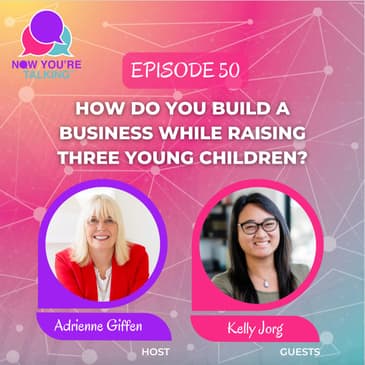
Kelly Jorg shares how intentional parenting, strong family partnerships, and a willingness to adapt have helped her build a business while raising three young children. This conversation is filled with practical insights for parents, entrepreneurs, and anyone navigating competing priorities.
What You’ll Hear:
- How Kelly and her husband are building a business while raising three children under the age of five
- The power of compartmentalization and creating systems that reduce stress and overwhelm
- How AI is helping Kelly scale her business and personalize learning for her children
- The parenting philosophy that encourages responsibility, independence, and confidence from an early age
- Why success at home and success at work both begin with being intentional about what matters most
Kelly Jorg’s personal breakthrough moment
Kelly reflects on the moment she realized there would never be a perfect time to pursue her dream. With three young children and a full family life, she chose to start anyway, building a business one late night, one small step, and one act of perseverance at a time.
Featured Guest: Kelly Jorg
Kelly Jorg is an entrepreneur, mother of three, and co-founder of Nalo Seed. She helps business owners turn ideas into thriving brands while navigating the realities of family life, entrepreneurship, and personal growth. Through a blend of creativity, technology, and intentional living, Kelly shares practical insights for building a meaningful life and business.
Follow Kelly Jorg:
https://www.instagram.com/naloseed
https://www.linkedin.com/in/kellymanalo/
Meet the Host: Adrienne Giffen
Adrienne Giffen is an executive recruiter, author of Unravel You, podcast host, and creator of the Now You’re Talking® conversation board game. Through her work, she helps people reconnect through meaningful conversations, shared values, and experiences that bring people closer together in today’s digital world.
Connect with Adrienne:
LinkedIn: https://www.linkedin.com/in/adriennegiffen/
Website: https://www.adriennegiffen.com/
Now You’re Talking® Game: https://nowyouretalkinggame.com/
YouTube: https://www.youtube.com/@NowYoureTalkingPodcast
Instagram:
Adrienne Giffen: https://www.instagram.com/adriennegiffen/
Now You’re Talking®: https://www.instagram.com/nowyouretalkinggame/
Spark Conversations That Surprise You
Every podcast episode includes a question from the Now You’re Talking® game designed to spark meaningful conversations and deeper connection.
🎲 Explore the Now You’re Talking® conversation board game (currently available in the USA):https://www.adriennegiffen.com/buy-game
Stay connected with new conversations, updates, and more from Now You’re Talking®. Join here
Because conversation builds connection.
Start Talking Today
Download: 5 Questions to Spark Real Conversations
https://www.adriennegiffen.com/game/start-talking-today/
Subscribe for more conversations that matter.
Now You're Talking is proud to be on the High Vibe Podcast Network. Check out Adrienne’s Gift in the Vault https://highvibepodcastnetwork.com/gifts
Share the Love
✨ If this episode lit something up in you… tag us on Instagram @HighVibeLeaders and let us know your biggest takeaway!
🦋 Don’t forget to rate & review — it helps us reach more conscious rebels like you.
Listen & Subscribe
[00:00:04] I'm Adrienne Giffen. Welcome to Now Youre Talking, the podcast. I believe real conversation connects us in a distracted world. One of the greatest gifts you can give your family and yourself is your presence. Because leadership doesn't begin at work, it begins at home. This is your space to pause, to listen, to reflect.
[00:00:30] Your journey toward deeper connections starts right here. Today I'm joined by Kelly Jorg, entrepreneur, mother of three young children, co-founder of Nallow Seed, a marketing and technology company she and her husband are building together.
[00:00:48] In this conversation, Kelly shares what it's really like to balance entrepreneurship and parenthood. From late nights building a business after the kids go to bed, to raising a young family while pursuing a dream. We talk about intentional parenting, homeschooling, the role of AI in business and education, and the systems that help keep family and work moving forward.
[00:01:22] Kelly, thank you for joining me today. It's wonderful to have you. You are an entrepreneur. You are at 1.3 little kids under the age of three. Mm-hmm. How, and you work with your husband in business. How do you do it all? Compartmentalization. That's a good beginning.
[00:01:44] Yeah, for sure. I mean, we, yesterday we took time to do work outside of the home at the library because our business, Nallow Seed, we conduct at home for the most part.
[00:01:56] Honestly, like, yeah, sometimes we need to remove ourselves from the house because, like, our kids are here. We have a babysitter. We hire a babysitter for, like, 15 hours of the week. But the rest of the time, one of us is with the kids and we switch off. Like, if we have client meetings, like, hey, okay, you have the kids. And, like, I'll try, we'll both try to take the kids out of the house to make, to let the other person have the house for peace and quiet. Right. Yeah.
[00:02:21] But really, like, yeah, compartmentalization. So my schedule, my calendar schedule is color-coded, I think, four different ways. Okay. My husband's schedule for work, my schedule for work, our kids' schedule, and then, like, personal, if, like, my husband and I have, like, next week we have a couple's massage. Like, that's, like, our first.
[00:02:47] And, like, that's good. Well, that has to be an event all in itself, all the little people that you have to organize. Yeah. To make that happen. Like, all these color-coding is, like, okay, you're allowed to go do that because the colors look right. What? And do you have this on your fridge or is this a digital thing that you have?
[00:03:09] Everything Google Calendar for us because we honestly, like, we probably wouldn't be at the right place at the right time if we didn't because it reminds us. Like, we looked the night before. Okay, like, what's tomorrow? Where does everyone have to be? Because, like, if, like, today, like, we're having this important meeting. So, like, I purposely scheduled this podcast, like, while my daughter is at choir practice so that I have the house to myself.
[00:03:33] So, like, we know important meetings schedule while kids are doing their events that they go to every week. The kids are in choir, ballet, art. Like, yeah. Oh, my goodness. So you're managing all that at the same time. And so what is it like for you working out at the home front? Because as much as you say you compartmentalize, there's a lot of crossover.
[00:03:58] There's no going to the office and leaving the chaos and the mess behind. Yes, because I hear, you know, I hear the kids, like, checking boundaries with the babysitter or if it's my husband out there. My husband and I, we try to reinforce each other's, like, if he says, like, you need to do that and then they don't listen to him, then I'm saying you need to listen to your dad and, like, vice versa.
[00:04:21] Like, we always support each other because, like, I think people who aren't parents, like, they understand, like, what you say, like, you're training puppies. But I don't think people really realize in, like, raising humans that, like, you're, I'm, we're teaching them everything. We're teaching them everything about their body to, like, mannerisms. And, like, I'm training them how to, like, how to say hello to people.
[00:04:44] And, like, I've told a friend that before and they were, like, I don't think my mom ever taught me how to, like, say a first introduction to somebody at the playground. Yes. So, yeah. So, when I'm, it's working and I don't do, I don't like full-on headphones, like the noise canceling. My husband does the noise canceling. So, when he works at home, he's totally zoned in. He's not. Okay.
[00:05:11] But me, I'm, like, making sure that, like, somebody's not climbing on the counter. I mean, that wouldn't happen. But, like, you know, like, something that could happen. Yeah. And so I just kind of layers. Be aware. Because, like, we allow them, like, to be wherever they want to be within reason. But we just did get rid of the baby gate. Like, we, first time in, like, four years, five years, we got rid of the baby gate. So, now they have full range of the whole house because we have a two-story house. Okay.
[00:05:41] So, then you just, you know, like. And your kids, though, there's still, there's still four, three, and two. Like, you said three under the age of three, which is mind-boggling. But right now there's three, four, three, and two. So, they're, they're running. They're not walking around the house. They're running around the house. Running. We keep the backyard door open. And now their uncle gave them a sand pit. So, like, if I'm not careful, sand is in my house.
[00:06:11] I'm like, yeah. So, we have to be cognizant of, like, where everyone is at all times. Because then the whole tissue box, like, is, you know, out. Where, like, all the toilet paper roll is out. And I'm like, what? And, like, it's not, it's not forever. And we're dealing with it with everyone. You know, like, they, three of them are having the times of their lives. Like, they have, they have their own words that they've made up.
[00:06:40] I don't know what conkalita means. But, like, that's a word that they say all the time to each other. And they're just excited. They're so, like, they're so joyful playing together so much. And just, like, totally self-entertained with the three of them. With the three of them. Yeah. Yeah. So, that's, oh, that's great. Now, how do you sleep? So, running a business, starting a business from scratch, you said it's much like your forest child. Yes. How do you do that?
[00:07:09] Plus, have the three, your three little kids when there's only 24 hours of the day. And probably not that much time to sleep. No. Well, so, like, I do this where, like, I need to be better at consistently sleeping. But, like, one, that's impossible with kids. Because, like, last week we had sickness. So, like, I'm up throughout the night. But then, like, my body knows that I need sleep. And so, like, some nights, like last night, I put my kids to bed.
[00:07:37] And I fell asleep in my son's bed. And so, and I'm, like, allowed to have that because, like, that was me having, like, four nights of interrupted sleep. Yeah. And so, like, my body will be like, okay, Kelly, like, you, I fell asleep at 9 p.m. last night. And, like, I got 12 hours. But then there are some nights where I get, like, six hours. Yes. Yeah. So, like, my body, like, knows. Like, we need to compensate. We can't do this forever.
[00:08:05] You can't do the no sleep forever. Yeah. Then you just crash. Yeah. And honestly, even my health practitioners are even telling me, I can tell you're not getting, like, because one of the things that I do is grind my teeth. And, like, I see a chiropractor, too. And so, the dentist was, like, this is stress-related. So, like, yes, I feel like I handle life and work.
[00:08:33] I mean, maybe it's not super balanced. But, like, I feel like I can handle it. But then my body is saying no. Like, yes, you need sleep. You're grinding your teeth too much. So, like, and, like, even my chiropractor said that, too. She was, like, adjusting my back. And she was, like, are you getting a lot of migraines? And luckily, like, I'm not.
[00:08:56] But she was, like, I can tell you're so tense that, like, your borderline, like, your body is, like, will shut down. Like, you know? Like, not really. But she's just, like, there's, like, seeing signals that, like, my body is reacting. And so, what do you do with that information? So, I've, we've been trying to really emphasize, like, our health and working out more.
[00:09:24] So, and, like, so if I know, like, sicknesses in the house, I try to, like, go for a run or a bike ride. And I've been doing yoga. And, like, it's so hard to, like, make time for ourselves. But, like, that, because that's the hardest part about being a mom is, like, making time for myself. Yes. Almost impossible. And then making time for me and my husband to go on dates.
[00:09:49] And so, like, it's kind of, it is nice that, like, we work together because, like, like, we'll, like, we'll go to a client meeting together. Sometimes we don't always work together with clients. But, like, we do. Yes. Last week we did a video shoot for a client. And so, like, we're together for that. Even though, like, even though it's not a date and it is working for four hours, we're with a client and we're not yelling at somebody to, like, not put their finger somewhere. You know? Like.
[00:10:19] Exactly. Like, we're not. Exactly. Like, we're, like, we never go anywhere where we're not telling somebody not to do something. So, like, four hours to not tell somebody not to do something is really great. Adult time. Yeah. Like, that's, like, really hard for us to come by is just that adult time where I'm like, okay.
[00:10:42] I don't have to worry about anybody getting hurt or anybody pulling anybody's hair or anybody putting yogurt all over their hair, you know? But, yeah, I would definitely say making time for yourself is, like, so important. And you're. Yeah. And it's. But that's easy to let slip through the cracks when you're in such a state of a frenzy, really.
[00:11:09] Trying to keep it all together with three little kids and a business. I mean, it's easy to put yourself on the back burner, isn't it? Yeah. And your relationship on the back burner? Yeah. It's not. It's because the kids are most important. They physically, mentally, everything need you. Yes. Yeah. We do. So, one of the things that we are trying to implement with the kids is, like, even though they're only two, three, and four, we're trying to give them tasks that are easy for them to manage.
[00:11:40] So, like, they're responsible from taking all the clothes from the washer to the dryer, which, like, and they know how to press the on and on button for the washer and dryer. And, like, we're trying to teach them how to fold clothes. But, like, we want them to have a sense of responsibility. And so, like, it's a small task that, like, my oldest, who's four, she can get her and her sister water for dinner. And, like, they can't do my son because he has the sippy cup.
[00:12:10] Yeah. But I'm like, okay, so setting up dinner, you're responsible for the water. You're responsible for putting your plate into the sink. Like, because it's, like, we have, like, every day our house is a mess. Like, that's just, like, so, like, if even that little task, that's all that they can handle. Because, like, the plates are not, we have metal plates. So, like, they can't physically break them, hopefully. Yeah. They're responsible for things that they can't break. Like, yeah.
[00:12:40] And that's good. That's good for them to be part of the family and part of the things that need to be done so they don't just take that for granted. I think even at that young age, that's key. And what are your thoughts around, I know they're young, but I'm sure you and Nicole, your husband, are still thinking about digital and how you're going to introduce digital if you are. What are your thoughts around that, being in a digital business?
[00:13:08] Yeah, we are in a super digital business, but we are, like, big on, like, we have dinner. Actually, we have all three of our meals together. I mean, maybe my husband's working for lunch or maybe I am, but, like, the kids are with one of us for all three meals. Because both Paul and I were very blessed that we both grew up in households that had dinner together every night, that, like, asked each other, like, how was your day?
[00:13:34] And, like, that's, I don't think that's commonplace nowadays, really. Like, we don't have the TV on during dinner. We limit TV time. And we take the kids to the library, like, probably every other week. So we constantly have library books in the house. And, like, instead of being one of the parents that bring iPads to the restaurant, we bring books to the restaurant. And they are, like, flipping through them.
[00:14:03] So, yeah, like, even the two-year-old, he's flipping through the books. My daughter is, like, she's four and she can, like, sight read a few words. And, like, they know, like, my daughters are Melody and Celeste. And I'm just an Oberon. And Mel and Celeste. Oh, they do. They know their letters. Like, they know, Melody knows that M is her letter and Celeste knows that C is her letter. So, like, out in public, she's like, that's my letter. Well, that's it.
[00:14:30] But that, it sounds like you're doing very intentional parenting. Like, you are making these decisions together with Paul. And you're not just flying by the seat of your pants. You're saying this is what we want to do. Yeah, we want, I mean, like, we have, like, they have, I don't remember which app. I think it's Khan Academy on the app, an app on the iPad. But it's not even, like, I wouldn't even say they're on the iPad for more than, like, three hours a week.
[00:15:00] Like, out of a whole week. Like, not really that much time. Because the problem with iPad for our kids is that we do not have three iPads for three kids. Right. And you know that kids, my kids' age are not good sharers. So, it's, like, a big problem to even bring out the iPad with three kids that are really young and who all think that it should be theirs. So, like, the only time it really comes out is if, like, somebody, like, my youngest might be napping.
[00:15:28] So, we're like, okay, then there's only two of you and maybe you guys can figure out sharing. I mean, but, like, if we, like, if we know that sharing's going to be an issue with the kids, then it's not even there. Like, that's why there's not much. I got it. It's, like, we don't have enough to give to everyone. Yeah, right. So, it's always sharing. Yeah, you have to share. Sharing's always an issue. So, that's a good excuse to put the iPad away. Yeah. We have no YouTube books. So, like, everyone can have a book.
[00:15:57] But, you know, people like that, like, everyone wants the one that the other person has. Like, that's always. All of a sudden. That negotiation that starts early with siblings. Yeah. It always serves kids well going forward later in life. But, yes. For sure. So, share about Nalaseat and your company.
[00:16:20] And, you know, where the idea came from and how you and Paul differentiate yourself in your business. Yes. So, well, I'll start with the name. My maiden name is Manalo. And Manalo in Tagalog, which is Filipino, is winner. And so, we took Manalo and we took just Nalo seed. And so, the name represents we help you create your winning seed.
[00:16:49] Because, like, not every seed is a winning seed. Because, like, we're here to cultivate you, to strengthen you, to, like, weed out the bad. If there's, you know, because, like, we help people with rebrands. We help people from the ground up in, like, figuring out what your name should be. Because, like, some people come to us and they're like, okay, we want a name that says this.
[00:17:13] And then I look it up on, like, I look up the domain name and it's $5,000 domain. Because, like, there are people out there that are just sitting on these good domain names. Waiting for somebody to, like, create a business and want that name. And so, then that's, like, my background is journalism. That's where I, like, I get, I love this part where, like, I get to be creative with them. And be like, okay, you want this.
[00:17:39] But, like, let's come up with these 10 ideas and, like, try to narrow them down. So, I'm the creative process person where, like, I love doing the intake and, like, understanding somebody and their business and what their goals are. And then I take that to Paul. And Paul's our total web development guru who understands everything AI and, like, understands how to build it, understands how to integrate it.
[00:18:08] So, he's, like, he's making our websites. But he's also, like, making our full, like, softwares in the background. And, like, making, like, our customer retention management. Making our tasks in the background. So, like, everything talks to each other. Everything's cohesive. And then, like, even having ticketing systems. And so, yeah. We're, like, we call each other, like, the left and right side of the brain, honestly. And, like, we really do think so oppositely.
[00:18:36] Like, even just, like, I love to read and write in my recent journalism. I'm marketing background. And so, like, you can, like, he will ask me, like, oh, how do you spell this word? And, like, it's a big word and I'll, like, know how to spell it. But then, like, when it comes to multiplication and, like, a big, like, number with, like, a thousand divided by this and then add this. Like, and he's, like, 172. And I'm, like, what? Like, I can't. Yeah. It really, like, shows that, like, we are.
[00:19:06] And we're excited about that, too, because we actually want to, we're going to homeschool our kids. So, like. We are. Yeah. Boy, that's another interesting dynamic. What are your thoughts around that? Excited about it because, like, Paul and I both feel like growing up in the public school system, which, like, which we had good experiences in, was not challenging enough for us.
[00:19:30] Like, we both, like, like, I remember, like, being excited about doing my homework and finishing it at school and then, like, being bored at home. Like, never having real homework. And then, like, he graduated. Like, we both, like, graduated from high school in Washington State. And he, like, the program there allowed him to graduate with his AA. Like, so you can go to college for free and get your associate's degree. Which, like, I could have done.
[00:19:57] But I was, like, I would be, I knew that, like, I would have been done with college by 20. And, like, I was, like, I don't know what I want to do at 18 years old. Like, I didn't know. Like, I knew I needed that, like, two years to figure out in college and everything. Like, even though it was, like, it would have saved a ton of money. But I was, like, but I still want to be a kid. And I just remember, like, I graduated from high school with, like, a 4-0. And I was, like, it wasn't hard, though.
[00:20:23] Like, nothing was, like, both him and I were, like, it wasn't challenging enough for us. And, like, our kids are, like, so close in age that they're really learning together. Yeah. Like, it's, when you teach the oldest, the youngest learns, too. Yes. Like, so my son, his nickname is Obi. And my husband's, like, well, I'm teaching my daughters how to say Mel, M-E-L-C-E-L.
[00:20:52] And he, like, taught Obi O-B-I. And, like, Obi can, like, he's getting that. Like, he's getting that O-B-I. And, like, he's two. And I'm, like, what? So it was just, like, we don't know, like, how much they could really know unless we try. And that's kind of where we're at. Is, like, we're already in, like, the choir that my daughter's in right now is a homeschooling community. So, like, we're. Okay. So you're. Same with art. Yep.
[00:21:19] Since we're taking another homeschool co-op thing. So, like, we are already in. Like, not that we're, like, because four years old, she's pre-K. So we're not, like, regimen yet. But, like, we are already surrounded by other families who are teaching multiple kids. Yes. Like, I'm hearing, like, how they're doing it. And I just, I feel like the community is. Here in Austin, Texas, like, is so opening, so welcoming.
[00:21:44] And, like, these kids are really good kids that we're seeing in the homeschooling community. Like, they're. They all love on each other. They, you know. Because, like, we. Because the thing with, like, public school, too, is, like. Is we don't want our three kids to be separated. Like, we get 18 years with them. And so. It's going to want them to be together. And to, like, remember all the foundational buildings that we're creating for them. Your team. So that. And then.
[00:22:14] And then you are. So I've always wondered about homeschooling and that social aspect. But it sounds like you are. You are exposing your kids to other kids through these other activities. And how, from an entrepreneur's perspective, are you going to be able to then be a homeschool teacher as well? I mean, there's only so many hours in that day. Yeah. Well, like. We basically. I work part-time. Yes. My. With my job.
[00:22:43] And, like, my. You know. I call being a mom my real job. Like, that's my real priority. My real job. And then my part-time job is, like, supporting my real. My family. Yes. And. Yeah. I mean, I work. I'm a night owl. I do work at night. Like, sometimes I'm working until midnight or 1 or 2 a.m. That's not often. That's just if I'm in the groove. Because, like. Yes. With the kids, like, there's no peace and quiet. So there's not really this, like.
[00:23:11] I can really get into the zone in the middle of the day. I reserve, like, us having a babysitter for, like, me creating real connections with my clients. So that's, like, I go in person and meet people and I do coffee dates and I go to networking events. So that's what, like, those times are reserved for. But, like, my real being creative, building content for people is at night when, like, I'm uninterrupted and I can do it for hours.
[00:23:40] But, yeah, we're, like, what we're building. No. It's, like, it is pretty crazy. Yes. We're only two people, right? I, right. Yes. And I think in, like, last night, we have a bunch of ongoing clients. And eventually, like, it'll get easier because we're not, we can't, we'll hit capacity, right? Like, we'll hit capacity. Yes. How many clients we can have.
[00:24:05] And then we won't, like, when you first start up a client, there's a lot of onboarding work. And there's a lot of, like, okay, I need to figure you out. We need to figure out our tone. We need to figure out how we work together. And so, like, the beginning is always the hardest. But then the maintenance, like, we get each other. We're okay. And so, like, we're not yet to that point yet where, like, everything is maintenance. So I think, like, our business is going to get easier.
[00:24:32] I know it's going to get easier because then we're going to be at capacity with how many clients we can have. And everything's maintenance. And check-in. We'll, like, we'll physically check-in or, like, video call. Like, we have some clients that are, like, in different states and things. So, like, but it'll be, and we're also working towards using AI more in our business.
[00:24:54] So, like, instead of hiring more people, my husband is creating a bunch of different AI agents that are customized to what our needs are. So, like, yeah, it's very complex. And, like, he's coding things. And it's, like, there's, like, six different things being coded at once. Like, these AI bots who are our workers are creating things for us.
[00:25:21] And so it's really taking, like, the lift off of him on the coding world. And he, like, he can read all that and he can double check everything. But, like, he's not doing the heavy lifting and thinking on how to do those things. And that's, like, that's why we can scale with just two of us. Yeah, that's fascinating. Because when I read your website, it's about AI strategy and creativity. So it's combining those three things.
[00:25:50] And, yeah, I find that quite fascinating that you're really, you're not hiring more people. You're just... Creating more people. Yeah, creating more people. That's amazing. And is it because that's where your, Paul's skill is? I mean, yeah, Paul's skilled at that. Obviously, we're going to leverage that. And I think, like, we're... And not just that we have NaloC. Like, we have a bunch of projects that are simmering. Like, we're working on clients.
[00:26:17] And we're, like, trying to create our back... Like, our CRM for our customer management. We're trying to create that so we can scale and sell out to other clients. Eventually, you just create a product that's copy-paste or you subscribe to it. Yes. You've only been in business for six, seven months. So, like... Right. So you're just still building. Yeah.
[00:26:46] So we're still building these products. But eventually, the goal would be to not have to have as many clients and just have a bunch of products that we sell. And then we're, like, a store or software company. That makes tons, tons of sense. What about AI and your kids' education? How do you see that integrating? Yeah. I feel like we can create such customized approaches.
[00:27:14] Like, we could tell AI, like, hey, I'm like, our kids are really sensory or our kids are... You know, they need more of this. And, like, our oldest name is Melody. And she really does... Like, all of them love music, love dancing. I love singing and dancing. And we love music. So, like, how... Like, we can use AI to, like, literally teach them anything, you know? Like, anything that's on the internet is there. But, like, it can create, like,
[00:27:43] a whole customized approach to them, for them. Yes. Yeah. That I'm really excited about, like, and... Yeah, I just... I feel like we're lacking, like, AI is not, you know? But we are the humans. Yes. We're figuring out all the pieces. Right. So, it's a combination, though. One wouldn't survive without the other. It's a strength that's in together. Yeah. But it's the human and the AI together. That's what makes it.
[00:28:13] My husband could speak more to it because, like, he's more in the AI world and he's, like... He has a bunch of ideas on his head on how he wants to educate the kids. And he also taught special ed for the first year of his career and then realized it wasn't for him. But, like, he still has that, like, teacher mindset. And, like, he... So, he's so patient. Like, he... So, my husband, for two years, after I had our second daughter,
[00:28:42] when we had, you know, a 13-month-old and a zero... A baby who was just born, that's when he decided to become a stay-at-home dad. And so, he was a stay-at-home dad for two years. And, like, I felt like that... We wouldn't have been able to do three under three without his support. Without him. Yeah. Like, I feel like he almost couldn't really, like, take care of the... Like, take care of the kids. Like, if I had been a stay-at-home mom, like, and nine months pregnant
[00:29:12] or six months pregnant with, like, two under two... It's just, like... She can physically carry all the gear that goes with the kids. Like, I'm so physically strong because, like, I can carry two kids over 30 pounds in both of my arms if I need to, you know? Like, if I need to. Not all the time, but, like, if I need to. What we put our bodies through as mothers, your son... Yeah.
[00:29:43] So, Kelly, knowing what you know now, Yes. What would you do the same and what would you do differently? I would absolutely would have my kids this close together again. Like, it seems... You would. It seems insane. But I, like, I love what they have together that they, like... That they're all besties, you know? Because, like, I see a lot of different families you know, on the playgrounds and this and that and I just feel like
[00:30:12] they have their built-in best friend. Like, I tell them, I'm like, I had you three so close together so you could have your best friend and, like, go play with your sister. Go play with your brother. Yeah. Yeah. Just, like, I'm really proud of it and I think I... My husband and I, we both have siblings that are younger than us but it was just, like, two of us... It's really interesting, actually. So him and I both feel like we're the oldest but we both have an older half sibling.
[00:30:41] My sister's 12 years old and his brother's 18 years old and him. And it's... Big difference. Big difference. So, like, we have... So you're... But we're basically the oldest so we both have that older sibling mentality and then the opposite sex is our sibling up below us. So we both have, like, our same, like, older siblings the same sex as us and the younger siblings opposite sex of us. It's like... I don't know. I feel like when you have kids you just think about
[00:31:10] the dynamics of your family more. For sure. Yeah. Like, how... Yeah. How do we build strong family dynamics and, like, and how do we, like, teach them to respect each other? Like, that's really big for us. It's like, we need to spend individual time with everyone but also teach everyone, like, you're not getting rid of your sister or brother. Like, they're this. You figure out how to love them. Yeah. Yeah. Yeah. And that sort of that constant push-pull about sharing and negotiating
[00:31:40] and all the life skills that we learn being siblings. So that's what you would do the same, Kelly? What would you do differently? What would I do differently? I just, like, I felt like there's so many times when I was, like, okay. Like, I felt like it was breaking points. Like, especially being when I was pregnant with my third and I had two young kids. Yeah. And it's just, like, what I would have done differently is, like, maybe ask for more help. Like... Okay. I don't think we did
[00:32:10] advocate it for ourselves. I mean, it's hard, though, because we have family that lives... Both of our parents live far away. Mm-hmm. But we... They did... They did come and help, like, when the baby was born and this and that. And it's just, like... I think we took a long time to, like... Well, it's hard to find good care, too. Like, right now, we have really awesome family that helps babysit for us. But it was just, like... It was just so... I think it was hard to, like, figure out, like, how can we even get help? You know?
[00:32:39] Like, it was just such a big... Because we... It's hard to, like, trust anyone else. And I think, like... And also, like, when you have a young family, like, money's tight because, like, it's not cheap to have babies. And then... Yeah, it's not. It's not. It's not. It's not. It's not babies back to back to back. So, you know? Like, and I think, like, when people ask, like, how can we help? I think parents could maybe ask, like, well, could you pay for, like, us to go on a date? You know? Because, like, for parents,
[00:33:08] you have to pay for the babysitter. Which is... We... Here in Austin, it could be $20 an hour for a babysitter. Yeah. And then you're asking for dinner for two in Austin. It's probably $100. At minimum. If you're going to a night, we could do it probably for $70. But still... So you're already looking at, like, $150 a night, maybe, just for us to go on a date? Yes. Kind of, like, too much to go on a date. So, like, we...
[00:33:39] Yeah. So, like, I feel like asking for help when, like... When, like, I know my mother-in-law's visiting next week, so, like, we're making... We're going to take advantage and go on dates next week. And so, like, take all the advantages you can. Yes. Yeah. People... And if people want to help you, like, let them help you. You don't have to... Okay. Well, yeah. Good. Good advice. Because, yes, as moms, I think, especially, we think we can do it all and carry a lot on our shoulders. And I'm sure you're doing that. Thank you very much.
[00:34:08] May I ask you a couple of questions off of my board game Now You're Talking? Yes, Pete. What is a small decision, Kelly, that you made that has had a very big impact? Okay. Like, this can be, like, any category? Yeah, any... Anything. Because we never know what are small decisions and what are big decisions, really, thank goodness, because it might render us sort of stopped
[00:34:38] all the time. A small decision. I don't know. I feel like... I feel like a small... I think earlier we were talking about, like, a little bit about the art of conversation and a small decision that I make whenever I get on a plane is I do try to make conversations with people if possible, like, if they're open to it, you know? And pretty much... Yeah. I am an extra person. So, like, I make a small decision to, like, if somebody seems open,
[00:35:08] I will have a conversation with them and I feel like one of the biggest small... Small... Like, the most impactful conversation I've had with somebody on a plane was this guy was an EMT and he told me about being an EMT and the importance of being CPR trained and I can tell you that that's profoundly changed our lives and that, like, it was very important to me that we got CPR trained and my husband has been in situations
[00:35:38] where he's had to use his CPR training and I can say he's saved a life. He's done the Heimlich on somebody before and saved somebody really choking and I just feel like just being... So, sitting next to that person having a conversation with an EG guy and then just hearing, like, you... Because you never know when emergency is going to happen and you don't know how to act and what our training teaches you is, like, they tell you you're in charge, you control the situation, you tell somebody
[00:36:07] who everyone... People become paralyzed, you tell them you call 911, you do this, you know, like, and you control... Because, like, if there's not an EMT person, if there's not police or fire, like, you might be up to save somebody's life. Maybe. Yes. So, like... Wasn't that interesting? Interesting. And you... So, you... You had one conversation on the plane... ...which then led you to take the CPR training, which then led your husband
[00:36:37] to save a life. That's... Yeah. And I've never had to... And luckily, he's, like, he's there to step in, but I just... I don't remember that EMT guy that I sat next to on a plane, but I was like, you know what? Like... And the other thing that he taught me is that every phone has emergency... emergency contact information. Yes. So, if an EMT ever finds you, they can call your emergency contact from your phone as if it's you. So, like,
[00:37:06] your partner, your husband, like, could be calling you a million times and you know that that's important, but if, like, a random phone was calling you a hundred times, like, you might not answer. Right. Yes. So... But it will come out as you? It will come out as you are calling an emergency... It doesn't need to be... It can be locked, but you can... And it could even say, like, what your blood type is, if you're diabetic, like, any of your weird items or things that people need
[00:37:35] to get you're allergic to penicillin or whatever. Like, you can write that and, like, an EMT can access that and then not review things you're allergic to. Interesting. Thank you. So, that's good to know. Can you describe, please, Kelly, a memory that you associate with your favorite childhood food? I feel like my dad always, and we do this too, we're guilty of this, motivate you to finish your dinner for ice cream. So, like,
[00:38:04] you want that ice cream? Like, you better eat all your dinner and, like, I do it too, and, yeah, so, like, ice cream's still my favorite, one of my favorite things. It was always your reward growing up. Yeah, like, it's still, it's still pretty up there. Well, that's, that's great, and that will probably go throughout the generations. If you learn that through your dad and now you're doing that, your kids will probably say similar,
[00:38:33] similar things. I mean, we don't do it all the time. We don't do it every year. But what it is there, what's funny is that Celeste, my secondborn, is she literally will eat 10 times faster if she knows that despair is on the line. That's beautiful. We've been there for, like, 40 minutes and she's, like, picking up, like, literally one broccoli at a time, but then you say ice cream and it's like, shuffle. Let's go. That's good.
[00:39:03] That's good. Very effective. Yeah. Just a couple more. How has your favorite high school subject influenced your career? Wow. Okay. My, so I got the award for social studies in high school because I took ever, it was called social studies. Like, I took every single history course that was available at my school. So I took AP Euro, I took current events, and I just, like,
[00:39:32] I love downloading information. And so that's, and I love history, I love reading, and so, like, to me, like, like, I took history over, like, I wanted to do photography because I'm also an artist, but I was just, like, I don't know, I just, something about it was, like, I just, I think it's, I think it shows, and my degree is also in journalism, like, I love understanding people and things. Yes. And yeah, that, I guess that, I've never thought of that,
[00:40:01] but the totally tracks with, like, what I do for my business is that I love trying to figure people out and understanding, like, even, like, what I'm saying, like, going to the grocery store and, like, talking to somebody at the grocery store. I'm just, I'm just innately curious. I think that's what it shows is that, like, I took my history classes, I'm very curious, I want to learn more, like, and yeah, I show up to work every day with my clients, like, okay, I'm here to understand you so that the public
[00:40:31] can understand you better. If I can figure that out, then, like, you don't have to explain yourself. If I create a website for you that explains you well, then somebody will give you a handshake and, like, I've had people who, like, had a first meeting with me where, like, they told me, well, yeah, I was excited to meet you because I understood this about your About Us page and so, like, that's a really cool feeling that I want to give to all my clients that, like, people understand you and, like, now we're doing video content days too and so,
[00:41:01] yeah, like, I want people to, I want everyone to be warm and inviting and, like, the cool thing about being a business owner is that you get to decide who you get to work with so, like, yes, I try to attack that, like, I want to work with cool people and we are lucky and blessed enough that we are working with awesome people and, yeah, so I'm like, let's just, like, keep, like, it's all, like, good karma and good karma. We don't know where it's going to snowball to, but it'll snowball somewhere good if, like, we have the right intention. Yes,
[00:41:30] I would agree with that. So, one more question. Who is your inspirational role model? Inspirational role model. Well, I feel like I'm a person of faith and I would say God. Like, I have to say, like, that is what's grounding me in everything and in my family and when I get, when it's too hard, like, I know not everyone's religious, but, like, that is, that is my safe zone with, like, okay, I can't do all of this, but with God's help, I'm fortified. So, yes,
[00:41:59] I would say, yeah, because, I mean, there's a lot of different people who are, who are really influential, but, like, nobody's who I've put, like, on a big pedestal because, like, nobody's perfect, but, like, he is. So, that's what I, oh, oh, well, thanks for sharing that, Kelly. And, so, words of wisdom. What are some words of wisdom that you can share for parents, for entrepreneurs, for spouses who want to work together
[00:42:29] but haven't quite made that leap? You're coming from many angles. So many angles. Okay, my best advice. Find, prioritize time, like, for yourself, for your spouse because, like, my husband's my biggest cheerleader and I'm his biggest cheerleader but, like, times are gonna be hard as parents because that is just, that's what we signed up for. Like, we, we signed up for hard mood. That's what I feel like. But, like, I think we, so, like, now that I've,
[00:42:57] I've been running some 5Ks and honestly, like, what's rewarding to me is that the kids are seeing that and the kids are saying, like, oh, like, my daughter is, like, running around the playground and she's like, Bob, I'm running a 5K. And, like, I think that's, like, we're doing something right if, like, my kid is, like, excited running around the playground and so, like, it's, like, I feel guilty. I, like, when I first started going and doing my own things,
[00:43:27] going on girls nights, I felt guilty but then I come home and I'm happier and, like, that's what our kids need to see is that we're happier for what we invest in ourselves and what, and same with being with my husband. Like, my, like, our girls, like, they, you know, they love all the princesses and everything and, like, and they're like, Daddy, I want to go on a date with you too. Like, and, you know, and I want, you know, and if I didn't go on a date with my parents, maybe they're not going to say
[00:43:56] something like that where they'll, you know, they're asking Dad, like, hey, Dad, I want to be with just you like Mommy's being with just you, you know, and, like, so then everything, even though it seems, it feels guilty but it's important. Yeah. And the kids are modeling. They're watching our every move, aren't they? Yeah. As parents, yeah. Oh, well, oh, well, thanks for that, Kelly. That's great advice and what you're saying too is you put your, you put yourself
[00:44:26] into the equation. It's not just about your kids or it's not just about your business. It's just me. It's, it's the whole complicated fall of chaos. Yeah. You put yourself, thank you very much for sharing those words of wisdom and thank you for being here today. Yes, I appreciate it so much. One of the biggest takeaways from today's discussion
[00:44:54] is that building a business and raising a family both require intention. Kelly reminds us that success isn't about doing everything perfectly. It's about making thoughtful choices, staying connected to what matters most and being willing to adapt as life evolves. Whether you're raising young children, building a business or simply trying to create more balance in your life, I hope this conversation
[00:45:23] has encouraged you to keep moving forward one step at a time. I'm Adrienne Giffen and you've been listening to Now You're Talking. If something in this conversation spoke to you, follow along on YouTube, LinkedIn or Instagram and subscribe or leave a review to help others find the show. Meaningful conversation can change how we see ourselves and each other.
[00:45:52] That's why I created Now You're Talking Board Game, a simple way to spark real conversation. If you'd like a way to start conversations like this with people in your life and be part of the movement to get people talking again, you can join the wait list for the game in the show notes. Let the conversations begin. Now You're Talking.