
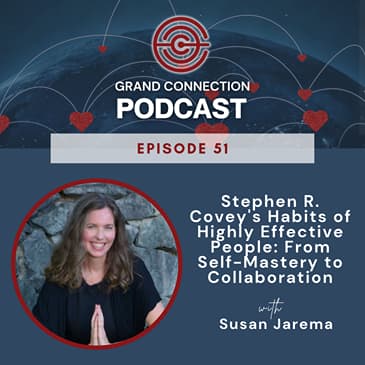
Are Stephen R. Covey's principles from The 7 Habits of Highly Effective People still relevant for today's entrepreneurs? Susan Jarema revisits this business classic alongside The 8th Habit and The 3rd Alternative, exploring nine principles that connect personal effectiveness with stronger relationships, meaningful networking, and collaborative business growth.
From taking responsibility for your choices and prioritizing what matters to thinking win-win, listening with curiosity, and finding creative solutions together, Susan brings Covey's ideas into today's business world. She also explores how neuroscience, mindfulness, and meta-awareness can help entrepreneurs move beyond understanding these principles to practicing them in everyday conversations, decisions, and partnerships.
Discover how small, intentional actions can strengthen trust, support sustainable growth, and create opportunities that wouldn't be possible alone.
What You’ll Hear:
- Why Stephen R. Covey's original seven habits remain relevant in a world of AI, distractions, and virtual networking.
- How self-mastery and intentional follow-up can transform the way entrepreneurs build relationships.
- What thinking win-win and listening to understand reveals about meaningful referrals and trust.
- Why protecting your energy and recognizing your unique contribution matter for sustainable business growth.
- How Covey's third alternative opens the door to collaboration beyond competing ideas.
Additional Resources Mentioned in this Episode:
Lead Magnet Guide - A Grand Connection resource that walks entrepreneurs through creating an effective lead magnet that showcases their expertise and attracts potential clients. https://grandconnection.ca/lead-magnets-guide-workbook/
Free Neuroscience Starter Kit - A resource which includes recorded masterclass, and a 1:1 Neuro coaching session to experience brain networking switching. https://community.grandconnection.ca/neuro
Meet the Host: Susan Jarema
Susan Jarema is a marketing strategist, internetologist, and founder of The Grand Connection. She helps entrepreneurs grow through collaboration, smart strategy, and high-impact digital presence. Susan is also president of New Earth Marketing, where she builds brands, websites, and ecosystems designed for real growth.
Connect with Susan and the Grand Connection Community:
Website: https://grandconnection.ca/
Facebook Group: https://www.facebook.com/groups/grand.connection
Facebook: https://www.facebook.com/GrandConnectionCommunity
Instagram: https://www.instagram.com/grandconnection.ca/
LinkedIn: linkedin.com/company/66749100
Youtube: https://www.youtube.com/channel/UCxq03yde7nb57HKV1hhztYA
Lead Magnet Workbook https://grandconnection.ca/lead-magnets-guide-workbook/
Access your Grand Growth Bundle and Free Guest Pass: https://grandconnection.ca/gifts
We are proud to have Grand Connection Podcast on the High Vibe Podcast Network. Grab your free gift from Susan in our Our High Vibe Gift Vault.
Love this show? Check out the other shows on the High Vibe Podcast Network.
Share the Love
✨ If this episode lit something up in you… tag us on Instagram @HighVibeLeaders and @GrandConnection, let us know your biggest takeaway!
🦋 Don’t forget to rate & review — it helps us reach more conscious rebels like you.
🔊 Listen & Subscribe
🎧 Spotify
Welcome to the Grand Connection Podcast, your
Susan Jarema:home for grand growth through collaboration. This is your
Susan Jarema:space to connect, create, and collaborate in a community of
Susan Jarema:heart-centered entrepreneurs and change makers. Hosted by our
Susan Jarema:community, this podcast brings collaboration to life. You will
Susan Jarema:meet members who share their wisdom, offer insights and
Susan Jarema:practical tips, and even interview each other. If you're
Susan Jarema:ready for more clarity, stronger connections, and better results
Susan Jarema:in your business, you are in the right place. Listen in, connect
Susan Jarema:with us, and be part of something grand.
Susan Jarema:Welcome to the Grand Connection podcast, where we explore how
Susan Jarema:meaningful relationships, continuous learning, and
Susan Jarema:collaboration can help us grow our business and create a
Susan Jarema:greater impact. I'm Susan Jerema, co-founder of the Grand
Susan Jarema:Connection, and I was recently sorting through my bookshelf
Susan Jarema:when I came across another business classic, Stephen R.
Susan Jarema:Covey's *The Seven Habits of Highly Effective People*. This
Susan Jarema:was first published in 1989, and this book was written long
Susan Jarema:before social media, virtual networking, and AI became part
Susan Jarema:of everyday business life. It got me thinking: Are Covey's
Susan Jarema:principles still relevant, or are they even more relevant
Susan Jarema:today? As I revisited his work, I was struck by how closely his
Susan Jarema:ideas connect with what we're doing at the Grand Connection,
Susan Jarema:particularly around self-mastery, building
Susan Jarema:meaningful relationships, and collaboration. Covey didn't stop
Susan Jarema:at seven habits. He later introduced an eighth habit in
Susan Jarema:2004, focused on finding your voice and inspiring others to
Susan Jarema:find theirs. He also explored the third alternative. I think
Susan Jarema:that was 2011, a way of moving beyond competing ideas to
Susan Jarema:creating something better together. So today we're
Susan Jarema:exploring nine principles drawn from three of his books. The
Susan Jarema:first seven are Covey's original habits. The eighth comes from
Susan Jarema:the eighth habit, and our ninth principle is inspired by the
Susan Jarema:third alternative. And I'll try to share some practical examples
Susan Jarema:for entrepreneurs and connect these ideas to what we're
Susan Jarema:learning at the Grand Connection and through our Neuroscience of
Susan Jarema:Communication and Connection Self Mastery Program, because
Susan Jarema:knowing what we should do and actually doing it are two very
Susan Jarema:different things. Let's rediscover this classic
Susan Jarema:together.
Susan Jarema:So before we dive in, let's take a quick look at all nine
Susan Jarema:principles. Covey's original seven habits are: one, be
Susan Jarema:proactive; take responsibility for your choices; two, begin
Susan Jarema:with the end in mind; know what you want to accomplish; three,
Susan Jarema:put first things first; prioritize what matters most.
Susan Jarema:Four, think win-win. Look for mutual benefit. Five, seek first
Susan Jarema:to understand, then be understood. Listen before trying
Susan Jarema:to persuade. Six, synergize. Combine strengths to create
Susan Jarema:something better together. And seven, sharpen the saw.
Susan Jarema:Continually renew yourself to sustain your effectiveness.
Susan Jarema:Then, from his later work, we're adding two more principles.
Susan Jarema:Number eight, find your voice and inspire others to find
Susan Jarema:theirs. Discover your unique contribution and help others
Susan Jarema:develop theirs. And number nine, explore the third alternative.
Susan Jarema:Move beyond competing ideas to discover a better solution
Susan Jarema:together. What I love about this progression is that it starts
Susan Jarema:with personal responsibility and self mastery, moves into
Susan Jarema:relationships and trust, and ultimately leads us towards
Susan Jarema:creative collaboration. So let's start with the first three
Susan Jarema:habits, which Covey called the private victory. Covey's first
Susan Jarema:three habits focus on learning how to lead ourselves before we
Susan Jarema:try to lead others, and as entrepreneurs, that's
Susan Jarema:particularly important. One, be proactive. Covey's first habit
Susan Jarema:encourages us to take responsibility for our choices
Susan Jarema:and focus on what we can influence. Think about
Susan Jarema:networking. Have you ever attended an event, met some
Susan Jarema:wonderful people, and then wondered why nothing came of it?
Susan Jarema:Perhaps nobody followed up. Maybe you didn't receive a
Susan Jarema:referral. It's easy to think that networking event didn't
Susan Jarema:work, but what if you approached it differently? Instead of
Susan Jarema:waiting for someone else to take the next step, you could reach
Susan Jarema:out and say, "Hey, I really enjoyed meeting you. Would you
Susan Jarema:be open to a short conversation to explore how we might support
Susan Jarema:each other?" You can't control whether someone. Responds or
Susan Jarema:refers you, but you can control your preparation, communication,
Susan Jarema:and follow up. Unfortunately, Covey never introduced a habit
Susan Jarema:called make other people reply to your emails, or even more
Susan Jarema:commonly lately, look in their spam folder. But you can make a
Susan Jarema:note yourself to reach out again, or use a different method
Susan Jarema:of communication that maybe they will see, and I like to message
Susan Jarema:them on LinkedIn.
Susan Jarema:And I may say, "Hey, did you see the email I sent?" So find a way
Susan Jarema:to reconnect in a way that they will notice it. It is an
Susan Jarema:increasingly busy world of communication and notifications,
Susan Jarema:so you need to be noticed. One of the concepts we explore in
Susan Jarema:our neuroscience of communication and connection
Susan Jarema:self mastery program is meta awareness. Simply put, it's
Susan Jarema:recognizing what's happening in our own minds while it's
Susan Jarema:happening. Imagine someone challenges your idea during a
Susan Jarema:meeting. You immediately feel defensive, but instead of
Susan Jarema:interrupting, you notice that reaction. Pause and ask, "That's
Susan Jarema:interesting. Can you tell me more?" The situation hasn't
Susan Jarema:changed, but your response has. Meta awareness gives us an
Susan Jarema:opportunity to recognize automatic reactions and make
Susan Jarema:more intentional choices. That's a practical way to become more
Susan Jarema:proactive. And your takeaway from this is to focus on what
Susan Jarema:you can influence and become more aware of how you respond.
Susan Jarema:The second one is begin with the end in mind. Covey's second
Susan Jarema:habit encourages us to get clear on what we want to accomplish
Susan Jarema:before we begin. How often do we attend networking events without
Susan Jarema:a clear intention? We actually always put a slide up at the
Susan Jarema:beginning of our big mixer saying, "What's your intention
Susan Jarema:today? Think about it. Write it down. Share it in the chat." We
Susan Jarema:show up, introduce ourselves, exchange contact information,
Susan Jarema:and hope something happens. But imagine you're a business coach
Susan Jarema:who helps entrepreneurs launch their businesses. Instead of
Susan Jarema:trying to sell to everyone, you might intentionally connect with
Susan Jarema:accountants, web designers, and marketing professionals who
Susan Jarema:serve the same audience.
Susan Jarema:These people could become valuable referral or
Susan Jarema:collaboration partners. Your goal isn't necessarily to find a
Susan Jarema:client at the event; it's to identify relationships worth
Susan Jarema:developing. And what ends up happening is when you're looking
Susan Jarema:for people to be collaboration partners, if somebody actually
Susan Jarema:is a potential client. They're most likely going to reach out
Susan Jarema:and want to connect with you because they're looking to solve
Susan Jarema:their problem. So you end up getting clients along the way.
Susan Jarema:And here's another perspective from self mastery: before
Susan Jarema:entering a meeting, ask yourself, "How do I want to show
Susan Jarema:up?" Perhaps your intention is to listen with curiosity, make
Susan Jarema:someone feel welcome, or discover how you can help. When
Susan Jarema:we set an intention, we have something to return to when our
Susan Jarema:attention wanders. So your takeaway here on this one is to
Susan Jarema:get clear about your destination on how you want to show up along
Susan Jarema:the way, making a plan with the end in mind comes up a lot in my
Susan Jarema:world. For example, with the grand giveaway, we have usually
Susan Jarema:a workshop on creating lead magnets, and I work with people
Susan Jarema:on thinking through what is the real goal of the lead magnet to
Susan Jarema:get new clients. Right? You want a lead magnet to showcase your
Susan Jarema:expertise, give an immediate win, and ultimately show the
Susan Jarema:user who's consuming your lead magnet that you are there to
Susan Jarema:help with the next steps in their journey and solve a
Susan Jarema:problem for them. So, building your lead magnet, thinking about
Susan Jarema:the end will help you craft the right content to share with them
Susan Jarema:immediately, an earlier part of the buyer's journey. And I'm
Susan Jarema:going to make sure to add into the show notes our lead magnet,
Susan Jarema:lead magnet that walks you through making a really powerful
Susan Jarema:lead magnet, so you can grab that there.
Susan Jarema:Number three is put first things first. The third habit is about
Susan Jarema:prioritizing what's important rather than continually reacting
Susan Jarema:to what's urgent. As entrepreneurs, our days can
Susan Jarema:quickly fill with emails, notifications, client requests,
Susan Jarema:and unexpected problems. But what about the important
Susan Jarema:activities that don't have immediate deadlines: building
Susan Jarema:relationships, developing new skills, planning for the future,
Susan Jarema:taking care of ourselves. These are often the activities that
Susan Jarema:create long-term growth, yet they're easy to postpone. You
Susan Jarema:sit down to work on your most important project, and suddenly
Susan Jarema:your answer. Emails, updating your website, or researching a
Susan Jarema:new AI tool. Three hours later, you've accomplished everything
Susan Jarema:except for what you sat down to do. Here's an example: You
Susan Jarema:attend a networking event and meet five interesting people,
Susan Jarema:but when you return to your desk, your inbox takes over. Two
Susan Jarema:weeks later, you realized you never followed up. What if you
Susan Jarema:schedule 30 minutes after every networking event specifically
Susan Jarema:for follow up? Suddenly, relationship building becomes
Susan Jarema:part of your business development system.
Susan Jarema:AI and automation can help us organize meeting notes, track
Susan Jarema:contacts, and remember follow up. Technology doesn't replace
Susan Jarema:relationships. It can help us make time to nurture them, and
Susan Jarema:meta awareness helps us notice when we become distracted and
Susan Jarema:redirect our attention towards what matters. Steve Brosman at
Susan Jarema:Our Mixers often reminds people to schedule an appointment with
Susan Jarema:yourself to ensure that you have undistracted time to follow up
Susan Jarema:after our mixers, and you can listen to our mixer talks here
Susan Jarema:in the podcast. So feel free to go back to the most recent one.
Susan Jarema:I know he talked a lot about it, and that was one of the big
Susan Jarema:takeaways people had at that event. I also make sure that I
Susan Jarema:schedule in my yoga and a walk every day, so that I fit in my
Susan Jarema:own wellness as a priority. So for your takeaway, don't let the
Susan Jarema:urgent continually crowd out the important. Now we move into what
Susan Jarema:Covey called the public victory. Habits four through six focus on
Susan Jarema:working effectively with others. This is where his work connects
Susan Jarema:beautifully with the Grand Connection. Think win-win. This
Susan Jarema:is my favorite Covey principle, and it's central to why I
Susan Jarema:created the Grand Connection. I believe we need to move away
Susan Jarema:from the idea that business always has to be a competition
Susan Jarema:where one person wins and someone else loses. What if we
Susan Jarema:asked, how can we both benefit?
Susan Jarema:And even better, how can we create value for everyone
Susan Jarema:involved? Imagine you're a business coach and someone asks
Susan Jarema:you to recommend a marketing consultant. You know two
Susan Jarema:excellent consultants. One has referred several clients to you.
Susan Jarema:The other hasn't referred anyone, but they're a better fit
Susan Jarema:for this particular client. Who should you recommend? If you're
Susan Jarema:thinking transactionally, you might choose the person who has
Susan Jarema:sent you business. But if you're focused on creating genuine
Susan Jarema:value, you will recommend the person who is the best fit.
Susan Jarema:You're supporting the client, helping the right professional,
Susan Jarema:and strengthening your reputation as a trusted
Susan Jarema:connector. That's a sustainable approach to referrals. And I
Susan Jarema:would add in having a one-on-one again with that consultant you
Susan Jarema:sent that referral to to strengthen your relationship.
Susan Jarema:Maybe you two become the best referral partners ever, at the
Susan Jarema:Grand Connection, we call this Grand Giving. We lead with
Susan Jarema:value, build trust, and look for ways to support each other's
Susan Jarema:success. But win-win doesn't mean giving endlessly or saying
Susan Jarema:yes to every opportunity. We win doesn't mean I do all the work
Susan Jarema:and you win twice. Healthy relationships respect everyone's
Susan Jarema:time, expertise, and resources. Sometimes the best decision is
Susan Jarema:recognizing that a partnership isn't the right fit. So your
Susan Jarema:takeaway for this principle is: look for mutual benefit without
Susan Jarema:sacrificing your values or boundaries. Number five is seek
Susan Jarema:first to understand, then to be understood.
Susan Jarema:This principle is foundational to meaningful networking. How
Susan Jarema:often have you attend an event where someone immediately
Susan Jarema:launches into their elevator pitch? They tell you what they
Susan Jarema:do, what they're selling, and why you should buy it, but they
Susan Jarema:haven't asked you a single question. They don't know what
Susan Jarema:you need. Have you ever met someone who delivers a 32nd
Susan Jarema:elevator pitch that somehow became five minutes, and by the
Susan Jarema:time they're finished, you can't even remember their name? Now
Susan Jarema:imagine a different conversation. You met someone
Susan Jarema:and asked, "What are you working on right now? What's one
Susan Jarema:challenge you're trying to solve? Who would be a valuable
Susan Jarema:connection for you? You listen, ask follow-up questions, and
Susan Jarema:become genuinely curious. Suppose you meet a speaker who
Susan Jarema:tells you they're struggling to get booked. You immediately
Susan Jarema:think, "I know someone who organizes conferences." But if
Susan Jarema:you ask a few more questions, you might discover they're
Susan Jarema:specifically looking for paid speaking opportunities with
Susan Jarema:corporate audiences. That changes everything. Now you can
Susan Jarema:make a much more intentional referral, and I'd probably
Susan Jarema:suggest they come to the Grand Speakers Group, where everyone
Susan Jarema:is trying to get paid speaking opportunities, and they can
Susan Jarema:learn from each other there. At the Grand Connection, we often
Susan Jarema:say value first, sales second. Understanding comes before
Susan Jarema:offering. We all know listening is important, but knowing we
Susan Jarema:should listen and actually being fully present are different.
Susan Jarema:Think about your last networking conversation. Were you truly
Susan Jarema:listening, or were you mentally preparing your next question,
Susan Jarema:thinking about your business, or waiting for an opportunity to
Susan Jarema:explain what you do.
Susan Jarema:Now we have arrived at a principle that captures the
Susan Jarema:heart of collaboration. Synergy is about bringing different
Susan Jarema:strengths and perspectives together to create something we
Susan Jarema:couldn't achieve in the same way alone. It's not simply dividing
Susan Jarema:the work; it's discovering what's possible when we combine
Susan Jarema:our abilities. Imagine you're planning a retreat. You're an
Susan Jarema:excellent coach and facilitator, but you're not particularly
Susan Jarema:interested in managing logistics, booking venues, or
Susan Jarema:promoting the events. You could try to do everything yourself,
Susan Jarema:or you could collaborate. Perhaps you partner with a
Susan Jarema:retreat organizer who loves logistics. A wellness
Susan Jarema:professional provides complementary experiences. A
Susan Jarema:marketing partner helps reach the right audience, and a
Susan Jarema:community leader introduces the retreat to people who would
Susan Jarema:benefit. Together, you could create a more valuable
Susan Jarema:experience than any one person could provide alone. But
Susan Jarema:successful collaboration requires more than complementary
Susan Jarema:skills. It also requires the ability to work with different
Susan Jarema:perspectives. Imagine your partner suggests an approach you
Susan Jarema:don't agree with. Your immediate reaction might be that won't
Susan Jarema:work. I know I used to do this all the time, actually. So I
Susan Jarema:really have listened to this one, but what if you notice that
Susan Jarema:reaction and ask, "What are you seeing that I'm not seeing?"
Susan Jarema:That's meta awareness in action. We don't have to agree with
Susan Jarema:everyone, but we can remain open long enough to genuinely
Susan Jarema:consider another possibility, and sometimes the other
Susan Jarema:possibility is better. Your takeaway for this principle is
Susan Jarema:to ask yourself, what could we accomplish together that would
Susan Jarema:be difficult to accomplish alone? So now I'm going to move
Susan Jarema:on to part three: renewal and self-mastery. Covey's seventh
Susan Jarema:habit reminds us that we need to continually renew ourselves.
Susan Jarema:It's sharpen the saw. He identifies four dimensions:
Susan Jarema:physical, mental, social, and emotional. Those are together,
Susan Jarema:and spiritual. Think about an entrepreneur who attends every
Susan Jarema:networking event, answers emails late at night, and says yes to
Susan Jarema:every opportunity. Eventually, their energy begins to decline.
Susan Jarema:You remember my nibble stories earlier on. They become less
Susan Jarema:patient, less creative, less present. This is particularly
Susan Jarema:important for heart-centered entrepreneurs because we often
Susan Jarema:love helping people. But there's a difference between giving
Susan Jarema:generously and overgiving. Imagine you're attending five
Susan Jarema:networking events every week, and I know people who do a lot
Susan Jarema:more. You're meeting lots of people, but you don't have time
Susan Jarema:to follow up. You're exhausted, and your business isn't growing
Susan Jarema:as expected. What if you attended two carefully selected
Susan Jarema:events instead, and you could use the remaining time for
Susan Jarema:deeper conversations, exercise, learning, or simply recharging.
Susan Jarema:You might discover that doing less creates better results.
Susan Jarema:Sometimes the most productive thing you can do is close your
Susan Jarema:laptop. Although, if you're like me, you might need to remind
Susan Jarema:yourself that closing the laptop doesn't mean checking your email
Susan Jarema:on your phone, self mastery is really a daily practice.
Susan Jarema:This principle connects beautifully with our
Susan Jarema:neuroscience of communication and connection self mastery
Susan Jarema:program. We spend so much time developing business skills and
Susan Jarema:learning new technology, but how much time do we spend developing
Susan Jarema:our ability to manage our attention, recognize our
Susan Jarema:reactions, and communicate intentionally. One thing Ray
Susan Jarema:McCauley, our neuro trainer at the program, emphasizes is that
Susan Jarema:mastery isn't something you practice for an hour and then
Susan Jarema:forget about it. It's something you can bring into everyday
Susan Jarema:moments. Before a meeting, take a mindful minute during a
Susan Jarema:conversation. Notice when your attention wanders. When you feel
Susan Jarema:frustrated, recognize the reaction before responding. We
Susan Jarema:call these opportunities aware seconds. Small moments of
Susan Jarema:awareness repeated throughout the day. Think of it as
Susan Jarema:developing a habit of checking in with yourself. Your takeaway
Susan Jarema:for this principle is sustainable grand growth begins
Susan Jarema:with taking care of the person creating it. So on to part four,
Susan Jarema:from effectiveness to greatness. Number eight is finding your
Susan Jarema:voice. And inspiring others to find theirs. Covey introduced
Susan Jarema:this principle in his later book, The Eighth Habit: From
Susan Jarema:Effectiveness to Greatness. It's about discovering your unique
Susan Jarema:contribution and helping others discover theirs. As
Susan Jarema:entrepreneurs, we often compare ourselves to others. We study
Susan Jarema:their websites, marketing strategies, their offers, and
Susan Jarema:sometimes without realizing it, we begin copying what everyone
Susan Jarema:else is doing. But what makes your business valuable is your
Susan Jarema:unique combination of experience, expertise,
Susan Jarema:strengths, and perspective. Imagine three business coaches.
Susan Jarema:One specializes in helping entrepreneurs gain confidence,
Susan Jarema:another helps established business owners build systems,
Susan Jarema:and a third helps purpose-driven entrepreneurs develop
Susan Jarema:collaborative opportunities.
Susan Jarema:They're all business coaches, but their unique contributions
Susan Jarema:are different. When each communicates that distinction
Susan Jarema:clearly, it becomes easier for others to recognize when to
Susan Jarema:refer someone to them, but Covey's eighth habit doesn't
Susan Jarema:stop there. It encourages us to help others find their voices
Susan Jarema:too. At the Grand Connection, we might invite a new member
Susan Jarema:tribute to a Grand Group. Perhaps someone recognizes their
Susan Jarema:expertise and encourages them to lead a workshop. Eventually,
Susan Jarema:they might become a speaker or a collaboration partner. They're
Susan Jarema:gaining confidence and visibility, and the entire
Susan Jarema:community benefits. Self mastery also plays a role here. Meta
Susan Jarema:awareness helps us notice when we're caught up in comparison or
Susan Jarema:self criticism. Instead of automatically believing every
Susan Jarema:thought, we can step back and consider whether it's helping us
Susan Jarema:move towards our goals. And your takeaway is: discover what makes
Susan Jarema:your contribution unique and help others recognize the value
Susan Jarema:of theirs. So, part five is the third alternative. So I'm
Susan Jarema:calling this number nine. Create something better together. Our
Susan Jarema:ninth principle comes from Covey's later book, The Third
Susan Jarema:Alternative. This isn't an official ninth habit. It's an
Susan Jarema:extension of his thinking about synergy and creative
Susan Jarema:cooperation. The idea is that when two people disagree, they
Susan Jarema:don't necessarily have to choose between one person's solution
Susan Jarema:and the others. They can discover a third possibility,
Susan Jarema:something neither person initially considered. Imagine
Susan Jarema:two entrepreneurs planning an event. One wants a large virtual
Susan Jarema:summit to reach a global audience, and the other wants an
Susan Jarema:intimate in-person workshop because she values deeper
Susan Jarema:connections. They disagree, but instead of arguing about which
Susan Jarema:format is better, they ask, "What are we both trying to
Susan Jarema:accomplish?" They discover that one wants greater reach, and the
Susan Jarema:other wants meaningful engagement. Perhaps they could
Susan Jarema:host a virtual summit, followed by a smaller in-person workshop,
Susan Jarema:or create local watch parties where participants act while
Susan Jarema:attending the virtual event. Suddenly, they're not choosing
Susan Jarema:between two competing ideas; they're designing something that
Susan Jarema:addresses both goals. And here's where self-mastery becomes
Susan Jarema:valuable again. The third alternative requires us to
Susan Jarema:recognize when we're attached to being right. Can I notice that
Susan Jarema:I'm becoming defensive? Can I become curious about what my
Susan Jarema:partner is trying to achieve? Instead of asking how do I
Susan Jarema:convince this person, we can ask what haven't we considered yet?
Susan Jarema:Now this connects directly to our SEN collaboration ladder at
Susan Jarema:the Grand Connection. Ascend stands for A.
Susan Jarema:Authentically connect, S. Strengthen trust and discover
Susan Jarema:alignment. C. Cultivate referral readiness, and we got a whole
Susan Jarema:episode on that 1e. Exchange referrals and opportunities, N.
Susan Jarema:Nurture and test partnerships, and finally D deepen the
Susan Jarema:collaboration. The idea is simple: we don't need to jump
Susan Jarema:from meeting someone to launching a major joint venture.
Susan Jarema:We build trust, explore opportunities, and develop
Susan Jarema:partnerships one step at a time. And remember, not every
Susan Jarema:connection needs to become a collaboration. Sometimes a
Susan Jarema:trusted colleague or referral partner is exactly the right
Susan Jarema:relationship. So your takeaway here is: instead of asking whose
Susan Jarema:idea should we choose, ask what better possibility haven't we
Susan Jarema:discovered yet? So I'd like to bring this all together. So what
Susan Jarema:can we learn from these nine principles? I see a beautiful
Susan Jarema:progression. First, we develop ourselves. We take
Susan Jarema:responsibility for our choices, clarify our goals, and
Susan Jarema:prioritize. What matters. Then we learn to work effectively
Susan Jarema:with others. We seek mutual benefit, listen to understand,
Susan Jarema:and combine our strengths. We recognize that we need to renew
Susan Jarema:ourselves to sustain our growth.
Susan Jarema:We discover our unique contribution and encourage
Susan Jarema:others to develop theirs. And finally, we move beyond simply
Susan Jarema:cooperating to creating entirely new possibilities together. But
Susan Jarema:here's what I find particularly exciting about bringing
Susan Jarema:neuroscience, mindfulness, and self mastery into this
conversation:we can understand the importance of priorities,
conversation:yet spend our entire day reacting to distractions. I am
conversation:still working on this all the time. That's why developing meta
conversation:awareness is so valuable. It helps us recognize what's
conversation:happening in the moment and gives us an opportunity to put
conversation:our principles into practice. And I see this as a natural
conversation:progression through our grand connection, connect, create,
conversation:collaborate framework. Connect is develop self-awareness.
conversation:Listen to understand and build trust. Create, think win-win.
conversation:Discover shared goals, shared values, and explore
conversation:opportunities as the trust in the relationship builds, and
conversation:then collaborate. We combine strengths, test partnerships,
conversation:and create something greater together. And that's grand
conversation:growth through collaboration.
conversation:So before we finish, here's your challenge: choose just one of
conversation:these nine principles to practice this week, perhaps you
conversation:need to become more proactive with follow-up. Maybe you want
conversation:to listen more carefully during your next networking
conversation:conversation, or perhaps there's someone in your network with
conversation:whom you could explore a new collaboration. Whatever you
conversation:choose, take one small action and add one more element.
conversation:Practice meta awareness while you're doing it. Notice what
conversation:happens in your mind when you're following up.
conversation:Do you hesitate because you're worried about rejection? If
conversation:you're listening to someone, do you notice yourself preparing
conversation:your next response? If you're collaborating, do you become
conversation:attached to your own ideas? Simply notice, pause, and choose
conversation:how you want to respond. Because understanding a principle is
conversation:valuable, but practicing it is what creates change. Thank you
conversation:for joining me today for this exploration of Stephen Covey's
conversation:principles, and I know today's episode has probably inspired
conversation:you to look for your copy of this classic to reread. And I
conversation:hope it's also inspired you to become more intentional in your
conversation:business, strengthen your relationships, and discover new
conversation:opportunities through collaboration. If today's
conversation:conversation about meta awareness and intentional
conversation:communication has sparked your curiosity. I'd love to invite
conversation:you to explore our neuroscience of communication and connection
conversation:self mastery program. Together in intimate groups with Ray
conversation:McCauley, we're exploring how the brain works, how to create
conversation:greater meta awareness, and how to apply practical techniques to
conversation:everyday conversations. You can explore the program and get our
conversation:free neuroscience kit at GrandConnection.ca/neuro. And if
conversation:you'd like to meet other heart-centered entrepreneurs and
conversation:potential collaboration partners, join us at an upcoming
conversation:Grand Mixer or one of our groups.
conversation:Grab your guest pass and Grand Growth Bundle at
conversation:GrandConnection.ca/gifts. If you enjoyed today's episode, please
conversation:subscribe to the Grand Connection podcast and share it
conversation:with someone who loves personal development, meaningful
conversation:networking, or collaborative business growth. Until next
conversation:time, keep connecting, creating, and collaborating, and keep
conversation:creating something grand.