What if your emotions weren't something to control—but something to understand?
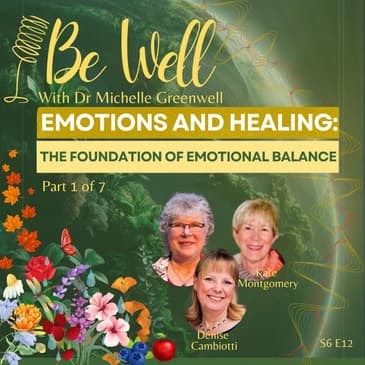
In this first episode of our new Emotions & Healing series, Dr. Michelle Greenwell, CIH BioEW welcomes Kate Montgomery, HHP, ND, and Denise Cambiotti, HCD, CIH BioEW, for an inspiring conversation that lays the foundation for understanding emotional wellbeing through the Five Element Theory, Touch for Health, and the BioEnergetic Wellness Formula.
Together we explore:
🍃 The Five Element Theory and emotional balance
🍃 The Central (Conception) Vessel and Governing Vessel meridians
🍃 The Shen and Ko Cycles
🍃 Why emotions are messages—not mistakes
🍃 How posture, movement, muscles, and emotions work together
🍃 Simple concepts that help build resilience and lifelong wellbeing
🍵 Tea with Intentions
Today's featured blend from the Cape Breton Tea Company is Awesome Island Passion, chosen to support the Central and Governing Vessels.
Featured herbs include:
🌿 Lemon Balm – encouraging emotional clarity, calm, and harmony
🍓 Strawberry Leaf – promoting grounding, nourishment, and self-trust
Affirmation:
"The bounty of summer sunshine grounds us year-round."
Take a moment to prepare your favourite cup of tea, breathe deeply, and join us for this thoughtful conversation.
Continue Your Wellness Journey
🌿 Explore the Artfilled Wellness Retreat
🌿 Learn Touch for Health Level 1
🌿 Discover the Movement Mastery Program
🌿 Visit the Greenwell Center for Holistic Health for courses, podcasts, wellness resources, and events.
Find Kate Montgomery at katemontgomery@me.com
Find Denise Cambiotti at www.muscletuners.ca
If this episode inspired you, please:
👍 Like
💬 Leave a comment
🔔 Subscribe
📤 Share with someone who could benefit from understanding the wisdom of their emotions.
Healing begins with awareness.
Awareness inspires intention.
Intention leads to action.
Action practiced consistently becomes resilience, balance, and a lifetime of living well.
#EmotionsAndHealing #FiveElementTheory #TouchForHealth #BioEnergeticWellness #EmotionalWellbeing #EmotionalResilience #MovementMastery #TeaWithIntentions #HolisticHealth #IntegrativeHealth #SelfCare #DrMichelleGreenwell #KateMontgomery #DeniseCambiotti
Each episode of the Be Well with Dr. Michelle Greenwell podcast includes the BioEnergetic Wellness Formula. That means that you have the opportunity to have a healing session while you listen based on the way the content is laid out and the activities we participate in. Before listening you can create a goal or an intention of where you would like to be heading with an activity or in your life, then make your cup of tea, engage in the activities and celebrate at the end.
Are you looking for more resources? The best way to find all the resources in one location is by visiting https://linktr.ee/greenwellcenter. Become a regular listener of the podcast and purchase your own tea blends to assist you in transformation while you listen. Our podcast is designed to bring balance and flow to your day, week, month, and year. Thanks for sharing us with others who could also benefit. Please send us your feedback and a review.
Dr. Michelle Greenwell, BA Psych, MSc CAM, Ph. D CIH (Complementary and Integrative Health). Striving to support the public to choose self-care and well-being options that create ease and flow in their lives, Michelle specializes in using movement to heal the body. Her BioEnergetic Formula for Success provides a means for everyone to set their intentions and create support and action for flow and ease to the goals. Learn more at www.greenwellcenter.com. Follow her YouTube channel and specialty playlists. Find her full resource list here. She highlights her Tea Company: The Cape Breton Tea Company which you can find at www.capebretontea.ca. Included is the specialty line of Tea with Intention, Harmony Blends and Coaster, and the focus on high quality organic black, green, herbal, rooibos, and honeybush tea. Including tea with your podcast listening is a unique way to explore tea, create healthy habits, and have great conversations with friends and colleagues.
[00:00:06] Hi, this is the Be Well with Dr. Michelle Greenwell podcast. Our heartwarming conversation is designed to lift you on your wellness journey. Grab your cup of tea and enjoy the podcast.
[00:00:26] Welcome everyone to a new series on emotions and healing. And this is the first episode in a series that we're going to have seven this time, rather than a trilogy of three. We're going to expand our conversation and take ourselves in a little journey each week as to how you can start to understand how emotions, metaphors and the body are all linked together.
[00:00:54] The stories that we tell ourselves, the emotions that get pocketed and how the tissue responds to the way we're living our lives and the way things unfold for us. And as we step into these conversations, if you have not been listening to the previous episodes that we've done in this kind of relationship, I just want to bring forward the series that we did on understanding body pain and the other one on body maintenance and living wellness.
[00:01:20] So please check those out because they have some of the things we may be talking about today. We want to make sure you have all the information available to you. All right, as we step into this, we're going to look at how our posture, our physiology, our pain, our habits and our well being can all evolve around the way we're feeling, the thoughts we have in our mind, the way that we're looking at our life and how things are unfolding for us.
[00:01:49] And we want to explore this through the Chinese medicine theory about how the five elements work. And so we're going to talk a little bit about the background of that as well. Okay, before we do our deep dive into this, I want to give you a little bit of background on these two lovely people that are joining us today. Okay. So Denise Cambiotti has been involved in Touch for Health for several decades.
[00:02:16] And it's the basis by which she set up her company, Muscle Tuners International. And she does advanced training for body workers and lay people. She works with a system called SIPS, Stress Indicator Point System, which was created by Ian Stubbings and based on the work of Richard Ut before that. And also Life Enhancement Acupressure Protocols or LEAP, which was created by Dr. Charles Krebs.
[00:02:45] Denise has a deep understanding of the nature of the brain and its connection to the body and movement. And her programs at Muscle Tuners as well as Radiant Code Breakers is changing the way we're understanding and supporting the systems in the body. We're looking at the mind and the spirit and how all of this works together to be well and to be thriving.
[00:03:06] Her background includes extensive collaboration with physiotherapists, recreational therapists, massage therapists, and movement specialists. And she bridges the gap between physical technique and emotional regulation. Her gift is understanding how the meridian system, the muscle function, and emotional states are going to weave together. And she brings depth, clarity, and compassion, helping clients understand their emotions, that they're not problems.
[00:03:35] They're indicators of energy imbalance, and that we can be supported, redirected, and transformed. So, Denise, thank you for being here to continue these conversations. It's a pleasure to be here. Have a podium to talk about these things that are such a new idea for most people. Yes, and that's true.
[00:04:01] Old concepts come from thousands of years, but new conversations for so many that haven't heard them before. And then I'm going to introduce now Kate Montgomery. And Kate began her career as a respiratory therapist. Then she transitioned to becoming a holistic health practitioner, a certified sports massage therapist, a naturopathic doctor. And then she became a bioenergetic wellness professional and is an author.
[00:04:29] So, by integrating Touch for Health into her multidisciplinary practice, she became known for bridging Western medical insights with holistic, intuitive approaches to healing. And Kate's worked with elite performers, musicians, and high-level athletes, helping them to navigate stage fright, memory freezing, burnout, performance anxiety,
[00:04:53] emotional distress during training, imposter syndrome, and even emotional turbulence during retirement transitions. She understands how hydration, nervous system regulation, neurolymphatic points, and biofeedback support emotional resiliency and peak performance. Her work demonstrates that when emotions balance, the body will follow. And when the body balances, emotions soften.
[00:05:22] So, Kate, thank you for joining in again and bringing your wisdom to the table. And thank you for having me too. And as Denise said, it's an honor to be able to talk about this stuff. I've been doing this for 40 years. And when you go and you travel, which I have, it's amazing to me. Who doesn't know anything about this type of work? So, this is an honor to be able to talk about it.
[00:05:50] And hopefully whoever's tuning in will bring more people to the channels and listen to what we have to say. Because there's a lot here that everybody can do for themselves too. Perfect. Thank you, Kate. All right. You know that with the podcast, I always bring in a tea. And that is a way for us to relax, integrate some systems. And so, if you don't have a tea brew beside you, you might have a glass of water or a jug of water.
[00:06:20] In which case, you can infuse that water with the energy that we're going to cultivate now. And this is a way for you to get a healing session while you're listening. As well as some of the topics we bring up and the way we bring them up provides a way for your energy to shift. So, you may notice where your energy is at before you start this podcast. And then where you'll finish with it when you get to the end. So, I'm going to ask here, who am I going to go with? Kate, would you like to share what the tea is in your mug today?
[00:06:51] I had to laugh when I read the script. You chose similar herbs. Perfect. I know. So, before the snow hit and before the cold hit in, I cut my last lemon balm. So, I had lemon, a ton of it. I couldn't believe how much had grown in the cold, you know, before it got really cold. So, I had a whole bag of dried, that finally got dried, a lemon balm. And then I also cut lavender.
[00:07:21] So, I cut all my lavender buds for the last time over the bushes. And so, I infused the two of them together. So, it's very calming, soothing, and stimulating at the same time. So, it's a lavender and lemon balm. That's what I did today. Perfect. Perfect. Yep. You're feeding right into the recipe here with the Awesome Island Passion. And Denise, how about for you?
[00:07:50] What called me this morning is the Cape Breton autograph tea that you designed a series, a package of teas for Natalie McMaster. Which I am so impressed that that's going out on tour with her. And just how I just love being able to say, I knew Michelle when. In any case, I love it because it's got peppermint in it.
[00:08:18] But it's not overly so. You can taste the lemon that you have in there. So, I've got lemon going on there too today. Today's a big brain day. So, I like the ginkgo leaves in there. And then the apple and orange just softens and mellows the peppermint somehow. And the turmeric is there, but it's energetically there, but it's not spicy in any way.
[00:08:47] So, there's a bunch of other yummy things in there like strawberry leaves. And it just smells like a party going on. I love that. Beautiful. And I do enjoy the autograph. And I enjoy the affirmation that's on the autograph. Great. Let me read that one out. Each of us has unique gifts for others to treasure.
[00:09:13] Create your special signature for others to be inspired. And what a wonderful message for December here in the world where we're at. Yes. And also with the same idea too about, you know, as we're bringing this conversation forward, it has been that the knowledge has been around for thousands of years. It's been used in Chinese medicine with great, incredible results.
[00:09:42] And then when we think about how the more we share this knowledge, the more other people can be engaged with their self-care. What are they going to do with it? And that's what I love about the autograph tea is, what are your gifts going to do and what are they going to cultivate? Yeah.
[00:10:27] Okay. passion and this one has a little symbol in the corner which i'm just going to share so if you're listening and you're on the road and you can't see this i've got a little circle in the top corner and that's actually a time of day wheel and how the systems come into focus for energy based on the time of day we're not talking about that today but the tea was put together based on that
[00:10:50] the affirmation is the bounty of summer sunshine grounds us year round so as we're all staring at our snow-covered windows today we're all thinking about where the the summer has brought us and what it continues to cultivate for us in our mugs and i want to bring forward lemon balm so kate grows hers and was lucky enough to still be clipping and and drying it's a gentle nervine that calms the mind
[00:11:19] it brings emotional clarity it softens fears irritability and overthinking which i know a lot of people suffer from with all the stuff we're trying to deal with and spiritually it helps to release emotional noise bringing the heart and the mind back into harmony and then if we look at strawberry leaves these support grounding nurturing and inner sweetness helps to dissolve emotional tension
[00:11:45] that can be stored in the gut it encourages emotional honesty and self-trust and that's a big one for a lot of people and spiritually it reconnects us to simplicity and receives the nourishment we often deny ourselves now what i like to do is put the the interest of those two ingredients together so same what you were doing kate with you brought the lavender
[00:12:10] and you brought the lemon balm together they have a partnership and when we start to bring these recipes together we really can enhance the qualities of each which is the same as the three of us having a conversation bringing to the table all of our skills and our interests it brings about a new conversation new opportunity and that's what the tea is going to do so i encourage you to take a sip make sure you smell it first so you can
[00:12:39] get right into the limbic system and the motor system feel the warmth as that tea goes down and finds the core for you and then allow your emotional body to do an exhale and i know that's a different way of thinking about things but sometimes we forget to breathe or we're holding tight so here we go
[00:13:03] um and awesome is always like coming home one of one of my main blends in the uh 10 years of the company it's it's been our number one tea all right there we are we have the tea underway we have the herbs joining us in this conversation and now people are wondering what is this chinese medicine five element
[00:13:29] wheel that we're talking about the theory that that is so i'm going to ask denise to shed a light on how this five element wheel brings us into a different way of thinking about our health and wellness and the vitality in our day can you share a little bit about the system absolutely so hopefully the audience has some idea of the words of the phrase the five elements
[00:13:57] you go to stores and you'll see five element candle colors affirmations words you know people who want to work with the elements it's they may not have actually dabbled in any of that but most people have a little passing knowledge and the chinese or asian five elements they're different than the elements that are used in other
[00:14:27] systems um like uh help me out here the indian version arvedics they work with elements as well but they work with different ones um beautiful systems they're models they talk to us about
[00:14:50] how does energy move through the body what does it do for us what what do the elements represent and it looks at us holistically and i know today we're working pretty much thinking about emotions
[00:15:10] in relation to the elements and specifically the pairing of central vessel and governing vessel how these actually aren't part of the five elements they were brought into um the model because chiropractors were the one that were marrying how muscles were connected to organs through these meridian
[00:15:38] pathways how meridians are paired they're paired in systems that are called elements and they went well wait a minute we have elements for you know that represent all the organs some of the glands but what about the spine that's what we're really keen about what about the nervous system and so they searched a little bit deeper
[00:16:03] in chinese knowledge and found that central vessel suited the purpose beautifully in how it relates to the brain and how governing works beautifully with the spine and so together that's the nervous system we've got the central and the peripheral represented with those and that's as fancy as i'm going to get with that and we start here
[00:16:33] because the nervous system powers a lot of the energy in the body and i'm just gonna for those of you that are watching you're gonna see i'm displaying a chart and gotta move the little zoom bar out of the way a little bit is that blocking the screen by any chance for anybody okay great so here are the names of the elements if we start with the red one at the top
[00:17:03] fire and notice the arrow moves clockwise to earth and moves clockwise to metal moves over to water and then up to wood and wood feeds back into fire and the the study of this at a very basic level
[00:17:23] let me start with water water nourishes and grows plants and trees so now we've gone from water to wood and if you apply sparks the trees burn we have fire and then when they are reduced to ash they return to the earth
[00:17:45] and in the earth there's minerals and things like metals that we can um mine and shape and how metal can work to contain water and so there's these things called shen cycles and co cycles and they're just
[00:18:09] models to express how energy works within our system and if you notice on this chart there's also arrows that go let's skip an element so let's say from metal we can go to wood so you can form metal into a sharp axe and chop wood wood can control the earth by putting its roots down into the earth to stabilize it
[00:18:33] earth can form um um dikes or dams or you know structures to retain water in ponds or the borders of a stream and water controls fire obviously it can put it out and how fire controls metal by melting it so this is just very um introductory knowledge and in touch for health you don't need to understand
[00:19:02] this with 25 years of study i've taught a number of acupuncturists and i say by understanding how these flows go it and it identifies what acupressure points would be very powerful to activate and i kid you not some of them are going really can it be that simple and yes it can you just activate the points that are
[00:19:32] shown in the manual and it works and yes if you have more in-depth knowledge more understanding of the interaction and the interplay between them you can create different patterns to wake things up but i have trained some acupuncturists who've gone i've been beyond trying to understand the theory and this is so simple and i went simple sometimes is the best now look up at the top right where we have the
[00:20:00] governing vessel meridian and the central vessel meridian and these ones happen to have names of muscles they're attached to and i just wanted to bring your attention to that for a moment because today we are talking about governing and central and as we go on with the rest of our talks we're going to talk about earth individually apart from metal water wood and then this fire one is a
[00:20:27] little bit kind of interesting because there are four meridians so we're going to split those up into two so now we have the five elements split into two which is six and then we have this nervous system stuff going on so let me stop share there and just say ladies is that pretty much your knowledge of the very basics
[00:20:52] great and also when we work with elements there are representations i'm sure a lot of people have heard about yin and they've heard about yang and they don't really know what that means but they know that they're supposed to be in balance with one another and your background today michelle is perfect because you have the darker gray on the wall color on your room which represents the yin and the white of
[00:21:21] your mantle represents the yang and so thin things that are in tend to be have less sun on them things that are outside receive more sun they're a little bit lighter and brighter and all these are metaphorical in nature and i want to just talk for a moment about metaphors and here is something our audience can apply
[00:21:50] if you're out of balance emotionally if you can get energy unstuck why wouldn't we do it so for example central and governing has a lot to do with what's going on blocking our goals
[00:22:14] and it has a lot to do with trust and support and releasing burdens so if you're feeling burdened your lack of trust your lack of trust jump into the element wheel somewhere and let me just say let's start
[00:22:34] with fire the emotions related to fire element the major one is joy absolute joy and maybe you're stuck in an emotion and joy is the last thing you could connect with at the moment but ask yourself the question what is one thing that brings me joy it might not be right now in the moment but think of something that
[00:23:01] brings you joy and then move to the next element which is earth and earth has a lot to do with sympathy and empathy so in relation to where you're feeling stuck can you feel sympathy or empathy are you feeling too much do you need to back it off and then we move into the metal element which has a lot to do with
[00:23:29] guilt grief and regret and emotions are not negative or positive on their own it's a reaction to them so it is okay to feel guilt grief or regret just not get stuck in it recognize that if that's what you're feeling that's what you're feeling and then move to water which has a lot to do with fear and anxiety
[00:23:58] and in my world i see when water's out of balance regularly for people to me this is very metaphorically related to boundaries because the water element has um it's connected to the kidneys and the bladder and we
[00:24:18] are animals really and what do uh dogs do when you take them out for a walk they will mark their boundaries and so i have just come to recognize in my world that when this comes up repetitively it's out of balance for people take a look or do you have appropriate boundaries or not or do you have too much fear anxiety
[00:24:43] going on and if you do can you switch that to awe awe a-w-e like how awesome that you get to have these experiences in life then we bring it over to wood and wood is interesting because a lot of people are connected to the energy of anger and i like sometimes to say there's uh stronger emotions besides anger
[00:25:12] there's um rage and there's softer emotions like frustration and so when you hear anger it's not always oh your liver is out of balance and your wood elements out of balance yeah maybe but maybe it's not because of anger maybe it's just that everyday simmering frustration we have so what can you do to let it go recognize it and also i want to indicate anger is not a negative emotion if you're not punching
[00:25:41] somebody in the face if you're using anger to express what do you do like an idiot why do you step into my boundaries you're stepping on my lines you're you're affecting my life with what you're saying and doing and you're mad at somebody and they go i had no idea sorry um isn't that positive then
[00:26:09] so just metaphorically think about the different flavor of emotions that you drift through in the day just naturally we often go in and out of emotions every minute and a half and if you feel stuck in any of them pick something else and ask yourself a question where in my life today could i feel more joy where could i feel more empathy where could i feel more awe for example where could i feel more courage
[00:26:39] so i'll just stop there because this isn't a whole class and i have to let the rest of you speak but the model of the five elements just looking at the emotions of them so rich thank you denise and and as people are listening and thinking about it how easy was that when you said think of something
[00:27:06] joyful and it's like oh and you've already forgotten where you're standing because you're you're already forward into what is my next thought and that's one of the key things about working with these ideas is that it can be instantaneous and it doesn't mean you have to find somebody else to support you with it you can do this on your own so i'm going to shift our gear a little bit now that we've got that
[00:27:33] background and i'm going to ask kate about her experience with emotions because she's worked with the elite athletes and performers who will have tremendous emotional pressure one and how to do their performance whether they're satisfied with what they did their outcomes it can be quite a journey for them and i know with your experience with emotions and patterns you're dealing with lots of fear doubt
[00:28:01] anxiety can you share some of the experiences and what these tools have meant for you to be able to support athletes well thank you denise for the background uh it's a good thing that people will know that part of it to know again science and there is stuff behind it um one of the things you know
[00:28:26] i've worked with a lot of elite athletes musicians um over the years and back in the 80s 90s i was privileged to work with some top track and field athletes and one of the things that you learn about them
[00:28:46] is that they are in another dimension they are on a different level than we are they are so in tuned with their body that they can make the slightest adjustments in a heartbeat because they know it doesn't feel right when i first went to
[00:29:09] um a competition as a sport as a sports therapist massage therapist up in san jose and it was a trials for the olympics it was in track and i happened to like many of us that were lined up there with our tables working on these athletes and you
[00:29:28] you find that as incredible as they are they tend to have this ability to compensate um to the degree that's amazing and then they compete and they win or they come in in place but when you start when i added touch for health
[00:29:52] to my repertoire of things that i could do and start to monitor the muscles specifically that i had time for it that in the short amount of time that we had you get to see what's out of balance and how in the heck they're doing it i don't know but as i got to know them and understand they became more fine-tuned
[00:30:18] and i think that's what muscle any of the stuff from touch for health does no matter what part of it it is there's a fine tuning that it does and when you can deliver that to a musician or an athlete and anybody that's of that caliber they click they they just grab it and they can take it and run like crazy and
[00:30:44] you know those are the things so that when you look at the water element and the large intestine and you look at metal and you look at all the different elements but you also look what's part of them you start doing the muscle response with the specific muscles that they need to work the best
[00:31:09] and the most efficient for say running uh if we use water as this one which we were talking about latonya was a 400 meter hurdler and one of the things that you have to do is you have to have a psoas muscle that works because you're lifting your legs so high and it's the hip flexor that's doing it
[00:31:34] um your hip hiker your quadratus lumborum but it's that psoas muscle when she has to jump over those hurdles at such speed and that what was interesting to me when i was able to finally work on her that night before the trial um i don't know how the psoas was even functioning when i was testing it it was it didn't turn on
[00:32:02] it wasn't holding and so i had to go through the response to see what everything was but then once we got that done and of course it was drink a glass of water first drink a glass of water because it's the water element and psoas needs water and it's a kidneys and that was important so that when i started
[00:32:27] my assessment was to drink water because she was dehydrated so when you start to put and add everything together to get the body to turn on again and to get the muscles and the nervous system and the structure to be solid then you have boundaries then you know that everything bilaterally
[00:32:49] works to the nth degree and that's what you need and as i did all this the night before and you have to be careful because the night before a race you you have to really watch what you can do um and i was just keeping my fingers crossed that i didn't overdo it but what was so nice her body was so equipped
[00:33:14] her nervous system could just take it and it was like it rewired overnight totally rewired and when i saw her the next day it was a different athlete it was one that her issue was this breathing was the biggest issue with her and we may have said this something in another podcast but not only did she was she able to
[00:33:40] get her leg higher and get over those um um to get over the hurdles faster she breathes through it that was what she was known for was that she didn't breathe and when you don't breathe you lose power major power because you're not oxygenating you're not even moving the water you're not moving anything no fluids no
[00:34:08] nutrients no anything and because i was able to free up and we did emotional stuff too because there was a fear factor there was with her you know am i gonna make it am i gonna am i as good as the rest of them and yes this lady was increased it was very talented but she when she ran that final
[00:34:30] lifted her leg higher and faster her response in the nervous system was so fast she was going so fast it scared her and she slowed up and took second she qualified but she could have won but it she she never threw up too that was the other side to this everybody was waiting for her to go to the corner and throw up because she did it after every race and this time she didn't and she came over to me and she says
[00:34:58] what did you do to me she she knew something had changed but she didn't know what it was because she's so fine-tuned to recognize her body's innate ability when you add what we do to
[00:35:22] helping someone like this become what they dream of the the your heart stops you feel that emotion as much as they do and and give them what they want which is to
[00:35:43] and and and it and and i and set a record set a time record too uh we moved on and went to north carolina for the olympic festival she took the goal she won that one and she called me and said i'm still rubbing points i'm still rubbing my neural emphatics i'm still holding vasculars i'm still doing this i'm doing
[00:36:09] and when you can show them the things that they can do for themselves excuse me and get that response that she won the gold qualified to go to pan am in indianapolis that year and oh and she took third in the pan am games and she's up against jamaica and the really top runners in the world for this and
[00:36:36] she took third that was incredible just for that she placed she took the bronze so those are the things that this type of work does it it allows people to hone in their that capacity excuse me um to become great to fine-tune to such a degree that they know there is a difference and they feel it
[00:37:06] there's no fear there's no fear there's no doubt there's no anxiety even they step up to the podium with anticipation there's an intensity um and it's like sharpening the nervous system is sitting there on the edge of the of the on the track and they're just vibrating holding still for the gun to go off
[00:37:32] but that is an innate sense they above anybody have it it's in it's exciting to watch it's exciting to watch them run and become same thing with a musician or an executive you look at them and they have these
[00:37:53] abilities that i don't have my abilities are different but theirs are up here because they seem to be in tune with those angels they're telling them how to feel how to respond how to shift and adjust there's no fear my musicians have no fear they are anticipating going out onto a stage entertaining a group of people
[00:38:24] singing the song they wrote they have no fear i was talking to a gentleman last night and he says i'm excited i go out there and know what i'm gonna do and i am it's it's like i can't wait to go out and spread joy to to make people happy to listen to what i do
[00:38:47] and every musician i've ever worked with is that way they when they feel good the playing is amazing because their hands don't hurt their mind is sharp they remember the words memories there and that's what all this does it fine-tunes the nervous system it fine-tunes the memory in
[00:39:12] the brain it fine-tunes everything and i think that's what we give them if you just teach them one little thing one little thing my favorite is the neural emphatics of course but those it's an instantaneous thing i watched one of my height guy that was doing a high jump and
[00:39:39] he was standing there he had he'd had my book and he i'd worked on him and stuff and he's standing there just before he's gonna run and jump and um he's doing stomach 36 which was one of my go points and he's hitting large intestine four another go point and he's rubbing the neural emphatics for his quadriceps and you know um he's watching every he's doing everything and i was sort of laughing because
[00:40:05] i was sitting there watching somebody actually doing it that's that's the incredible thing is they're not afraid to do it because they know that it's going to help them do what they need to do and yeah that's that's for all the science that we all know and we know why it works it doesn't matter
[00:40:30] it really doesn't as long as you know that i don't feel pain anymore and my muscles don't hurt anymore when i rub the neural emphatic for my quadriceps or my hamstrings or my glutes and that's it as long as it makes me lifting weights easier and i can just bench it fine it doesn't matter it's nice to give it and it's nice for them but they look i don't care how do i do this how do i make it
[00:40:56] how do i get what i want you know that's why iron man was so successful is that all they had to know was to do these three four things while they ran while they biked that that would get them across that finish line with no injury uh recovery would be phenomenal and just get them home safely without
[00:41:19] any problem so that's what this does and that's what sports touch does yeah perfect perfect um it is so interesting um you know having worked with lots of children who have lots of fears going out onto a stage and um when you eliminate that they think that they're supposed to have fear because that's what
[00:41:44] people talk about and that's kind of where they start from those very first performances where they go to do their 60 seconds but when they realize the joy that they can have and that those emotions don't need to be there i mean how empowering um i want to take you to something you said kate um is when you were working with the athlete and you discovered that the psoas muscle wasn't working
[00:42:09] and i know when people are listening they don't know much about muscle monitoring what are we measuring or how are we checking those muscles and then what does it mean to have information that the psoas muscle isn't working can you just share that surely the psoas muscle is a hip flexor meaning that it's one that helps you lift your leg we sometimes think that the quadricep the
[00:42:34] large thigh muscle is what lifts our leg it isn't it's the secondary muscle the psoas muscle is the one that flexes and brings your leg up um and so for a hurdler which is who i was talking about she needed to lift that leg as high as she could in order to get over the hurdle when i muscle tested her i would put the leg into an extension but it's bringing two ends of the
[00:43:03] muscle together and pressing i can't just i can't show it right now but when i did this um the the way the leg got if we use the word weak it didn't connect with the nervous system and i did that bilaterally she also had a long leg short leg well that makes sense because she's hurtling with one leg that's going
[00:43:29] over more than the other leg one the left leg is your plant leg and the hurdle leg is the right leg so that leg's a little bit shorter so because i'm do sports massage i was able to release those muscles and get them even but also turn that muscle back on by rubbing neural lymphatic reflex points
[00:43:50] holding neural vascular on her head as well and showing her how to get it to do it before she even ran or got up there and so you know the neural lymphatic is you go down to the navel and you go one inch out and one inch up into the in the abdomen and rub deeply because you rub not softly but
[00:44:15] you rub firmly into that area and you open up that energy flow through that muscle and detoxify it it sheds the lymph and it gets rid of byproducts really fast that shifts it and makes the muscle work better and for her that's what she needed so i hope that's a little bit of an explanation but i just want to add to that because you're going well it's the hip flexor and somehow she's been
[00:44:44] getting over those hurdles what's been going on in her body is other muscles were compensating of course to do the action and those muscles were not designed to make that happen so the iliacus which is part of the fibers of all that they were working harder than they should have
[00:45:07] and the pectineus the glutes there are different things that are going on to allow that action to take place and that's what causes injury true because those other muscles weren't designed to do the lift turn
[00:45:27] plant if the psoas wasn't doing its job fully or even really at all and the point that you're making is these athletes think they're okay when they're not right and how if an athlete that's tuned into their body
[00:45:52] and i've seen the football players and all that they're going oh this isn't firing right so a lot of them are can they know when they're on and when they're off when the muscle's working when it's not working but how is the average office worker housewife sorry to use that term uh you know how are we supposed to know that some of our muscles haven't shown up to work today and because they haven't that is why
[00:46:21] you have pain at the joints that is why some muscles aren't tight and will not release with massage like well they'll feel good for a little bit but they'll come right back and so i just wanted to bring into the conversation that the muscles are compensating for one another and coming back to the elements
[00:46:46] elements compensate for one another and sometimes if somebody's not carrying their share of the load somebody else go well fine i'll do it all then and once you get your system in a snit that way um it takes a bit to unravel and how do you do it when do you do what do you do exactly well you use this
[00:47:11] thing called muscle monitoring because the body will show you so i mentioned compensation in the beginning when i started working with her i just didn't mention every single muscle that has to compensate for the psoas muscle not working i'm only focusing on one muscle just to give it as a
[00:47:33] demonstration an example well obviously trying to keep it simple well we work holistically and for this conversation you were focusing on one and to bring it back to the audience is what was going on there is a whole bunch of muscles were trying to help who shouldn't have had to
[00:47:55] and how often do we in our day and i'm thinking about people who do household chores or um have a job where they extend beyond their energy capacity and so they just push through because somehow it'll happen and they don't really care how they're just going to push through and the body's just going to adjust and that's that process where we start to build those patterns of other muscles doing things they
[00:48:24] shouldn't be doing and then they wonder why when they bend over to get a box and their back goes out and they say well i was just lifting a tiny box no it wasn't that you it already created a beautiful pattern that set you up for when we lifted a lighter box and and the body was able to say this pattern doesn't work you need to fix it but then how do we fix it so that's our our conversation today okay
[00:48:50] so let's move from there um we could just go on in so many directions and i know all of us get excited about talking about it um i wanted to move a little bit into how experiences so denise you were talking about the metaphors and how those elements work with those metaphors and how different emotions can bring imbalances to the system so can you talk a little bit about some of the self-care techniques that we use
[00:49:19] that can help with some of those emotions like esrs or meridian tracing or really my favorite is to trace central and governing meridians and bring bring the nervous system back into balance can you share a little about that absolutely so when we learn a little bit about the elements and what they do how they support
[00:49:45] us and you sense that they're out of balance for example central and governing uh you're not focusing uh as sharp as you know uh it's hard to concentrate the brain's just not clicking on all cylinders there are some fantastic um self-care techniques so let me start as you were mentioning the esrs that
[00:50:13] stands for emotional stress release points they're acupressure points right here on the frontal bone just above the colored part of your eyes so just by putting two fingers there and touching there you're actually helping drain emotions that are cycling through your system the quality of touch is very
[00:50:38] important anybody that's ever blown up uh a pool floaty where you have to pinch the little valve and then when you let go and you get ready to put the little plug in there's a valve in there that literally keeps the the air on the floaty from floating out or you know your kid the air got out
[00:51:04] of there while they're swimming around it wouldn't be so good so quality of touch is important and it's the same thing when you're ready to collapse the floaty you can't push on the valve too hard or the air can't come out so you just have to touch it but not too hard and not too soft well actually you can't go
[00:51:24] too soft on this one uh seems incredibly simple i've shared this with some big name coaches and they're walking around their condo and they're shrieking on the phone i don't believe this what did you do what because they can be in a real state um that is just not productive and i say touch these points
[00:51:50] or simply put your whole hand across your forehead very lightly and think the thoughts you're having about the thing that's stressing you out right now just take a few breaths and as basic as that is there there can be more however that is enough and when we teach this to nurses in hospitals now it's calming somebody getting ready to go to surgery who's worried or one thing or the other
[00:52:18] how many mothers will sue the child's brow how many times have you seen people get bad news and they put their hand on their forehead but they usually press too hard and they're going oh hey this is a very natural subconscious position that we can use with intention that's emotional stress release and then
[00:52:39] what you were talking about the central governing um the central meridian for example sorry a little odd with my virtual screen on okay so central meridian starts just below the pubic bone and comes up to the chin you don't even have to touch the body you can do it with one hand just stroke upwards this is
[00:53:04] the direction it is meant to flow so if it is stagnant if it has stalled you can just go like that or you know i know a grandmother she does a third grandkids you point there you come up and you put your arms out like a heart sending love to you and this do this you know five seven times really fabulous to get that
[00:53:30] flow flowing to wake up the brain because your fingers act like little magnets and they pull the energy up the channel the way it's meant to and same thing on the back of the body is very much in the center line of the body tailbone bring it up as far as you can kind of toss it up there catch the ball
[00:53:52] and pull it over your head to end under your nose right in the center under your nose so just by doing that a few times you're waking up the energy of the spine going up into the brain stem so very simple technique and very powerful and there are a lot of people walking around in the world who have gotten
[00:54:19] overwhelmed and their brain is just in and just tracing a meridian for example the central vessel one is the easiest if i find myself in a bit of like confusion i will just do this and then you do it quickly you're pulling that energy up quickly and you're done um is that basically what you needed to
[00:54:46] know is a couple of self-care tips to demonstrate that and and just for that realization that if you're having an experience at the moment and that emotion has come up and and maybe it is um that anxious you know you've you've coming up to something and then to know oh i could just trace this line and then all of a sudden you realize you've shifted to something else and that anxiety isn't even there
[00:55:13] anymore and you didn't realize that it disappeared you just your focus went completely in a different direction um it's just so simple what we can do with that and central and governing being that you are looking at the brain and the spine you're bringing everything in that core back together so such a beautiful beautiful piece okay so now let's shift a little bit into um
[00:55:40] um that koen shen cycle and denise you did a good job of describing that the whole cycling of it there's two parts that i just want to bring up for people so that they can realize this it's two ways that the body can deal with things so one is to nurture and one is they call it creation destruction
[00:56:01] i like to call it um changing patterns but can you just talk just a little bit about that in regards to regulating emotions but also um just to bring the body back into balance okay i'm going to bring it back a notch because you showed on the top of your package how there's a time of day wheel
[00:56:29] and we spoke about that i think in our very very first episode so one of the meridians is most active at that time of day supporting a specific organ chinese had observed that and so over 24 hours there's what i like to call like a relay race an energy baton that gets passed on to the next organ
[00:56:56] the next meridian and how that goes on when it's called the time of day cycle but there are deeper patterns when we look at the five elements and we ask the body or choose to speak to the body in how can we nurture if we have a blockage let me bring that chart back up let's say
[00:57:24] there's a blockage ladies um kate pick any element name um pick any element okay water okay so if we have a blockage on water water is literally there could be like a brick wall here between the what should be
[00:57:48] flowing from water to wood and so wood isn't getting the energy it should because if the energy is flowing properly over 24 hours this energy is just continually flowing in this nurturing cycle this generating cycle but if there's a block here at water you get a backup and this gets over full you get pressure and the guys
[00:58:16] downstream get less energy and it doesn't have to be a full block let me get back to my zoom screen how do i do that there we go it can be a little bit of blockage so if you think about beavers who are building a dam in a stream before they complete that dam there's water flowing through just not as much as getting
[00:58:41] downstream but when that dam is pretty much solid there's just a trickle of energy that's getting through there a trickle of water and so we are we work with that by understanding that concept and that can happen whether it's generational as i was just demonstrating or whether it is going in um i've learned
[00:59:09] about the control cycles terms michelle and you call it um creation and destruction right so there's also all these models from the asian culture about how the mother supports the daughter so on and so forth and this mother supports that daughter so on and so forth all the way through
[00:59:34] now we're talking about a grandmother relationship where a grandmother will come in and say you stop that you're spoiling my grandchild or i'm going to be the one to spoil the grandchild and so we have these patterns that can go this way so the whole family model of the asian culture it's so fascinating i've
[01:00:00] worked with a number of asians who have come from china and their family structure is still very very antique some of them are very modern but there are some especially uh the middle-aged people were brought up with the grandmother rules the roost she controls what happens under this roof
[01:00:26] and in the body our organs can act in the same way and the training that we can provide makes it super simple to support those systems that are not getting the right amount of energy without needing a whole lot
[01:00:45] of theory perfect thank you thank you so as people are thinking about what they've known about wellness and being in balance and having the emotions freely flowing in and out or not this is a different way to to look at this picture and to understand how we can support ourselves
[01:01:11] by looking at other areas and how we can also bring more balance and flow into the systems so i'm going to move the question over to kate because i want to talk a little bit about how you built some daily protocols because your books have special ways of bringing things together can you share with our audience how those daily rituals can help keep the emotions balanced so that
[01:01:38] it's a much more even day or joy fill wow this is a good one um emotional balance so in the book in sports touch uh there is a chapter on visualization and one of the things i would do
[01:02:02] after i had done all the testing and everything and we were balanced but we would go through the visualization process and i would have them see and run the race before they even got there see hear smell taste hear the sounds hear everything see the colors of the runners with you or ahead of you or
[01:02:28] whatever see everything in living color and re and live it now before and and the end point what what happens at the end have you have you made your goal and so that was one of the things that we would do but in the process of that we would run through the pattern and through their visualization and i would be
[01:02:51] monitoring their emotions as they had their hand on their forehead and as we went through each one of those you know they would hit a certain point within that run and all of a sudden they would go weak if we use those terms and and i'm going oh okay so halfway point we fall down you know the muscle doesn't want to go any
[01:03:18] farther so i would go and test say the quadricep and we would look at that but we would also look at the emotion that would go with this and i would just start rambling ones off or they would say what's the first thing that comes to your mind what's the first thing that you feel and we would go through patterns of different words and different things and then we would find it and then as we
[01:03:45] as he or she would say it i would be testing the muscle and and i also tested the muscle in range of motion i didn't just stay in the one position i always move through whatever the cycle like if they're on a bicycle or if they run where is that muscle in that and where does it stop and start to not
[01:04:08] be a hundred percent and and as we did that we would hit that point and then we would start holding the points and for chill and esr but at the same time rubbing neural emphatics and them seeing it again as they ran it was amazing to watch the body strengthen just from letting go of the emotion if we use
[01:04:38] we could say fear whatever they were thinking but um usually it's like i'm tired i can't go any farther you know but but the muscle saying i'm done but if it's not done if you rub a point say you rub for your quads and then it perks up then then what do you say you say i'm strong i'm resilient uh i can do
[01:05:05] anything i can run faster um so and that's what we would put into the tape we would put a new affirmation in there a new thought process would go back into the tape and and i always call it the computer the bio computer so let's put a different file in there and and rubbing those points so if he or she is rubbing
[01:05:28] the quadriceps which is underneath the rib cage as they ran um and saying i am strong i'm resilient you know blah blah blah and then they did and they were that way so this has already been done before before they actually do the race and it was exciting to watch them come over the finish line because it was
[01:05:55] almost like they they had the best race it was so much joy so much happiness because they didn't have any aches or pains and they felt wonderful the recovery was phenomenal and that's where some of the coaches could never understand why they never had pain why they never had residuals it's because they were doing
[01:06:22] the simple little techniques and that's what we did so you can clear it yourself if you understand the connection between mind and body and get it in motion to replace one tape for another tape
[01:06:42] and then just go for it but that's what i did that's how i did it but the rituals were there to help them know that this is something that they could do to prepare the body but also the mind also so that they could you know get the best out of the race that they were going to do how beautiful it is that
[01:07:09] you can go into the body ask a question get an answer and then be able to just what you're saying just be able to walk yourself right through a whole situation by understanding how the body's reacting in all of those cases rather than just assuming because a lot of people will fill in the blank oh it's because of but you actually have real time you have real time with information right from the body
[01:07:36] and then you can address it right there how beautiful yeah yeah and so yes crossing the finish line or the performance where i know um we like to say you know it was in the pocket right you were just right in the pocket totally everything was in balance and some people await eons to find that experience and finally get to their thinking that it might need to be because they practiced for so long that they could
[01:08:04] finally find the pocket not realizing that it's the experience of that balance and hearing the body state the challenges it's it's god it's it's so beautiful okay we have covered a lot of material for an introduction to emotions and healing uh and uh there's so much more yet to come we're going to
[01:08:29] move from this topic into the next um session is going to be on the sovereign fire element so denise had stated about how there were these four meridians that are part of the fire element and so we're going to be looking at that joy love hatred energy that scatters and in relation to the heart and the small intestine
[01:08:53] systems so we hope that you'll get ready to tune in for that try the techniques that we shared today think about the way kate has set up protocols so that you have this ability to really transform and then think about where in your day you might be able to fill that in so we're going to discover more about emotional patterns that are shaping posture our memory focus digestion sleep relationships
[01:09:23] so many times we fill in the blank with our mind thinking it's because of and we're going to look at it in a different perspective and you might find some answers that surprise you but also work really well if you haven't listened to those other trilogies that we talked about we explore a little bit more about the muscle monitoring that's something that is really profound when you have the opportunity to dive in a little bit deeper so we invite you to do that and as you're listening to these podcasts
[01:09:53] and you have the opportunity to comment share um and even just do a like or a love on them we would so love for you to do that so that other people can find these conversations and as you can share them out with the people you know who might be influenced by some of the ideas we're offering we would love for you to be able to do that so with that i'm going to take what's left of my tea i'm going to have to start
[01:10:22] making a pot ladies because you know i keep sipping away but cheers thank you so much for being a part of this conversation i so appreciate it thank you all right and as you finish today remember that you've had a healing session so you might be feeling a little bit more more balanced emotions might be feeling a little bit more joyful calm or feeling like there aren't those
[01:10:49] monkey thoughts running through your head and that's great because that's what we geared for today so with that we'll close this one off and we look forward to the next uh podcast that you'll be able to share with us take care everyone be well happy holidays to everyone too happy holidays be safe thank you for listening to be well with dr michelle greenwell there are a couple of resources i want
[01:11:15] to just point out when you go to the website greenwellcenter.com you'll have a pop-up window that pop-up gives you the top eight easy stress releasers that you can use every day that's something you can put beside your computer the bathroom mirror beside the bedside table a great resource also my youtube channel it is full of playlists with all kinds of different ways that you can
[01:11:41] activate energy and bring vitality into your day you can find that when you go to youtube at michelle greenwell and last if you're a link tree person link tree l-i-n-k-t-r dot ee slash greenwell center that has all my resources in one spot those are for intricate little things that you can't get
[01:12:07] everywhere and it's a wonderful way for me to be able to share all the different aspects of the kind of work i do so thank you for listening be sure to drink that tea and if you want to have the tea blend that was shared in the podcast today then be sure to check out kbretton tea dot ca have a wonderful day