
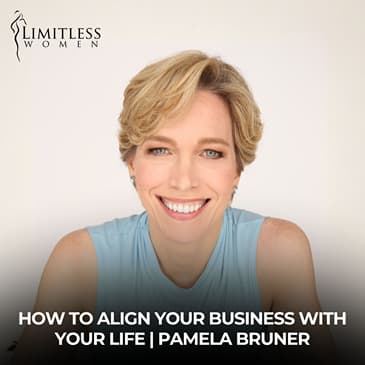
What if the next level of your business isn’t about adding more but about getting clear on what truly belongs? Laura welcomes Pamela Bruner into a powerful conversation about building a business that evolves with who you are, who you serve, and the impact you’re here to make.
Pamela shares how philanthropy became a catalyst for growing her business, why success can create unnecessary complexity, and how personal goals must sometimes reshape the businesses we’ve built. Together, she and Laura explore the deeper role of emotion, authentic connection, positioning, curiosity, and mindset in creating meaningful growth. Pamela reveals why entrepreneurs can mistake inner resistance for a strategic problem and why becoming a category of one requires more than messaging; it requires believing in the value and transformation only you can deliver. At the heart of the conversation is an invitation to return to connection, service, inner wisdom, and a definition of success that honors both your life and your contribution.
Your business is allowed to evolve with you and the clarity to simplify, reposition, and lead from a deeper place may be one of your greatest pathways to impact.
What You’ll Hear:
- The often-overlooked connection between purpose, philanthropy, and the kind of business growth that calls a woman into greater service.
- Why a successful business can stop fitting the woman who created it—and what becomes possible when growth is allowed to evolve alongside life.
- The hidden complexity that accumulates as businesses scale, and the deeper questions that reveal whether the business is still built around the right priorities.
- How emotion, human connection, curiosity, and meaningful relationships shape marketing, sales, leadership, and the experience of doing business.
- The subtle difference between a strategic obstacle and an internal one—and why some of the biggest breakthroughs begin where resistance, identity, and positioning meet.
Resources
Free Gift: Download your step- by- step workbook and calculator to uncover how much you really need to live life on your terms! https://www.wealthbuildingconcierge.com/enoughcalculator
Claim Your Friday Gift: Tools to Make Business Easier - https://limitlesswomen.com/free-gift-friday/
Strategize Your Next Best Step: Schedule a Clarity Conversation with Laura http://schedulemycall.today
Meet the Guest:
Pamela Bruner is a business coach, author, speaker, and online marketing strategist.
15 years ago, she tried to launch a life coaching business, but was unsuccessful because the marketing techniques she was being taught didn’t work for transformational entrepreneurs. She also struggled, as many coaches do, with being uncomfortable with promotion, marketing, and sales.
After re-visioning marketing for the transformational industry, and using cutting-edge mindset techniques to overcome her social anxiety, she re-launched her coaching business 11 years ago, and grew from $375/month to over $1,000,000 in less than three years.
Now Pamela is passionate about helping other coaches, consultants, and healers to expand their impact, and be well-paid for their extraordinary gifts. Her company, ‘Attract Clients Online’ provides coaching, training, and done-for-you social media marketing for thousands of clients world-wide. She’s been featured on numerous stages, podcasts, and as a contributor to Forbes.
Pamela is also the co-author of “Tapping Into Ultimate Success,” a book and DVD with Jack Canfield, creator of “Chicken Soup for the Soul.”
Pamela Bruner is a business coach, author, speaker, and online marketing strategist. She built a 7-figure coaching business in just three years, supporting transformational leaders to expand their reach. Pamela is the co-author of “Tapping Into Ultimate Success,” a book and DVD with Jack Canfield, creator of “Chicken Soup for the Soul.”
Website: https://attractclientsonline.com/
LinkedIn: https://www.linkedin.com/in/pamela-bruner
Meet the Host:
Laura Gisborne, founder of Limitless Women, empowers female entrepreneurs to create businesses that are both profitable and purposeful. With 30+ years of experience, from building multi-million dollar enterprises to guiding small businesses, Laura understands the challenges of scaling beyond solopreneurship. She's a sought-after speaker, business growth strategist, and author of "Stop the Spinning – Move from Surviving to Thriving" and "Limitless Women." Laura's focus is on mindset, authentic leadership, and integrating social impact into business models. The Limitless Women community has raised over $750,000 for charities, reflecting Laura's commitment to "profits with purpose."
Follow Laura
- Website: https://limitlesswomen.com/
- Facebook: https://www.facebook.com/groups/LimitlessWomenGroup/
- Instagram: https://www.instagram.com/limitless.women/
- LinkedIn: https://www.linkedin.com/in/lauragisborne/
***********************************
High Vibe Podcast Network
We are proud to have the Limitless Women Podcast and Laura Gisborne on the High Vibe Podcast Network
Grab your free gift from Laura in our Our High Vibe Gift Vault. Love this show, check out the other shows on the High Vibe Podcast Network. https://highvibepodcastnetwork.com/gifts
Share the Love
✨ If this episode lit something up in you… tag us on Instagram @HighVibeLeaders and let us know your biggest takeaway!
🦋 Don’t forget to rate & review — it helps us reach more conscious rebels like you.
🔊 Listen & Subscribe
🎧 Spotify
Welcome to the Limitless Women podcast. Our mission is to
Intro:help women business owners like you grow profitable businesses
Intro:and actualize your opportunities to serve and give to yourself
Intro:and others. Here's your host, the founder of Limitless Women,
Intro:Laura Gisborne.
Laura Gisborne:Welcome back to the Limitless Women podcast. So
Laura Gisborne:glad that you're here with us today, and I'm really excited to
Laura Gisborne:introduce you to a new friend who's really been an old friend,
Laura Gisborne:but we've reconnected, so it feels like a new friend, Pamela
Laura Gisborne:Bruner, and Pamela and I met years ago. We couldn't really, I
Laura Gisborne:couldn't really figure out exactly where, but we were
Laura Gisborne:dancing with each other, and then we had this great reconnect
Laura Gisborne:on LinkedIn recently, and got on a call and just realized that we
Laura Gisborne:had so much synchronicity and so many mutual values that we share
Laura Gisborne:around serving women and around impact and around philanthropy
Laura Gisborne:and giving back. And she has just a beautiful story about how
Laura Gisborne:she built her own business. And you know, I just was excited to
Laura Gisborne:bring her to you today so that we can all learn from her
Laura Gisborne:brilliance. So, welcome, Pamela. Thank you so much. I'm so
Laura Gisborne:delighted to be here, Laura. Thank you, sweetie. I so
Laura Gisborne:appreciate you. All right, so we'll start with philanthropy
Laura Gisborne:because that's what brings us together first, right? And so
Laura Gisborne:when we were talking the other day, you said you have a great
Laura Gisborne:story about meeting, maybe meeting Cynthia Kersey, or there
Laura Gisborne:was. Let me not tell you what the story is. It's your story to
Laura Gisborne:tell. Cynthia Kersey is the founder of the Unstoppable
Laura Gisborne:Foundation, and Unstoppable has been a cause that's been near
Laura Gisborne:and dear to our limitless women community's hearts for many,
Laura Gisborne:many years. So tell us how that started for you, and that'll be
Laura Gisborne:a great way for us to kick off.
Pamela Bruner:Well, I met Cynthia well over a decade ago,
Pamela Bruner:and I approached meeting her as sort of the business
Pamela Bruner:opportunity. You know, I was told by my coach at the time,
Pamela Bruner:"Well, you need to go to the Unstoppable Gala. Like, okay, I
Pamela Bruner:am a good client. I will go to the Unstoppable Gala. But what
Pamela Bruner:happened is, I flew to Los Angeles, and the first thing I
Pamela Bruner:did when I got in my hotel room, and I'm I'm going to cry through
Pamela Bruner:this story. I took my Kindle out, and I put it on my bedside,
Pamela Bruner:and all of a sudden they went, "Oh my God, what if I couldn't
Pamela Bruner:read? And I went to the gala with that, and I listened to
Pamela Bruner:Cynthia, and this was well over decade, probably 15 years ago.
Pamela Bruner:So
Laura Gisborne:yeah, yeah, it's been a long time since we're
Laura Gisborne:doing a long time ago. The things, yeah,
Pamela Bruner:right, and I saw her present about Unstoppable
Pamela Bruner:and what they did for the children and the young girls in
Pamela Bruner:Africa. And and at that time, and their model has changed, but
Pamela Bruner:at the time it was $25,000 to sponsor a village. Right. I did
Pamela Bruner:not have the business at that time to write a check like that.
Laura Gisborne:Right. Right.
Pamela Bruner:But I went up to her and I was sobbing, like ugly
Pamela Bruner:sobbing. I was sobbing, and I said, "I want to sponsor a
Pamela Bruner:village. And and being the gracious and wonderful person
Pamela Bruner:that she is, she said, "Of course, and we'll talk.
Laura Gisborne:Yeah.
Pamela Bruner:So I think it was the next year that I had my
Pamela Bruner:first live event. You know, 150 people in the room, and I asked
Pamela Bruner:Cynthia to come speak, which she did. And you know, I was going
Pamela Bruner:to give a matching donation. I was hoping that we'd get our
Pamela Bruner:village. Well, we raised $50,000 that year. Wow! Congratulations!
Pamela Bruner:And yeah, I was so happy for for the impact that we'd make. And
Pamela Bruner:so, year after year, I kept inviting Cynthia back, and it's
Pamela Bruner:just it just I remember the days she called me and she said the
Pamela Bruner:entire region of Kipsingal is now done and and that was you
Pamela Bruner:know there were a number of villages there that I and and my
Pamela Bruner:extended community had support and it was just like like so
Pamela Bruner:rewarding so I almost feel like I had to grow the business and
Pamela Bruner:get the audience and get the people in order to honor this
Pamela Bruner:this real dream that I had of being being the helpful person I
Pamela Bruner:wanted to be.
Laura Gisborne:Yeah, well, and it's interesting because it
Laura Gisborne:starts with the emotion, right? The the piece around picking up
Laura Gisborne:your Kindle and thinking, "What if I couldn't read? Which leads
Laura Gisborne:to how many children don't have access to education, and how the
Laura Gisborne:simple, how that one pillar of Unstoppable's model of the
Laura Gisborne:United Nations model, how that one pillar changes so much,
Laura Gisborne:right? And it's just such a fascinating thing, and it's
Laura Gisborne:beautiful that that you decided to make that a part of your
Laura Gisborne:business plan and really incorporate that into your
Laura Gisborne:model, right? Because it's one thing to say, okay, and P.S.
Laura Gisborne:Here's this piece, but to actually have that purpose call
Laura Gisborne:you forward, I have a feeling that's probably how. You know,
Laura Gisborne:energetically, your room is filling up. It's filling up with
Laura Gisborne:great, great impact in the world, and great service, and
Laura Gisborne:great energy. So, what do you know today that you didn't know
Laura Gisborne:then? Like you started your business, and I told you before
Laura Gisborne:we started recording, I was doing a little bit of homework
Laura Gisborne:and reading about you starting at you know $375 a month, and
Laura Gisborne:then growing a million dollar business and being really
Laura Gisborne:successful. What what's the thing that you were like? Wow,
Laura Gisborne:this is what I thought it was, but it was actually something
Laura Gisborne:else. Tell me what you know, kind of what you're aware of
Laura Gisborne:when you look back at your early days as an entrepreneur. Well,
Laura Gisborne:one of the things that I've learned now is that the business
Laura Gisborne:that you build and the business that you want to build can
Laura Gisborne:change over time. So I really wanted, I wanted sort of the
Laura Gisborne:family of a team, and I wanted to have a team, and I wanted to
Laura Gisborne:serve a lot of people in a big way. And I did that for a number
Laura Gisborne:of years. Right. You know, I grew the coaching business. I
Laura Gisborne:added a Facebook ad agency.
Pamela Bruner:Then I was like, no, no to the ad agency, but
Pamela Bruner:still to the coaching, yeah, and and I even weathered the
Pamela Bruner:pandemic, which a lot of people, you know, did not do. And then a
Pamela Bruner:couple of years ago, I said, you know, not sure I want the team
Pamela Bruner:so much anymore. I want to serve a slightly different crowd at a
Pamela Bruner:slightly in a slightly different way, and use the skill sets that
Pamela Bruner:I've acquired over the last 20 years, not necessarily the skill
Pamela Bruner:sets that I started with, and and so a lot of people that I
Pamela Bruner:help actually are in that position now, and and it's all
Pamela Bruner:okay. Like your business does not have to look a certain way.
Pamela Bruner:More revenue is not always the answer.
Laura Gisborne:Amen,
Pamela Bruner:and and. and now you know I can say what is the
Pamela Bruner:best way for me to serve not only my life and my lifestyle,
Pamela Bruner:but the lifestyle and the needs of my clients and of my
Pamela Bruner:community and of the world. And it's a different answer now than
Pamela Bruner:it was then, and that's okay. That's not that's not a detour
Pamela Bruner:or a wrong turn or a failure or anything-it is just a life
Pamela Bruner:choice.
Laura Gisborne:So good, so good. And you know, and I feel
Laura Gisborne:like in my own experience of nine different companies and six
Laura Gisborne:exits, and people are always like, "How do you? People hear
Laura Gisborne:that and they think it was all happening at once. So I'm like,
Laura Gisborne:"No, I'm really old. I just look really young. Like I'm really
Laura Gisborne:old, right? Like I'm just going to be. I've been on for longer
Laura Gisborne:than most of my clients have been alive. I think that it's
Laura Gisborne:fascinating how we do the best we can with what we know in the
Laura Gisborne:moment, right, Pamela? Like this is where I am today. This is
Laura Gisborne:what I know today. I really pray to be shown how may it be of the
Laura Gisborne:greatest service today. And you know, God willing, if I'm still
Laura Gisborne:doing this 10 years from now, there could be an entirely
Laura Gisborne:different version. I know the version of myself as I am going
Laura Gisborne:to turn 60 tomorrow. The version of myself today very different
Laura Gisborne:than the version of myself at 40 or the version of myself at 20.
Laura Gisborne:Right, so it's you know 23 is when I married into a family
Laura Gisborne:business. So I think you know it's it's having grace for that,
Laura Gisborne:but it's also remembering not only are we all one of a kind,
Laura Gisborne:but we're also in different seasons, you know. And I think
Laura Gisborne:that that's the piece that I'm hearing from you is like giving
Laura Gisborne:yourself permission to say, "Okay, I tried that on, and then
Laura Gisborne:I did it, and I did it well, and now it doesn't fit the season of
Laura Gisborne:life that you're in right now. Right. So, so tell me a little
Laura Gisborne:bit about who you love to work with today, because we had a
Laura Gisborne:really good conversation before this, and I was like, I had this
Laura Gisborne:visual in my brain of like a a necklace all full of knots. But
Laura Gisborne:go ahead and tell me that I still have that picture in my
Laura Gisborne:head. That you tell you tell your your words of who you love
Laura Gisborne:to work with today.
Pamela Bruner:Well, I you know I usually usually think of the
Pamela Bruner:Gordian knot or the something like that, but I like a necklace
Pamela Bruner:and knots. That's so much more glamorous. This idea of
Pamela Bruner:unraveling thorny problems, like picking at them until we figure
Pamela Bruner:out what is actually the constraint, what is actually the
Pamela Bruner:problem. Most of the time, when people come to me with a
Pamela Bruner:problem, when we when you say, you know, who do you love to
Pamela Bruner:love to serve? I love to serve people who have enough
Pamela Bruner:complexity in their business and have created enough success that
Pamela Bruner:there are things bolted on and things that shouldn't be there,
Pamela Bruner:but they're not sure what shouldn't be there. They just
Pamela Bruner:know that things things have dragged to them and they're not
Pamela Bruner:able to achieve their goals. Sometimes, honestly, they they
Pamela Bruner:their personal goals have changed, but they've forgotten
Pamela Bruner:to change the business along with it. Kind of what I was
Pamela Bruner:talking about for myself, and so, and so I like picking apart.
Pamela Bruner:You know, what's the business that you actually want to build?
Pamela Bruner:Are you, you know, is with the old saying? Is your ladder
Pamela Bruner:actually leaning against the right wall as you're growing it?
Pamela Bruner:Do you want to scale something that's got a ton of revenue,
Pamela Bruner:which is a perfectly appropriate goal. But do do you want to run
Pamela Bruner:a smaller business where you're working with an ideal number of
Pamela Bruner:clients, or do you want to run a lifestyle business where you
Pamela Bruner:only work part time and you know and optimizing your business for
Pamela Bruner:that thing? Because almost always, as we build and when
Pamela Bruner:once. You get past the the 250k, 500k, 750k mark. You're you're
Pamela Bruner:bolting things on, and almost always you're adding unnecessary
Pamela Bruner:complexity. Yeah.
Laura Gisborne:And then what if that? What if you're? And this
Laura Gisborne:is really the work that we've been doing with emerging
Laura Gisborne:leaders, and a lot of times with legacy leaders, we're revisiting
Laura Gisborne:this. Is how solid is the foundation, right? Like that
Laura Gisborne:whole you're bolting things on, but it's you know it's the old
Laura Gisborne:the story from the Bible. You built your house on the sand, or
Laura Gisborne:you built the house on the rock. You don't really know that
Laura Gisborne:you've got foundation problems until the wall starts cracking,
Laura Gisborne:right? So you keep building, and then realizing, oops, now we
Laura Gisborne:have to go back down, right? So it sounds like you have an
Laura Gisborne:awareness of seeing things that are in people's blind spots.
Pamela Bruner:Yes, and even if you built, even if you built it
Pamela Bruner:perfectly, and you continue to build it perfectly, the world
Pamela Bruner:and the market changes so fast. So you can be doing everything
Pamela Bruner:right and have built on the rock, as you say. And
Pamela Bruner:then there's a then there's a little tremor, and
Laura Gisborne:then there's COVID, right? I mean, like
Laura Gisborne:hello, there's there's stuff happening. Life is lifeing, and
Laura Gisborne:it's and it's it's a conversation I have often with
Laura Gisborne:my mature girlfriends when I remind the younger ladies that
Laura Gisborne:you know we had our first really successful business before the
Laura Gisborne:internet, right? Amazing. It's life by the internet. There was
Laura Gisborne:no social media because we didn't have computers. We
Laura Gisborne:actually did have like a PC that we typed DOS into that we used
Laura Gisborne:for bookkeeping and accounting. Right? Like I'm just there were
Laura Gisborne:no cell phones. Like there was life before the this time. And
Laura Gisborne:it's an interesting thing how how much things have changed,
Laura Gisborne:and yet how much things have stayed the same, which leads me
Laura Gisborne:to another question that I wanted to address to you. That
Laura Gisborne:I'd asked you ahead of time: Is it okay if we talk about this?
Laura Gisborne:Which is, I feel like one of the things that you're really
Laura Gisborne:amazing at is keeping relationships going in a really
Laura Gisborne:authentic, congruent way, and it's something that you teach
Laura Gisborne:about, and it feels so resonant for our community because I feel
Laura Gisborne:like again since you since you are the pro with the ads agency
Laura Gisborne:you're actually the best person to talk about the power of
Laura Gisborne:organic testing right like finding out what works before
Laura Gisborne:you start pouring money at it you know is really my
Laura Gisborne:recommendation is like what about that whole wealth of
Laura Gisborne:connections that people already have that they just forget
Laura Gisborne:about, like what's what's real, real life, real time right now,
Laura Gisborne:Pamela. That a woman can listening to this say, like,
Laura Gisborne:"Oh, there's a tactic. There's something I could try on, and
Laura Gisborne:see how it works in my own business.
Pamela Bruner:Can I start with a really vulnerable story?
Laura Gisborne:Please start with all the stories you want.
Laura Gisborne:You're a good podcast guest if you've got stories. Let it go.
Laura Gisborne:Let it
Pamela Bruner:start because. you know one of the things that
Pamela Bruner:I used to teach is something called the story that runs your
Pamela Bruner:life, and it's either I'm I'm not good enough in some way, I'm
Pamela Bruner:not safe, or I'm not lovable. And my primary story was I'm not
Pamela Bruner:lovable. So building relationships, you know, I
Pamela Bruner:always it it was as so many powerful things are. It was both
Pamela Bruner:a blessing and a curse because I always felt like it was really
Pamela Bruner:important to be of value because that was going to make me
Pamela Bruner:accepted. And it's actually it's actually a great way to start a
Pamela Bruner:relationship is to is to offer value and to be a value to
Pamela Bruner:people and that kind of thing, but what I had to change, I
Pamela Bruner:didn't change the front end of that. I changed the back end of
Pamela Bruner:that and why I was doing it and who I wanted to be in that
Pamela Bruner:relationship. And you know, 25 years ago, literally, I could
Pamela Bruner:not. I could. I would walk into a networking event and I would
Pamela Bruner:leave in 15 minutes and go sit in my car and cry because I was
Pamela Bruner:so uncomfortable. That's where I started, and I used all my
Pamela Bruner:mindset tools to help me get to the place where meeting people
Pamela Bruner:is now a joy. And so now I will return to your your question,
Pamela Bruner:which is it's important context. It's important context because
Pamela Bruner:how many people are feeling that way first, yeah. They're like,
Pamela Bruner:"Oh, it's easy for you, Pamela. I'm like, "No, no, it really
Pamela Bruner:wasn't. And and you know, now we have these these amazing tools
Pamela Bruner:with AI and web builders and and funnel builders and all of this
Pamela Bruner:kind of stuff. And it used to be that nobody would build a
Pamela Bruner:website until they had made you know 1000s and 1000s and 1000s
Pamela Bruner:of dollars because that's what it costs to have a website
Pamela Bruner:built, and now you have to do it at a click of a button, and and
Pamela Bruner:I think that one of the problems with that is it makes people
Pamela Bruner:focus on the tools rather than the the content or the meaning
Pamela Bruner:or something like that. Like we say, how do I reach out
Pamela Bruner:organically on social? How would you reach out if you encountered
Pamela Bruner:somebody on the street and you know started talking to a
Pamela Bruner:neighbor? You know,
Intro:it's
Pamela Bruner:and so I love what you said about you know
Pamela Bruner:test. What's the smallest test that you can run where you can
Pamela Bruner:get a. Immediate feedback, and it's usually, you know, talking
Pamela Bruner:to somebody at the grocery store or picking picking up your phone
Pamela Bruner:and calling somebody that you haven't talked to in six months,
Pamela Bruner:and and you can get feedback that's so much faster even than
Pamela Bruner:you can do with the extraordinary tools and building
Pamela Bruner:a funnel and that kind of thing,
Laura Gisborne:yeah,
Pamela Bruner:because you get the feeling and you get the
Pamela Bruner:emotion behind it, and all business, for all that we we
Pamela Bruner:love our numbers and we love our systems, business runs on
Pamela Bruner:emotion, and so we've got to put that connection in there because
Pamela Bruner:that's where that's where not only will the business and the
Pamela Bruner:marketing, the sales all build on that emotion, but honestly,
Pamela Bruner:the joy that you have in your business will build on the
Pamela Bruner:emotion.
Laura Gisborne:Absolutely, and it's interesting because I was
Laura Gisborne:teaching. We host a flow retreat each year, right? Which is
Laura Gisborne:financial literacy for women. So it's cash flow, it's marketing
Laura Gisborne:flow, it's sales systems, it's finance. Like what to track and
Laura Gisborne:how, right? Just how to have money be the easy part of your
Laura Gisborne:business starts a lot with just getting away from everything and
Laura Gisborne:having a place to settle down where you're safe and actually
Laura Gisborne:be in the conversation. And I think one of the things that
Laura Gisborne:came up in the sales with ease conversation this year, and I've
Laura Gisborne:been teaching this since I think we crafted that in 2012, so 14
Laura Gisborne:years. But I just for years have been saying, I wish I had a
Laura Gisborne:magic wand, Pamela. I wish I had a way to just make all of this
Laura Gisborne:be so easy for you, and take everything I've learned and just
Laura Gisborne:give it all to you. Like if I just could do that, and then I
Laura Gisborne:just had this download, I had this moment, and you'd
Laura Gisborne:appreciate this given the context of what you just shared.
Laura Gisborne:I said, you know what it is, my loves? It is emotion. If there's
Laura Gisborne:one magic wand that lives, especially in sales
Laura Gisborne:conversations, but what about like what it is to be human in
Laura Gisborne:the time of great change in AI? AI does so many cool things, and
Laura Gisborne:this technology has been such a blessing. I feel like it's a a
Laura Gisborne:great catalyst from God, and we still have something really
Laura Gisborne:special, and it is this place of emotion. It's this place of
Laura Gisborne:connection, and when we remember that, and we allow ourselves to
Laura Gisborne:be there, and again, there's a lot of layers of safety to
Laura Gisborne:getting ourselves to the place where we can even allow
Laura Gisborne:ourselves to be safe. But if we've got there through the, I
Laura Gisborne:think you talk about your your business adventure as like the
Laura Gisborne:greatest getting a master's in personal development or
Laura Gisborne:something. I'm putting words in your mouth and something along
Laura Gisborne:those lines, right? Like the the journey, it's just so so
Laura Gisborne:powerful. The way it gets easier is by doing right, and I think
Laura Gisborne:that that's another piece. I feel like there's this something
Laura Gisborne:about having the courage to take the actions when we don't feel
Laura Gisborne:that we're ready that help us build new muscles, you know. And
Laura Gisborne:I feel like you've got so much mastery around marketing and
Laura Gisborne:sales. I love that I want to know the tactics. You bring me
Laura Gisborne:right back to the emotion, and even the tactic of reaching out.
Laura Gisborne:You know, I I encourage our ladies, especially if they're if
Laura Gisborne:they're new in business. I encourage them to choose, you
Laura Gisborne:know, five or 10 people a day to just connect. Whatever your
Laura Gisborne:methodology is, right? For me, I'm just when after I do my
Laura Gisborne:prayer time, after I do my meditation, before I get up and
Laura Gisborne:start hitting the road, I just reach out to like 10
Laura Gisborne:girlfriends, and you know, and it's interesting, and the phone
Laura Gisborne:calls that result from that are fantastic. You know, it's not an
Laura Gisborne:agenda; it's just a way of keeping our connection alive.
Laura Gisborne:You know, as friends, it's just really so sweet. So, yeah,
Laura Gisborne:thanks.
Pamela Bruner:I want to build on that because there would have
Pamela Bruner:been a time when I heard what you just said.
Laura Gisborne:Yeah,
Pamela Bruner:and I was like, "That's fine for her, but I
Pamela Bruner:don't even have 10 girlfriends that I can reach out to, and so
Pamela Bruner:so I want to answer that version of me that's still listening
Pamela Bruner:from that place,
Unknown:which is
Pamela Bruner:that you don't even have to start with 10; you
Pamela Bruner:can start with one. And the last great business connection I made
Pamela Bruner:was like somebody who takes yoga with a friend of mine and
Pamela Bruner:thought that maybe we ought to meet for lunch and oh gosh the
Pamela Bruner:idea so
Laura Gisborne:it was a divine date
Pamela Bruner:yeah so
Laura Gisborne:it you know it doesn't it doesn't you if you if
Laura Gisborne:you are fortunate enough to have 100 people in your rolodex and
Laura Gisborne:you want to do 10 a day, great. And if you don't start with two
Laura Gisborne:and ask them who they know, and be willing to sometimes not hear
Laura Gisborne:from them, it's all okay. Like start where you are. Yeah. Well,
Laura Gisborne:and it's that's a good reminder too because I know when I first
Laura Gisborne:started being asked to speak and lead, and the invitations would
Laura Gisborne:come with synchronicity, right? Because I'm listening. Like,
Laura Gisborne:what's the pattern? My brain kind of goes that way. So it was
Laura Gisborne:around women. It was always global. It wasn't where you come
Laura Gisborne:down to Phoenix. I lived in Sedona. I lived in Cornville
Laura Gisborne:actually at the time, which is outside of Sedona. It was where
Laura Gisborne:you come to China. Will you come to India? Who are these? What
Laura Gisborne:are you? Who? What? What's a about session? It was so bizarre
Laura Gisborne:to me, and the work was around philanthropy, and I didn't
Laura Gisborne:identify that way, right? I just didn't seem like who am I? I'm
Laura Gisborne:not a philanthropist. I'm just a person who's trying to do what I
Laura Gisborne:could do, right? And what I'll say to you is very interesting:
Laura Gisborne:is that my girlfriend, one of my girlfriend conversations I had
Laura Gisborne:yesterday, which was with a girlfriend that I had not talked
Laura Gisborne:to for several years, and you had things to catch up on, like
Laura Gisborne:the death of her father and the death of her her puppy that she
Laura Gisborne:had for 15 years. You had like life to catch up on, and one of
Laura Gisborne:the things that she said is that she said I came to mind for her
Laura Gisborne:because she saw something online around philanthropy. She said I
Laura Gisborne:saw the word philanthropy, and your picture popped into my
Laura Gisborne:brain, and I was like, 'Wow, that's so cool! Right? So often
Laura Gisborne:it's like not even how we see ourselves, but how other people
Laura Gisborne:see us. I think that the actions of continuing to show up with
Laura Gisborne:great service, continuing to show up with what you know
Laura Gisborne:you're here to do, and then praying to be shown how has been
Laura Gisborne:my journey, right? Like I was like, Lord, I don't even know
Laura Gisborne:what this is, and I was a man in a woman's body. So can see me
Laura Gisborne:today, all cute, and that's you know dolled up, and this is this
Laura Gisborne:is a thing. I put on my makeup for you today, but I got to tell
Laura Gisborne:you, I was so masculine in my young years, you know, and of
Laura Gisborne:course there was a cost to that too. But I didn't, I wasn't a
Laura Gisborne:girlfriend. I didn't have a bunch of girlfriends, and now I
Laura Gisborne:have 1000s of amazing friends, which I'm so grateful for. But
Laura Gisborne:let's get back to you. Tell me about this piece that that we
Laura Gisborne:can kind of tie together with one of your superpowers. Is and
Laura Gisborne:I was just reading your posts on LinkedIn. If you don't follow
Laura Gisborne:Pamela on LinkedIn, go because she writes great content. Just
Laura Gisborne:really helpful thought pieces, right? You're very thoughtful in
Laura Gisborne:the way that you write. And one of the things you wrote that
Laura Gisborne:really caught me was the story of somebody who's really great
Laura Gisborne:at what they do, and then why is why doesn't he not get into
Laura Gisborne:business? Other people getting the business. There's something
Laura Gisborne:that you know, Pamela, that you specialize in. I would say
Laura Gisborne:around helping a business owner become a category of one. That's
Laura Gisborne:you know what I would call that. You might use different language
Laura Gisborne:about that, but there's something about knowing your
Laura Gisborne:positioning in the marketplace that I'd love to know more about
Laura Gisborne:how you help people have that clarity.
Pamela Bruner:I'm gonna I'm gonna start off with an image of
Pamela Bruner:a sport that I don't play,
Laura Gisborne:but I know the sport is, and we'll have to know
Laura Gisborne:if I know what it
Pamela Bruner:is. I've heard people say that often when
Pamela Bruner:they're like teaching people to putt on a golf course. Okay,
Pamela Bruner:definitely
Laura Gisborne:the most sport. I do not play, but I I
Laura Gisborne:understand what golf is because my husband's obsessed. Yes,
Pamela Bruner:people people they're putting like I want to
Pamela Bruner:get it close to the hole,
Laura Gisborne:okay.
Pamela Bruner:Instead of I actually want to sink it in the
Pamela Bruner:hole, and I think that this question you've asked me
Pamela Bruner:actually fits into that metaphor, because people don't
Pamela Bruner:always think I want to be a category of one or I want to be
Pamela Bruner:the only go to for my clients. They think I want to be one of
Pamela Bruner:the best, or I am a person that offers this service. I can't
Pamela Bruner:tell you how many people I have talked to. I do work with a
Pamela Bruner:service-based entrepreneurs, mostly transformational
Pamela Bruner:entrepreneurs. So it's it's coaches and consultants and
Pamela Bruner:agency owners and and other services like that. But the
Pamela Bruner:thing is, they'll they'll say I offer X Y Z services, and it's
Pamela Bruner:like no, that that makes you a commodity. You know, when you
Pamela Bruner:specify further, you you move up a little bit and you become
Pamela Bruner:premium, and that's good. But premium means usually you're
Pamela Bruner:evaluated as one of five to seven companies that they might
Pamela Bruner:choose. Why would you do that? What's it going to take to move
Pamela Bruner:you into category one? And some of that is is the messaging and
Pamela Bruner:the positioning and all the strategic things we do to to
Pamela Bruner:niche in a certain way. But another part of it is believing
Pamela Bruner:that you can be believing in the only person to do this for a
Pamela Bruner:particular group, or in a particular area, or deliver a
Pamela Bruner:particular transformation, and so when we find that that that
Pamela Bruner:juxtaposition of the perfect message and the perfect
Pamela Bruner:positioning and the perfect approach and the perfect also
Pamela Bruner:delivery method, because categories of one do not deliver
Pamela Bruner:low end, you know, poorly delivered services. You know,
Pamela Bruner:everything is is top notch. Then everything changes. Then you are
Pamela Bruner:the category of one.
Laura Gisborne:Interesting. Yeah, and I think about how much
Laura Gisborne:because there was another post. So I was reading all your posts
Laura Gisborne:today. I was like, not. I shouldn't apologize for that.
Laura Gisborne:But I'm like, then you posted this, and then you posted that.
Laura Gisborne:Like you get your whole thing, but there was something else
Laura Gisborne:about like coaches offering $25,000 of the service and then
Laura Gisborne:charging 5000. You know what I mean? Like what's happening for
Laura Gisborne:that person and their identity? Are they just what's where are
Laura Gisborne:they missing? Like are they not aware of the results or the
Laura Gisborne:outcomes that they're. Clients are getting. What's causing
Laura Gisborne:somebody just so undercharged like that? Well, there are two
Laura Gisborne:things. One is that the market for coaching is changing
Laura Gisborne:drastically right now, and it is more difficult to be in
Laura Gisborne:transformational services. It just is right now. It's putting
Laura Gisborne:more pressure on the marketing and the sales and the messaging
Laura Gisborne:and and all of that. So so I don't want to say that all of
Laura Gisborne:this can be solved with just a couple of things because we are
Laura Gisborne:in a we are in a different more difficult
Pamela Bruner:place in the world.
Laura Gisborne:Right.
Pamela Bruner:That that being said, they're they're pricing
Pamela Bruner:that way partly because the language that they're using
Pamela Bruner:doesn't communicate the value, and usually the reason it
Pamela Bruner:doesn't communicate the value is they're talking too much about
Pamela Bruner:the process or
Laura Gisborne:the matter or the system, yeah, rather than
Laura Gisborne:talking about the
Pamela Bruner:outcome.
Laura Gisborne:Yeah,
Pamela Bruner:and people love their. I love my process. I'm,
Pamela Bruner:but we work really hard to build this framework. Yes, and and I
Pamela Bruner:must tell you all about the framework and getting fly into
Pamela Bruner:the fact that the framework is the right one. And you know
Pamela Bruner:there is something in marketing, as you also call it, unique
Pamela Bruner:mechanism. And yes, we want to talk about that, right? But too
Pamela Bruner:many transformational entrepreneurs lead with their
Pamela Bruner:method, and that's that is what is holding them back because
Pamela Bruner:people will people won't see the outcome; they'll see the method,
Pamela Bruner:and they'll believe that the method is worth 5000, not
Pamela Bruner:25,000. Yeah, yeah.
Laura Gisborne:Well, there's something you said in in in one
Laura Gisborne:of these posts. I was reading today about how I have an
Laura Gisborne:elephant brain, so I'm going to be like quoting to you
Laura Gisborne:everything you ever read, everything that you ever wrote.
Laura Gisborne:We only have so much time. I'm going to, but I love this.
Laura Gisborne:There's all good stuff that I want to bring forward because I
Laura Gisborne:think it really matters. Is there something that that you
Laura Gisborne:shared, Pamela, and I want you to have your words about it, not
Laura Gisborne:me to project this on you. I don't misquote you, but there
Laura Gisborne:was something that you shared about in every premium buyer's
Laura Gisborne:decision process. There's one question to be answered, right?
Laura Gisborne:And it's it's it's the like the the version of like what's
Laura Gisborne:what's in it for me is not what's happening. It's like
Laura Gisborne:what's the thing that's going to be so different as a result of
Laura Gisborne:this? Help me with that. Help me unpack that because I feel like
Laura Gisborne:the way you wrote it and the way you explained it, I was like,
Laura Gisborne:oh, that's actually what's happening when our prospects are
Laura Gisborne:in the conversation with themselves about am I ready to
Laura Gisborne:do this? Is this the right partnership? What is it that
Laura Gisborne:they're trying to determine?
Pamela Bruner:This is actually something that I was that I was
Pamela Bruner:working on today when I was writing and posting and getting
Pamela Bruner:something ready for client. So is this idea that so so this is
Pamela Bruner:a person who, let's just say, helps deliver leadership
Pamela Bruner:excellence in a company. Yep. And everyone agrees that
Pamela Bruner:leadership excellence is a good idea, but let's develop our
Pamela Bruner:leaders could be on a C-suite's to-do list for years. Oh,
Pamela Bruner:shortcut. There's nothing. There's nothing particularly
Pamela Bruner:urgent in there. There's nothing compelling in there. What's the
Pamela Bruner:actual business problem that gets somebody to you know pound
Pamela Bruner:their fist on the table and say, "Who are we calling today to
Pamela Bruner:solve this problem? And so it is a problem in the moment. It is
Pamela Bruner:not. It's not the the general category that you solve-it's not
Pamela Bruner:even that this is a good idea, but it is what is the problem in
Pamela Bruner:the moment. And most people-they're not going there
Pamela Bruner:because it either it feels too specific or they don't know if
Pamela Bruner:it's accurate. You know, some people even put numbers on their
Pamela Bruner:LinkedIn, which I mean, I love you know. I helped people go
Pamela Bruner:from X Y Z numbers to A B C numbers. That's wonderful to
Pamela Bruner:say, but if you don't talk about what the problem was before and
Pamela Bruner:the the the outcome was after, the numbers are great, but they
Pamela Bruner:don't really tell me the story. So, all of those things, and am
Pamela Bruner:am I saying in way too many words that you need to get much
Pamela Bruner:more specific about me? I think you're saying
Laura Gisborne:exactly what you want to say. You're doing great.
Laura Gisborne:I'm hoping I can get these questions out because I have so
Laura Gisborne:many of them. But yeah, it really
Pamela Bruner:is. Your buyers are almost certainly not asking
Pamela Bruner:the questions that you are trying to answer.
Laura Gisborne:Well, and there, you. This is the whole
Laura Gisborne:conversation too that I had with somebody earlier today about
Laura Gisborne:this act of generosity of meeting people where they are,
Laura Gisborne:and then partnering with them to go where they want to go. Right,
Laura Gisborne:but if you are not meeting them where they are, it doesn't
Laura Gisborne:matter what you want to take them through or where you want
Laura Gisborne:to go with them, right? I mean, we were. This started as a a
Laura Gisborne:mission vision conversation we were having, and I was saying
Laura Gisborne:that you know the mission statement at Limitless Women is
Laura Gisborne:to heal the poverty consciousness of women business
Laura Gisborne:leaders so that they can join together in community and heal
Laura Gisborne:actual poverty. Right? Yes. To this day, my love, no one has
Laura Gisborne:ever called up and said, "Hey, I'd like to have my poverty."
Laura Gisborne:Consciousness healed. It just hasn't happened. It hasn't been
Laura Gisborne:on anybody's radar. It's not what they're looking for, right?
Laura Gisborne:But we can have that for ourselves, right? This is really
Laura Gisborne:for us to remember the sacred nature of the healing process
Laura Gisborne:that leads to an actual healing of poverty. And then in the
Laura Gisborne:vision statement, we can go into a place where businesses are
Laura Gisborne:seen as a force for good, and that all beings are seen as
Laura Gisborne:worthy and valuable, and resources are reallocated. We
Laura Gisborne:can go into that a little more explanation. I think the piece
Laura Gisborne:here is that the symptom that your prospect is aware of
Laura Gisborne:requires attentive listening. It requires being fully present, it
Laura Gisborne:requires capacity to hold without judgment. I mean,
Laura Gisborne:there's a lot of things that I feel like are in the in the very
Laura Gisborne:energetic realm of your work that you do when I'm getting to
Laura Gisborne:be with you, like unconsciously, or maybe you're not unconscious.
Laura Gisborne:Maybe you're like in there analyzing everything I'm saying
Laura Gisborne:and figuring it all out. I don't know, but but you make it feel
Laura Gisborne:so seamless, you know. You have a superpower around just really
Laura Gisborne:leaning in and asking better questions to help identify
Laura Gisborne:what's really going on for somebody, you know. And I think
Laura Gisborne:that that's a process that is there's probably a combination
Laura Gisborne:of practice and your own individual. It's probably a
Laura Gisborne:nature and nurture thing that's going on, you know, to get you
Laura Gisborne:there, very possibly. To me, ironically, as an expert, I
Laura Gisborne:mean, I know I'm an expert in a lot of things, but I don't mind
Laura Gisborne:looking
Pamela Bruner:like like I have beginner's mind. I won't say
Pamela Bruner:looking ignorant, but I will say looking like I have a beginner's
Pamela Bruner:mind because it's in it's in the asking questions that we create
Pamela Bruner:understanding, and from the understanding, we can then build
Pamela Bruner:a bridge. And so, the problem, and this harkens back to what we
Pamela Bruner:said a moment ago about trying to sell your system, your
Pamela Bruner:method, or something like that, is when you come in with "I know
Pamela Bruner:what you need, and what you need is this, and you sound at best
Pamela Bruner:like a jerk, you know. You know. Wow, little
Laura Gisborne:off-putting. Yeah, you are kind
Pamela Bruner:of a know-it-all. Instead of
Unknown:sorry, let me
Pamela Bruner:let me ask questions. Let me use a little
Pamela Bruner:bit of the Socratic method here, and and get all the details out
Pamela Bruner:so that you feel heard, you feel understood, and then I can make,
Pamela Bruner:um, I can make a really cogent argument for what you need.
Laura Gisborne:So this brings me back to an earlier part of
Laura Gisborne:our conversation. I'm hoping you have time because I'm having so
Laura Gisborne:much fun. I have lots of time with you. Yeah, you're my last
Laura Gisborne:call today. So here's what shows up a lot in our community: is
Laura Gisborne:that women are struggling with who am I to do this? Am I ready?
Laura Gisborne:Am I strong enough? So as a result of that, there's a lot of
Laura Gisborne:posturing that happens because they're trying to look a certain
Laura Gisborne:way until they actually can feel themselves rooted and grounded
Laura Gisborne:in their positioning. Right. So we want to really help them get
Laura Gisborne:clear about their positioning and their unique brilliance and
Laura Gisborne:who they be in the world and what's theirs to do and what's
Laura Gisborne:theirs to let go of, right? All of the systems piece that we we
Laura Gisborne:work with. I'm curious about your willingness to show up
Laura Gisborne:looking curious, not looking ignorant, so you can ask the
Laura Gisborne:questions because I think that there's more to that. I want to
Laura Gisborne:unpack that a little bit with you, Pamela, because if you're
Laura Gisborne:trying to show up looking good, you know. I'll say often I've
Laura Gisborne:like spent a lot of money hiring hiring a mentor and then being
Laura Gisborne:too cool for school. Like, how smart was that? I actually spent
Laura Gisborne:the money, asked them what to do, and then said, "Oh no, my
Laura Gisborne:way is better. Like, well, now I spent money and and was wrong,
Laura Gisborne:and then had to figure it out and be like, "Oh, that's what
Laura Gisborne:they were talking about. You know what I mean? Like, hello.
Laura Gisborne:So, not trying to look good, but instead really having what I
Laura Gisborne:would see again is just this generous heart, you know, for
Laura Gisborne:listening that you have, and for staying curious to meet people
Laura Gisborne:where they are. Anything else you want to share about that?
Pamela Bruner:Well, first, thank you for the
Pamela Bruner:acknowledgement. That means a great deal. It's it's nice to be
Pamela Bruner:seen in for something that I actually work hard at and
Pamela Bruner:cultivate. Like that, I appreciate that. And one thing I
Pamela Bruner:will say, you know, when you're saying who am I to and how do I
Pamela Bruner:show up and I'm afraid to, when you show up in a place of
Pamela Bruner:curiosity with the question, "How can I serve? I remember one
Pamela Bruner:of my clients created a mantra years and years ago. If I could
Pamela Bruner:remember his name, I would credit him. Yeah, he said, "I
Pamela Bruner:take this into networking. He said, "I, I need nothing from
Pamela Bruner:you. I want everything for you. Oh, how beautiful! He's like a
Pamela Bruner:Buddha. Yes, and I take that into conversation. So you're
Pamela Bruner:lovely. You're taking this this heart and this beginner's mind
Pamela Bruner:and this. You know, I'm not afraid to say what I don't
Pamela Bruner:understand or what I don't know and keep asking questions, and
Pamela Bruner:then. Often, what'll happen is I'll ask a question that seems
Pamela Bruner:very obvious to me, and someone will go, "Oh my gosh, that's a
Pamela Bruner:good question. It's just, it's just me trying to uncover
Pamela Bruner:things. So, don't don't be too cool for school, right? Don't be
Pamela Bruner:kidding, right?
Laura Gisborne:For sure, for sure. All right, so we've got
Laura Gisborne:this piece around really understanding someone's value
Laura Gisborne:proposition, and I think that the piece that I'm still I want
Laura Gisborne:to talk a bit about a little bit about before we wrap up is what
Laura Gisborne:are some of the things that you're aware of that are in
Laura Gisborne:people's blind spots? You know, like just what are some of the
Laura Gisborne:things that somebody could maybe ask themselves, and then of
Laura Gisborne:course we're going to encourage them to reach out to you and to
Laura Gisborne:follow your work and to lean in and feel into you know whether
Laura Gisborne:there there's an opportunity for you to serve and partner with
Laura Gisborne:them. But in the meantime, what are some of the things that that
Laura Gisborne:you've seen in your experience that really live in people's
Laura Gisborne:blind spots?
Pamela Bruner:So the the the first one is that whatever is
Pamela Bruner:the big no for you, like if you've got this big no right in
Pamela Bruner:front of you and you're like, I'll do anything but that, and
Pamela Bruner:I'm I'm doing this stuff over here and this stuff over here,
Pamela Bruner:all of your money is right behind that no.
Laura Gisborne:Oh my gosh! Do not tell me this. I don't want
Laura Gisborne:to know. All
Pamela Bruner:your money is right behind the no. So, so I do
Pamela Bruner:want to know. I'm teasing, and and so what looks like some
Pamela Bruner:people will say, "Well, this is just a boundary. Is it actually
Pamela Bruner:a boundary, or is it a fear, or a limiting belief, or something
Pamela Bruner:like that? So that's a blind spot. Often, especially as we
Pamela Bruner:get into sort of the the more mature businesses or higher
Pamela Bruner:levels of entrepreneurship, almost always the CEO and
Pamela Bruner:founder is a bottleneck.
Laura Gisborne:Yeah, not
Pamela Bruner:necessarily in every way. I remember when I I
Pamela Bruner:heard the phrase, you know, a $1 million CEO delegates what she
Pamela Bruner:doesn't do well, a $10 million CEO delegates what she does do
Pamela Bruner:well, and I'm like, "Ooh, I love that so much. So, you know, if
Pamela Bruner:you're going to ask yourself questions, where's my biggest
Pamela Bruner:no, and is that actually a boundary or is that a block?
Pamela Bruner:Number two, where am I the bottleneck in my business, and I
Pamela Bruner:need to get out of my own way? Number three, if I think
Pamela Bruner:something is a strategic problem, am I sure, or might it
Pamela Bruner:actually be a mindset problem? Okay, so let's get clear about
Pamela Bruner:the difference. So, what's the difference between a strategic
Pamela Bruner:problem and a mindset problem? So glad you asked. So, usually,
Pamela Bruner:especially now when tactics and platforms and social and ads and
Pamela Bruner:all of this have become very easy, very sort of push of a
Pamela Bruner:button, most people who are successful at least briefly in
Pamela Bruner:the industry, and you and I are OG, my friend, but most people
Pamela Bruner:who are successful in the industry are selling some little
Pamela Bruner:tactic, right? They're selling they're selling a hammer
Pamela Bruner:because, my goodness, everything is a nail. Right,
Laura Gisborne:lead somebody where they are. Yep.
Pamela Bruner:And so, so the problem is when you go looking
Pamela Bruner:for that tactic, and a lot of people call that the silver
Pamela Bruner:bullet.
Laura Gisborne:Then
Pamela Bruner:you're often approaching something as though
Pamela Bruner:there is a tactical or perhaps a strategic problem. Well, I just
Pamela Bruner:need more leads. That means I need to find the best lead
Pamela Bruner:generation system, and that's going to be ads on Facebook, ads
Pamela Bruner:on LinkedIn, somebody to do X, Y, Z for me, whatever it is. And
Pamela Bruner:maybe the problem is what you need to do is serve a higher
Pamela Bruner:level of clientele that you're not willing to step into yet
Pamela Bruner:because you don't believe that you belong there. Do you see how
Pamela Bruner:that looks like a strategic problem, actually a mindset
Pamela Bruner:problem?
Laura Gisborne:Yeah, it's a it's a way of also like
Laura Gisborne:creating. I'm thinking about one of my clients who's you know my
Laura Gisborne:clients become friends, my friends become clients. It's a
Laura Gisborne:beautiful gift in my life, especially in the season of life
Laura Gisborne:because I'm really here for because I get to be here, right?
Laura Gisborne:I think about how I'll have a really great conversation about
Laura Gisborne:the tactics that got done by the team by the next thing, and then
Laura Gisborne:I'll talk to this person like a week or two later, and all these
Laura Gisborne:other things got done, but not those things, right? And it's
Laura Gisborne:always so fascinating, right? Because what's the and there's a
Laura Gisborne:resistance there specifically. Like those are the things that
Laura Gisborne:we know that if we would just do X, Y, or Z, we now would have
Laura Gisborne:like consistent cash flow and easy things. And so instead, all
Laura Gisborne:of these busy things show up. Right. So I think you know I'm
Laura Gisborne:just I'm not giving her name. I'm going to pick on her as one
Laura Gisborne:person of many, myself included. But you know, it's a little bit
Laura Gisborne:of human nature to distract ourselves. It's so interesting,
Laura Gisborne:yeah.
Pamela Bruner:And and you know, the the world with all its
Pamela Bruner:bright shiny little technology toys has made it so easy to
Pamela Bruner:distract ourselves now, has it not? So we jump in and we want
Pamela Bruner:to use all these toys when we really need to do is possibly.
Pamela Bruner:Some more deep thinking,
Laura Gisborne:yeah, yeah, and a little more reconnecting. I
Laura Gisborne:think you know it's one of the powers of having live events for
Laura Gisborne:us, right? That women can disconnect, so they can really
Laura Gisborne:reconnect to hear their inner voice and their inner knowing,
Laura Gisborne:right? There's something that happens in that space and
Laura Gisborne:connect not only with themselves but with each other in a way
Laura Gisborne:that's just very, very different than on the fly. So, I'm always
Laura Gisborne:astonished when I go inside, and all the wisdom is actually, you
Laura Gisborne:know, it comes forth, and I'm like, why didn't I ask you
Laura Gisborne:sooner? Well, this is, you know, this is really the what we know,
Laura Gisborne:and it's it's in its infancy. So I'm grateful for any insights
Laura Gisborne:you have, what you hear about this, but you know this is
Laura Gisborne:really our our work that's been pulling me forward, which is
Laura Gisborne:kind of where I told you that I went to Asheville to go to
Laura Gisborne:Montreat and and talk with women about linear led life. Is this
Laura Gisborne:idea of having God as our CEO, right? Whatever that power of
Laura Gisborne:the divine is for you, as you understand God in a time of
Laura Gisborne:great change. You know how do we embrace this beautiful catalytic
Laura Gisborne:change on fire fast time, and also remember that we're not
Laura Gisborne:alone and stay deep, you know, steep deep in it. So I will
Laura Gisborne:leave us on that note to say any other thoughts you have that you
Laura Gisborne:know about Divine business retreat or any other things that
Laura Gisborne:are going on. I want women to know how they can connect with
Laura Gisborne:you. And men, if we have men listening to this now or in the
Laura Gisborne:future, but for the most part, limitless women. We're talking
Laura Gisborne:to women. What anything else you want to wrap with us? I would. I
Laura Gisborne:would certainly encourage people to reach out. I love connecting
Laura Gisborne:with people, and LinkedIn is the best place to find me, Pamela
Laura Gisborne:Brunner on LinkedIn, and and I want to. I love what you said
Laura Gisborne:about God as the CEO because it's fine to play in the it's
Pamela Bruner:fine to play in the the numbers world, in the
Pamela Bruner:revenue world, in the ego world, and and how good you feel taking
Pamela Bruner:care of people. And then there's source, and then there's there's
Pamela Bruner:the center. And when you return and connect with that, takes
Pamela Bruner:care of a lot of business problems. So thank you for that.
Laura Gisborne:Okay, so so good. All right, my darling,
Laura Gisborne:it's been fabulous to reconnect with you. I look forward to
Laura Gisborne:seeing you in the flesh soon. We'll figure out when that is
Laura Gisborne:and how that works. But just so much fun having your girlfriend
Laura Gisborne:chat and getting caught up. And thank you for sharing your
Laura Gisborne:wisdom and your brilliance, and you know, just and again,
Laura Gisborne:shining some light on some things that I needed to hear
Laura Gisborne:today that I maybe didn't want to hear, but that I needed to
Laura Gisborne:hear. So I appreciate you. My pleasure. All right, Jelly. Good
Laura Gisborne:to be with you. Thank you again.