
Your home can hold memories and emotions from a life that may no longer reflect who you are or where you are going. After divorce or another major transition, changing your surroundings can become an important part of creating your next chapter.
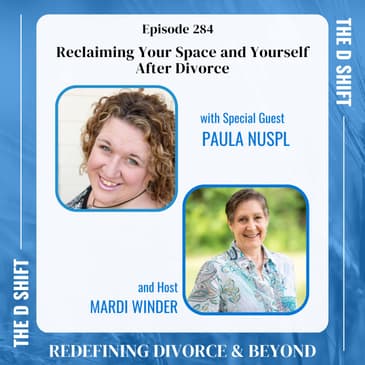
Strategic Divorce Consultant Mardi Winder talks with interior design professional Paula Nuspl about intuitive interior design and how the spaces around us can influence the way we feel. They discuss how a home shared during marriage often reflects years of compromise and why divorce can provide an opportunity to reconsider what you want your home to look and feel like.
Paula shares how letting go of possessions, making small changes, or creating an entirely new space can help you reclaim your environment. She also explains why working with an interior designer does not necessarily require a large budget or complete renovation.
Mardi and Paula also explore the decision to remain in the family home after divorce or start fresh somewhere new, and why there is no single right choice. What matters is creating a space that supports who you are today and the life you want to build.
In This Episode, You'll Learn:
• How your surroundings can affect your emotional well-being
• Why divorce may change the way you experience your home
• How to decide what possessions still belong in your life
• Why small design changes can make a significant difference
• What to consider when deciding whether to stay or move
• How to create a home that reflects who you are becoming
About the Guest:
Paula Nuspl is an intuitive interior design specialist and founder of Paula Nuspl Interiors, helping women reclaim their space—and themselves—after major life transitions like divorce. She believes your home isn’t just where you live; it’s either quietly holding you in the past or powerfully supporting who you’re becoming. Blending design expertise with deep intuition, Paula looks beyond aesthetics to how a space shapes your clarity, confidence, and daily decisions. Her work helps women release what no longer fits and create environments that feel grounded, supportive, and fully their own. For women navigating the emotional and practical shifts of starting over, Paula’s approach brings the transformation out of your head and into your home—so your space finally reflects the life you’re ready to step into.
For Paula’s gift: www.paulanusplinteriors.com
To connect:
Website: www.paulanusplinteriors.com
Facebook: https://www.facebook.com/paulanusplinteriors
Instagram: https://www.instagram.com/paula.nuspl/
LinkedIn: https://www.linkedin.com/in/paula-nuspl-interiors/
About the Host
Mardi Winder is a Strategic Divorce Consultant and High-Conflict Divorce Coach who helps high-achieving individuals navigate divorce with clarity, confidence, and control. Drawing on more than 30 years of experience in mediation, divorce coaching and conflict resolution, she supports clients in making smart decisions while reducing emotional and financial fallout, particularly in high-conflict, high-asset and complex divorces. Mardi is the founder of Positive Communication Systems, LLC, and the Strategic Divorce Directory, LLC.
For Mardi’s gift: The Resilience Building Blueprint: A 28-Day Journey To A Stronger You https://www.divorcecoach4women.com/rbb
Connect with Mardi on Social Media:
Facebook - https://www.facebook.com/Divorcecoach4women
LinkedIn: https://www.linkedin.com/in/mardiwinder/
Instagram: https://www.instagram.com/divorcecoach4women/
YouTube: https://www.youtube.com/@divorcecoach4women
Thanks for Listening!
Thanks so much for listening to our podcast! If you enjoyed this episode and think that others could benefit from listening, please share it using the social media buttons on this page.
Do you have feedback or questions about this episode? Leave a comment in the section below!
Subscribe to the Podcast
If you would like to get automatic updates of new podcast episodes, you can subscribe to the podcast on Apple Podcasts. You can also subscribe in your favorite podcast app.
Leave an Apple Podcast Review
Ratings and reviews from our listeners are extremely valuable to us and greatly appreciated. They help our podcast rank higher on Apple Podcasts, which exposes our show to more awesome listeners like you. If you have a minute, please leave an honest review on Apple Podcasts.
[00:00:04] Welcome to The D Shift Podcast, where we provide inspiration, motivation, and education to help you transition from the challenges of divorce to discover the freedom and ability to live life on your own terms. Are you ready? Let's get this shift started.
[00:00:22] Hello, and welcome to this episode of The D Shift Podcast, and we are going to talk all about how to create a beautiful space that truly reflects you after you're going through divorce. And I have the perfect guest to do that today. I want to introduce you to Paula Nuspel. She is an interior design professional and specialist, and she does something really cool called intuitive interior design that we're going to talk all about today.
[00:00:50] Paula is the founder of Paula Nuspel Interiors, and her goal is really to help women going through divorce, emptiness, loss of spouse, whatever reason you may find yourself wanting to recreate and reinvent your space. This is what she does. This is what she's here to do is to really reclaim their space and themselves because she believes your home isn't just where you live.
[00:01:15] It's quietly holding you in the past or powerfully supporting you moving in to the next chapter of who you're becoming. And I love that. I really love that. So, Paula, welcome. Thank you. I'm so delighted to be here with you today. Well, I am so glad to have you because as we were chatting before we got on the call, I have... It's interesting.
[00:01:36] I met you through Wendy Vaughn, who has also been a guest on the podcast, and I've been on hers, and you've been on hers, too, because I listened to your interview. And so I was telling Paula how I had seen several interior designers who also work with women going through divorce, but they have a very different approach than Paula's. And I just think your approach just really resonated with me, Paula.
[00:02:01] So before we get into all that good stuff, let's get a little bit more information on you and why this is your area of focus. Oh, sure. So when I started designing, I was just your garden variety interior design person. And as I started working with people, I realized that they were really telling me all about their lives and what was happening for them and how their spaces were impacting them.
[00:02:31] And I really thought about it for my own self and what made me get into design. And I realized it isn't about making things pretty, per se, or being, you know, what's hot couture or what's on trend. It really is about what makes you feel comfortable, what makes you feel welcomed, what resonates for you and your family or yourself in your space. And I realized it was a lot deeper.
[00:03:00] And so I took it deeper, and I went into a different direction. And when I did that, it just really opened up a lot of things for me and for my clients. Yeah. And that's what resonated. I mean, when we talked before, this just really resonated with me because I have decided I am definitely not a show home living person. Like, no. And I think it's beautiful, you know, the muted grays and the whites and the chrome accents and the black. And it's beautiful to look at.
[00:03:30] Do not want that to be my space, though. So, like, people would, people would, like, people come into my home and they're kind of like, I think, a little shell-shocked because I have a collection of metal chicken ornaments. And I have my bright, vibrant colors on the wall that have nothing to do with chickens. And I have this and I have that. But, you know, every time I come in the house, I just feel like, oh, I'm home. Exactly. It brings you joy.
[00:03:54] It makes you feel it's really a reflection of your life experience, your personality. And that's what you want to surround yourself with in your home. That's your space, your sanctuary from the outside world. Right. And so everything you have in your home impacts you in some way. And so it's important for you to set intention as you're creating that space. And so often people don't. It kind of defaults.
[00:04:23] And then they wonder why maybe things aren't feeling the way that they need to. Yeah. And I think that's so true because when we're in, when we're in a marriage, whether it's healthy or unhealthy, we try to accommodate. So we're blending like our likes with our partner's likes, with our kids' likes. And, you know, sometimes we don't feel totally comfortable in that space. Or it's not like we're uncomfortable. It's just like, well, if it was my decision alone, this wouldn't be like this. Right.
[00:04:54] And so something like a divorce or the loss of a spouse, the death of a spouse, or even an empty nest situation where all of a sudden the kids aren't there anymore. That really does create an opportunity to change those places or to move someplace else and start all over again. Absolutely. Absolutely. And I highly, highly, highly, highly recommend that because, you know, your house is a living, breathing thing just like you are.
[00:05:23] And as you know, as seasons change and times change, you often update, shift things around. I mean, people, if they celebrate certain holidays, they take decorations, put them up, take them down. So it's important for you when you make any kind of a major life shift, whatever that is, to reassess and make the necessary changes for yourself.
[00:05:46] And divorce is a very poignant thing, of course, because, like you just mentioned, when you're married, you're blending things from your life, from your spouse's life, your children's life. And when that shifts and changes, you want to release some of those things that are maybe no longer supporting you in where you're at now. Yeah. Yeah. Yeah. So here, and I'm going to kind of come at this from two directions.
[00:06:15] So bear with me, Paula. I've been through a divorce and I've also been through the death of a spouse. And so the whole idea of the house reorganization, it was very simple after my divorce because I sold the house. I moved everything from Canada, moved down here to Texas and put my stuff up in my second husband's house. And that was okay because he really didn't care. He was one of those people just like, I don't care what it looks like.
[00:06:41] But then when he passed away, there was still a lot of his stuff in the house. And it's a very old farmhouse. So it's got like that old fake plank walling on, you know, with the two narrow strips and then the one wide strip. And I almost felt guilty taking his stuff out of the house. And that was, you know, I didn't do anything for a while after he passed, but it was a very different experience.
[00:07:08] It wasn't so exciting as it was, you know, moving into a new house and creating. Do you see a difference in your clients between those people who are coming from a real place of grief? Maybe the relationship was good from their perspective and the divorce is a lot of grief for them. Or like somebody in grief and somebody who is like, woohoo, I'm on my own. I want to create this beautiful space. Do you see there's a difference when you're working with them? Oh, sure. Absolutely.
[00:07:37] It's a completely different energy. And because I'm an empath and an intuitive, I really try to connect not only with my client, but with their space and be as gentle and respectful and give them the grace that they need to move through that energy as they're going along.
[00:07:57] Because, of course, you're removing, you know, you want to add things in that support you and release things that even if they had good memories attached to them, you still, there's still that grief process of seeing something and saying, wow, I remember, you know, when we had this thing and we got this thing and it was so happy and joyful, but then it makes them sad. Yeah. You know what I mean?
[00:08:22] And looking at that every single day, walking by it, whether you're conscious of it in your head or not, it still has an energy that permeates through you. And so sometimes it's better to release those things or put them away and bring in new things that give you a new energy and a new sense. So, yeah, there is a very much a difference between someone who's like you said, woohoo, the divorce is over and now I get to scrap this all and start over as opposed to someone who's lost a spouse.
[00:08:52] And says, I have to grieve the loss and all of these things that remind me of them. And I know I need to start fresh again. And that takes time to go to move through that. And it isn't just about the releasing of items. You know, I'm not a professional organizer or, you know, anything like that. It's really just about honoring and procuring and releasing what is going to make sense for you now moving forward in your space. It's furniture, accessories, colors, all of that. Yeah.
[00:09:20] And so let's talk a little bit because you've said this a couple of times and this is what really drew me to the work that you do. And I'm not a woo person. I'm just going to tell you that. Like up till about 55, I didn't even do yoga. And then all of a sudden the older I get, the more this is kind of making sense to me and the more I'm tuning into my own like intuition and things like that.
[00:09:44] But how do you use that intuitive aspect in interior design for your clients? And do your clients even know that you're doing it? Like, do you explicitly tell them or is it just like your ability to tap into, like you said, what they're really deeply feeling and experiencing?
[00:10:04] Like you just said, it's it's I kind of gauge the the the woo level of my client and what they're open to and not because, you know, what I know. And it's taken me a long time to figure out what this gift is that I have. I didn't know like you, you know, I didn't know what was going on with me until I knew. And I'm like, oh, all this stuff really kind of makes sense to me now of why I do this thing, you know. So but I I just use it.
[00:10:33] I use it because that's all I know to do. And then depending on the client and how open they are to receiving information, I will give it as they're able to receive it to me and to them. I would think that most of my clients, they don't I don't necessarily know that they care as long as they get they feel that they've been seen, heard and understood.
[00:11:00] And that the result of getting what's in their head and what they're feeling is then out and can be manifested in their space how they want it. I think that's the main goal. Yeah. You know, regardless of how we get there. But of course, I respect everyone's, you know, religious feelings and and where they're at, you know.
[00:11:24] But also what's interesting for me is not only do I have this gift, but I'm also very a very logical person. And I'm a very utilitarian person. So I have like both halves of that that I can kind of blend together. You know, I'm not way off in the, you know, the land of woo, but I'm also very level headed. So, yeah. And I think that's probably that's probably reassuring for clients because, you know, if you are more open to the whole idea of energy and I really do.
[00:11:54] That's one thing I do believe that because if you just tune into your body, I mean, you can walk into a room and you can sense immediately. Like, you know, is this and I've had people that have even said that they can walk into an office and say, you know, this this is a day. This is a this is a person that's putting out really bad vibes right now. And I'm not going to trust what they're saying and things like that.
[00:12:20] So whether you're that level or whether you just just can walk into a room and feel like this space feels cold. And that's what I get out of those show homes, you know, and it's not because they don't have pictures on the walls, because a lot of them do have pictures on the walls now. But it's it's that it's that everything is too perfect and nothing feels to me, nothing feels connected to the person in the room. Right. Exactly.
[00:12:48] It doesn't like you would use the term before when we first started, like a museum, you know, it's like a museum or it's like a show home. It doesn't feel like somebody lives here. You know, it looks like just something to look at. That's pretty, but don't touch it. And of course, we don't live in homes that way. You know what I mean? It's nice to look at or it's nice to visit. Like you said, I can respect this style or what they're going for here, but it's not for me. Right.
[00:13:13] And the way that I design with people is my goal is to get what's in your head and your heart and what you're wanting, making that reality for you. It's not about me, you know, repeating a style, you know, my style or a style in a space. It's about really connecting deeply with you. So how do you go about doing that?
[00:13:34] Let's say somebody's thinking, hmm, I'd really like to work with an interior designer, but I don't want somebody telling me what my house should look like, which I already get you don't do. But what does that look like? What would the client experience when they first start working with you to get that information out? Sure. Sure. I have a, you know, very detailed. I ask the right questions. I mean, the bottom line is I just ask the right questions. I've done this for almost 30 years.
[00:14:02] Coming up in 2028. It'll be 30 years. And so I ask a lot of questions to get those answers from them and listen to what they say. And of course, tap into their energy and what they're not saying, what their space is saying and all of that. And as we're communicating back and forth, I'll say, OK, so what I'm hearing from you is, you know, X, Y and Z.
[00:14:32] Is that correct? And then, of course, because I'm an empath and intuitive, I tend to channel. So I get information as I'm talking. And I'll say, OK, so, you know, here's what else I'm thinking. And I'll explain. They'll be like, yes, exactly. That's it. That's da-da-da-da-da. Because, of course, they're trying to describe a feeling or a color or a style or whatever they may or may not have the words for. But I do. So I can go.
[00:15:00] I can sort through all that and go, OK, so this is what you're wanting. Is something like this? And maybe show them a thing. They're like, yes, like that. So it's kind of like that. It's just making sure I'm asking them the right questions. Again, like I mentioned earlier, I want them to feel seen, heard, and understood and respected for what they're needing and wanting for their space. So what are some? So, again, I really appreciate that. And like I said, I think that's really distinctive.
[00:15:29] And that sets you apart from a lot of, you know, again, my limited. I've never used an interior designer. I've watched a lot of those home flipping shows and home redesign shows. And those people seem really bossy. I mean, they just come in and say, nope, this is how we're going to do it. And I actually wrote an article on that, a blog, and put it on my blog.
[00:15:57] Because people either have two perceptions of what an interior designer, an interior decorator is. And it's either what Hollywood has presented it to be, that they're these snobby people that have an entourage of minions, that they walk into a room, they pronounce a color, puce, and then walk out. And then their minions start, you know, zhuzhing and whatever.
[00:16:22] Or they are like the HGTV people, you know, who they come in, they tell the people, wow, your house is horrible. And this is, we're going to make it fabulous. And you're going to go away. Yeah. And we're going to come in and we're going to do it all. And then there's going to be this big reveal and you're going to love it. You know, and it's like, that is not at all how that works at all. Now, granted, there are people who hire designers to say, I like your style. I like the way you, I've seen your work.
[00:16:52] I want this style. You know, or this is, I want you to come in and surprise me. I, you come in, I've seen your stuff, just come in and do it. And then I want the big reveal. But that's typically not how it works because that's not real life. You know, that's TV. Right. So let's, if you don't mind, let's ask some, if I can ask you some really practical, like people want to take the next step and they want to work with you.
[00:17:17] Is there, is there like a budget is always a tough question because everybody's house is different. Everybody's needs are different. But do you have to have a huge bankroll to hire an interior designer and to make, you know, changes in your home? Or can you do it if you're on a budget? Absolutely. Oh my goodness. Yes. I, um, and I work with people on all spectrums of budgets.
[00:17:44] Um, the biggest thing is what is the outcome that you want ultimately? And then how do we get there? So things can be broken up into months, years. I mean, however you want to do it. Once you've got that plan in place of what you're wanting to achieve. Um, I work with my clients to say, okay, if this is the DIY part that you want to do,
[00:18:14] if you need the dots put really close together and then I can send you on your way. Great. And then if you're like, oh, Paula, I've run into a snag. I don't know how to do blah, blah, blah, blah, blah. Then I'm like, all right, well, let's work it out how I can help you with those pieces. So, um, I really try to make it as user friendly and budget friendly for whomever I'm working for, because I want it to be accessible to everybody. That's what I'm saying.
[00:18:40] I'm not a lofty interior designer or decorator that says, oh, well, you, I only take clients that have $30,000 or more to work with. Like, I just, I'm not that person at all. I'm like, you know, you just need some advice. Great. Let's hop on a call. We can do a consultation. I can give you a whole bunch of ideas within an hour, and then you can go off and do whatever you want. And then when you, if, and when you want help beyond that, give me a call. We'll see where we're at.
[00:19:08] I always work with people no matter where they're at. And I think that's really reassuring because so many people are afraid to call professionals because they're afraid of what the cost is going to be. And they're often very pleasantly surprised if they're working with a very experienced, very knowledgeable, very, very highly recognized professional such as yourself. It's not this big, huge, giant price tag on the far end. And again, I think we get that from TV, right?
[00:19:35] Because that's what it, you know, that's what all these shows make it sound like. It's bazillions of dollars to do these renovations. Well, and then you have to redo the whole thing. Right. And often, like I had a client many, many years ago who literally had bought some furniture. She hated it when it arrived. And she thought she made this huge error and costly error. And when I walked into her space, I said, oh, no, all we need to do is blah, blah, and blah to make this all work. And she was like, really?
[00:20:05] And I said, yeah, you don't have to start over again. And she's like, what is that going to cost? And I said, and I told her, she goes, oh, my goodness. I thought I'd made such a huge error. I was going to have to get rid of this and start over again. And I was crying. And I said, no, no, no. All we need to do is just fill it out with these few things. And it's going to pull it all together. And she was delighted. So often, sometimes just some small tweaks can change a whole room.
[00:20:32] So yeah, it's beneficial for you to talk to a professional and have them look at it with a trained eye to say, yeah, these are things you need to do right now. These are things you can put off till later. It's not that big of a deal. But here's what we can do right now. Yeah. And I think that whole pulling it all together, that is what always amazes me when it's just like you put down a different rug or you change the color of like the window, the curtains,
[00:20:58] or you add some kind of fancy, even a little fancy thing in the room. And all of a sudden, the colors and everything just all, it just brings everything kind of, like you said, it brings it together. It makes it look more put together. Then it's the thread. It's the thread that, and that's what typically designers can see is what is the commonality.
[00:21:23] And when I look at people's things in their homes and I get a sense of their style, their colors, like what they're going for, and then go, you know, what's going to pull all this together is like you said, this or this or this. And they're like, oh my goodness. I'm like, yeah, that's all you need to do. And they're blown away. They would have never, because that's not what they do all day. You know what I mean? So yeah. Yeah. No, that's so reassuring. And is it all, do you see, and I'm really putting you on the spot with this one, Paula.
[00:21:52] If people are going through a divorce, especially if it's been a difficult marriage, a toxic relationship or a horrific relationship, do you recommend that people try to stay in the space? Or do you recommend that they maybe consider, or not recommend, but maybe encourage them to consider whether just starting over in a brand new place may be sort of the best option for them if there's a lot of stuff that's happened in that home?
[00:22:24] Um, I'm going to be honest. I sort of, and I went through it myself. So I felt after, and I had a catastrophe happen in my house that I had to completely gut it and restart over again because I had a leak. Um, but even after that was done, it felt like lipstick on a pig to me. So I, I sort of feel, and I didn't have a difficult traumatic divorce.
[00:22:50] Um, I would say, I personally think that it's better for you to move. I'm just going to say it out loud. I think it's better for you to shift and go into a completely different space. Um, if you can't, which many people can't, then I would very much recommend, again, depending on your belief systems.
[00:23:14] Um, you know, if you're, you know, have no belief systems, whatever. But I always tell people, um, to smudge their space, you know, to maybe do some, um, some kind of ritual work, you know, whether it's saging it, or even if you just, you know, say out loud, I, I'm, I'm starting over. I want this house to feel open and clear, and I'm releasing all of the negative that has happened in this space.
[00:23:44] I mean, it can be something very basic, um, to just declare that this is my space now and moving forward, I'm releasing all of the things that no longer support my life moving forward, whatever that is. Yeah. You know, um, I think it's a declarative thing. And if you can do that and you feel like I can own this space and make this be about me now, then perfect. If you, if you've done that and you still feel the feelings, I think it's honor, you need to
[00:24:13] honor that. Right. Um, yeah, yeah. But honestly, I kind of feel like it's better, but I recognize that not everybody can do that. They can't afford to just up and move. That's a huge expense after you've been divorced too. Like there's, there's a lot of, and there's a lot of processing that needs to happen after a divorce too. There's the big transitionary period. So maybe you do need to grieve in that house a little bit and slowly release things until you're ready to go out and begin again. And that's okay too.
[00:24:43] And, and obviously if you have kids and you want to keep them in the same school district and the kids love the house. And sometimes, sometimes you just really love the house and then that's okay. So then, you know, we're only talking about if you're like, well, I guess I could stay here. I don't really love this space, but I guess I could stay here that, you know, again, I always tell people, this is what we need to, we need to start talking about this way early in the, in the divorce process.
[00:25:09] And when it comes to mediation and actually making decisions, you've got an idea in there for sure, which way you want to go. Yeah. And Paula, I appreciate that. I really did put you on the spot with that one. Cause that's almost impossible. I just, I just, I really try to meet and honor people where they're at and no matter where they're at in that process, if they engage with me with it, I'll be honest with them.
[00:25:34] And I'll say, I will help you no matter what you choose, whether it's a brand new space or if you're going to love this space for what it is right now, let's honor where you're at in this moment and make the best of the space in this moment. And then when it no longer suits you, or if you need to shift, we'll shift again and that's okay. Yeah. And that's really good. And now you have an amazing gift that you have given everybody who's listening in. Can you tell us a little bit about your gift, Paula?
[00:26:06] So if you would like to chat with me about what you're working on in your space, I would love to offer you a complimentary design clarity session. It's about a 45 minute to an hour long session. And literally we kind of do what, what we've been doing here is talking about your space and what's going on for you and how you're feeling in it. And then we kind of explore what would be the next best steps for you to move forward.
[00:26:35] How can you take this, this space that you're in to the next level and how I might be able to help you create and manifest that. So I want to hear, you know, and there, that's a $197 value. So there's always, you will get a lot out of that out 45 minute to hour long session about where you're at and where you can go. And that is, that is such a generous gift. Thank you so much for that. And I'm going to encourage you, Paula is, this is every time I've talked to Paula, she's been exactly like this.
[00:27:02] She's been absolutely open and wonderful and just, you know, she really knows what she's talking about. So if you're interested in doing that, I'm going to encourage you to take Paula up on that. All the information will be in the show notes. Paula, what do you think out of everything we've talked about today? What do you think would be the big takeaway you want people to keep in mind? I want people to just really understand and appreciate that we all have a space that we live in.
[00:27:33] Everything in your life originates from that space. Good, bad, indifferent, right? And it's important for you to set intention in what you want moving to your next chapter, to your next level, whatever you're doing, to think about how can I intentionally create the space
[00:27:54] to impact my life in a positive way, to do all of the things that I want to do and live to be the greatest version of myself. Love that. Great way to wrap this up. Last question, Paula. If people want to find out more about what you do, I know that they're going to go to your website to book the call that you've generously offered, but tell us a little bit as well. Just give us your website so that they can find you. Sure.
[00:28:23] Just go to paulanuspelinteriors.com. I know I have a weird last name. It is N-U-S-P-L, NUSPEL. And they can find everything that they need there. They can follow me on Facebook, Instagram. Yeah. And all of that information. Yeah. Everything is in the show notes. So it's easy for people to follow. Paula, thank you so much for being here today and for sharing your intuitive interior design
[00:28:52] process because I think this is something that, you know, it's an investment in yourself, in your environment, and in your happiness. You want your home to be a place you come home and go, I'm so glad I'm here. So I think Paula is the person to help you do that. Thank you, Paula. Well, thank you so much. I appreciate being here. And thank you everyone for listening in to this episode of The D Shift. And don't forget to tune in to the next one. Thanks for listening and supporting The D-Shift Podcast.
[00:29:21] If you would like to attend live trainings by our amazing guests and have a chance to ask questions and get answers from our experts, join the D-Shift crew. For more details and to sign up, head on over to www.divorcecoachforwomen and click on the podcast page.