
Many people assume that intimacy is simply about physical connection, but what happens when emotional distance, unresolved issues, and years of disconnection begin to erode a relationship from the inside out?
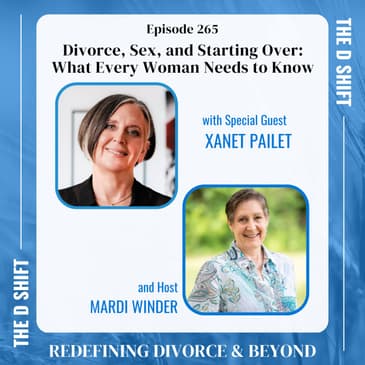
In this episode of The D Shift, Mardi Winder sits down with sex and intimacy coach Xanet Pailet to discuss one of the most overlooked aspects of relationships. Drawing from her personal experience of spending 26 years in a sexless marriage and her professional work helping couples reconnect, Xanet shares valuable insights about emotional intimacy, communication, self-awareness, and creating healthier relationships after divorce.
Whether you are currently in a relationship, considering divorce, or rebuilding your life afterward, this conversation offers practical wisdom for understanding the role intimacy plays in long-term relationship success.
This episode highlights:
• Why intimacy challenges are more common than most people realize
• The emotional impact of living in a disconnected relationship
• How unresolved issues can affect future relationships
• The connection between communication and intimacy
• Rebuilding trust and connection after divorce
• Common relationship patterns that follow people into new relationships
• Creating healthier and more fulfilling relationships moving forward
About the Guest:
Xanet Pailet is a nationally recognized Sex and Intimacy Coach, bestselling author and the founder of Passionate Intimacy Retreats. After leaving a 26-year sexless marriage Xanet now helps committed couples who feel stuck, disconnected, or in conflict transform their relationships into ones filled with intimacy, safety, passion, and joy.
For Xanet’s book: https://a.co/d/0gYuFzO6
To connect with Xanet:
Website: https://www.passionateintimacyretreats.com/
Instagram: @xanetpop
LinkedIn: https://www.linkedin.com/in/xanet-pailet-2b464671/
YouTube: https://www.youtube.com/channel/UCjgLul94hbzGu3X5-QBxrjg/featured/featured
About the Host
Mardi Winder is a Strategic Divorce Consultant and High-Conflict Divorce Coach who helps high-achieving individuals navigate divorce with clarity, confidence, and control. Drawing on more than 30 years of experience in mediation, divorce coaching and conflict resolution, she supports clients in making smart decisions while reducing emotional and financial fallout, particularly in high-conflict, high-asset and complex divorces. Mardi is the founder of Positive Communication Systems, LLC, and the Strategic Divorce Directory, LLC.
For Mardi’s gift: The Resilience Building Blueprint: A 28-Day Journey To A Stronger You https://www.divorcecoach4women.com/rbb
Connect with Mardi on Social Media:
Facebook - https://www.facebook.com/Divorcecoach4women
LinkedIn: https://www.linkedin.com/in/mardiwinderadams/
Instagram: https://www.instagram.com/divorcecoach4women/
YouTube: https://www.youtube.com/@divorcecoach4women
Thanks for Listening!
Thanks so much for listening to our podcast! If you enjoyed this episode and think that others could benefit from listening, please share it using the social media buttons on this page.
Do you have feedback or questions about this episode? Leave a comment in the section below!
Subscribe to the Podcast
If you would like to get automatic updates of new podcast episodes, you can subscribe to the podcast on Apple Podcasts. You can also subscribe in your favorite podcast app.
Leave an Apple Podcast Review
Ratings and reviews from our listeners are extremely valuable to us and greatly appreciated. They help our podcast rank higher on Apple Podcasts, which exposes our show to more awesome listeners like you. If you have a minute, please leave an honest review on Apple Podcasts.
[00:00:04] Welcome to the D Shift Podcast, where we provide inspiration, motivation, and education to help you transition from the challenges of divorce to discover the freedom and ability to live life on your own terms. Are you ready? Let's get this shift started. Hello and welcome to the D Shift Podcast. And today I am happy and really excited to have this conversation with my guest.
[00:00:33] Janae Paylette is an author, she's a speaker, she is a recognized sex and intimacy coach, and also the founder of Passionate Intimacy Retreats. And I'm going to let Janae tell her story because I think it's a really unique one that she's telling it, but I think it's very common in a lot of relationships.
[00:00:57] So her goal now working through this is to help couples who feel stuck, disconnected, or in conflict transform their relationship into a positive one filled with intimacy, safety, passion, and joy. And we're going to really talk about if you're coming out of a bad, bad-ish relationship, if you're going through a divorce, it's a bad-ish relationship no matter how amicable it is. And then you want to move forward and find a better relationship in the future, maybe some of those red flags to look for.
[00:01:27] So Janae, welcome. Thank you so much, Marty. I'm so happy to be here. This is a topic I'm super passionate about. So yeah, thanks for inviting me. And it's one of those topics that, you know, I don't know why people are so hesitant to talk about the whole idea of actual grown-up adult couples have sex and it needs to be a part of their relationship. For some reason, that just weirds people out.
[00:01:54] But I think it's the cause of a lot of problems. So before we get into all of that, tell us a little bit about your story. I know a little bit about it because I've listened in on a couple of podcasts you've been on. But if you could just share with the listeners so they kind of get an idea where you're coming from. Yeah. Yeah. So a little bit about my story is by I'm a sex and intimacy coach by training. I'm a health care lawyer.
[00:02:20] And I had the experience of living in a sexless marriage for 26 years, which is many of you may have been in that position as well, because sexless marriages are actually, unfortunately, very common in the context of long term relationships.
[00:02:42] And so when I left that marriage at the age of 50, I had to do sort of my own deep dive into what was going on for me because this is all about me. I was the one who was totally shut down and felt broken around my sexuality. And I had to go through my own like sexual healing and awakening journey. And that I wrote all about that in my first book, living an orgasmic life.
[00:03:10] But, you know, eventually I ended up on the other side of that and decided to just transition my whole life and my career into doing what I felt was really important. And what I'd wish, you know, I had someone like me when I was like 32 years old and like, what do I do? Do I stay in this marriage? Do I leave this marriage? Are we just never going to have sex again? And the answer was, yeah, we're just never going to have sex again. But I'm going to stay in this marriage. Maybe not for the right reasons, but there I was. Right. Right.
[00:03:40] And it's hard to be vulnerable and talk about this. And it's hard. It's not a topic that, you know, you're just going to sit around with your friends. Now, maybe after a few glasses of wine, this is a topic that comes up. But for most people, like you're not going to, you know, you're not going to sit down in the break room at work and start talking about this. Whereas you might start talking about how your husband doesn't help clean the house or do whatever. Right. So let's talk about, or maybe I should open this up to you.
[00:04:05] What do you think is the first sign or symptom or vibe that you get out of a relationship that maybe this is not going to provide the intimacy quotient that you're looking for in your life? For a new relationship when you're starting out again? Yeah. Yeah.
[00:04:24] So I think that, you know, one of the things that I learned in my own journey and one of the things that I see happen with the couples that I work with all the time is that they're not feeling really emotionally safe and emotionally connected to their partner. Right. Right.
[00:04:44] And so I think like if you have that sense of like, oh, this doesn't feel like I'm being seen, I'm being understood, you know, like if we quickly get into conflict and don't have a way out of it, it's totally fine to be in conflict. But you don't have a way out of it where you feel like you're not being invalidated, which is what happens so frequently in relationships. Right.
[00:05:13] I think that's the beginning of a red flag of like, whoa, wait a second. Maybe I need to take a second look. Is this somebody who can I can really talk to? I'll tell you, like, you know, with my current partner, I've had a bunch of partners shorter term. This one is my I think my final I do. I haven't been remarried, but I think this will happen eventually. We've been together for five years.
[00:05:39] On our very first date, at the end of our great date, I sat down and we were chatting and I said to him, you know, this was a very risky thing for me to do, but I really wanted to know how he was going to react to it. Right. I said, like, I just want you to know these are the things that make it really hard to be in a relationship with me. Right.
[00:06:02] And I, you know, and I said, you know, I can be very judgmental and I can I have some abandonment issues and sometimes that shows up. I can become anxious. Sometimes I can get bossy. Right. Like, I just went through. I was it was a relatively short. It can be a lot longer. But for the first date and I was kind of for me like a task. Like, how's he going to take this? Right.
[00:06:32] Is he going to like freak out and say, oh, my God, I don't know why. I also told him. And by the way, I lied. By a lot of years. Because he's younger than me, almost 10 years younger than me. But but I really wanted to get a sense like how how are you going to respond to this? Are you going to like, you know, are you going to freak out? And, you know, his response was beautiful. He said, like, well, thank you for sharing that.
[00:07:00] And then I asked him, tell me what what makes it hard to be in a relationship with you. Right. And he answered one or two questions. And then a year later, like I learned the whole list. As it goes. Right. So I think things that we can do in the beginning with somebody who we really feel a connection to or feel like, well, this is somebody I wouldn't do this. I don't know if I he's the only person I did it with. But we had like, you know, we were dating online and I could just tell there was a real connection there.
[00:07:30] We had a great first date. And I just had this sense of like, I think this is somebody I could really be in a relationship with. So I'm going to take a risk. And I really want to see, can this man be vulnerable? Can he be offensive? Can he be OK with me practicing vulnerability and authenticity? I was going to say, because that was a big step for you as well. Like, you know, it was how is he going to hear this? But also, what is he going to do with this information? Because I'm sharing something deeply personal.
[00:08:01] Yeah. Yeah. And I'm wondering, because I hear this all the time. What is the and I may be putting you on the spot, so don't answer this. But what is the like? I've heard people say before that if there's too much of a rush to make sex a part of the relationship, that's quite often a red flag. And if there's like this kind of no sense of we're ever going to get there in a relationship,
[00:08:30] that's a red flag as well. Mm hmm. Mm hmm. Yes. It's a complicated question. I think it really depends, like goes from person to person. Right. There's definitely there's definitely like you see it a little biologically, like women get attached to men much faster when they have sex. Right. Right. There's something that happens to us hormonally yet to be, I don't think scientifically, I'm
[00:08:58] not sure it's been scientifically researched, but we do get attached. Yeah. Right. I think that's that's part of our nature, nurture, nurture, nurture part, our attachment piece. And so I think when you have sex, sometimes if you have sex too quickly, you might be setting yourself up for a lot of disappointment. Right. Right. And more heartbreak because all you know, you're really gotten attached.
[00:09:24] Everybody, you know, some women are super happy, especially after a divorce. And I often, you know, recommend this to women who are just divorced, like just go and sell your wild oats. Yeah. Yeah. That's what I was going to say. Yeah. Right. Just know what you're. Yeah. Yeah. Right. You know, just go have fun. Like, you know, don't take it seriously. Have fun. Enjoy yourself sexually. Explore different things. So many women, you know, especially in my age group coming out of a divorce. Right.
[00:09:53] They may not have had a lot of sexual experiences when they were younger. Right. They may have gone from college to grad school, whatever, to marriage. Right. Maybe they had one or two boyfriends, but things changed a lot. Yeah. Yeah. And I had a dating expert come on one time and she said, basically, just know what you want. Like, do you want, do you want a hookup or are you really looking for a long term? Do you want somebody to just go have fun?
[00:10:22] And even if it's not sex, like, do you want somebody to just, you know, go dancing with or go to the movies, but you have no intention of taking it any farther? Right. That you really need to be, if you can be transparent, it kind of helps set that relationship up, whatever it's going to look like. Absolutely. And I think, I think you're right on the other side. Like if it's not moving forward in a sexual manner and you're more in the friend zone, right? That's a huge red flag. Right.
[00:10:52] In my opinion, it's very hard to move from the friend zone, generally speaking, to a more sexual zone. It's just either the pheromones aren't there, the attraction isn't there, like something isn't clicking. Right. And I think it's very hard to make that transition. And I see a lot of couples who show up 30 years later, right? And they'll tell me, well, when we actually started, you know, we were just really good
[00:11:17] friends and then we decided to get married, but the attraction was really never there. And it's very often really hard to find that attraction if it's, if it's actually not there in the first place. Right. And some, you know, it's interesting because some people are very okay with that. I think like two people with very low sex drives are probably really happy in that situation. And if that's you, congratulations, that's wonderful. That's probably the very best relationship.
[00:11:47] I think the problem comes when one person really prioritizes that intimacy and the other person is like, well, I can take it or leave it like whatever. Right. Right. Absolutely. The high desire, low desire. And then there's not enough communication around it, especially, you know, if you're just coming out of a divorce and dating, like, and you really want to be sexually active and you know that you're a pretty sexual person and maybe it's been really repressed and you haven't
[00:12:14] had good sex in your marriage for years. Right. Right. So let's, you know, a big reason why people get divorced in the first place. Right. Exactly. So let's talk about something that let's, you know, I, so I work with mostly women who are in their forties, fifties and up who are divorcing and, you know, some of them have, have, um, like you said, not been really sexually active in their relationship.
[00:12:40] Um, some of them are maybe how, have body conscious body image issues or may feel overwhelmed with what dating is nowadays with the apps and the likes and the pushes and the nudges and 50 bazillion other things. And, and then the weirdo situation that you always hear the safety situation where somebody gets attacked or, you know, heaven forbid something serious happens to somebody.
[00:13:06] Like what's, what's, how do you break out of that sense of, I don't even know if I think I should be going out there. Like I'm, I'm overwhelmed by even the thought of having to take off my clothes in front of another human being. Yeah. That's such a great question. Um, I think that part of that is like trying to do some of your own work on your own confidence, right? Like really giving yourself a lot of compassion around like, yes, our bodies are aging. Yes.
[00:13:34] What your body looks like now, isn't what it looked like 10 years ago, but neither usually is we're pretty, we're, we're kind of well matched at some level. Um, but you know, I think, you know, having done it myself, like it was terrifying. I was terrified, um, to start dating. And every time I went through a relationship and then I ended a relationship and I had to like start over again and meet somebody else. I was like, Oh God, like this is still really hard.
[00:14:05] And it's gotten even harder. The last time was, I mean, it was some ways it was the easiest, but the whole dating scene really has changed so much. Um, and so I don't know, like I always tell, I try to tell people to, you know, just go slow and, and not take risks, you know, go to a restaurant, you know, I grew up in New York city, go to a bar, sit by yourself, have a drink, just start a conversation with somebody,
[00:14:31] whether you're attracted to them or not, just to start to remember, I would flirt just a little bit. Right. Because those are some of the skills that we lose as well. Right. Like how do you flirt? How do you start a conversation with somebody? You know, how do you get comfortable about taking your clothes off? Right. And, you know, I think sometimes it's okay to say like, Oh, like I'm really kind of nervous about letting you see my breasts. Yeah.
[00:15:01] Being like honest and letting somebody know, like, this is a little bit of a pain point for me. I'm, I have some fear around that and hopefully getting some compassion from your partner as well. Yeah. Yeah. I think that's a great message. And I think it's just one of those things where it's, it's kind of like swimming. You can think about it, you can practice it, but at some point in time, you just got to jump in and do it because it's, you know, you can't really.
[00:15:28] So let's, let's take this to the, let's take this to the next step. Let's say you get in a relationship with somebody, you've done this, you've maybe had some talks about what you expect with the intimacy side, both physical and emotional and things are going along well. And then you start finding yourself slipping back into the friend zone. What are some, cause I know you work with couples as well. So let's say you're, you're, you're through the divorce process and now you're in a new
[00:15:56] relationship and you're already starting to get that vibe that, oh crap, this is going exactly the wrong way right now. Well, you know, hopefully you're in a new relationship where there's really good communication. Right. And in that context, right. You begin to communicate and say like, Hey, you know, like I'm kind of feeling like, you know, like we're becoming more friends again, or like, I'm, I'm feeling like there's something
[00:16:24] missing, um, in our relationship. And, you know, some of this is right. Like that new relationship energy is very hormonally driven, right. Very chemically brain oriented. Um, and that is going to fade, right. So those first six months, those first 12 months, you're going to be attracted to each other. You're going to be having a lot of sex. Your relationship is going to be the priority. Um, and then, you know, things start to change, which is a very normal process.
[00:16:52] And it's important when that starts to happen, that you start to say, Hey, I'm feeling like things are changing a little bit. Are you feeling like that? Like what's going on? Right. Like really being in that place where you can communicate in real time about, you know, what's happening. Maybe you get in a rut and you're starting to do the same thing over and over again. And what you don't recognize is like, oh, I'm starting to get bored because we're having sex the exact same way. Right. Every Thursday night, the exact same way.
[00:17:21] Every Thursday night, the exact same way. Maybe we need to try something different. Maybe we need to read some books. You know, maybe we need to explore our sexuality in a different way. Right. Because, you know, as women, we get bored very easily in sex. Most women do. Right. We, I mean, in general women, I think get bored, right. We need a lot of stimulation. We like a lot of different things to happen. And I find that a lot of men are totally fine with just doing the same thing over and over and over again sexually.
[00:17:48] But it doesn't necessarily meet what we're, what we, what we need and what we're, we really want. Yes. I had just interviewed somebody who said that men having sex is goal oriented. It's like for, for the sex to be, you know, for them to have the orgasm. That's their goal when they have sex. Whereas women, it's the whole sensory experience with, yeah, you know, it might be a nice thing to have at the end, but if it doesn't happen, that's okay.
[00:18:17] There could still be this great experience if it's actually happening. Um, then, you know, if you're feeling the sensations, if your mind, if that emotional intimacy is there, that's more what, what, what tends to be pleasurable for women. So emotional connection, like, you know, you're coming out of a divorce. You were not in a good emotional connection, right? Like obviously, right. The emotional connection is so important for women to be able to open up sexually. Right. Right.
[00:18:46] And so very often, even the beginning of a relationship when, when people come and see me, you know, and they're like, things are just changing. And I do a little probing chances are like pretty, really strong chances are that something's changed in their emotional connection. And they're starting to feel a little distance or it's a new relationship and there's things they haven't shared, um, that are coming up for them or, you know, or they're getting triggered because this is what their ex-husband did. Yes. Yeah.
[00:19:15] You're free to bring it up. Right. And that's. Yeah. And I'm sorry, we're almost out of time. I can't believe how fast these conversations go. You know, you have a gift. If you can just give everybody just really briefly what the gift is, because I do want to have time to talk about your book. Okay. Um, yes. Um, the gift is, uh, an intimacy equation quiz, um, which will help you identify what your intimacy style is.
[00:19:41] And this is a nice thing to do with a partner and have them identify their intimacy style so they can talk about that. Um, and you can get that at, uh, this website, which is how to improve my love life.com. Oh, that's easy to remember. And I'll make sure that's in the show notes. Now tell us about your book that just came out. Um, my book that just came out is called the sex and intimacy repair kit, how to enhance communication and create a lifetime of passionate intimacy.
[00:20:08] And I think for women going through divorce, reading this book with a, with a new partner, even just by themselves will be incredibly helpful because there are all skills. There are a lot of skills that we can learn around intimacy, especially when you're going into, um, you know, you're on the dating scene and you're going into new, into a new relationship because again, chances are, if you're divorced, there was problems with yourself as well,
[00:20:34] in terms of how you related to your partner around emotional connection. Yeah. Yeah. And it's funny every now and then I'll get a client that will say, yeah, there's nothing wrong with the sex. I just can't stand them personally. I've heard that one too. That's a big piece too, right? Yeah. Absolutely. Absolutely. Um, thank you so much for being here and sharing all your expertise.
[00:20:59] Uh, this is, this is a topic again, that it's one of those ones that people are just awkward about talking about this and, and it's, it's a part of the human experience. And, uh, yeah, I mean, it's part of, part of being a couple. So, um, Janae, thank you so much for sharing your wisdom and really appreciate you coming on the podcast. Thanks, Marty. And thank you everyone for listening to this episode of the D-Shift and don't forget to tune into the next one.
[00:21:29] Thanks for listening and supporting the D-Shift podcast. If you would like to attend live trainings by our amazing guests and have a chance to ask questions and get answers from our experts, join the D-Shift crew. For more details and to sign up, head on over to www.divorcecoachforwomen and click on the podcast page.