
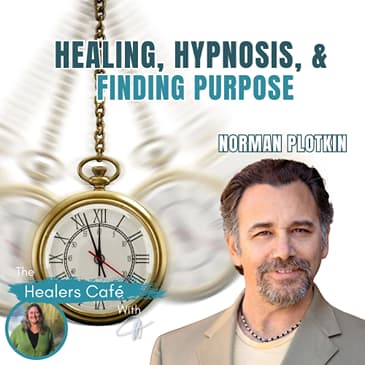
The conversation traces Norman's transition from political lobbying through cancer treatment to hypnotherapy and discusses his views on healing, trauma, and personal change.
For the transcript and full story go to: https://www.drmanonbolliger.com/norman-plotkin
Highlights from today's episode include:
-
He found that listening and interviewing well mattered just as much as hypnosis techniques: people often tell you what they need when you truly listen. 0:05:00
-
He measured success by a "colorful calendar"—a practical sign that he was busy helping people and serving a purpose. [00:08:40–00:10:23]
-
Manon appreciated that the colorful-calendar goal made a big vision concrete and present-focused. 0:09:51
Norman Plotkin is a Certified Clinical Hypnotherapist, CEO and author. After a 25 year career in politics, a cancer diagnosis led to a spiritual awakening and reordering of what was important. Plotkin returned to school and then embarked upon a new focus helping others in their healing journies. Author of two books and coauthor of two more, he is committed to sharing about how to live authentically and engage in our own healing. Plotkin is CEO of a multi-clinic, multi-specialty practice in Sacramento, CA.
Core purpose/passion: Our corporate and my personal mission is to help as many people as possible to regain their health and to learn to maintain it for the rest of their lives.
tianchaoherbs.com | violetwellnessspa.com | normanplotkin.com | Instagram | Facebook | LinkedIn | TikTok | X | YouTube |
ABOUT MANON BOLLIGER, RBHT, FCAH:
As a retired Naturopath 1992-2021, I saw an average of 150 patients per week and have helped people ranging from rural farmers in Nova Scotia to stressed out CEOs in Toronto to tri-athletes here in Vancouver.
My resolve to educate, empower and engage people to take charge of their own health is evident in my best-selling books: 'What Patients Don't Say if Doctors Don't Ask: The Mindful Patient-Doctor Relationship' and 'A Healer in Every Household: Simple Solutions for Stress'. and What if Your Body is Smarter than You Think? I am the Founder & CEO of The Bowen College Inc. which teaches BowenFirst™ Therapy and holds transformational workshops to achieve these goals.
So, when I share with you that LISTENing to Your body is a game changer in the healing process, I am speaking from expertise and direct experience".
Mission: A Healer in Every Household!
For more great information to go to her weekly blog: http://bowencollege.com/blog.
For tips on health & healing go to: https://www.drmanonbolliger.com/tips
Follow: Manon Bolliger website | Linktr.ee | Rumble | Gettr | Facebook | Instagram | YouTube | Twitter | LinkedIn |
Follow: Bowen College Inc. | Facebook | Instagram | LinkedIn | YouTube | Twitter | Rumble | Locals
ABOUT THE HEALERS CAFE:
Manon's show is the #1 show for medical practitioners and holistic healers to have heart to heart conversations about their day to day lives.
Subscribe and review on your favourite platform:
iTunes | Google Play | Spotify | Libsyn | iHeartRadio | Gaana | The Healers Cafe | Radio.com | Medioq | Audacy |
Follow The Healers Café on FB: https://www.facebook.com/thehealerscafe
Remember to subscribe if you like our videos. Click the bell if you want to be one of the first people notified of a new release.
* De-Registered, revoked & retired naturopathic physician after 30 years of practice in healthcare. Now resourceful & resolved to share with you all the tools to take care of your health & vitality!
00:00:05
intro: Welcome to the Healers Cafe: Conversations on Health
00:00:08
and Healing at Manon Bolliger, a retired and deregistered
00:00:12
naturopathic physician with 30 plus years of experience. Here
00:00:18
you will discover engaging and informative conversations
00:00:21
between experienced healers, covering all aspects of healing,
00:00:27
the personal journey, the journey of the practitioner, and
00:00:31
the amazing possibilities for our own body and spirit.
00:00:44
Manon Bolliger: So welcome to the Healers Cafe, and today I
00:00:48
have with me Norman Plotkin,
00:01:35
Norman Plotkin: Yeah, it's a pleasure to be here.
00:01:39
Manon Bolliger: Yeah. So why don't we start with that?
00:01:41
Norman Plotkin: Okay, so I had a rather unconventional path. I
00:01:47
went in the Marine Corps right out of high school, and out of
00:01:50
the Marine Corps, I worked in the oil fields and then a rock
00:01:52
plant like Fred Flintstone, making little rocks out of big
00:01:55
rocks. And then I then I built cable TV. I climbed telephone
00:01:59
poles, and then my brother was killed in a car accident, and I
00:02:03
realized that I wasn't immortal and would probably not live
00:02:07
forever. And I moved back in with my mom, and I started
00:02:11
college. And I was on my way to law school. I finished. I was
00:02:16
very serious. Former Marine, 25 years old. I I finished in three
00:02:21
years, and along the way did speech and debate and and
00:02:24
student government and and my senior first semester of my
00:02:29
senior year I got an internship a paid internship in the state
00:02:32
legislature as a clerk and learned the rules and the
00:02:36
procedures and that's what began from there I Took successively
00:02:43
more difficult and involved positions. At one time, I was a
00:02:47
committee consultant for the health committee and the
00:02:49
insurance committee, and then became a lobbyist for the
00:02:52
California Medical Association, representing physicians before
00:02:56
the legislature and regulatory boards. And then I went out on
00:02:59
my own, and for 13 years, I had my own lobbying firm, and I
00:03:05
mean, I thought it was the greatest thing since sliced
00:03:07
bread. I had a fairly decent-sized ego. I drove, you
00:03:11
know, fast cars and wore Italian suits. And but I loved the
00:03:17
public policy. You know, it was it was strategy and campaign
00:03:21
very much like my military early military experience the the
00:03:24
words that you use and but politics is dirty and they're
00:03:29
pretty much all corrupt they start as they start as regular
00:03:33
people good networkers active in their community and then they
00:03:37
get elected and they come and they start believing their own
00:03:40
press release and and I had to raise money and and it made me
00:03:47
sick. I had in in 2011 I was diagnosed with papillary
00:03:51
carcinoma, thyroid cancer, and and so I dutifully followed the
00:03:57
allopathic way that burn and poison, and I had a radical
00:04:03
thyroidectomy, a lymph node resection, and a few rounds of
00:04:06
radiation. And I wanted to just get back to normal. What I came
00:04:12
to find out, as when it returned and I had to have that second
00:04:15
round of radiation, is is that normal was what made me sick.
00:04:20
And so, teachers began to appear. I had a friend who got
00:04:25
out of politics and opened a yoga studio. She took me through
00:04:28
therapeutic yoga for cancer, taught me to med, taught me how
00:04:31
to meditate, and Pilates to regain my strength. And she sent
00:04:37
me to a medical intuitive that she knew, and who saw my energy
00:04:42
and and helped me kind of put things in perspective? Wayne
00:04:48
Dyer, Carolyn Mees, Deepak Chopra, Joseph Murphy, the power
00:04:55
of the subconscious mind, which eventually led me to, and I
00:04:59
believe I. I was divinely guided to this hypnotherapy college. I
00:05:03
I had moved to L.A. and I'd taken a job as an executive
00:05:06
director of a trade association, much in in alignment with the
00:05:10
old me, and and that lasted a year until I began to work on
00:05:16
their ethics and they didn't renew my contract. So now I'm
00:05:19
like, now what? And so things just lined up for me to, and I
00:05:23
went to hypnotherapy college. You can get a certificate to
00:05:27
learn to hypnotize someone in a weekend, but I wanted something
00:05:30
more vigorous, and so this was an 18-month program with the
00:05:35
residency, and it was it was fairly vigorous, and and I had
00:05:41
never been hypnotized before, but I'd read I'd read Joseph
00:05:45
Murphy's Power of the Subconscious Mind, and was
00:05:49
convinced. and And the staff was great, and the training was
00:05:52
great. I had no idea until you know now I'm 13 hours into
00:05:58
doing the hypnotherapy sessions. I had no idea the most important
00:06:01
class that I took in doing that training was counseling and
00:06:05
interviewing, because people will tell you what's wrong and
00:06:11
what they need if you listen. And so, in the beginning, I
00:06:18
continued. I tried different modalities. I was searching for
00:06:22
you know answers and just kind of soaking in it.
00:06:29
Along the way, I I studied under a psychologist who's written
00:06:32
five books on tarot and psychology, and so I used the
00:06:35
tarot cards therapeutically. He wrote his he wrote his doctoral
00:06:38
thesis on therapy therapeutic use of tarot cards. I study
00:06:44
shamanism, but my day to day was, and my my goal was. It's
00:06:50
not easy to start a hypnotherapy practice. So in the beginning, I
00:06:54
took I took a contract position with one of my former clients,
00:06:57
and I covered 16 Western states. So when I wasn't flying to one
00:07:01
of the capitals in the Western United States, I was doing
00:07:05
hypnotherapy out of my office, and I reached a point where I I
00:07:11
was able to leave that once and for all. And my goal was just to
00:07:16
color up my calendar. If I could have a colorful calendar. It
00:07:21
meant I was busy and I was helping people, and the the
00:07:25
money would flow in terms of you know it's not a lot of money,
00:07:29
but it's enough to earn a living. And along the way, you
00:07:33
know, you have to learn. It's not I'm I'm 62 years old. You
00:07:37
know, it's not the old way. You know, I remember when I worked
00:07:42
in the legislature when PCs were distributed in in the mid '90s,
00:07:48
and I didn't. I had a little Mac Seven in college. You had seven
00:07:53
seven megabytes of RAM, 70 megabyte hard drive. You know,
00:07:58
and so suddenly had these powerful things. I tried, you
00:08:01
know, Facebook ads and different things, and and finally settled
00:08:05
on Google ads, which is, and because those people are
00:08:08
searching. But along the way, I've learned so much and and
00:08:15
grown in my ability. The thing that drives me is that I I feel
00:08:20
like I've found my purpose. It feels really good when people
00:08:24
leave better than they came.
00:08:26
Manon Bolliger: Right. Yeah. I mean, that's quite a. You
00:08:30
exposed yourself to a lot of moments in life that can really
00:08:36
have impacts. That's how I see it. You know, it's like yeah,
00:08:40
Norman Plotkin: yeah. I've had you know kind of four distinct
00:08:42
lives. You know, the early years in the Marine Corps, and you
00:08:46
know, then the the blue collar, heavy blue collar work, and then
00:08:51
the legislature, and then and and now being in service. Wayne
00:08:56
Dyer's book, The Power of Intention, was really a seminal
00:08:59
work for me. You know, if you put yourself into the service of
00:09:02
others, you really don't have to worry. The rest will come. And
00:09:06
money is energy, and it's an energetic exchange. He he he
00:09:11
borrowed from a biblical reference. He would he talked
00:09:15
about the raccoon that that goes along the riverbank, and doesn't
00:09:20
worry about where lunch is going to come from. The universe
00:09:22
provides, right? And you just be a really thoughtful and
00:09:26
intentional raccoon, and and the universe will will. And in the
00:09:30
Bible, it's the industrial ant. But anyway, it's the same thing
00:09:34
that. And that that led me to color up your calendar, you
00:09:38
know. And I've got appointments throughout the day, and that was
00:09:42
the true measure of success, because that gave me the access
00:09:46
to meet people where they are and to help them solve their
00:09:50
problems.
00:09:51
Manon Bolliger: Yeah, well, it's interesting. I mean, there's so
00:09:53
many courses on marketing. You know, when you're in practice,
00:09:57
and you know, it's like huge. Goals and you know visions,
00:10:03
which I'm not saying they're wrong. They're wrong if you feel
00:10:07
them and you can live into them. You're you're bringing them into
00:10:10
the present. But I like the the very tactical, you know, vision
00:10:16
of the calendar full, right, and colorful. It really is the
00:10:21
present, you know.
00:10:23
Norman Plotkin: Right. The yellow ones were the
00:10:24
consultations, and the green ones were the sessions, and you
00:10:28
know, red was a business meeting, and you know, so it's
00:10:35
it's all about your intention, and if you set the intention and
00:10:39
and and live it, it tends to work out.
00:10:43
Manon Bolliger: So I have a question for you. Let me see how
00:10:45
I can pose this one. So obviously, with the thyroid
00:10:51
cancer and reoccurrence, you light was shed on the medical
00:10:58
system, and it's let's call it its limitations. To be polite, I
00:11:05
have a lot of words I could use, but we'll try that one for now.
00:11:13
And obviously, you you have interest in hypnotherapy, and we
00:11:19
are really facing a, I would say like a mass hypnosis that it's
00:11:29
changing. I mean, whatever is happening, even if you know
00:11:34
we're watching a movie to wake people up, and all of these
00:11:38
things could be true. I'm not you know denying any of it, but
00:11:43
it's it feels excessively slow. I realize that the job is
00:11:48
excessively big that needs to be achieved, but from a
00:11:53
hypnotherapy point of view, have you thought like what is it that
00:12:01
keeps people so so hypnotized into not like it's always an
00:12:11
event that allows people to wake up, you know, like a cancer that
00:12:16
doesn't get cured the normal way, or you know, like it seems
00:12:20
like it takes us a big shock to our system before we kind of go,
00:12:29
"What's going on here?" Right? Or losing a friend or family
00:12:33
member, or you know, it's every story I've heard is like that.
00:12:38
Yeah.
00:12:39
What can you tell us about that process.
00:12:42
Norman Plotkin: Well, you know, Joseph Spencer speaks about that
00:12:44
in terms of you know why does it take something like an illness
00:12:47
or a death or you know something to strike us, and you know
00:12:52
there's there's the old cliche about putting a frog in a pot of
00:12:56
water, and if you if you put him in the hot water, he'll jump
00:12:59
out. But if you put the frog in tepid water and then turn up the
00:13:04
heat slowly, he'll boil to death. And so, people ask me
00:13:09
about hypnosis, and they say, "Did Hitler hypnotize the German
00:13:13
people?" And I always begin with this: there are three things
00:13:17
required for a hypnotic modality: Authority, a doctrine
00:13:24
or paradigm, and you must and you must feel something. So I
00:13:29
have my authority up on the wall. The doctrine or paradigm
00:13:33
is hypnotherapy, and when people come in, they they are deeply
00:13:38
relaxed and you know deep relaxation with focused
00:13:42
concentration. They feel it, but let's look at some other aspects
00:13:46
of life.
00:13:48
Manon Bolliger: Lap
00:13:48
Norman Plotkin: coat and stethoscope is the authority.
00:13:51
Medical school, medical books is the doctrine or paradigm. Do you
00:13:54
feel something when you go to the doctor? You could don't get
00:13:57
your blood pressure taken there. What do they call iatropic,
00:14:01
yeah, you know,
00:14:03
Manon Bolliger: white coat syndrome.
00:14:05
Norman Plotkin: That's right. Or you can be relieved that your
00:14:07
test results was were good, or that you're pissed off that you
00:14:10
spent an hour in the waiting room to get five minutes with
00:14:12
the physician. So you felt something. Or how about this
00:14:16
one: the collar, or cape, or caf, the book. I've read. I've
00:14:21
read them all: the Bible, the Quran, the Torah, the Bhagavad
00:14:25
Gita, the Tao Te Ching. And when you go to mosque or temple or
00:14:29
church, do you feel something? People sing and dance and are
00:14:33
moved by spirit. That's hypnosis. All of these things
00:14:38
are hypnosis. So when when you have the Fuhrer standing at the
00:14:42
podium, it's the authority. National socialism was the
00:14:46
doctrine or paradigm, and did the German people feel
00:14:48
something? They felt pride. They marched in the streets, and so
00:14:52
they've studied this in depth and more recently, and they
00:14:57
they've come with on a. Level on that type of level, they now
00:15:02
call it mass formation psychosis.
00:15:04
Manon Bolliger: Right,
00:15:05
Norman Plotkin: and so we can look at recent events and see
00:15:08
the authority, Fauci, Burks, and the doctrine of paradigm was
00:15:13
neurology and and epidemiology, and did people feel something?
00:15:17
Well, if you watched your television, you were seeing case
00:15:21
case counts, death counts, you know, stories of you know, and
00:15:25
so, you know what I did differently during that period?
00:15:31
Manon Bolliger: No,
00:15:31
Norman Plotkin: absolutely nothing. I did I did nothing
00:15:34
different than I ever did before, and so people, you know,
00:15:43
there's Maslow's hierarchy of needs, and if your if your needs
00:15:47
are taken care of, then you fall into a sense of comfort. We live
00:15:49
in an exceedingly comfortable existence compared to our
00:15:53
ancestors who lived lives that were nasty, brutish, and short,
00:15:57
and fight or flight was a constant. And so today, today we
00:16:04
can't run and fight. There's no saber-tooth tiger to grab a
00:16:07
stick or to run. And so when we have something that makes us
00:16:12
anxious, adrenaline is dumped into the bloodstream and pushed
00:16:17
out to the extremity, so you can run or fight. But there's no run
00:16:21
and there's no fight, and so now you have adrenalized blood in
00:16:23
your system, and we're dropping into fight or flight, and you
00:16:29
know autonomic nervous system, and so so what does that do?
00:16:33
That what that does is it creates suggestibility, and so
00:16:39
people are walking around highly suggestible, and at at the same
00:16:43
time, we have modern media that you know is ubiquitous, and and
00:16:50
so people are highly suggestible, and and they fall
00:16:55
into behavior, and you know it's also the social media phenomenon
00:17:03
has everybody angry, and you know they talk about red ants
00:17:07
and black ants. They go about their way, and everything's
00:17:10
fine. But if you put them in a jar and shake it, all of a
00:17:12
sudden they attack each other, and and so so people are tend to
00:17:20
externalize and blame outside world for their problems. In
00:17:26
Carolyn's book *Anatomy of the Spirit*, she talks about why we
00:17:31
don't heal. You, we all know the person who gets on Facebook and
00:17:35
posts about their diverticulitis. You know, and
00:17:37
why do why did? And they hold on to this. One of the one of the
00:17:41
biggest challenges for me as a hypnotherapist is getting people
00:17:44
to agree to let go of what they've been carrying for so
00:17:48
long. You know, it becomes their identity, and and so there's a
00:17:53
thing called secondary gain. They get something: sympathy,
00:17:57
attention, empathy, and their identity becomes wrapped up in
00:18:03
yeah, and so I'm certified in hypnotherapy for cancer. It was
00:18:08
obviously it was an area of my interest given what I had gone
00:18:11
through, and I wrote a book about my experience. And the
00:18:15
first thing you know, one of the first things I asked them is,
00:18:18
why did you produce this cancer? I didn't produce this cancer,
00:18:24
and I said, "Well, until until you're willing to accept that
00:18:28
you had a role in it, we can't get past it."
00:18:31
I produced mine. I was a lobbyist. I spoke for others. My
00:18:35
throat chakra. This is where I got sick. I didn't have my own
00:18:39
authentic voice, And so, so if you look at it like this, we all
00:18:46
have an immune system, and a healthy immune system eradicates
00:18:53
mutations. But if you if you have unresolved, repressed, and
00:19:01
suppressed emotions that are traumatic based. Then it there
00:19:08
was a there was a Dr. Carl Simonton in the 70s. He was a
00:19:13
radiological oncologist, and he saw a lot of people with cancer,
00:19:17
and he came up with a a theory that these unresolved traumas,
00:19:24
these repressed and suppressed emotions that are largely
00:19:27
unacknowledged, they're deep, buried deep within your
00:19:29
subconscious mind and unacknowledged. You think you
00:19:32
moved on, but the emotional pain that's deep seated, it
00:19:38
percolates and it may rise to the level of the point where the
00:19:44
subconscious mind perceives death as a way out of the
00:19:48
unconscious emotional pain, at which time it can modulate your
00:19:52
immune system downward.
00:19:55
Manon Bolliger: Manon Bolliger here, and I want to thank you
00:19:57
for taking actionable steps towards. Engaging your healing
00:20:01
journey and helping others discover their path by watching,
00:20:07
sharing, subscribing, and reviewing these podcasts. Every
00:20:13
review and share helps spread the word on these different
00:20:17
perspectives and choices and options for healing. And to
00:20:21
thank you, I'd like to invite you to sign up to my free seven
00:20:25
sequence email tips on health and healing for everyday life,
00:20:30
and you can go to healerscafe.com tips. Thanks so
00:20:35
much,
00:20:40
Norman Plotkin: And so, trauma release is super important. With
00:20:46
almost all, I mean, with all of my clients, I regress them to
00:20:50
childhood. I study their family structure. We make peace with
00:20:55
that little boy or girl inside, and and we do an inventory of
00:20:59
traumas, and and really, really help them let them go, and
00:21:04
that's the gateway to moving forward.
00:21:09
Manon Bolliger: In your like your experience with
00:21:12
hypnotherapy, and you're when you're bringing up or allowing
00:21:17
these traumas to surface and Release. How much consciousness
00:21:26
do you find is required? I mean, it'll come up in the. I'm asking
00:21:32
because in the work that I did when I used to be able to do
00:21:37
that, you it was through touch and it was Bowen therapy and the
00:21:43
way that I taught it and did it, I would find that things would
00:21:48
come up, but the you know it's as if the person nothing would
00:21:55
come up that the person couldn't handle, but it didn't come up
00:21:58
with the mind first. It felt as if the body kind of brought up a
00:22:03
memory, you know, which is kind of how, on some level, I see the
00:22:09
subconscious. It's, it's um, it's this the the voice that is
00:22:17
below the what we make of it and what we rationalize and
00:22:22
whatever, but it doesn't always know what happened, right? Like
00:22:30
what caused. I mean, I don't know. There, you know, there's a
00:22:33
lot of authors that say you don't remember if you're under
00:22:36
two, whatever. Different theories on that, but do you
00:22:40
think you need to identify the incident, or just allow the
00:22:47
emotion to to come out and release? What's your feeling on
00:22:52
that?
00:22:53
Norman Plotkin: So the body keeps the score, and we
00:22:59
oftentimes somatize difficult emotions into body syndromes,
00:23:04
and they can express as disease. The there there are three levels
00:23:12
of hypnosis: hypnoidal. You're driving a car home from work,
00:23:17
pulling the driveway, don't remember the trip. That's
00:23:19
hypnoidal hypnosis. Then there's catalepsy that mimics the dream
00:23:24
world. Your hands and feet will go numb and cataleptic, and
00:23:30
you'll move in and out of awareness of the situation.
00:23:34
You'll drift off and start having thoughts of dinner or
00:23:38
unfinished business, and then you'll come back. And then
00:23:41
there's somnambulism, which is characterized by amnesia, where
00:23:44
you don't remember. Now, painful events as a defense mechanism,
00:23:49
most people block them out, but the subconscious knows
00:23:54
everything.
00:23:55
Manon Bolliger: Right.
00:23:55
Norman Plotkin: And so, so with hypnosis, there's the conscious
00:23:58
mind. It's reason, logic, analysis, decision making,
00:24:01
willpower is the tip of the iceberg. We think that's part in
00:24:06
power. Below the surface is the base of the iceberg, which is
00:24:10
the subconscious mind, which is your programming. And so, when I
00:24:15
put someone in trance, it's like the conscious mind is a Labrador
00:24:19
Retriever, and I throw it a stick. It's off. It's off
00:24:22
chasing the stick, and I speak to the deeper part of the mind
00:24:26
where the programming, where the defenses are down.
00:24:29
Manon Bolliger: Your
00:24:30
Norman Plotkin: defenses are down. Your your defenses are up
00:24:32
through the conscious mind. That's it. Keeps you protected.
00:24:36
With a with a lot of intransigent conditions, I do
00:24:40
inner protector. I take them into houses. I and I introduce
00:24:44
them to their inner protector, and I set them down in two
00:24:46
overstuffed chairs to have a conversation. I had trauma. I
00:24:50
needed love, and you were there for me. You were like a parent,
00:24:53
but I got it now, and I dismiss you. It's a little more
00:24:56
elaborate than that, but letting that inner protector go. Because
00:25:00
all of these things, all of these, all of these things that
00:25:04
we create are to keep us safe. What would I do if I didn't have
00:25:09
my diverticulitis? Who would care about me if I, you know?
00:25:15
And so, so the law of opposites says you can't be relaxed and
00:25:21
anxious at the same time. So when I get you into a deep
00:25:25
catalepsy and you are totally relaxed but sharply focused, and
00:25:32
I begin to regress you, I'll ask, you know, when was the last
00:25:36
time you felt this? And when you remember that, nod your head or
00:25:42
lift your finger. I'll have them give me an ideomotor response,
00:25:45
and then and then before, and then the time before that. Now
00:25:49
let's go all the way back to the first time you remember this,
00:25:54
and and see it's a progression. It's a progressive regression.
00:25:58
That's what it is.
00:25:59
Manon Bolliger: Right. Right. Okay.
00:26:00
Norman Plotkin: Yeah. And so now you have to be careful because
00:26:04
there can be an ab reaction. I've never experienced one. I
00:26:08
one time I was doing a past life regression with a woman who had
00:26:12
a history of heavy drug use, and I triggered something, and I
00:26:17
just brought her up out of it. You know, I just I you know I'm
00:26:21
tending to the client at all times. I brought her out of it,
00:26:24
but that was that was just an extreme. So you're deeply
00:26:27
relaxed and it's dissociative. So it's like watching a movie.
00:26:33
Manon Bolliger: Yeah,
00:26:33
Norman Plotkin: and you're not, and you don't, you're not
00:26:35
reliving it. You're watching it. You're watching, and and things
00:26:39
come up, and and the inner child. Sometimes people bawl
00:26:43
their heads off. Sometimes one hot little tear. Some people.
00:26:47
Sometimes the those who had the most traumatic childhoods allow
00:26:52
themselves to remember something magical that they had blocked
00:26:56
out because all they allowed themselves to remember was all
00:26:59
the tragedy.
00:27:00
Manon Bolliger: Yeah, yeah, well, hmm, yeah. No, it's
00:27:06
interesting too how you see the the body like mentally that
00:27:12
mentally and emotionally that we protect ourselves, right? And
00:27:16
that's sort of the the ego or the the comfort, you know, like
00:27:22
what would I be if I didn't have diverticulosis, right? But it's
00:27:26
also interesting physically, because again, if you do normal
00:27:34
science and normal medicine, you don't really study healing or
00:27:38
health, right? It's more medication and how to remove
00:27:42
symptoms, right? But it's interesting this idea of the
00:27:47
body creates also things that it really actually doesn't need,
00:27:55
but does to protect itself.
00:27:58
Yeah,
00:27:58
you know, so it's like swelling, right? It's so that that way you
00:28:02
can't further injure that knee, because now it's swollen, right?
00:28:07
But the swelling isn't really part of the the healing; it's
00:28:12
the protective layer, right? So when you do, you know, Chinese
00:28:18
medicine, homeopathy, any of these, you know, Bowen therapy,
00:28:23
so-called alternatives, you'll see that protection, so-called,
00:28:29
disappear right away when the body's focused on healing. Yeah,
00:28:35
Norman Plotkin: so you're right. They don't. They don't teach
00:28:37
healing. They, they, modern allopaths are symptoms managers
00:28:42
now? If you if you break your arm, a surgeon can you know
00:28:44
stitch you back together with some titanium. You know, I have
00:28:47
a couple plates and rods from extreme sports, but but in day
00:28:54
to day medicine, they're symptoms managers. So when I was
00:28:56
a lobbyist for the medical association, pharma paid for
00:29:01
everything,
00:29:02
Manon Bolliger: right? They
00:29:04
Norman Plotkin: and you know all the junkets, all the events, all
00:29:07
of the conventions. Pharma were the sponsor for everything, and
00:29:12
with with respect to mental health, a number of years ago,
00:29:15
see real doctors prescribe. So the mental health side of
00:29:21
allopathy, and this may be controversial, but it's my
00:29:26
opinion. They came up with the notion of a chemical imbalance,
00:29:34
Manon Bolliger: right?
00:29:34
Norman Plotkin: And there's no baseline. There's no baseline.
00:29:37
That's a
00:29:37
Manon Bolliger: notion. I agree.
00:29:38
Norman Plotkin: Right. And so when you have a chemical
00:29:40
imbalance, now we can prescribe, and the psychologist. You know,
00:29:45
we used to fight these scope battles. The psychologist wanted
00:29:47
prescriptive authority, and and and you know, the medical
00:29:51
association fought against it, right? And so, so now the
00:29:55
psychologist is partnered with a psychiatrist, and they they team
00:29:58
up and and load. The prescriptions, but all those,
00:30:02
you know, if you read Deepak Chopra's Quantum Healing, he
00:30:05
talks about he talks about our ability to synthesize our
00:30:12
chemistry in the laboratory, but it's not organic chemistry; it's
00:30:16
inorganic, and it leads to inefficacy and side effects.
00:30:19
Manon Bolliger: Yep,
00:30:20
Norman Plotkin: and so when these mind-altering substances
00:30:24
are taken, it numbs out the executive function, and you
00:30:28
know, so you don't you don't have any lows, but you don't
00:30:31
have any highs. You just blah, and you might engage in in
00:30:37
dangerous behavior because there's no that that that part
00:30:40
of you that says, "Wow, that's dangerous! Don't do that!" is
00:30:46
unmanon.
00:30:46
Manon Bolliger: Yeah, yeah. Well, yeah. I can't. You know,
00:30:49
our time is up already. I feel like we haven't even started.
00:30:56
Well.
00:30:58
Norman Plotkin: Well, yeah. I mean, yeah.
00:31:00
Manon Bolliger: When we concluded, but I don't know what
00:31:02
what to say. I feel like we've just touched on things. But why
00:31:06
don't you leave a message and we'll we'll do that for now.
00:31:10
Norman Plotkin: We all have our own answers, and you just have
00:31:14
to be brave enough to dive in and have a look and make a
00:31:18
decision to change. And if you do, anything is possible,
00:31:23
including health.
00:31:26
Manon Bolliger: I would agree with that totally. But thank you
00:31:29
very much for sharing your personal experience and you know
00:31:32
your your your life experience to give us a really good
00:31:37
context.
00:31:38
Norman Plotkin: Yeah, it was a pleasure. Maybe we can meet
00:31:41
again, and I'll talk to you about what I've learned about
00:31:43
Chinese medicine. I've written. Well,
00:31:45
Manon Bolliger: I saw that afterwards. I know. Well, why
00:31:47
don't we do that? Okay, great. I've written.
00:31:50
Norman Plotkin: I've written two books with my partner, and
00:31:54
although I'm not a practicing acupuncturist, I know about the
00:31:57
Wangdi Niqing and a whole lot of cool stuff that complements.
00:32:02
Manon Bolliger: Let's. do that. Then we'll we'll book a time and
00:32:05
do part two.
00:32:06
Norman Plotkin: Okay, outstanding.
00:32:08
Manon Bolliger: Okay, thank you. Thank you.
00:32:12
Ending: Thank you for joining us at the Healers Cafe with Manon
00:32:15
Bolliger. Continue your healing journey by visiting
00:32:19
thehealerscafe.com and her website, and discover how to
00:32:24
listen to your body and reboot for optimal health.