
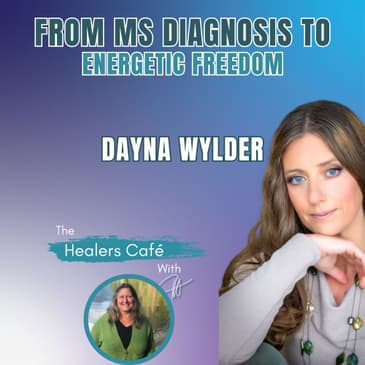
In this episode of The Healers Cafe Manon speaks with Dayna Wylder, an energy healing practitioner and author, discusses her journey from being diagnosed with multiple sclerosis (MS) to reconnecting with her body and innate healing capacity.
For the transcript and full story go to: https://www.drmanonbolliger.com/dayna-wilder
Highlights from today's episode include:
Gratitude as medicine: She chose to be "grateful before there was anything to be grateful for," using gratitude and mindset as active healing tools.
Frequency and choice: We are "antennas to the field," and what we broadcast—fear or love—shapes our health, relationships, and reality.
Refusing limiting narratives: You chose to step away from fear-based MS support groups and not identify with a doom-and-gloom prognosis, protecting your mindset and healing path.
ABOUT DAYNA WYLDER:
Dayna Wylder is an energy healing practitioner, author, and guide devoted to helping people reconnect with their bodies and rediscover their innate capacity for healing. After years of living in a state of disconnection shaped by trauma, chronic stress, and nervous system dysregulation, she was diagnosed with multiple sclerosis — a moment that became not an ending, but an awakening.
Unwilling to accept a life defined solely by symptoms or limitations, she began a deep exploration into the mind–body connection, subtle energy, and ancient healing systems. Through this journey, she discovered the profound wisdom of the five koshas — the layers of the human experience described in yogic philosophy — and began to understand that true healing must occur not just in the physical body, but across the energetic, emotional, mental, and spiritual dimensions of being.
Her work now blends modern neuroscience, frequency and sound healing, somatic awareness, and biofield tuning with Eastern and Western wisdom traditions. She draws inspiration from pioneers in the fields of longevity, nervous system regulation, and consciousness studies, while grounding her approach in lived experience, intuition, and compassion.
Dayna is the author of an upcoming book - Unlearn Dis-ease Relearn Well-being - that shares both her deeply personal story and the practical, integrative tools she used to change her relationship with her body and her diagnosis. Her message is not about "fixing" what is broken, but about restoring communication between the body, mind, and soul.
Through private sessions, group sound baths, healing circles, and online teachings, she empowers others to shift from fear into curiosity, from resistance into listening, and from survival into wholeness. Her work is an invitation: to soften, to reconnect, and to awaken the healer within.
Core purpose/passion: I am here to offer hope and shift what people believe is possible. My work moves beyond treating illness and into restoring alignment between body, mind, and spirit. Through energy medicine, sound, and conscious living, I support those who feel sick or disconnected in reconnecting with their natural intelligence. Aligned living then becomes the path not just to healing, but to preventing future suffering and expanding human potential. This is not about fixing what's broken — it's about remembering what has always been whole.
Website | Facebook | Instagram | YouTube |
ABOUT MANON BOLLIGER, RBHT, FCAH:
As a retired Naturopath 1992-2021, I saw an average of 150 patients per week and have helped people ranging from rural farmers in Nova Scotia to stressed out CEOs in Toronto to tri-athletes here in Vancouver.
My resolve to educate, empower and engage people to take charge of their own health is evident in my best-selling books: 'What Patients Don't Say if Doctors Don't Ask: The Mindful Patient-Doctor Relationship' and 'A Healer in Every Household: Simple Solutions for Stress'. and What if Your Body is Smarter than You Think? I am the Founder & CEO of The Bowen College Inc. which teaches BowenFirst™ Therapy and holds transformational workshops to achieve these goals.
So, when I share with you that LISTENing to Your body is a game changer in the healing process, I am speaking from expertise and direct experience".
Mission: A Healer in Every Household!
For more great information to go to her weekly blog: http://bowencollege.com/blog.
For tips on health & healing go to: https://www.drmanonbolliger.com/tips
Follow: Manon Bolliger website | Linktr.ee | Rumble | Gettr | Facebook | Instagram | YouTube | Twitter | LinkedIn |
Follow: Bowen College Inc. | Facebook | Instagram | LinkedIn | YouTube | Twitter | Rumble | Locals
ABOUT THE HEALERS CAFE:
Manon's show is the #1 show for medical practitioners and holistic healers to have heart to heart conversations about their day to day lives.
Subscribe and review on your favourite platform:
iTunes | Google Play | Spotify | Libsyn | iHeartRadio | Gaana | The Healers Cafe | Radio.com | Medioq | Audacy |
Follow The Healers Café on FB: https://www.facebook.com/thehealerscafe
Remember to subscribe if you like our videos. Click the bell if you want to be one of the first people notified of a new release.
* De-Registered, revoked & retired naturopathic physician after 30 years of practice in healthcare. Now resourceful & resolved to share with you all the tools to take care of your health & vitality!
00:00:11
Manon Bolliger: Welcome to the Healers Cafe today. I have with
00:00:15
me Dayna Wylder, and she's an energy healing practitioner, an
00:00:19
author and a guide devoted to helping people reconnect with
00:00:24
their bodies and rediscover their innate capacity for
00:00:29
healing. After years of living in a state of disconnection,
00:00:34
which was shaped by trauma, chronic stress and nervous
00:00:37
system dysregulation, she was diagnosed with multiple
00:00:41
sclerosis, a moment that became not an ending, but actually an
00:00:49
awakening. I'm going to leave it right there and just welcome you
00:00:57
to yeah to this conversation.
00:01:00
Dayna Wylder: Yeah. Thank you so much for having me. I love
00:01:02
talking about all of these things and bringing inspiration
00:01:05
and hope to anybody else that might be suffering.
00:01:08
Manon Bolliger: Yeah, I think that that's really important.
00:01:12
You know that that we can take, like a look at our our health
00:01:20
and and realize that it was actually whatever happened that
00:01:26
was not convenient was actually for our benefit, rather than it
00:01:31
was like a stop sign, like, Hey, wake up. Wake up. You know?
00:01:35
Dayna Wylder: Yeah, well, I mean, I ignored all the subtle
00:01:37
symptoms for so long in my life and disconnected and suppressed
00:01:41
and just pushed through and just was always doing a type
00:01:45
personality, achieving, going perfectionism, and at some point
00:01:49
my body just said, like, no, like, you're couched, that's it.
00:01:53
You better just sit down and go internal and start looking at
00:01:58
all of the things that are in there that need to be addressed,
00:02:00
that for years had been stuffed down, yeah.
00:02:04
Manon Bolliger: So what kind of symptoms did you have that you
00:02:06
were Yeah, you know, it was probably something, but let's
00:02:09
just move on. And, you know, work,
00:02:13
Dayna Wylder: you know, I think the first one started for me
00:02:15
when I was pregnant with my second son, and it was right on
00:02:19
the cusp of losing my first son who had passed away. So I had a
00:02:23
lot of trauma already that was going on and and then being
00:02:28
pregnant. Every time I would talk to the doctors about any of
00:02:30
my symptoms, they just kept saying, maybe you need an
00:02:32
antidepressant. Maybe it's all in your head. And it's funny,
00:02:36
because yes, the emotions definitely translate into
00:02:39
symptoms in the body. So in a sense, they are right, but not
00:02:43
in the way they meant it. No, they meant it in a derogatory
00:02:46
way, where it's just like I was making it up, or I was just like
00:02:48
psychologically impaired in some way. But the symptoms were so
00:02:52
strange to explain to somebody, because how do you say to
00:02:56
somebody, I can feel my pants? Because all the rest of my life
00:02:59
when I would walk, you just didn't notice your pants
00:03:02
touching your skin. But all of a sudden, when the skin sensation
00:03:05
changes, and I notice now my pants rubbing against my leg
00:03:09
right that I'm trying to explain to somebody, and they're like,
00:03:12
Yeah, that's crazy. And then I lost I got optic neuritis in one
00:03:15
eye, and lost my eyesight two times in a row. And when I
00:03:19
brought that to people, even family members, were saying to
00:03:22
me, well, it's probably because you just don't want to face
00:03:24
reality for what's just happened to you. And again, even when I
00:03:29
do energy medicine, now I know that there is an emotional
00:03:31
component to these things, and I do agree with that, but in the
00:03:34
moment, it was really hard to take that. As they were caring
00:03:37
about me or seeing me or supporting me, it felt like they
00:03:40
were just dismissing and then you end up in this very strange
00:03:43
position where I'm trying to prove I have a disease and
00:03:48
actually have a disease, like, who wants to really have
00:03:50
something wrong with you? But nobody will take me serious that
00:03:52
something is actually going on wrong, right? You know, they
00:03:56
just ended up saying, well, just go off on maternity for the rest
00:03:59
of your pregnancy. I was high risk again all the remaining
00:04:01
pregnancies I had. So I was like, Sure, and I guess maybe
00:04:04
they can't do a lot of testing during pregnancy anyway, they're
00:04:07
not going to do that many diagnostics on me. No. And once
00:04:12
my baby was born, now I had way more symptoms coming up, vertigo
00:04:16
and numbness. But I now am in a in a, you know, abusive
00:04:20
marriage, and I have a baby to take care of at a C section to
00:04:23
recover from, and I'm still grieving. I didn't have time for
00:04:26
those symptoms. I just pushed through it and just ignored
00:04:29
everything. And, you know, and being in the Canadian medical
00:04:32
system, which, you know, yes, it's free, but it's so limited
00:04:37
in so many ways, and we have long wait times, and we're
00:04:40
really restricted on what we can do. I waited a long time even to
00:04:44
get a diagnosis.
00:04:46
Manon Bolliger: Wow. There's so many points I want to throw in
00:04:50
with what you've just shared, you know, but I guess the one
00:04:55
that hit me at the beginning was also sort of the truths. That
00:05:00
are truths, but can be. They're not at the right time. They're
00:05:06
not therapeutic. You know, they're, they may have been well
00:05:09
intended. You know, to say, you know, well, maybe you should
00:05:14
take time off, and maybe you know that you're they're
00:05:17
alerting you. But you know, I found that you always have to
00:05:22
meet the person where they're at to really be able to help them,
00:05:27
you know? And it's not like even the diagnosis, isn't it's kind
00:05:33
of like it's an outside force. We need to go through the
00:05:38
process of coming to terms with what we have. And if you're in,
00:05:43
you know, I'd have quite similar situation on all fronts,
00:05:47
actually, not I didn't lose any, any child, which I, I can't even
00:05:51
imagine what that's the pain of that is like. But as far as you
00:05:56
know, being in a, not a good relationship, and, you know, and
00:06:02
the MS actually all these symptoms. It's like there's a
00:06:06
part of you that just, you just have to be there for the others.
00:06:10
In my case, it was for the others. It's just, you know, my
00:06:13
other kids, my, you know, I had to continue, and I start to work
00:06:18
and, you know, so you justify. It's like you, you don't really
00:06:23
listen to the opportunity that these signs are tell are giving
00:06:29
you. You just can't right. Your blade is full.
00:06:32
Dayna Wylder: You don't have time. And then, I mean, we live
00:06:35
in such a hectic, fast paced world where so much is expected
00:06:39
of us, especially as a woman, because, you know, not only did
00:06:43
the child rearing and the pregnancies and nursing staying
00:06:46
up at night, that's falling on me, but I still had to have a
00:06:48
career, right? I'm still trying to, you know, Chase, Chase, the
00:06:52
ladder of all these dreams I had, which, honestly, I'm not
00:06:54
even sure any of those were my dreams. Anyway, they were just
00:06:56
things roles I felt like I had to play. You know, avatars were
00:07:01
just kind of taking on in life, and even that's part of the
00:07:04
disconnection, I think, for me too, is just following a path
00:07:07
the whole time that really wasn't about me ever, right? It
00:07:11
was always in service of somebody else, and it was always
00:07:14
to give to somebody else and what somebody else wanted. It
00:07:17
wasn't until this major relapse that I've had five years ago
00:07:21
that I really aligned to purpose, you know. And I
00:07:25
actually think that the disease did that for me, yeah, it really
00:07:29
gave me a direction that I never would have taken before. And,
00:07:32
you know, sometimes your pain can become your cure, yeah.
00:07:36
Manon Bolliger: So you were before in the corporate world,
00:07:38
right? Yeah.
00:07:40
Dayna Wylder: I mean, I had taken a kind of a weird path. I
00:07:43
originally was doing scenic set design, and I owned a business
00:07:47
doing art when I was 18, and I was really happy doing that. I
00:07:51
love doing that. But I watched my father, who has an gliosing
00:07:55
spondylitis, which is another autoimmune disease, but
00:07:59
affecting the spine and arthritis, and he suffered
00:08:03
silently, and he never had the job with all the benefits and
00:08:06
all the things, and he still had to get up and go to work every
00:08:08
day. And watching him suffer, I started to think to myself, Wow,
00:08:11
I really should go get a job with benefits and with
00:08:15
disability and with all of the security nets, because I'm
00:08:18
watching him suffer. But again, the way life has a way of
00:08:23
teaching you lessons. I think, going off my path of following
00:08:26
my passion and going into a job where I was unhappy, not
00:08:30
respected, not really valued, there actually created the
00:08:34
disharmony of my body that ended up making me need the benefits
00:08:37
because I got sick. And I wonder, looking back, if I had
00:08:40
have stuck with my my my heart centered decision, right? And
00:08:44
not out of fear, not making a decision out of fear, but one
00:08:47
out of just my passion and where I was just being guided, maybe
00:08:50
some of that disease might not have manifested. I mean, there's
00:08:54
no way to go back and know, but I have a suspicion that maybe
00:08:58
that played part anyway.
00:09:00
Manon Bolliger: Yeah, well, you can't be twice, having two
00:09:03
different moments. There may be two different timelines, but,
00:09:07
but it's very hard to kind of know, you know if that's true or
00:09:11
not true. But, I mean, in the end, is, if you feel that it
00:09:15
could be, it usually is the truth, right? Because that's you
00:09:20
connecting to your inner knowing of your own journey, right?
00:09:25
Dayna Wylder: Well, once I left that job, which was so stifling
00:09:28
and threatening and made me so uncomfortable, like it wasn't
00:09:32
even just the that I really didn't feel my like myself in a
00:09:36
cubicle, maybe, and like living in this kind of a corporate job,
00:09:41
but I also was really serving there, like the 1% right? It's
00:09:45
doing risk consulting on high end insurance. So I'm you're
00:09:48
working on ensuring art pieces on a yacht, right? And then I'm
00:09:52
stepping outside in downtown Toronto over sewer grates of
00:09:56
people sleeping on the street, and you just have this kind of.
00:10:00
A disconnect between, I think, my morals and, you know, where I
00:10:04
wanted to be in life, and what I was actually putting my energy
00:10:07
into every day. Wow.
00:10:10
Manon Bolliger: So what was the, what was the moment that made
00:10:16
you say, Okay, enough of that.
00:10:19
Dayna Wylder: Well, I mean, I think during covid, it really
00:10:22
changed my relationship with that job. And I mean, I already
00:10:26
didn't really feel like I fit in very well in the corporate
00:10:29
environment, and I didn't feel like I was ever really going to
00:10:32
get promoted and pushed up into anything higher there. But
00:10:35
during covid, times when they started to really pressure me,
00:10:38
and they started to, you know, threaten if I didn't do testing,
00:10:43
and I didn't tell them a test to whether I was vaccinated or not,
00:10:47
or if I didn't comply to things that I was going to be fired. I
00:10:50
really started to struggle and and I put together a lot of
00:10:53
legal documentation to send, because I, because I work in
00:10:56
insurance, we have an entire floor of our building dedicated
00:10:59
to legal teams, right? Well, once I put together this very
00:11:04
well thought out, it took me months to put together all of
00:11:07
the bylaws and the laws and the then even their own code of
00:11:10
conduct that I could find to put together for them. And I sent it
00:11:13
through to them, and I had said that I don't want to talk about
00:11:16
it on the phone, because I thought they would trick me into
00:11:18
saying something I'm like, I want it all to be done via
00:11:20
email, and they kept calling me and trying to make me do it,
00:11:24
like, with multiple people on the phone, and I kept having to
00:11:27
step back and really, like, I'm not that good with setting
00:11:30
boundaries before this, and having, like, my own sovereignty
00:11:33
to say, like, no to people. So this really was, like, a test
00:11:36
for me in a lot of ways, to just be like, I'm, you know, I'm not
00:11:39
really comfortable. I'm not going to do this. And in the
00:11:42
end, they responded back to all that legal documentation with
00:11:46
only one simple email saying, Okay, we'll take you off the
00:11:49
list and we won't contact you again. And it was a little
00:11:51
victory for me, because I was like, Well, I guess all the
00:11:53
things I thought were right, because once they had their
00:11:55
legal team review it, they left me alone. But by then, I really
00:11:59
was already had woken up one morning and I couldn't walk, and
00:12:04
so now I'd already worked for a week or two where I was, like,
00:12:07
using my arms to put my legs under my desk and still type,
00:12:10
because I was going to push through right. I still needed my
00:12:13
job, especially because I was so scared my partner was going to
00:12:15
lose his job too. I felt the pressure. I still had to work
00:12:18
through this. Symptoms that were, yeah, I continued to work,
00:12:22
even though I really disliked them, they were disliking me. I
00:12:24
had all this threat of I'm going to lose my house now. How am I
00:12:27
going to take care of my kids? I'm homeschooling now as well,
00:12:30
because I've removed my kids from the school system, so more
00:12:33
pressure. So I'm working, I'm homeschooling. I'm being
00:12:36
threatened, and I'm pushing through, and then two weeks
00:12:40
later, it now it's my trunk, and I can't hold myself up. I'm
00:12:44
tipping and so I'm still trying to struggle through. And then
00:12:48
eventually my hands went from my elbows down numb, and I had
00:12:52
optic neuritis in my good eye, so now both eyes couldn't see.
00:12:55
And at that point I was like, I mean, there's no denying now,
00:12:59
like, I can't do this job. I can't feed myself, I can't walk
00:13:02
I can't bathe myself. So, I mean, at that point, there
00:13:07
wasn't a choice to push through anymore. My body made me
00:13:12
Manon Bolliger: very loud voice, but good for you, getting that
00:13:16
document, you know, together. But I mean, to think that this
00:13:20
is the pressure that people were under, you know, at that time,
00:13:24
and now that we know, you know, well, in Canada, we don't know
00:13:29
yet, because, as Trudeau said very proudly, that the reason
00:13:34
the news is so limited is because he controls it, right?
00:13:39
Dayna Wylder: Yeah, well, censorship is pretty real here.
00:13:42
Manon Bolliger: It's very real, you know. And most people in the
00:13:45
States, whenever I talk to them, they they can't believe it, and
00:13:49
then we can't share news, you know, if I show my apps to
00:13:53
anybody, not allowed, content, not allowed, not allowed. It's
00:13:57
like what, you know, it's, it's absolutely insane here. But, you
00:14:02
know, I think it's hard to wake up when the real, you know, I
00:14:07
mean, covid was, well, we know it's pre planned all this
00:14:12
business, right? We know it was all that stuff that is coming
00:14:16
out now in black and white. It's not even a question anymore, at
00:14:21
least in the States, in their system, it's all you know in
00:14:25
Congress, like they they can't hide it anymore, right? It's
00:14:28
actually out there. We're not privy to that information. We
00:14:33
can't share that information. So the real disease here is our is
00:14:39
the fact that we can't get the truth, we can't get informed
00:14:45
consent. We are brainwashed, you know, and we've had to so many
00:14:51
of us make decisions. I mean, for you, your body made the
00:14:55
decision. For you, clearly saying, Okay, you're out of this
00:14:59
one. But truthfully, a lot of people, you know, their body
00:15:04
didn't do it yet, and or, you know their their stress levels
00:15:09
went through the roof, or financially, they had no way
00:15:12
out. And you know, I think we have to acknowledge that we we
00:15:17
were all victims of incredibly astute propaganda, I mean very,
00:15:25
very good propaganda, which was a lie, you know, as it turns
00:15:30
out.
00:15:31
Dayna Wylder: So, you know, we the people that did have access
00:15:35
to information, and we're looking in the right places and
00:15:38
seeking it. It was there, but it was almost to me, like we lived
00:15:42
in two alternate realities. Yeah, correct, yeah, yeah, like
00:15:46
the people that were on one side for me there, it got to a point.
00:15:49
In the beginning, I really protested a lot. I did a lot of
00:15:52
deputations against the government. I spoke up a lot,
00:15:55
because I still thought there was a chance I was going to stop
00:15:57
somebody from taking a vaccine that was going to hurt them. And
00:16:01
in the end, you know, I saved my children, at least, and some
00:16:05
people in my life around me, but the, you know, the wider
00:16:07
community, I didn't really affect them very much, but they
00:16:10
really there was going to be no arguing with people that that,
00:16:13
or even just displaying information that I had, like I
00:16:17
was printing things out and showing it and being like, like,
00:16:20
making this up. It's not just me having an opinion. This is
00:16:23
actual science, this, well, REAL science, not the kind that's
00:16:27
politicized, but, you know, but people there, there's so much
00:16:31
cognitive dissonance that people had a hard time once they were
00:16:35
tricked into believing something. It's very hard for
00:16:37
them to go back and and admit that, and and the ones I do know
00:16:42
that have admitted it now it's because they got damaged. And
00:16:45
that's so sad to me. Like the friends that I have and the
00:16:47
people in my life that that something bad has happened, they
00:16:51
know why, and they talk about it now, but you know, it's it's too
00:16:56
late that they know it now, and now it's about, how can I help
00:16:58
people, and how can I find solutions? And when I started
00:17:02
treating people out of my house and doing energy healing, I had
00:17:05
some of those people who had been, you know, on on the
00:17:09
protesting side with me, and they were very concerned about
00:17:11
me treating people that had been vaccinated because I was so
00:17:14
compromised already. And they were thinking, Well, if you let
00:17:17
these people into your house and they're going to make you sick.
00:17:21
And are you sure these people were so mean to you? Do you want
00:17:23
to help these people? And I'm like, Absolutely. Like, the same
00:17:26
way I meant it when I said that. You know, back, everyone always
00:17:29
said that I got radicalized. And I was like, I think that
00:17:31
actually I have the same opinions that we all used to
00:17:33
have as a society all the way throughout time, which is, we
00:17:36
had privacy right and we had the right of autonomy of our own
00:17:40
body. And all of a sudden something changed, and everybody
00:17:43
tried to take mine away. And now, in response, I'm not going
00:17:46
to try to take that from somebody else to, you know, tit
00:17:49
for tat with anybody. It is all utmost sympathy, because I know
00:17:54
people that have been injured and and I'm not, I'm not quite
00:17:57
sure yet for everybody, how we're going to unwind some of
00:18:00
that and help people. I know that I've, I've had some good
00:18:04
success with PEMF in particular, seems to be helping people.
00:18:10
Manon Bolliger: Well, I was going to say, yeah, why don't we
00:18:12
talk about that? Because I think there's a lot of people that you
00:18:18
know, if they haven't realized it yet they will, very shortly.
00:18:22
I don't think this is going to be a big secret much longer. I'd
00:18:27
say the most a month, you know. And then it will be known
00:18:31
worldwide, you know what, what actually happened? So, I mean,
00:18:35
there's med beds, there's all these things. We don't know if
00:18:38
that's, you know, when that'll manifest exactly, but the work
00:18:42
you already do is already frequency. It's already
00:18:46
energetic. Do you want to maybe share a bit of that? Because
00:18:50
that gives people hope right now that there are things to do.
00:18:55
Yeah.
00:18:55
Dayna Wylder: So I mean some of the tools I do biofield tuning,
00:18:59
which is actually working with the bio field and and kind of,
00:19:03
it's almost like holding a mirror up to the body. So when
00:19:05
the body is got a disharmony in it, or an oscillation or
00:19:10
something stuck, when you play the frequency to the body, when
00:19:13
it when it hears what it should sound like in comparison to what
00:19:17
it is producing, it's a chance for the body to kind of correct
00:19:20
its own blueprint. And, you know, even before the tools, I
00:19:24
just wanted to maybe, on the topic that we were just
00:19:28
broaching, make something that's so accessible to so many people
00:19:31
right away. And it's something that changed for me, is that I
00:19:34
was really trying to, always before fight at the and I'm
00:19:39
going to say again, this is moving from the physical to the
00:19:42
energetic, or to the quantum. Is I was trying to fight people on
00:19:47
the ground like, let's protest, let's fight politics, and we're
00:19:51
fighting, you know, words with words, politics with politics,
00:19:53
opinion with opinion. But I found that the more I watched
00:19:58
that negative media and. And the more I engaged with it, I almost
00:20:02
felt like I was giving my energy to manifesting the very vision
00:20:05
that these people were hoping, you know, that we're trying to,
00:20:08
you know, create this, you know, top down, you know, central
00:20:13
control mechanism. And the more fearful we got about it, the
00:20:17
more that we fed into that system. Even though we were on
00:20:20
my side, trying to fight against it. I feel like I was
00:20:23
contributing to it. I'm manifesting the fear and so with
00:20:27
the energy devices, to me, I've thought it's not even just the
00:20:30
device, because not everybody has access to PEMF, and not
00:20:33
everybody will know a practitioner that does bio
00:20:35
residents, but we all have access to is the energy of our
00:20:38
own thoughts and our own beliefs and our own perceptions, and
00:20:42
it's something that we can engage with where, if we come
00:20:45
from a place, and I love that we're talking about this now
00:20:48
with compassion and love for people, because it's exactly
00:20:51
what's needed in the world. We don't, we don't need more fear,
00:20:53
we don't need more judgment. We don't need more, you know, shame
00:20:57
for people that have taken it or guilt, or, you know, we need
00:21:00
families to come back together and support each other's
00:21:02
communities, to come back and realize that, you know, it's not
00:21:05
as dark and as bad as we're told it is all the time. I mean, when
00:21:09
we watch the news, it seems dark, but when we actually look
00:21:11
at the streets and our neighbors and our families and the people
00:21:14
around us, the world is still beautiful. And if we treat each
00:21:18
other with kindness and we create, you know, I guess maybe
00:21:22
I, at some point, I stopped fighting against the government,
00:21:25
and I started thinking, let's create something else. Right?
00:21:28
Exactly, right. So I started a farm school with a lady that has
00:21:31
property, and we all built a yard, and everybody took their
00:21:34
kids out of school, and I thought, it's so beautiful. My
00:21:36
kids, mind you, they're in high school now, so they've gone back
00:21:39
into school because they wanted that, but that, that community,
00:21:43
that farm school, is thriving. Yeah, everybody is there, and
00:21:46
it's, it's a huge community now and then, the same thing with me
00:21:49
doing teaching yoga and sound bath. I thought there is still a
00:21:52
way to just bring all of these people that have felt lonely and
00:21:55
isolated, and to bring them all into a place where we are
00:21:58
playing a shared frequency, you know, of hope and love and
00:22:04
community. And, you know, I love the tech devices too. I treat
00:22:08
people with that. I think that they're really valuable, and I
00:22:10
think that they can affect the body very quickly, and they're
00:22:15
powerful, but our mind does so much for us too. And I don't, I
00:22:18
think people underestimate, actually, how much power they
00:22:21
have to create the frequency they want and to manifest the
00:22:24
life they want just by using their own mind.
00:22:28
Manon Bolliger: So, like, just concretely, to give an example,
00:22:34
when you say you can use your own mind so somebody's listening
00:22:39
and they're going, Okay, well, what do I what is it I do? So,
00:22:43
like, I don't want to answer it for you. You tell me what you
00:22:47
would,
00:22:48
Dayna Wylder: you know, I mean the simplest, easiest one. And
00:22:50
sometimes when I say these things, I think it sounds so
00:22:52
simplistic that people are like, they think that things need to
00:22:55
be complicated to work, but they don't. They don't, because the
00:22:59
thing about energy that's so beautiful is that all you have
00:23:01
to do is just think a different thought, and your energy
00:23:03
immediately shifts Right, right? And I know this because when I'm
00:23:06
when I'm live, teaching with people, or working with people,
00:23:09
I can do a muscle testing or kinesiology, right, applied
00:23:13
Kinesiology. And you can see right away, if I tell somebody,
00:23:16
think about a negative thought, they get weaker. If I, you know,
00:23:19
think of a happy moment, they get stronger. So I mean, you
00:23:22
know that the thought is that immediate. So one of the
00:23:24
practices I love to do, I mean, not everybody is religious. So I
00:23:28
mean, if you're not saying grace at the table, another easy
00:23:30
practice is when you sit down to eat meals. And it is a good idea
00:23:34
to always sit with other people and to share meals, not eating
00:23:37
on the run, not, you know, rushing, you know, the then the
00:23:40
blue zones around the world. One of the things is not just the
00:23:42
food they eat, but it is the fact that they eat together and
00:23:44
they have shared community. That every time we eat in my house,
00:23:47
we say five things we're grateful for. And that was like
00:23:51
pulling teeth when I first did it with my kids, you know.
00:23:54
Instead, they always want to, like, say it like, backhanded,
00:23:57
like, well, I'm grateful that it's your night to clean, right?
00:23:59
Like it was. So it took a while to get everybody kind of into
00:24:03
the groove of it, but that's such an immediate practice to do
00:24:07
that changes the way you think about your own life. And I know
00:24:11
one of my first clients I ever had, she was so sick she
00:24:14
couldn't come into my house to do PEMF. I had to buy a portable
00:24:19
carrier in case so I could bring it to her house. And she was an
00:24:21
elderly lady, and she asked me, what was it that how did I first
00:24:26
start to heal when I was so sick that I was crawling and it took
00:24:30
me a minute to answer, but you know, the answer I gave her then
00:24:32
still really holds true for me, which was I became grateful
00:24:35
before there was anything to be grateful for. And so even when I
00:24:39
was laying on the floor, and everybody else's life kept
00:24:42
spinning. So everybody's still at work and at school, and
00:24:44
they're all doing things, and I'm just alone every day with my
00:24:47
thoughts and my broken body. And I started to think about, well,
00:24:51
you know, there still is so many things that I could be grateful
00:24:53
for, the fact that I'm laying here with my dog beside me, the
00:24:56
fact that I have a house right that there's heat right now,
00:24:59
that. That somebody still, you know, poured me a glass of water
00:25:02
before they left the house, so I could have that right, that
00:25:05
somebody was going to come home later tonight and tell me they
00:25:07
love me, right? That there was like that I still had the strong
00:25:11
mind that could help heal my body. Like, once you start, even
00:25:14
right now, if I just start saying it, I could just go on
00:25:16
and on and on, be grateful for and that's just a quick, easy
00:25:20
practice to do, you know, like we are kind of born with a
00:25:23
negativity bias, because it is evolutionary for us to like,
00:25:27
remember all the things that could be danger or the bad
00:25:30
things, and you know who to stay away from and what not to engage
00:25:33
with. But it's a conscious effort to draw on the positive
00:25:39
memories and the positive resources. And the same way that
00:25:43
we train ourselves to be negative and to complain and to
00:25:47
judge, we need to train our brain to also remember all of
00:25:51
the wonderful things that happen too. Because whatever, whatever
00:25:55
you will seek, you'll find, right like, you know, if you're
00:26:00
buying you buy a white jeep. You see white Jeeps everywhere
00:26:03
because you're looking for it, right? With happiness, and it's
00:26:07
the same thing with joy.
00:26:09
Manon Bolliger: Oh, yeah, I definitely concur. Yeah. It's
00:26:13
very interesting to hear your you know, how you managed to
00:26:17
turn that around? So it was partially like you say, the
00:26:22
gratitude, just to start the practice, and then it becomes
00:26:27
not, I mean, at least, at least for me, it's natural. I I'm more
00:26:32
like, I see the celebration and everything. So I'm like, oh, you
00:26:37
know. And then sometimes people say to me, but it hasn't
00:26:40
happened yet, oh, it's going to really care. I can feel it. And
00:26:45
what's the difference? If it you celebrate and it you feel this
00:26:50
joy and it feels true. I mean, it's part of almost the
00:26:55
manifesting. I don't do it like, oh, because I'm going to
00:26:58
manifest. It comes to me, and then I have to just acknowledge
00:27:03
it, because it's actually there, you know. And I know Byron Katie
00:27:07
said, if, if you don't, if it does, if the thought doesn't
00:27:11
bother you or doesn't hurt you, keep it right. The rest you can
00:27:14
deal with, right? But you know, there's many ways of working on
00:27:18
it, or putting in a cloud or do whatever, but it's like, keep
00:27:21
the good things, you know, and then after a while, it's, that's
00:27:24
what you see, you know, absolutely.
00:27:27
Dayna Wylder: And I feel like we are like antennas to the field,
00:27:31
yes. So what are we broadcasting? And if we're
00:27:34
broadcasting fear and worry, and you know, it's one of the
00:27:38
decisions I made early with the MS too. Was that because I had
00:27:41
thought after I got diagnosed, when I had my my second son, and
00:27:46
then I was thinking I wanted to have another child because I
00:27:49
didn't want him to be cut off from family lines. I wanted him
00:27:53
to have be an uncle, and, you know, to have nieces, nephews. I
00:27:56
wanted there to be, you know, an extended family. But I was
00:27:59
thinking, is this really irresponsible now, like, you
00:28:01
know, now I have MS of grieving, and I'm high risk. Was that
00:28:06
second pregnancy didn't really it was very scary, too, you
00:28:10
know, the story of that, and I'm still in this abusive marriage,
00:28:12
and I thought, you know, I'm never going to make a decision
00:28:15
based on fear with the MS, because the truth really is
00:28:17
going to be that, you know, there's a few scenarios how it
00:28:20
plays out. Either I could be very scared about my future, and
00:28:23
I can waste all the years worrying, and I get to the end
00:28:26
and the MS didn't really do that much, my life was fine, but I
00:28:29
wasted my whole life worrying about something that never came
00:28:32
to be. Or I can Worry, worry, worry, worry, and end up the
00:28:36
worrying maybe accelerating my stress and my health going bad.
00:28:40
The health goes bad. I still didn't get to enjoy any of the
00:28:43
years because I worried the whole time. Or I can just, like,
00:28:47
be happy and just take it for how it is, live in what is,
00:28:51
which is right now. I'm fine right now. I'm safe right now.
00:28:54
I'm okay. And, you know, maybe tomorrow I won't be but I'll
00:28:57
still be okay, even if an MS relapse comes or something
00:29:00
happens, that's okay. I'm still going to be okay anyway, and
00:29:03
maybe I get to the end of my life, and it was all just
00:29:05
beautiful, regardless of whether my health did whatever we did
00:29:09
right? Is just be happy with it. And and when you're broadcasting
00:29:12
that frequency out all the time, you know, the universe meets you
00:29:16
halfway, right? And so whatever you're putting out there, just
00:29:19
like the tuning forks. When I'm, like, listening to people's
00:29:22
body, you know, the the cosmos and the energy and the field,
00:29:25
it's just, you know, a macro of the micro that's going on in
00:29:29
your body. And you will manifest those things coming towards you.
00:29:32
And you know, and I don't think manifestations necessarily
00:29:34
exactly like one for one, like you're like, oh, I want this
00:29:37
exact thing, and you get it. But the frequency, the emotions that
00:29:40
you hold, you know, the belief that you hold, and even if it's
00:29:43
as small as that, life never really changed, but you just
00:29:46
noticed to be happier, right? It wasn't some magical thing that
00:29:49
happened, even if it's only that, then, isn't that good
00:29:52
enough, too? That's huge, right? Like, that's just like placebo.
00:29:55
I don't care if it was real or not, like, if, in the end, the
00:29:58
thing made me feel better. Yeah, then, you know, that's the
00:30:01
point.
00:30:01
Manon Bolliger: Yeah, that was exactly the point. So, yeah, no.
00:30:05
And, you know, I think too. The other thing is to in order for
00:30:09
that to be, like, if you have beliefs, for example, that you
00:30:14
haven't questioned, you know, like, for example, when I, when
00:30:18
I was diagnosed, you know, I was suggested to go to, what are
00:30:23
those groups called support groups. But the support group,
00:30:27
oh my gosh, like, negative craziness, like, it's like, and
00:30:31
what will you do when you're on the wheelchair? What will you
00:30:34
do? And how will you this? And, you know, it's like, oh my God,
00:30:38
I am so not being in this group. And, you know, there was a
00:30:41
choice where I could try and be the inspiration for this group.
00:30:44
But no, no, I gotta deal with me here. And my vibe feeling was
00:30:49
not get out of there. This is not the world, you know. And you
00:30:55
know, look for proof, which was easy, because at the time, I was
00:30:59
a practicing naturopath, and I know that Ms can be and I can't
00:31:04
use that word, and I still won't, because it's so illegal
00:31:08
in Canada, I'm not going to go there. But it can. You could
00:31:13
have a life that feels as if you really don't have such a
00:31:19
condition.
00:31:19
Dayna Wylder: You know, I actually can't say that, but I
00:31:22
already feel like that's happened
00:31:24
Manon Bolliger: for me. Yeah, me too, me too. That's
00:31:27
Dayna Wylder: actually done. I've already sorted that, and
00:31:29
it's and it's done, and I don't, and I think actually it's one of
00:31:32
the beautiful things at the beginning, is that I never, ever
00:31:35
identified with that label, and I never believed it. So when I
00:31:39
first got diagnosed, because I had done a lot of courses about
00:31:42
brain and behavior in university, and so I knew about
00:31:44
ms already, and I knew kind of some of the symptoms, and I had
00:31:47
it in my mind that that could have been it. But by the time I
00:31:51
went to see my actual ms doctor for the first time, and he said
00:31:54
to me, you know, all this poor prognosis and how things would
00:31:57
turn out and what I need to do and take and you know how
00:32:00
effective those things only are. And I remember, I'd already kind
00:32:04
of researched it a little bit, and I said to him, Well, no, I'm
00:32:06
going to cure it. And he was laughing. He's like, Well, you
00:32:09
can't do that. And I was like, Well, you know, I read studies
00:32:12
where some people never get any new lesions, and the rest of
00:32:14
their life they never get any more. He's like, Yeah, that
00:32:16
happens sometimes. Like, well, I've also heard that they can
00:32:18
shrink and go away. Yeah. That happens. Sometimes. I'm like,
00:32:21
Okay, well, I'm gonna do both. I'm gonna not get anymore, I'm
00:32:25
gonna drink the ones that I have.
00:32:27
Manon Bolliger: And there's a study that shows that there may
00:32:29
not be any correlation between the lesions and the symptoms.
00:32:33
Another study, you know. So it's like, hello, you know.
00:32:36
Dayna Wylder: And he he said, you know, be prepared to be in a
00:32:38
wheelchair probably within 10 years and keep your job with
00:32:42
benefits. And on the 10 year anniversary, I ran a triathlon.
00:32:47
Manon Bolliger: Oh, my goodness, congratulations.
00:32:49
Dayna Wylder: You know what? Though, honestly, looking back,
00:32:51
I don't think I would ever do that again, because that was a
00:32:53
little bit of that perfectionist fight against it, prove it
00:32:59
exactly, yeah, so I think that, I don't know that I would want
00:33:02
to go back and maybe recreate that, but it was a little
00:33:05
Manon Bolliger: bit of like a celebration. Wow. Okay, I have
00:33:12
one more question for you, just it's because it's on my mind,
00:33:17
and we haven't really talked Well, we have actually,
00:33:20
indirectly, we haven't talked about sound baths, and we
00:33:23
haven't really, you know, explored more. So if you have
00:33:27
something you want to end with that, I'm more than happy that
00:33:30
you you do that. But are you still in what you would call an
00:33:36
abusive relationship?
00:33:38
Dayna Wylder: No, no. So I eventually, and this is the
00:33:41
thing about energetics, too, that relationship once, I
00:33:44
finally decided when I had my daughter, so now I have two
00:33:47
kids, and I guess some of the things I tolerated for myself.
00:33:52
Once I had children, I was like, I couldn't tolerate it for them,
00:33:55
right, right? Because it maybe in my life, I didn't think I was
00:33:59
worth it, but they definitely were and, and so, you know, it
00:34:03
was hard to because I, you know, being a relationship, I was kind
00:34:06
of scared of them, and leaving is a scary thing to do. And I,
00:34:09
you know, now I also have a disease, and I'm working only
00:34:11
part time, and I have two kids, and how am I actually going to
00:34:14
now, you know, like I might leave the stress of him, but I
00:34:18
have the stress of carrying this weight now by myself, but
00:34:21
energetically, once I said, like no thank you to him, it was just
00:34:26
done, you know. And then I had a lot of things you have to pick
00:34:28
up the pieces later, but I took after that, almost two years
00:34:32
where I never dated, I never, you know, entertained men in any
00:34:37
way. In my mind, I just, I'm going to get my ducks in a row.
00:34:40
I'm going to figure out all those patterns in myself and
00:34:43
those beliefs I have about myself, because I don't want to
00:34:46
welcome that in my life ever again. I'm not trading in their
00:34:49
dad for a different guy. That's going to be maybe even worse. So
00:34:54
I that whole year or two that I was doing that I kept saying to
00:34:58
myself the affirmation over and over. Sure you deserve peace and
00:35:01
happiness. You deserve peace and happiness. And I I played that
00:35:05
to myself every morning when I was waking up, and every night
00:35:08
when I was going to bed, and I eventually ended up with, I
00:35:13
would say, the man I'm with now. I've been with for 10 years, so
00:35:15
he's actually raised my kids more than their dad did. He's
00:35:19
like, not even just my, my but the best part I've ever had,
00:35:22
he's my favorite friend I've ever had. Well, you know, and
00:35:26
just and so kind of what a difference. Because when I had
00:35:28
MS, and I looked at my my ex husband, what a terrifying
00:35:31
thought it was for me that he was going to be my caregiver,
00:35:34
right? If I ever became vulnerable or in a wheelchair or
00:35:37
something, this man would really have, you know, taking advantage
00:35:41
of that, and it would have been a nightmare, where it would have
00:35:44
Manon Bolliger: been like a being in a hospital. I mean,
00:35:51
it's terrible. It's, you know, how people have suffered in
00:35:54
there, right, from exactly this kind of abusive, yeah, a
00:36:00
position, right this, it's crazy.
00:36:02
Dayna Wylder: But you know what, actually, and I, you begin
00:36:06
having being a former naturopath. I right in the
00:36:08
beginning, when I got diagnosed, I left that neurologist, and I
00:36:11
said, I'm going to go try to seek somebody else. And I found
00:36:13
this lovely naturopath, and she, she kind of, you know, tiptoed
00:36:18
around it during a lot of our first meeting, but near the end,
00:36:21
before I left, she said, You know, I just want to let you
00:36:23
know I've had a lot of patients with MS that have come to me
00:36:25
over the years, and they had one common pattern. They were all in
00:36:29
really terrible marriages, and how's your marriage? And I was
00:36:32
like, Well, now that you ask, it's not that great. And she
00:36:34
said, Well, I don't really want to, you know, it's not my place
00:36:36
to say anything. But those people that left those
00:36:38
marriages, they're all doing fine now, and the ones that
00:36:40
stayed, I don't even see them anymore, and they didn't do very
00:36:44
well, wow. And it was when I really started to think, yeah, I
00:36:47
need to readjust this, because, you know, he's probably going to
00:36:50
put me in the wheelchair.
00:36:52
Manon Bolliger: Yeah, well, you would be allowing him to put you
00:36:55
in the wheel.
00:36:56
Dayna Wylder: Yes, that's right, yeah, I know, because we are
00:36:59
responsible for,
00:37:02
Manon Bolliger: yeah, okay, let's finish this with it was
00:37:07
people who don't know what a sound bath is. Why don't you
00:37:09
explain what that is, at least? So there's something about this,
00:37:13
because this was a lovely conversation, and I think from a
00:37:16
healing perspective, which is what my podcast is. You know,
00:37:19
how do people heal? What does it take? All of that, I think we've
00:37:23
covered, you know, amazing ground. But sound healing, some
00:37:27
people may not know what it is. Why don't you explain it?
00:37:31
Dayna Wylder: Yeah, so sound bath, I do for groups of people,
00:37:34
and we generally start by doing some kind of energy work, so a
00:37:39
little bit of maybe yoga, some pranayama, or breath work,
00:37:42
Qigong, anything to just kind of open the body and kind of get
00:37:46
the energy moving and flowing, and then generally moving into a
00:37:50
meditation once we've kind of got the body, kind of like
00:37:53
taking a breath and letting go and relaxing a little bit. And
00:37:57
then I, generally, I have people lie down and get cozy with a
00:38:00
blanket around them. I provide eye masks, because I feel
00:38:04
there's something about all the other senses being blocked out
00:38:09
right where you're really now you're just listening. And I'll
00:38:13
walk through and I know different people do sound baths
00:38:16
with, you know, sort of different techniques, but for
00:38:18
me, I like to make the sound immersive. So I set up my
00:38:21
instruments, you know, in different parts of the room, and
00:38:23
then I walk over top of people. Because if you take, say, my
00:38:27
sonic chimes, and once you hit them, if you move them, it
00:38:30
oscillates the this the sound over top of somebody. So it
00:38:35
becomes like they're part of the wave. I know that a lot of
00:38:39
people have a difficulty meditating because we,
00:38:42
especially people with the monkey mind and the active
00:38:45
world, and we're so distracted with social media and news and
00:38:48
all of these things, it's very hard to sit down. But sound is a
00:38:52
really beautiful bridge into meditation because it gives your
00:38:56
left brain that needs to think and to analyze and to process.
00:39:01
It gives that part of you something to pay attention to,
00:39:04
so that, especially once I get to the crystal bowls, they have
00:39:08
so many overtones in them, and especially when you start to
00:39:11
pair them together with multiple ones at one time, singing, it's
00:39:16
it gives you something to listen to and focus on where the right
00:39:20
brain, then the one that's creative and problem solving and
00:39:23
has the space and the expansiveness and is more open,
00:39:27
it has a chance for that one to kind of come in to the
00:39:30
forefront. And I find that that's where a lot of the stored
00:39:34
beliefs are and the stored emotions are. And you know,
00:39:38
you're getting into the somatic and the body. And I've had
00:39:42
experience many times over and over with people releasing a lot
00:39:46
of emotions during sound bath, that people end up crying, some
00:39:50
people end up kind of ecstatic and and it's interesting for me,
00:39:54
because I'm getting to watch people, especially when they
00:39:56
have the eye masks on and they're all laying down. What
00:39:59
freak. One sees will do different things for different
00:40:02
people. So I find, like when I play 528, Hertz, that a lot of
00:40:07
people sigh. Where you see people hear these big breaths
00:40:10
and they kind of let something out, right? And when I'm
00:40:13
playing, you know, higher frequency ones, I'll get people
00:40:17
clearing their throat more often, right where, when you're
00:40:21
moving on higher frequencies, where there's our people
00:40:24
swallow, or there's little, just kinds of things where I can see
00:40:27
their bodies actually working through something like, I don't
00:40:30
know what's going on inside their mind, but I get to see,
00:40:33
you know how you can see their chest and their stomach rise and
00:40:36
fall differently as you play frequency to them. But I always
00:40:40
every sound bath, and I think with this podcast too, talking
00:40:44
about things that are accessible for people right now today,
00:40:47
which are, you know, sometimes the the energy tools, as much as
00:40:50
I love them, not everybody has them. Same with sound bath, as
00:40:54
much as I love everybody to keep coming back. And I have regulars
00:40:57
that come all the time. I like to give people things that they
00:40:59
can take at home and do for free all the time. And so we end up
00:41:03
every sound bath by doing a lot of chanting and mantra, because
00:41:07
it's something and and it's really powerful too, like your
00:41:10
own voice is your best healing tool, and not even just because
00:41:13
I believe that words do have a lot of power. So when we're
00:41:16
actually saying Sanskrit words that have these, you know,
00:41:20
powerful messages, and frequency with them, but it's also
00:41:25
stimulating your vagus nerve, right? And it's calming the
00:41:28
parasympathetic nervous system, and it's having all these other
00:41:31
wonderful benefits. And words are not even just in that sense
00:41:35
of humming or vibrating, but words are so powerful in
00:41:38
general, right? And so it's like, really, to be careful the
00:41:41
kinds of words that we speak, because that's its own kind of,
00:41:44
you know, harmonic frequency, or it's a dissonant frequency,
00:41:47
Manon Bolliger: absolutely, yeah, yeah, great. Well, I think
00:41:51
we, we managed to cover a lot, so I really appreciate your time
00:41:57
and your share for today.
00:41:59
Dayna Wylder: Yeah, thank you. I feel like this is a conversation
00:42:02
I could just have hours on end. I love talking about this stuff.
00:42:07
Thank you. Yeah, thank you for having me. Yeah.