
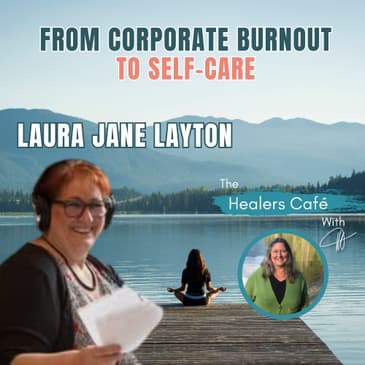
In this episode of The Healers Café, Manon speaks to Laura to discover how Laura Jane Layton overcame the stresses of corporate burnout and negative self-talk to embrace self-care and inspire others to find balance and well-being in their lives.
For the transcript and full story go to: https://www.drmanonbolliger.com/laura-jane-layton
Highlights from today's episode include:
Laura recognized her "inner bully" through her patterns of negative self-talk, particularly as a response to work-related self-doubt, and began consciously changing the language she used with herself to foster self-kindness.
Laura emphasized the necessity of setting and defending boundaries for self-care, sharing how putting "me time" on her calendar and communicating her needs at work led to a healthier, more effective work-life balance.
Manon observed that openly practicing self-care and self-respect can inspire others in the workplace to value their own well-being, suggesting that positive individual change can shift corporate culture.
ABOUT LAURA JANE LAYTON
Laura Jane Layton is a recovering corporate workaholic. Her work-related stress resulted in neglecting her self-care. Her message is a beacon of hope for women seeking to transform their inner bully voice into their best friend. With a warm and relatable approach, Laura Jane guides listeners towards lasting change, inspired by her own journey of self-discovery.
Laura Jane specializes in helping women change their self-talk, foster self-kindness and support themselves as if they were their own best friend. Having navigated her journey from workaholic to prioritizing self-care after a wake-up call due to failing health, Laura Jane is uniquely equipped to guide others towards greater balance and fulfillment.
Core purpose/passion: My purpose is to love others unconditionally and to create natural happiness, the kind that flows from within like an artisan well.
– YouTube | Instagram | LinkedIn | Website
ABOUT MANON BOLLIGER:
As a recently De-Registered board-certified naturopathic physician & in practice since 1992, I've seen an average of 150 patients per week and have helped people ranging from rural farmers in Nova Scotia to stressed out CEOs in Toronto to tri-athletes here in Vancouver.
My resolve to educate, empower and engage people to take charge of their own health is evident in my best-selling books: 'What Patients Don't Say if Doctors Don't Ask: The Mindful Patient-Doctor Relationship' and 'A Healer in Every Household: Simple Solutions for Stress'. I also teach BowenFirst™ Therapy through Bowen College and hold transformational workshops to achieve these goals.
So, when I share with you that LISTENING to Your body is a game changer in the healing process, I am speaking from expertise and direct experience".
Mission: A Healer in Every Household!
For more great information to go to her weekly blog: http://bowencollege.com/blog.
For tips on health & healing go to: https://www.drmanonbolliger.com/tips
Follow: Manon Bolliger - | Linktr.ee | Rumble | Gettr | Facebook | Instagram | YouTube | Twitter | LinkedIn |
Follow: Bowen College Inc. | Facebook | Instagram | LinkedIn | YouTube | Twitter | Rumble | Locals
ABOUT THE HEALERS CAFE:
Manon's show is the #1 show for medical practitioners and holistic healers to have heart to heart conversations about their day to day lives.
Subscribe and review on your favourite platform:
iTunes | Google Play | Spotify | Libsyn | iHeartRadio | Gaana | The Healers Cafe | Radio.com | Medioq | Audacy |
Follow The Healers Café on FB: https://www.facebook.com/thehealerscafe
Remember to subscribe if you like our videos. Click the bell if you want to be one of the first people notified of a new release.
* De-Registered, revoked & retired naturopathic physician after 30 years of practice in healthcare. Now resourceful & resolved to share with you all the tools to take care of your health & vitality!
00:00:00
Introduction: Welcome to the Healers Cafe, the number one
00:00:03
show for medical practitioners and holistic healers to have
00:00:08
heart to heart conversations about their day to day lives
00:00:12
while sharing their expertise for improving your health and
00:00:17
wellness.
00:00:17
Manon Bolliger: Welcome to the Healers Cafe today. I have with
00:00:23
me Laura, Jane Layton, and she's a recovering corporate
00:00:29
workaholic, so I'd like to know that story a little bit, and
00:00:33
we'll find out anyway, her work related stress resulted in
00:00:37
neglecting her self care, and her message is a beacon of hope
00:00:42
for women seeking to transform their inner bully voice into
00:00:47
their best friends. So I think this could be an appropriate
00:00:52
discussion. First of all, when did you know you were a self
00:00:57
bully?
00:00:59
Laura Jane Layton: You know, probably we all have that
00:01:02
negative self talk. You know that even growing up, oh, I'm
00:01:07
not as cute as my sister. My sister has more friends than I
00:01:10
do. You know, we always second guess ourselves. And I didn't
00:01:14
realize how bad I was bullying myself until I was into maybe
00:01:19
middle age. You know, I do. This was normal, and it's like, why
00:01:23
can't I can change the way I talk to myself, right?
00:01:25
Manon Bolliger: For sure. Yeah, yeah. Well, okay, so let's give
00:01:30
a bit of context on because this is about health. Stress is
00:01:35
certainly related to health. But what? What like? Why are you
00:01:42
wanting to share your message to to my audience? What is it that
00:01:48
we can really learn from you? Know, a self professed
00:01:52
workaholic, corporate workaholic. So what? What's
00:01:56
involved in that? Because not everyone's into the the
00:01:59
workaholism can happen in any field, but tell us a little bit
00:02:04
what makes corporate workaholics work that hard. Typically.
00:02:10
Laura Jane Layton: For me, I can tell you why I did. It was a lot
00:02:14
of self doubt. You know, I didn't I wasn't sure I was as
00:02:18
good as the other people in my department, or as good as the
00:02:21
managers equal to me. And so I busted my butt as hard as I
00:02:26
could if I needed to stay two, three hours longer or work
00:02:31
overnight because I had a deadline, I did it, and it was
00:02:37
so important to have money. You know, money is that thing that
00:02:40
keeps us a roof over our heads, but I had no idea how bad it
00:02:47
was, killing my health. You know, until you wake up in the
00:02:50
hospital and go, Okay, I have got to make a change. I cannot
00:02:54
let this do it anymore. And so how do I take away that self
00:02:57
doubt and those reasons why I'm staying at the office long hours
00:03:04
and answering phone calls and emails in the middle of dinner.
00:03:08
It's like, why? It like those things should be precious, you
00:03:11
know? And so where are we setting our boundaries and how
00:03:15
are we enforcing them? You know, boundaries aren't for the other
00:03:18
people. You can't say, well, never call me after eight. It's
00:03:22
going to happen. So how are you going to enforce those and how
00:03:26
are we going to make sure that we keep those boundaries?
00:03:31
Because once somebody crosses, they're going to keep crossing.
00:03:35
And so it's that self doubt. I it's like, well, it can wait
00:03:39
till tomorrow. There is no reason it's so urgent right now.
00:03:43
And I think that's when I love email and text, you know, so I
00:03:47
don't have I can just respond like, I'm off for the night,
00:03:52
done. And so how do you set those boundaries to take care of
00:03:58
yourself and stop that negative chatter like, Oh, if I don't get
00:04:02
this done on time, I might get fired. Or if I don't have all of
00:04:06
this, my ducks in a row, the other managers are gonna think I
00:04:10
don't deserve to be here. And that's all negative self talk,
00:04:14
you know. Or some people call it imposter syndrome. Sometimes
00:04:17
call it the inner critic. I call it my bully because, you know,
00:04:23
and I can, I'm going to just this one. I know it's not about
00:04:26
your podcast, but when I was raped many years ago, that was a
00:04:30
one time incident. How many times did I replay in my mind
00:04:36
over and over and over? And it's like, how do you get that
00:04:40
thought out of your mind? And it's like that forever? So that
00:04:44
was an exaggeration, but that same repattering pattern, I
00:04:49
can't even say it happens in all sites, of ways that we're doing
00:04:53
our own bully and if our best friend was to trip, what would
00:04:57
we say? You're an idiot? You're so clumsy? No, we'd say it's
00:05:02
okay. Come on, let's go. I'll give you a hand. I'll help you
00:05:05
out. Why do we not do that for ourselves? We are the only thing
00:05:14
that keeps us going. There's no outside force. There's no
00:05:18
outside anything else. And when we ignore our own personal
00:05:23
needs, we're letting ourselves down. That's the bully in our
00:05:30
our life is ourselves.
00:05:36
Manon Bolliger: So, yeah, so, so why don't we work through that
00:05:41
process a little bit like, so what comes first? Like, how does
00:05:47
a person become, you know? Because you could say, well,
00:05:50
I'm, you know, Oh, I like to succeed. I like to make sure my
00:05:54
work is good. Sure, I'm a bit of a perfectionist, but, you know,
00:05:58
it's, it's how I operate. And, you know, I'm proud of it, and I
00:06:02
feel good. How do you distinguish when it's truly like
00:06:07
a bully voice, when you become aware that this is not in your
00:06:12
best self interest, and then certainly not a self care thing?
00:06:17
Like, how did you become aware of that.
00:06:21
Laura Jane Layton: So I started paying attention to how I talked
00:06:25
to other people and how the thoughts were in my head. You
00:06:29
know that that dialog back and forth and go, I don't talk to
00:06:33
other people like this. So why do I talk to me like this? And I
00:06:38
know we know ourselves 24 hours a day, every second of those
00:06:42
hours, and we know all our ups and downs, and you pretty much
00:06:45
only see the highlight reels of everybody else. You know those
00:06:48
basketball games that all the perfect shots. You don't see the
00:06:51
bloopers, and we know our bloopers, and so we are. There's
00:06:57
that piece of shame, that thing that kind of holds us back. It's
00:07:01
like, I'm not as good as them, because you only see your
00:07:05
bloopers. And that's built in, you know? That is our the thing
00:07:10
that we got from ancient years ago that says, protect yourself.
00:07:15
If you don't know where the cyber Tooth Tiger is, you're
00:07:18
going to get eaten. And so we have that natural thing to grab
00:07:22
onto, those negatives for protection. I don't need to know
00:07:26
where the saber tooth tigers are. If someone tells me I'm
00:07:30
ugly, why do I have to even think another second of that? I
00:07:35
wonder if I really look bad today. Oh, my gosh. Oh, you
00:07:40
know, you go to the grocery store out of a really quick run
00:07:43
and you're going someone's wondering who let her out of the
00:07:47
house. She didn't even comb her hair. She's got holy pants on
00:07:50
her weirdly, weird sweats. Well, it's yourself second guessing
00:07:55
yourself as you're walking and doing things, wondering what
00:07:59
everybody else is thinking. But guess what? They're thinking of
00:08:03
themselves. So I started consciously changing the words I
00:08:08
used. So instead of saying I can't have that, like I'm on a
00:08:15
diabetic so I have certain things I avoid. I can have it. I
00:08:21
can have it. I choose not to, because I don't want the
00:08:24
consequences of it. And so giving yourself those little,
00:08:27
tiny word changes starts freeing up that shame. My favorite one
00:08:33
is, I'm sorry. It's like I used to say sorry to the wall. I'd
00:08:38
turn a corner and bump into it and go, sorry. That is a person
00:08:42
who didn't even want to exist because there was shame
00:08:47
everywhere she went, even to inanimate objects. And so I
00:08:51
started saying things like, Thank you, or, you know, walk
00:08:57
into a meeting, think about this. You're on a call, you're
00:09:00
calling a customer service rep, and you're art, you're
00:09:03
complaining about the service, and then they go, Oh, I'm so
00:09:06
sorry that happened to you. You know that sounds nice, right?
00:09:10
But what if they said, thank you for bringing that to our
00:09:14
attention. We can take care of that. Just look at the different
00:09:18
feel that has, and when you can say thank you to yourself, thank
00:09:24
you all for keeping me up, right? You know, find the
00:09:28
positive and find that way of switching those around. And as
00:09:33
there's times where right in the middle of a conversation and go,
00:09:36
wait, I'm rephrasing that, and I'll come back with, how do I
00:09:40
say that in a positive way, a way that is building somebody or
00:09:45
something up and myself, or am I tearing it down? It's our words
00:09:52
and like we just have to change teeny, tiny things, and it takes
00:09:59
a lot of frack. Is, I've been trying it for years, and I'm
00:10:02
getting there.
00:10:04
Manon Bolliger: And so with your health, I mean, you little, it
00:10:08
looks like you had heart surgery. So did it? Is that the
00:10:14
wake up call? Is that, or you went, Whoa, or, or, how did it,
00:10:20
had it become clear that you had to do Bolliger, you had to look
00:10:23
at your language, you had to do a bit of self care, self love.
00:10:28
Laura Jane Layton: I let the car completely collapse. I didn't
00:10:33
take it to the shop. I didn't do anything. I just kept filling
00:10:36
her up and driving her, and that's what I did. I let myself
00:10:41
go because getting to the office and getting back was more
00:10:44
important than stopping and getting an oil change. And we
00:10:48
need things for our bodies to take care of them, and if we
00:10:52
don't do it, nobody else will. It's only your responsibility or
00:10:59
my responsibility. It's, it's an inside job. You can't do it on
00:11:04
the outside. I can be mended on the outside, but only prevention
00:11:12
is from the inside, yeah.
00:11:15
Manon Bolliger: But so, so how do you so let's say you will use
00:11:18
your analogy with a car, so now you realize that you got to get
00:11:23
an oil change, and you might have to pump one of those tires.
00:11:26
Otherwise, you know you're it'll affect the steering and etc. So
00:11:32
now you're late to work. What happens in your mind?
00:11:38
Laura Jane Layton: I use this analogy. We stop at the gas
00:11:42
station, and I don't have time to fill up, so I put five cents
00:11:44
in, and I jump back in the car and I start running, and guess
00:11:47
what? You're out of gas again. So I have to stop and get
00:11:50
another five cents in, and then you get to get back on the road
00:11:52
and go a little bit further. And if we don't sit down and do a
00:11:56
full setup, if we don't give our time that moment to really
00:12:01
recharge. We're not making it, and we, as in a lot of corporate
00:12:09
workaholics, we think we're invincible because we we got
00:12:15
this. Hey, look at you know, we live by our titles and expect
00:12:21
everybody else to fall in line. It's like, No, this is not how
00:12:26
life should be. And it took that wake up call for me. I didn't do
00:12:30
it until I had to, like a lot of people say they don't change
00:12:36
their diet until after. I didn't change my stress until after and
00:12:41
it was like, okay, stress is the reason I overeat. Stress is the
00:12:46
reason I don't sleep. Stress is the stress was the reason for
00:12:52
all of my other unhealthy habits. I didn't have time to go
00:12:55
to the gym, I didn't have time to do anything, and so for me, I
00:13:00
had to focus on that stress level of how do I get rid of it?
00:13:03
Number one was to be friendly to myself.
00:13:06
Commercial Break: What would your life be like if you were
00:13:08
pain free? If you were one of the millions who suffer from
00:13:12
chronic pain, the thought of just one day without it may seem
00:13:17
impossible. This is often because conventional medicine
00:13:20
tends to fall short in the treatment of pain, opting to
00:13:24
prescribe pills or recommend surgery rather than getting to
00:13:27
the root cause of the problem. But if you are suffering with
00:13:30
emotional or physical pain, there is hope. Join the founder
00:13:36
and CEO of Bowen College, Manon Bolliger, live online for your
00:13:41
body, mind reboot, learn how to listen to your symptoms and get
00:13:46
to the root cause of your pain, plus be trained in basic
00:13:50
Bolliger and therapy moves so that you can reboot your body
00:13:54
for optimal health. You don't have to live in pain. You can
00:13:59
heal, stop the pain pill cycle by visiting
00:14:04
www.yourbodymindreboot.com to learn more and to register,
00:14:19
Manon Bolliger: Right so now that you know this, so you're
00:14:22
afterwards, right? So you've Are you still have your corporate
00:14:26
job?
00:14:27
Laura Jane Layton: I did retire. I did. I did have it for many
00:14:30
years after, but I have retired now,
00:14:34
Manon Bolliger: when you had it afterwards, right after the wake
00:14:36
up call. And again, I'm going to go with your analogy with the
00:14:40
car. So now you realize, okay, you've gotta do whatever was an
00:14:46
oil change well. So now you would, I guess you would know
00:14:49
that an oil change, so you'd plan it into your calendar,
00:14:54
right? But let's say can only be done during the week, and that's
00:14:58
when you're at work. How? How do you then get to work? What's the
00:15:02
do you have to justify to anyone? Or is it, is it you that
00:15:08
you just have to just say, Well, yeah, I'm, you know, half an
00:15:11
hour late, but had to do it. Or, or, how do you talk to yourself
00:15:15
about finding the time shifting that you know outside of like
00:15:22
positivity, which I understand, you know, but how do you
00:15:26
actually create the time, you know, in your schedule?
00:15:32
Laura Jane Layton: I have this thing that you put your me time
00:15:34
on the calendar, and yes, I do understand that sometimes it'll
00:15:41
get trumped you don't cancel. You reschedule, and it cannot be
00:15:46
a month away. You reschedule for as soon as you can get it in. I
00:15:51
started putting it on my calendar. I started putting I'm
00:15:54
not in the office until 830 I am out of the office at five. I
00:15:58
have a lunch break. Now, if I had to move those, that's okay,
00:16:02
but it gave the guard rails that somebody else saw. I put them as
00:16:07
out of the office, you know. So when someone's looking at your
00:16:10
calendar to book a meeting, they'll ask before they'll book
00:16:14
over something that says out of office. And so I took that time
00:16:20
to say, I'm doing these things. And then had a heart to heart
00:16:24
with my manager. Well, actually my however you call him, the
00:16:27
person over me, supervisor, just says, I no longer, I'm going to
00:16:33
do this. And if it's going to be a problem, I can start looking
00:16:38
for something else, you know, I'm one of my managers. This is
00:16:41
when I was in the hospital and in recovery, when I wasn't
00:16:45
allowed to work. And then when I came back, I was told that was
00:16:48
part time, you know, little hours. And he said, half of you
00:16:54
is better than a whole somebody else, so we'll take it. So it
00:17:01
was like that validation that I overworked for nothing. I
00:17:06
probably could have all these years been playing go home at
00:17:10
five, but I didn't,
00:17:14
Manon Bolliger: yeah, yeah. And I think it's interesting,
00:17:16
because I think often when you have self respect and self love.
00:17:21
People have it for you, you know, they see it. Then they go,
00:17:26
yeah, gosh, maybe I should take, you know, this time for myself.
00:17:29
Or, you know, like, I think you can really affect people by
00:17:34
being a really great example as well.
00:17:37
Laura Jane Layton: You know, you know, we wore the badge of honor
00:17:40
of how many PTO days we had left. You know, I've got four
00:17:44
years and 10 months built up. Take your PTO guys. Go enjoy
00:17:51
your life. Work is going to be there.
00:17:59
Manon Bolliger: Well, so any other things you you could share
00:18:04
to help people well, either recognize, like, what was the
00:18:07
hardest part for you about all this,
00:18:14
Laura Jane Layton: identifying the places where I was weak at
00:18:18
the time and paying attention and building them up. I didn't
00:18:24
take the time to exercise. I still take little time to
00:18:28
exercise, but I do more than I ever did for 30 years in the
00:18:32
corporate environment. You know? It's like, where are those
00:18:36
places where I could benefit? And so I started doing like
00:18:43
lunch clubs with the people at work, or we'd go out and do the
00:18:47
flow ropes, or go walking, or do something where we got away from
00:18:52
the office. Or you'd walk in after one of those really pissy
00:18:56
ass meetings, and just thought, I can't take it. I gotta have
00:18:59
some outside time and go sit by the tree or in the grass and
00:19:03
just let yourself relax where before that, it was, bang, bang,
00:19:07
bang, bang. That was a hard switch, because I felt obvious.
00:19:13
I felt I mean, lazy, and so I had to change the word, you
00:19:18
know, I had to. I went back to that Stephen Covey book, The
00:19:21
Seven Habits of Highly Effective People, and said, I'm sharpening
00:19:25
my saw. I can't keep working with a Dole saw. And those
00:19:31
moments were the time that I took. And so that one principle
00:19:37
that I had read at least 20 years before my heart surgery
00:19:43
came back and said, You are now going to sharpen your saw. And
00:19:47
that's what I did for the next several years in the corporate
00:19:51
environment, is I got to go sharpen my saw. I got to take a
00:19:55
moment. And nobody ever questioned it. Hmm, and it's
00:20:01
like, Oh, I could have been doing this all along. I thought
00:20:04
that was taboo.
00:20:07
Manon Bolliger: You do perpetuate the the problem,
00:20:13
right? You know, it's, uh, I mean, one thing is to get out of
00:20:16
the victim mentality that it's happening to you, which
00:20:20
obviously that's not how you I mean, maybe unconsciously you
00:20:24
perceived that you had no choice. But really, when it
00:20:29
comes down to it, we have lots of choice.
00:20:32
Laura Jane Layton: Yeah, we have so many choices, you know, yeah,
00:20:37
weigh and measure the cost benefit analysis of I have a
00:20:41
podcast on the cost benefit analysis of life. You know, do I
00:20:45
eat this hamburger or do I not? And what is the cost benefit?
00:20:49
And really, some of these benefits that we take are short
00:20:54
term and not long term, and is that really what we want?
00:20:59
Manon Bolliger: Yeah, yeah. Yeah, but that takes a moment,
00:21:02
right?
00:21:02
Laura Jane Layton: It says it takes some self reflection. You
00:21:06
can't just go on autopilot. I call them my robot. Years I
00:21:10
didn't do anything, but
00:21:14
Manon Bolliger: and actually taking the time. I mean, you're
00:21:17
retired now, but when you did go back to work. Did you find
00:21:22
yourself actually even more effective?
00:21:26
Laura Jane Layton: Yes, don't. Is that so sad? You know, I was
00:21:31
a I was able to really put effort into things, and I'm
00:21:39
trying to think of how to explain it, just to clear your
00:21:42
brain, less brain fog, less fatigue, less annoyance, and
00:21:49
those are the areas that triggered for me when I was on
00:21:53
in overdrive. I'm fatigued, I'm tired, I'm foggy, I just can't
00:21:59
concentrate. Those went away, and I was way more effective all
00:22:05
those years. I could have been better,
00:22:10
Manon Bolliger: but it's okay. We made it. There's comparisons,
00:22:14
right? With different countries that have, like, six week
00:22:17
vacation. Some have two, you know, this kind of thing, or
00:22:22
they have shorter days, or they have, you know, less, yeah,
00:22:27
shorter days, or less days a week, or or all of this. And it
00:22:31
seems that the more time you can balance with your life, the
00:22:38
better you actually work at your work, right? So, you know, I
00:22:44
mean, that is now true, right? So I think it, it, yeah, we're
00:22:49
sort of, if we pay attention to this, and more people pay
00:22:53
attention to this, companies and all that, I think, you know, we
00:22:57
could live a much more integrated life, you know, and
00:23:00
avoid this because, I mean, part of it is, you thought that's the
00:23:04
norm, that's what you should do, right? It's, you know, it's
00:23:08
because that's how people do it, you know, it's, it's around you,
00:23:11
right? If you had one person doing it differently, and you'd
00:23:15
be going, Gosh, you know, they're, they seem really fit
00:23:18
and happy and healthy, you'd probably be going, what are you
00:23:21
doing differently?
00:23:22
Laura Jane Layton: I dished on the guys that left early. I was
00:23:26
not nice. I cannot believe that they do not care about getting
00:23:30
this done. I didn't realize they were going to be more effective
00:23:34
at it in the morning than staying late to get
00:23:36
Manon Bolliger: it done. Yeah, yeah. Well, I'm sure you didn't
00:23:39
right, because it's, you know, again, what most people do. I
00:23:43
mean, we take it for granted as being the normal thing. And you
00:23:47
know, it's, it's usually wrong. It's like, it's usually the
00:23:51
thinkers that, you know, the one the oddballs, the one that
00:23:54
reflect, that are closer to getting it right than the the
00:23:59
masses that follow, you know. And we're definitely in a mass
00:24:02
system, whether, like, corporate behavior is a mass system, you
00:24:07
know, yes, which will change on mass when it changes, or as it's
00:24:12
changing, you know. But it, it does take people to recognize,
00:24:17
you know, that there's something not quite right, and be honest
00:24:21
about it, right? Because it's, it's easy to hold on to a story,
00:24:25
you know, like if you were instead, you were saying, Well,
00:24:29
I worked really hard, and, yeah, sure, I had the heart thing,
00:24:34
whatever, but you know, I was really better for the company
00:24:37
than now, you know, for example, that's not what you're saying.
00:24:42
Laura Jane Layton: You know, it would have been nice, but, yeah,
00:24:46
those early years, they did not have the best of me.
00:24:50
Manon Bolliger: No, no, but it's interesting, right? And that's
00:24:52
okay, right? Like, you know, that's it's that kind of honesty
00:24:56
that really makes people go. You know, on both ends, right? Like,
00:25:02
yeah, if you're the employee working for if you're the one
00:25:07
creating the corporate job. Like, it's a good reminder, for
00:25:12
sure, absolutely. So our time is actually coming to an end. Is
00:25:17
there any last like, or how people get hold of you, or do
00:25:21
you have a book, or you're doing a podcast? Maybe you could.
00:25:24
Laura Jane Layton: I do have a podcast, and I do have a website
00:25:27
that has some great blogs on it about self care, but my podcast
00:25:33
is the Laura Jane Leighton show, so very easy, and my blog is on
00:25:40
Laura, Jane layton.com, so there is, like, I have self care from
00:25:44
the inside out, and a bunch of different things about body
00:25:47
image, talking about being raped, and, you know, things
00:25:51
like that. So it's pretty transparent.
00:25:55
Manon Bolliger: Yeah, great. Okay. Well, thank you for
00:25:58
Laura Jane Layton: Well, thank you for having me.
00:26:01
Manon Bolliger: So the discussion with Laura, Jane,
00:26:04
really, you know, symbolizes so much what everyone needs to do,
00:26:09
whether it's the corporate world, where we're quite used
00:26:14
to, you know, hearing this overwork mentality, that's how
00:26:19
everyone does it. But that mentality has its own place in
00:26:24
in the professional world, in the you know, in any industry,
00:26:30
whether it's led by you or led by another, where you're proving
00:26:35
you, instead of really just coming to terms with balance and
00:26:41
what feels right and self care. And again, as usual, it's
00:26:46
usually a big health event, like a heart attack, or we didn't
00:26:51
actually determine what it was, but it was a heart related issue
00:26:57
in hospital and and then change comes in, and that's when people
00:27:02
realize that health actually matters, and we really need to
00:27:07
start with that and then live our lives around, including
00:27:13
health in our well being and in everything we do.
00:27:17
Ending: Thank you for joining us at the Healers Cafe if you
00:27:21
haven't already done so, please like comment and subscribe with
00:27:25
notifications on as I post a new podcast every Wednesday with
00:27:30
tons of useful information and tips for natural healing that
00:27:34
you won't want to miss you.