
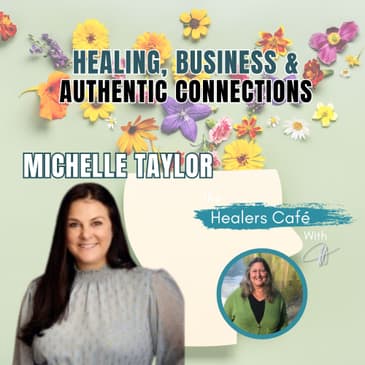
In this episode of The Healers Café, Manon speaks to Michelle Taylor, founder of the Woman and Wealth Initiative, discusses her journey from being diagnosed with leukemia at 17 to becoming a financial educator. She emphasizes the importance of financial education and stress management for women's health and wealth.
For the transcript and full story go to: https://www.drmanonbolliger.com/michelle-taylor
Highlights from today's episode include:
Michelle explains how financial stress can significantly impact health, and building financial education and comfort reduces this stress, especially for women.
Michelle introduces how taking small, intentional steps towards financial understanding and trust in oneself leads to greater empowerment and better outcomes, both financially and for overall well-being.
Manon says how focus on controlling what you can in your health and financial journey, and embrace the present rather than stressing over "what ifs" or uncontrollable factors.
ABOUT MICHELLE TAYLOR
Michelle Taylor is the founder of the Women and Wealth Initiative, a transformative platform aimed at empowering women to take control of their financial futures. With over a decade of experience in financial services, Michelle is committed to closing the wealth gap by providing financial education and a supportive community for women from all walks of life. From business owners preparing for exit strategies to stay-at-home moms managing household budgets, Michelle's initiative helps women define and achieve their version of financial success with confidence and clarity.
Having overcome personal adversity, including battling leukemia at 17 and launching a business at 27, Michelle's passion for financial empowerment stems from both professional expertise and personal experiences. She holds a Bachelor's in Business Administration and Marketing, and has been nationally recognized as a leader in financial planning, especially for female business owners. A member of the Millionaire Founders Club and Entreprenista League, Michelle continues to guide women through their financial journeys by equipping them with the tools to overcome limiting money beliefs and create long-term security.
Known for her relatable and energetic storytelling, Michelle speaks frequently on topics such as closing the pay gap, financial freedom, and overcoming adversity. Whether through her initiative or as a sought-after speaker and consultant, Michelle's mission remains clear: to break down financial barriers for women and inspire confidence in every aspect of their financial lives. Married to her husband Jason for 11 years, and mother to Beckett, 9, and Sloane, 5. Michelle also cherishes travel, fashion, and spending quality time with her family.
Core purpose/passion: To help females overcome similar health struggles and provide them with hope.
– Facebook | Instagram | LinkedIn | Website
ABOUT MANON BOLLIGER:
As a recently De-Registered board-certified naturopathic physician & in practice since 1992, I've seen an average of 150 patients per week and have helped people ranging from rural farmers in Nova Scotia to stressed out CEOs in Toronto to tri-athletes here in Vancouver.
My resolve to educate, empower and engage people to take charge of their own health is evident in my best-selling books: 'What Patients Don't Say if Doctors Don't Ask: The Mindful Patient-Doctor Relationship' and 'A Healer in Every Household: Simple Solutions for Stress'. I also teach BowenFirst™ Therapy through Bowen College and hold transformational workshops to achieve these goals.
So, when I share with you that LISTENING to Your body is a game changer in the healing process, I am speaking from expertise and direct experience".
Mission: A Healer in Every Household!
For more great information to go to her weekly blog: http://bowencollege.com/blog.
For tips on health & healing go to: https://www.drmanonbolliger.com/tips
Follow: Manon Bolliger - | Linktr.ee | Rumble | Gettr | Facebook | Instagram | YouTube | Twitter | LinkedIn |
Follow: Bowen College Inc. | Facebook | Instagram | LinkedIn | YouTube | Twitter | Rumble | Locals
ABOUT THE HEALERS CAFE:
Manon's show is the #1 show for medical practitioners and holistic healers to have heart to heart conversations about their day to day lives.
Subscribe and review on your favourite platform:
iTunes | Google Play | Spotify | Libsyn | iHeartRadio | Gaana | The Healers Cafe | Radio.com | Medioq | Audacy |
Follow The Healers Café on FB: https://www.facebook.com/thehealerscafe
Remember to subscribe if you like our videos. Click the bell if you want to be one of the first people notified of a new release.
* De-Registered, revoked & retired naturopathic physician after 30 years of practice in healthcare. Now resourceful & resolved to share with you all the tools to take care of your health & vitality!
00:00:00
Unknown: Welcome to the healers cafe, the number one show for
00:00:04
medical practitioners and holistic healers to have heart
00:00:08
to heart conversations about their day to day lives while
00:00:13
sharing their expertise for improving your health and
00:00:17
wellness.
00:00:17
Manon Bolliger: Welcome to the Healers Cafe today, I have with
00:00:23
me Michelle Taylor, and she's the founder of the woman and
00:00:27
wealth Initiative, a transformative platform aimed at
00:00:31
empowering women to take control of their financial futures. With
00:00:37
over a decade of experience in financial services, Michelle is
00:00:40
committed to closing the wealth gap by providing financial
00:00:44
education and a supportive community for women from all
00:00:49
walks of life, from business owners preparing for exit
00:00:53
strategies to stay at home, moms managing household budgets.
00:00:58
Michelle's initiatives help women define and achieve their
00:01:03
version of financial success with confidence and clarity. Now
00:01:09
some of you may be wondering, what does this have to do with
00:01:12
health, and how is it all tied in? So I'm going to, first of
00:01:17
all, welcome you, Michelle, and maybe you could do that little
00:01:21
tie in. This is the podcast where we're running it. It is
00:01:27
very tight, so please go ahead.
00:01:30
Michelle Taylor: It absolutely is. So thank you. I'm excited to
00:01:33
be here with you, and I feel as passionate about what you talk
00:01:38
about on this podcast as women in their approach to money, I
00:01:44
was unfortunately and fortunately exposed to how
00:01:48
important health is. At a very young age, I had lived my whole
00:01:53
life and never had any issues, and at 17, was very unexpectedly
00:01:59
diagnosed with leukemia, so I quickly got a lesson in how
00:02:05
important priorities are in life and how critical your health is
00:02:10
to every other component in what we're doing.
00:02:14
Manon Bolliger: Yeah, that would do it right, yeah. So how do you
00:02:21
think you got that? I'm just going to call it a lesson.
00:02:24
There's a million ways. But why is this your path? Why? Why did
00:02:29
this, in retrospect, happen for you? Wow.
00:02:34
Michelle Taylor: Well, so growing up, I was a product of a
00:02:37
divorced home. My parents were very amicable, but approached
00:02:43
things very differently, and money was something that was
00:02:47
always a bit of a stressor for my mother. My dad was an
00:02:50
entrepreneur, so his approach was a little bit different. And
00:02:54
when I was coming up through my teenage years, I didn't realize
00:02:59
necessarily how my mom's struggles and stressors around
00:03:06
this could impact the situation when I got sick, one of the
00:03:11
first things the doc, the doctor said to me was likely this was
00:03:15
caused by stress, and I had had a really rough year, I had gone
00:03:21
through losing a grandparent. I was close to to watching my
00:03:28
having some some financial struggles with my dad's
00:03:31
business, and feeling that and absorbing that, and then going
00:03:36
through a really hard breakup as a teenager, and I internalized
00:03:40
all of that and had a lot of stress. And so I think at that
00:03:45
point, I realized, okay, if stress can do this to your body,
00:03:49
how do I make sure that as I grow up and and build a life of
00:03:55
my own, that I avoid stress as much as I possibly can? And one
00:04:00
of those things was around being financially educated and
00:04:05
comfortable with how money does impact that in your life. So I
00:04:12
knew that in order for me to make sure that I was avoiding
00:04:17
financial stress, I wanted to also impact as many women as I
00:04:22
possibly could being in this field, to learn how it's
00:04:27
manageable and how to tackle it one step at a time, to take some
00:04:30
of that stress away from them as well.
00:04:33
Manon Bolliger: Yeah, no. Makes sense. Yeah. That ties it kind
00:04:37
of together, right? Yeah, and so. And can you maybe expand
00:04:42
upon because it's a it's not unusual the situation, but
00:04:47
having a one parent that's more of an entrepreneur and one that,
00:04:54
so what is her? She was a stay at home mom, or more. An like an
00:05:00
employee prior, and then a stay at home mom, or what was her
00:05:05
financial background and understanding?
00:05:08
Michelle Taylor: So initially, she was a stay at home mom, and
00:05:10
then when my parents divorced, she went back to work and she
00:05:14
went into retail management, and in that, you know, she was just
00:05:19
very budgeted. She was working with a limited income, and
00:05:25
wanted to ensure that I wasn't missing out. I was, you know,
00:05:27
taking dance classes my whole life and doing the little extras
00:05:31
as much as she could. And I remember growing up and watching
00:05:35
her sit at the dining room table every Sunday, balancing her
00:05:39
checkbook, and I could see the stress that it brought. And then
00:05:43
I could also see the the flip side of that with my dad, who
00:05:47
was an entrepreneur and approached money very
00:05:51
differently. You know, money was a tool. He knew that if he
00:05:54
needed to, he could go out and make more. He felt more in
00:05:58
control. He made it a little bit more lighthearted, where my mom,
00:06:02
being an employee, she didn't have the same opportunities to
00:06:07
go out and truly do something that would have the immediate
00:06:10
and direct result of more income coming into the house. So I
00:06:13
learned very quickly that being an employee and very budgeted
00:06:20
was more stressful, and being an entrepreneur and having the
00:06:26
ability to go out and create more opportunity seemed like the
00:06:30
natural path to a little bit more of a stress free life. And
00:06:37
you know, looking at it through that young girl's eyes, I
00:06:41
realize now being an entrepreneur myself, how it's
00:06:44
quite the opposite actually being an entrepreneur very
00:06:47
stressful. But I think it just speaks to and leans into the
00:06:51
fact that regardless of what you're doing in your life,
00:06:57
making sure that stress is limited at all costs, is truly
00:07:03
the way to build health and wealth in a life of longevity,
00:07:09
hopefully.
00:07:11
Manon Bolliger: Well, it's interesting. The you know that
00:07:13
that statement, it kind of a turnaround there, because a lot
00:07:18
of entrepreneurs realize that there is definitely a stressful
00:07:24
aspect to it. I mean, part of it sure you you control your
00:07:28
schedule. So, yes, you can work 160 hour if you want. You know,
00:07:34
you can travel sure, like you know, nobody really tells you
00:07:41
what to do. I mean, you can have great relationships with your
00:07:43
team, but you don't have to be, you know, that terrible boss. I
00:07:48
mean, you know, whatever. So yeah, lots of that, but it's
00:07:52
like you make it what you want it to be, right? And so I think
00:07:58
part of the lesson, at least, that I can see in it is that
00:08:01
you, you learn to be flexible and innovative and creative,
00:08:08
right and and you, I think, you have a more sovereign self
00:08:13
approach to living life,
00:08:16
Michelle Taylor: absolutely. And that's one thing you know in
00:08:19
that I learned that you can't worry about the things that you
00:08:23
can't control, and it was a valuable lesson at 17 to realize
00:08:28
so much of this life we can't control. It's how we approach
00:08:31
it, and that's a hard thing to learn, even as an adult. So I
00:08:37
talk to people about it, you know, I often say it's one of
00:08:39
the best and worst things that ever happened to me, because You
00:08:43
quickly learn how to pivot face a problem head on, focus on a
00:08:49
solution and how important true health really is to the big
00:08:57
picture. You know, health does not discriminate, and there are
00:09:02
things that we can do to set ourselves up for success. But
00:09:07
again, I feel like that goes back to the Money Story. Having
00:09:13
a freedom of income allows people to pursue health in ways
00:09:18
that feel authentic to them. So it always comes back to, how do
00:09:23
you set someone up with the proper resources to be able to
00:09:28
live their most healthy life, with or without? A focus on, on
00:09:33
just the financials, you know? And when I first found out I was
00:09:37
sick, one of the things I did learn, but through another
00:09:40
family member that was an entrepreneur, was my uncle. We
00:09:43
wanted to get a second opinion, because it was very early on,
00:09:47
and so there were some question marks of what we were really
00:09:50
dealing with. And my uncle was very successful entrepreneur,
00:09:55
and he had relationships with doctors at Mayo Clinic, and so
00:09:59
we had. To get in. We could not but my uncle made a few phone
00:10:03
calls, and I had an appointment at Mayo Clinic with the best
00:10:06
doctors, and went right up there. And I was very aware of
00:10:10
the fact that that happened because of his connections. And
00:10:16
so again, it was another kind of check on the box of okay,
00:10:21
building something where you have impact and are kind of in
00:10:27
charge of your own destiny in a way, right? Not only gives you
00:10:31
opportunity, but opens up doors because of connection, and
00:10:35
that's sometimes limited as well when it comes to what you're
00:10:39
doing in your life?
00:10:41
Manon Bolliger: Yeah, no. And I think that's a great point,
00:10:44
because it's true. When you're an employee, you've got your
00:10:48
boss and and then you've got the whole, you know, infrastructure,
00:10:52
the the government, the taxes, the you know, all that,
00:10:57
whatever. There are words for it, but I won't use them on my
00:11:01
own podcast. But you know, when you're an entrepreneur, I mean,
00:11:08
sure you have to deal with some of that, but so much more
00:11:12
flexibility. But it's true, it's it's human connections, it's you
00:11:18
happen to meet this person who happens to know this, whether
00:11:21
it's in your field or not, it's just because it's, it's much
00:11:25
larger and expanse, right? You're growing yourself as a
00:11:28
person, right? Which has, you know, in this current system,
00:11:33
financial advantages, but it's just advantages of, of meeting
00:11:38
more people, more exposure, more more of that, right? So, yeah,
00:11:42
very interesting. So, what was it like being 17 and being told
00:11:48
by the medical people that be that this is a stress related
00:11:55
condition, like, what like? Where did you go with that?
00:12:00
Michelle Taylor: Yeah, yeah. You know, it's wild, because at that
00:12:03
age, you know, you think that there wouldn't be that much
00:12:07
stress, but especially in this day and age, I mean, what we're
00:12:10
doing with how we're how the growing up experience has
00:12:17
changed, even since I was little, has placed a ton of
00:12:22
stress on parents and kiddos in a way that we've never seen
00:12:27
before, and so for me, I remember being really surprised
00:12:30
by that and thinking, How do I approach now the rest of my Life
00:12:38
with as little stress as possible, and one of the things
00:12:43
that I focused on is looking at a solution instead of a problem.
00:12:48
So there's somebody that I've heard speak many times and
00:12:52
gotten the pleasure to work with over the years. His name is Dr,
00:12:56
Jason Selk, and he talks a lot about being relentless,
00:13:00
solution, focused, and I felt that I was doing that before I
00:13:05
even knew what it was. So, you know, I was also taught that as
00:13:10
growing up in a household, we're Christian and believe that if,
00:13:14
if you have a worry, you are supposed to give it to God and
00:13:19
let it kind of work itself out. And so I thought, How do I do
00:13:23
this? How do I take something that would be stressful and give
00:13:27
it away, and then focus on what I can control, and I put it into
00:13:33
practice then, because it was very scary when you hear a
00:13:37
diagnosis like that, and you realize that it could have been
00:13:40
a direct result of something that I did. How do I undo that?
00:13:47
So something like this never happens again, and a lot of it
00:13:52
was internalized. I didn't talk about it with my parents. We
00:13:55
didn't have the same access to resources that we do now. So I
00:14:00
really did just think, what can I control? Let me focus on that.
00:14:05
So as the lead up to the diagnosis, was extremely
00:14:10
stressful. I was most afraid at a 17 year old girl of losing my
00:14:14
hair. You know, I never thought about the option of I could pass
00:14:20
away from it. I always just thought, I'm in my senior year
00:14:23
of high school. I'm captain of our cheerleading team. I don't
00:14:26
want to lose my hair once I knew what the diagnosis was, that's
00:14:31
when the people around me, my family and friends, that's when
00:14:34
they got very emotional and upset. But for me, it was
00:14:38
something strange where I immediately thought, okay,
00:14:41
there's nothing that I can worry about that's going to change
00:14:44
this. So now let's just get started on treatment, because I
00:14:48
can put all of my energy and focus on getting through it so I
00:14:52
can get back to being a normal teenager again. And I wish I
00:14:57
could tell you how I knew to do that at 17. That I still to this
00:15:01
day, don't know, but I'm so thankful that I did.
00:15:04
Manon Bolliger: Yeah, and you like, you didn't go through the
00:15:07
blame like, Oh, it's my mom's this, or it's my dad's this, or
00:15:13
it's because they're divorcing. You just focus on, what can I
00:15:16
do?
00:15:16
Michelle Taylor: Basically, what can I do to impact this journey
00:15:20
moving forward, yeah, pouring your energy into that, instead
00:15:25
of playing the should have, could have, would have, I think,
00:15:29
was something that I held on to very tightly. Wow.
00:15:34
Manon Bolliger: It's amazing. I mean, just, I don't want to take
00:15:37
your interview time, but I do want to share a little bit my
00:15:40
story, because there's some similarities to it. When I was
00:15:44
diagnosed with cancer, I was like, okay, you know, I actually
00:15:52
I'm going to figure out what to do about it and get myself into
00:15:58
a position where I'm not living stressfully, but one of the
00:16:03
choices was not to tell anybody, because I had realized, and I
00:16:09
was, I was older than you, not 17. But at that point, I had
00:16:12
realized that if I told my parents, if I told you know,
00:16:17
that, like the people who love me, you know, their their love
00:16:22
would have come in. Like, did you try this? Do you do this or
00:16:25
don't that? Because how do you know that works? And and I
00:16:28
realized, like, No, I this. I need to focus 100% on me and
00:16:35
getting through this without other people's care. But you
00:16:39
know, which comes often in the form of well meaning judgment,
00:16:43
right? And and recommendations that you know, like, if it's not
00:16:49
resonating, it's not going to be right for me, right? So then
00:16:54
avoid them, all the pain and all the tragedy, and then I'll, I'll
00:16:58
see them when I'm on the other side and I'm fine, and that's
00:17:02
exactly what happened, right? So, yeah, it's interesting.
00:17:07
Michelle Taylor: It is. It really is. And I think that, you
00:17:10
know, for me, something else that I really grasped onto, and
00:17:15
I don't know if this is what you how you ended up, where you're
00:17:18
at, is, I tell people all the time. I recognize that
00:17:22
traditional medicine saved my life at that point, but it
00:17:28
actually pushed me in a totally different direction when it came
00:17:33
to health and wellness. Moving forward as an adult, I seek out
00:17:38
anything I can that is more natural, I go to a functional
00:17:43
medicine doctor. I, you know, I've been in remission and
00:17:47
considered cured now for, you know, 2020, 25, years. So I
00:17:55
don't, I don't go to get those things checked. I don't have to
00:17:58
anymore, but I really do just focus on the here and now,
00:18:02
listening to my body, understanding that the things I
00:18:06
can control, the quality of the food that I eat, what I put into
00:18:10
my body, what kind of sleep I'm getting. I wear an aura ring.
00:18:15
You know, I do all of those things because they feel like
00:18:18
things I can control, versus going to a doctor once a year
00:18:23
and them putting me on a prescription, and it feels a
00:18:26
little bit out of my control. So again, it kind of held on to the
00:18:30
control and recognized, if you break your arm, you go to the
00:18:33
emergency room. If you have a cough, you don't go get on a Z
00:18:38
pack, you chew up garlic or take honey and elderberry or your
00:18:45
vitamins. And again, I think it's because I could, I could
00:18:48
control and understand that
00:18:50
Commercial Break: What would your life be like if you were
00:18:52
pain free, if you were one of the millions who suffer from
00:18:56
chronic pain, the thought of just one day without it may seem
00:19:00
impossible. This is often because conventional medicine
00:19:04
tends to fall short in the treatment of pain, opting to
00:19:07
prescribe pills or recommend surgery rather than getting to
00:19:11
the root cause of the problem. But if you are suffering with
00:19:14
emotional or physical pain, there is hope. Join the founder
00:19:19
and CEO of Bowen College, Manon Bolliger, live online for your
00:19:25
body mind reboot. Learn how to listen to your symptoms and get
00:19:30
to the root cause of your pain, plus be trained in basic
00:19:34
bolligern therapy moods so that you can reboot your body for
00:19:38
optimal health. You don't have to live in pain. You can heal.
00:19:43
Stop the pain pill cycle by visiting
00:19:48
www.yourbodymindreboot.com, to learn more and to register
00:19:59
Michelle Taylor: Yeah, and that was important, yeah?
00:20:03
Manon Bolliger: No, I think we did choose different choices at
00:20:07
that moment, but I had a much earlier lesson in life where
00:20:11
that made it clear that it really was about taking charge,
00:20:17
you know, of of your health, which also means your
00:20:20
environment, but also your emotional environment, you know?
00:20:24
So it really is, for me, it was like, Okay, this is now the new
00:20:29
lesson I'm getting to learn through this one. So it's like,
00:20:33
okay, you know? So, and it's been also 27 years now that I've
00:20:39
been completely clear, and I don't get checked because I
00:20:43
don't. I don't associate myself to a so called survivor. It's
00:20:49
like, no, no, this, this went through me, served its purpose
00:20:53
for me and and I'm ready to learn, you know, new things
00:20:58
Michelle Taylor: a girl after my own heart. It is not part of
00:21:03
what we identify with. No Exactly. And you know, going
00:21:08
through this again, tying it back to what the financial
00:21:11
impact can be, I'm sure that the choices that you've made, you
00:21:16
recognize that really good health and wellness is much more
00:21:22
expensive than doing things in the traditional way. And so, you
00:21:27
know, I encourage everybody to think through what is most
00:21:30
important to you. I talk about health all the time, and how do
00:21:37
you make sure that you're planning and building a life
00:21:41
that will allow you to, you know, buy organic food and shop
00:21:47
at a farm and know where your food is coming from. And, you
00:21:51
know, look into things like Infrared Saunas or all of these
00:21:57
things. And it goes back to how do you become the architect of a
00:22:02
life that will allow you to focus on the things that are
00:22:05
important, and it comes back to financial capability. So how do
00:22:10
we make sure that women all over this country are having the same
00:22:14
conversations and access to the same resources, mentorship
00:22:18
material to truly be in a place of power and make the best
00:22:25
decisions for themselves and their future.
00:22:28
Manon Bolliger: Yeah, no. And I think, I mean, now we're, you
00:22:31
know, we're seeing it big time, you know, all this sort of
00:22:35
financial entrapment, and you see it in the educational
00:22:40
system, you know, just creating followers that listen, that
00:22:45
don't question, that go with some people call it the flow,
00:22:52
the prism. But anyway, you know, but it's, it's, how do you get
00:22:58
to the the mind? You know, like when you said to yourself, you
00:23:02
don't know how you knew I have the same kind of thing. It was
00:23:06
like a knowing and a deep knowing, and then it was a trust
00:23:12
and and then I spent years perfecting my intuition, because
00:23:17
when it came to money, you know, I would say, Oh, I'm so lucky
00:23:22
because, you know, I, let's say I would, I would live in a
00:23:25
house, and then I would need to move, but it was in the right
00:23:28
direction at the right time, and then, boom, the asset grew,
00:23:33
right but it's not because I spent, I mean, I've spent hours
00:23:37
and hours and hours and hours on, on my Passion and on, you
00:23:41
know, medicine and on, you know, helping people get better. On
00:23:45
real estate, I spend no time but, boom, it's like, you know?
00:23:49
So I keep saying, Oh, I'm so lucky, you know. But the thing
00:23:54
is, how do you get to the into the mind that knows, like, you
00:23:59
know, I in health, I'm I'm so lucky, not because I knew all
00:24:02
this knowledge, but because something told me, you know,
00:24:06
follow your your intuition. And, sorry, it's a very long
00:24:12
question, but I, you know, I tend to explain it all out,
00:24:15
cushion it with everything so that we can get to the point.
00:24:18
But anyway, I'll try and, you know, get clear here. But in
00:24:23
finances, how do you know, like this, intuition, you know?
00:24:28
Because you could say, Oh yeah, you could put your money in a
00:24:32
bank, in a savings account. Well, today, that would be very
00:24:37
risky, right? You talk to some people in the banking industry,
00:24:42
and you tell them, you know, what? About silver? And they
00:24:45
look, oh, nothing will ever happen. It's like, Aha. It's
00:24:50
like, not exactly what's happening. You know, or you you
00:24:55
you know. Like people will say, Oh, you gamble if I take risks,
00:24:58
but they're not. Risks. You know, it's, it's, what do you
00:25:04
call it? It's, well, it is a risk. Life is a risk, I mean,
00:25:11
but that doesn't mean that, that, you know, you win some and
00:25:16
you lose some, it's, and how do you get to that place in finance
00:25:21
where you know like you do in health, that's my question. I
00:25:27
think
00:25:27
Michelle Taylor: it again, is doing your own due diligence,
00:25:31
understanding the tools that are part of the game, so finding
00:25:37
people that seem to have done what you would like to do, and
00:25:41
asking questions, having the conversations. And I think that
00:25:45
a lot of our intuition and our gut feelings on things really
00:25:50
come down to trusting yourself. And it's hard to trust yourself
00:25:53
on financial decisions if you don't understand the game that
00:25:57
you're playing. And so it's starts as simply as knowing what
00:26:03
your money is doing for you, knowing what you're spending,
00:26:07
what you need to bring in, understanding that it doesn't
00:26:12
have to be a big choice. It has to be a choice, a choice to move
00:26:17
forward so small intentional steps create a financial
00:26:23
snowball that will change your life. And it's very intimidating
00:26:27
for somebody who's never understood like the world that
00:26:31
you're living in to say, I'm not going to trust what I've been
00:26:36
told to trust blindly, dive in and learn about health and truly
00:26:42
understand what's out there. It's the same thing with
00:26:44
finances. If you understand that your money needs to grow for
00:26:48
you, but you don't understand how the stock market works, that
00:26:51
could be very intimidating and really difficult to trust your
00:26:54
gut. So I say that in finances, just like in health, you've got
00:26:59
to start by asking the questions and understanding the game
00:27:03
pieces that are on the board. Once you do that small right,
00:27:09
next steps change the outcome of the game.
00:27:14
Manon Bolliger: Yeah, yeah, yeah, step by step, yeah, yeah.
00:27:23
Michelle Taylor: Further you go down the ladder, the more and
00:27:26
more you learn it, just like with health. What starts out is
00:27:29
saying, well, maybe I want to look into different vitamins,
00:27:33
Manon Bolliger: right
00:27:35
Michelle Taylor: to, you know, further and further down, and
00:27:38
before you know it, you have a podcast talking about true
00:27:41
health and how to get there,
00:27:43
Manon Bolliger: yeah, yeah, yeah, no, it's, it's very
00:27:48
interesting. So do you do you? I mean, you do it step by step,
00:27:53
but how do you deal with, like, what some people, there are no
00:27:59
mistakes. It's always experiences and opportunities.
00:28:03
But you know, when you when you feel that you made, on some
00:28:09
level, a mistake in the present moment where you're going, oh my
00:28:13
god, you know, I had a feeling, but you know, I didn't pay
00:28:18
attention, or I, you know, I really trusted them, because
00:28:25
blah, blah, blah, you know, usually that's where we go
00:28:27
wrong, right? It's, it's usually it involves more than yourself,
00:28:32
right? How do, how have you learned to deal with that?
00:28:38
Michelle Taylor: Just like with health, focus on what you can
00:28:40
control. So with money and with health decisions, once the
00:28:45
decision is made, oftentimes you can't unwind what's been done
00:28:50
right. Can't put toothpaste back in the tube. So when you make a
00:28:55
financial decision that doesn't go the way that you hoped it
00:28:59
would, or that you feel that you were taken advantage of. I would
00:29:04
encourage anybody to not get stuck in the should have, could
00:29:06
have, would have, it's now okay. How do I how do I correct this?
00:29:10
How do I course correct? So for example, if someone is listening
00:29:14
to advice and some and they're hearing only focus on paying
00:29:19
down any kind of consumer debt that should be your number one
00:29:22
focus, but they aren't building an emergency savings account at
00:29:25
the same time, if something happens, they've paid down so
00:29:30
much of this debt, but then something unexpected happens,
00:29:33
and now they have to go back to putting it on a credit card.
00:29:36
They may feel like, what was it all for? So the next best step
00:29:41
is to figure out how to tweak what you're doing and avoid that
00:29:46
the next time talk to people. So in that case, I tell everyone,
00:29:50
live in an and universe. If you have $100 $1 $10 a month
00:29:55
to do something with, don't do everything to one pay. Down your
00:30:00
debt and invest and save so that no matter what happens, you have
00:30:05
got a lever to pull and you can't predict the future. So how
00:30:13
do you prepare for the future and not worry about the things
00:30:18
that you can't control? Yeah?
00:30:22
Manon Bolliger: Yeah. I mean, it's very similar, right? It
00:30:26
seems simple,
00:30:27
Michelle Taylor: but so if you are somebody you know that did a
00:30:31
financial, I mean, I'm sorry, a medical procedure or got
00:30:37
treatment that afterward, you say, Oh, wow. Like I could have
00:30:40
done this right with the leukemia at 17. It because of
00:30:45
that. I had to go through IVF to have my children, which was my
00:30:48
number one goal in life, was to be a mom. And it was very easy
00:30:52
for me to say in that moment, that decision I made led to this
00:30:57
because of the drugs and the poison that it was being in my
00:31:01
system. I can't undo it, but I can make better decisions moving
00:31:07
forward. Of learning what side effects are, learning how to
00:31:11
treat things holistically that aren't going to affect me in the
00:31:15
same way, God forbid anything else happen. Same thing with
00:31:18
finances, yeah, yeah. Learn from the past, self correct a little
00:31:24
bit, and lean on people who have learned the same or similar
00:31:29
lessons ahead of you. We all know those people.
00:31:33
Manon Bolliger: Yeah, no, I think it's true. And what about
00:31:36
the the box that often exists with and I brought it up as if
00:31:40
it was a valid box. But the idea of the employee mentality
00:31:46
compared to the entrepreneur mentality in that so called Box
00:31:51
of the employee first of all, is it really a box, or is it just
00:31:58
looking at, you know, you meet other people and they're doing
00:32:01
it differently. And then you say, hey, you know what? Maybe
00:32:04
I'll put some of them funds into this. That's not very employee,
00:32:11
like, you know, gosh, maybe I'm not in that mentality fully. Or,
00:32:15
you know,
00:32:17
Michelle Taylor: not everybody is meant to be an entrepreneur.
00:32:20
So it's not trying to emulate someone in a way that is
00:32:26
uncomfortable for you. It's a way of saying, again, taking
00:32:31
control of the situation. So if you are an employee, and you
00:32:36
enjoy being an employee, you don't want to take the risk of
00:32:39
being an entrepreneur, but you want to improve what tools you
00:32:44
have in your toolbox to live a life that may look a little
00:32:46
different, ask the questions to stay in your comfort zone, but
00:32:52
again, we have so many resources available to us. How do I
00:32:57
increase my income without becoming a business owner, how
00:33:01
do I increase what's coming into my home? Well, maybe it is
00:33:05
evaluating what you're spending in areas that don't resonate
00:33:10
with you anymore or aren't as important to you, and how do you
00:33:15
maybe take a little bit less of or how take more of your money
00:33:23
home by putting a little bit less in a retirement account
00:33:26
that you can't touch until you're 59 and a half and you're
00:33:29
30 and you have this big dream, but you're over funding or
00:33:33
maximizing a retirement account, maybe that's not in alignment
00:33:37
with your goals. So again, it all comes back to resources and
00:33:42
conversation and not trying to do something that feels
00:33:46
uncomfortable, but getting comfortable, understanding the
00:33:51
players, understanding what resources you have at your
00:33:55
fingertips to go after, what's important to you. And I think
00:34:00
that on the outside, being an entrepreneur feels a lot more
00:34:05
like a freedom. But there's also the consideration of, you know,
00:34:11
your business is never turned off. I have phone calls or text
00:34:17
messages very late at night or on the weekends and and then I
00:34:21
have to make the choice. Is this a fire that I have to address
00:34:25
now for my own well being? Or can I wait until Monday? So life
00:34:30
is full of these choices, whichever path we're on. So I
00:34:33
think it's just important to find the the path that feels the
00:34:36
best, to keep your health and wellness at the forefront and
00:34:43
stay focused on always having conversations with people that
00:34:48
seem to have learned lessons you may have not learned.
00:34:52
Manon Bolliger: Yeah, I think that's exactly it I was gonna
00:34:55
say. I'll leave the last words to you. The those are perfect.
00:34:58
But. Our time is up, but thank you so much for spending the
00:35:02
time and having this conversation.
00:35:05
Michelle Taylor: It was my absolute pleasure to be here.
00:35:08
Well, I
00:35:08
Manon Bolliger: guess when it comes to finance, money or
00:35:13
health and well being probably the biggest lesson, and I think
00:35:19
that was very well addressed, is the here and now, the you know,
00:35:24
work with the things you can control and the things you
00:35:28
can't, don't put them in your stressor zone. What if? What if
00:35:32
I could? What if this? What if that, you know, a lot of people
00:35:35
spend time in that which is a stressor. It doesn't matter, you
00:35:42
know, in what domain you you do that in, but it definitely has
00:35:47
an impact on your health. So I loved just simply, you know,
00:35:52
control the things you can, and then obviously, you know, it's
00:35:57
an attitude thing. And you know, life is happening for you. It's
00:36:00
for us to learn. You know, from we're not presented things that
00:36:06
we can't incorporate and learn from if we choose to. And you
00:36:12
know, we're not necessarily supposed to be here past the
00:36:16
time that we're not so it's about just relaxing into what is
00:36:20
so anyways, a very light conversation given the health
00:36:26
implications.
00:36:27
Ending: Thank you for joining us at thehealerscafe. If you
00:36:31
haven't already done so, please like comment and subscribe with
00:36:36
notifications on as I post a new podcast every Wednesday with
00:36:42
tons of useful information and tips for natural healing that
00:36:46
you won't want to miss you.