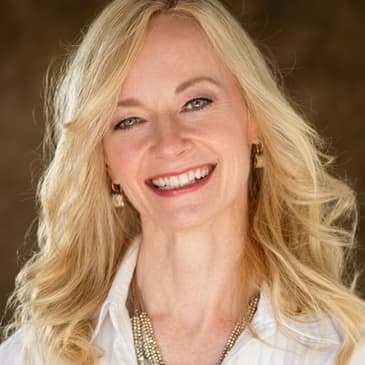
Meet a woman on a mission to create and promote “conscious media”, the kind of content that leaves people inspired and motivated and reminds us just how wonderful humans are. Award-winning producer Kia Kiso-Brennan, has had a hand in many TV shows, movies and music videos. But it’s her current work promoting conscious media that she’s really excited about. She’s the founder of Conscious Media Visionaries and the host of the podcast “Convos About Conscious Media with Kia”. She shares her simple but powerful framework for deciding what media she watches so that she’s inspired to keep working on her heart-centered projects. Once you hear this conversation, you’ll think twice about what’s in your “media diet” and how you can be a part of this powerful movement.
Website: https://consciousmediaconvos.com
A gift from Kia: https://consciousmediaconvos.com/gatewaygift
Book mentioned in this episode:
“Crowdsourcing for Filmmakers” by Richard Botto
Films mentioned in this episode:
“Between the Mountain and the Sky”
“Mile…Mile & A Half”
Debra, with her 30 years of being an entrepreneur and creating over seven companies, knows exactly what it means to accept the mission. When you make that decision, when you accept the mission to become a solopreneur, to take yourself and your talents to market, then you embrace a life of not only unlimited possibilities but also the unknown. It's an elixir of fear and bravery that only someone who's taken the leap really understands. On our show, Deb digs deep with her guests to highlight what you, the listener, wants to know: the stories, the whys, and the hows to navigate the journey to success. Get ready to hear from some of the most incredible mission takers, from Generation Z to Boomers, so sit up, perk up, and get ready to be blown away. Now, here is your host, Debra Drummond.
Unknown:Welcome back! Welcome! Welcome! Welcome back! I am happy that you are here, and so are you, because you are going to feel enlightened in a way that you've never felt before. Love reading about things that you probably would not associate enlightenment. So it's going to be a very cool day for you. And thank you so much. You are the best podcast audience ever. And even though my incredible guest today is going to talk about her podcast, she has a great audience too. They're all going to come together to be watching this show. But you really, really share. You really, really comment. You really connect with the people that are spending their time here as guests on the show to inspire and motivate, and all of the good things that you receive. So thank you for our listeners. Thank you for our viewers, and thank you for being with us. We've been making some incredible announcements. I mean, we're coming upwards of the 400 shows, and we appreciate you supporting that. So you're great. We're great. Our guest is great. Let me introduce you to her. So this is Kia Kiso Renan, and she is incredible. She is the founder of Conscious Media Visionaries. Okay, so yeah, vision, consciousness, enlightenment-you are starting to get it. Member of the podcasters, or sorry, member of the Producers Guild of America Social Impact Entertainment Task Force. She has done many things. If you read her bio, and please go to camera assistant for the TV show Cold Pace. She is going to share with us a few things that you may not have heard about before, like media diets and really defining conscious media for us, so we can be producing and digesting, as she calls it, all the right things for all the right reasons. We're going to dig a little bit into this very cool. I was reading in your bio about how there was a crowdfunding experience that you had with the documentaries. So I'd love to dig into that because when people think about media, one of the things they think
Unknown:about is I can't, how can I, and it's usually attached to money. So let me introduce you to Mission Accepted Media. Thanks for coming on today.
Unknown:I'm so happy to be here.
Unknown:Yeah, this is great. This is great. So good. Why don't we start off with defining what conscious media is? And because you have a podcast, please share with us about the podcast because those two really inter interrelate.
Unknown:They do, they do. So actually, episode one of the podcast is what is conscious media. You know it when you see it. It's a definition that's been hard to define. Groups and people have been trying to do it for a long time, but you know it when you see it. The way I define it is media, entertainment, content, even that creates awareness, but aims to have a positive impact, not create awareness and then all of a sudden leave you feeling horrible after watching a documentary, eating a pint of chocolate ice cream. Right? When you watch it, you're inspired, you're motivated. You remember a part of yourself that maybe you've forgotten about-that part of you that exists beyond the fears and the doubts, the worries, the limitations-and and or it it reminds you how fantastic humanity is, right? You know those titles, those movies or TV shows, podcasts, books that you've read, songs that you've heard-that just they're additive. They're not neutral. They're not subtractive. They make you feel just better. Remember something that that brings you back to your full potential. And so I started a podcast, Convo's short for conversations, convos about conscious media. And episode one defines it, and then episode two is about how does media actually affect us. And I go deep, deep, deep into the data and the science. I am full on passionate about it. I've been passionate about it ever since I was 12. So I'm excited to now share it. With the world in a bigger way, and I'm seeing that people like, oh yeah, I've always felt this, right? I'm looking for that, but I never knew there was a name
Unknown:to it. Well, I think that's a big piece, right? Where do you find it? Where do you find it? And I think people find conscious media in bits and pieces, so it's really beautiful to see that there's going to be some fluidity, like really some fluidity and almost some breaking ground with it. You talked about being 12 and knowing you were going to do something, so let's dig into that a little bit because how did this start for you?
Unknown:It's funny. I was thinking about it this morning. The name of your podcast, like, is rich. I think we could riff on that for 90 minutes more about this idea of mission accepted. You know, I believe I was born with a mission, but I didn't know what it is. And along the way, I thought I was on the mission, like, but you know, it it was just the rings of a bullseye, and I've gotten now now what I'm doing with the podcast and what's going to come up later is now I finally hit the bullseye of that mission. And along the way, there were these twists and these turns, and there's like, oh, I'm down to this rabbit hole. It has nothing to do with it. No, it actually gave me that tool that I needed now, that I couldn't even see, and so I feel like I was given one right, and I accepted it. But only now is it unfolding. At 12, I was selected by the teachers of my elementary school as only one or two students to be entered into a gifted and talented program, and as part of that, I got to pick from the catalog of courses at an adult community college to take summer classes there. And so I took a class in three camera film production. This was at 12 years old. I was producing, writing, directing, acting, and creating projects in a real studio. I took the bus by myself, by the way, at 12, and I was hooked. And immediately, I saw one the power of media, the power of messages, but also saw like people do this for a living. And immediately, I was hooked. I knew I was going to go to film school. I knew I was going to move out to Hollywood. You know, kind of the mining town of where it's all made. And that was the that was the what we call the inciting incident of my story, and then much later, I had a real, a real challenging sort of like dark night of the soul that then got me to the conscious part of media. Like you said, I worked on Cold Case. That's the farthest thing from a conscious media title. It was a really good golden handcuffs. I was making a good income, but it. I
Unknown:realized that the content was not aligned with my values.
Unknown:Let's talk about what that was like because I think that we have inclines of that throughout our life, and you know, some people call it intuition, and some people call it like you know, sometimes I call it a universal nudge. How loud that nudges is usually when I start to take activation on it. But when we start to define ourselves, when we start to learn about ourselves, like ourselves, pick ourselves up from situations, and that's that's a tough decision. I remember when, and most people know that I'm pretty addicted to music. That when I was in my element, I was in the mystic industry. We were booking bands, and it was you know it was fantastic having dinner at three and four in the morning after the night. You know, like that was no problem for me. And then I had my own mirror experience where I was looking in my mirror, taking off makeup, and that situation was a large nudge that moved me from a career standpoint, actually into a whole into the world of holistic medicine, but I still love music and all of that. But it really moved what I did for a living. Was there something that was a catalyst? You said that you had Dark Knight of the Soul. Yes, you know what were big ones. I didn't do that, and it's kind of scary, right? Like I left a really good income. People like, what are you going to do for money? I was like, I don't know. Like I don't know. I think it was the 80s, and the nightclub scene was happening. Sure, it's happening. There was, I mean, my one why my boss came to me at one point and said, you haven't cashed a check in six months. Can you cash a check, please? Because we were making so much and tips and gratuity and all that. So when you make that shift and go, there's lots of things that happen. So maybe give us some insight, and we could probably
Unknown:work like he said for 90 minutes on that alone as well. But for sure, and and I believe that sometimes we do get a call, we do get a call, and we do get the nudge, and we don't heed it. And that's what happened to me. I actually had a friend that was a life coach, intuitive life coach, and he was like, "I keep seeing you on red carpets. I keep seeing you producing. I'm like, "Yeah, but I've got this tool belt. I actually put in an acrylic box, right? I have this tool belt. I'm like, I'm crew. I'm, you know, I'm loading film in dark rooms. Like, I'm making really good money. I'm only having to work." Nine months out of the year, and and he's like, no, no, I see you on these red carpets. I see you producing. You you're supposed to be doing more, and he goes, if you don't do it, Kia, then like he goes, this is not not happening for you, and he goes, please just heed my call. But I didn't, and while I was on cold case, I um, I was, I think at that time I was now the second AC, so I'm the person on set with the slate mark one, you know, take one, take two, and we're shooting film at the time, and they don't want to wait for you to run out of the scene. That's every second is costing money, running through the camera. So they're like, Kia, go hide behind the couch after you slate next to that actress that's being murdered, and she's not very good, and she's screaming ah ah, and then like after a while, I'm like, this isn't good for me. I was taking these spiritual classes, these metaphysical sort of quantum physics classes, and I'm like, this isn't good in my body, and so I was like la la la la, thinking about my classes, and it dawned on me, and this was that catalyst moment? If my thoughts create my reality, right? If we talk about like thoughts become things, is our media actually creating a future, our future, our collective future, and is this a future I want to live in where people are solving problems by murdering each other, and then am I responsible
Unknown:for helping that megaphone go out to the world? I am part of this this message that I don't even believe in. It was this big light bulb moment. I was like, I, I don't think I can be part of this. Like, I don't actually want to be part of this. But golden handcuffs. It's interesting. I got an injury. I got an injury, and I literally could not even lift anything over five pounds without having to be in bed for days. I was disabled for a year, and my doctor is like, "Kia, what can you do with your brain and not your body? You can't be a camera assistant anymore. And this is where my friend he had said, "You know, bless you, Gary Quinn. He had said, "If you don't heed my call, and that's what happened. I literally couldn't go back to that job. It wasn't there anymore, and I had to solve it. And I was like, okay, if I then I need to go find the people that are making the content that I love, that I want to be part of, and I've got to trust I will be taken care of and supported, and that was oh seven. And look, I'm not starving. I'm not, you know, I have a roof over my head. I have food in my belly. I'm still being provided and taken care of.
Unknown:Yeah, yeah. Wow. Okay. Let's talk. Let's talk before we don't. Let's talk because I really want to have a conversation about the media diet, but right before I do, yeah, I I was when I was reading information about you, the mile and a mile and a half project that was crowd funded. When I was reading it, the the it was a crowd funded its audience, and I thought that is something that I have not heard someone talk a lot about. We we know about crowdfunding and we know funding and and how people do better that crowd funded its audience and didn't just crowd fund a little bit was highly successful in the project. Can you talk a little bit about that because you were really involved?
Unknown:Sure, for sure. That's actually the poster here. Mile mile and a half. So mile mile and a half is a feature documentary about a group of artists that hiked the John Muir Trail, and they each captured it from their own point of view. Pleiner painters, painters, musicians, sound recorders, photographers, videographers. It's a beautiful movie. And when the when the filmmakers came back, they edited together. They're like, "We've got something here. They shot footage along the way, that while they were while they were on the trail, and they're like, if this is meant to be a movie, we need the funding ahead of time. If not, they were very smart. If not, we're not going to do the project. So they credit they they cut together a small trailer, put it up on social media, and said, you know, if you believe in this, then fund it, right? We need $85,000 to make it happen. I created a crowdfunding campaign, and this was back in 2013, 2014. But some of the some of the some of the steps still apply. Spent a lot of time actually crafting what that crowdfunding campaign would be because once it's going, you don't have time to build the assets and and and you know create relationships and so forth. But what was beautiful about it is, and I think a lot of artists, creators, entrepreneurs might benefit from doing a crowdfunding campaign if they are not the kind of person that would do a business plan because it forces you to think in those terms. Who are my partnerships? What is my marketing? What is my offering? All of that. We ended up raising even more than the money that we needed. But what I realized it wasn't the money that mattered. It was one forcing us to think like a business. It's something called crowd sourcing. Crowdsourcing and crowdfunding go hand in hand, but not a lot of people know about crowdsourcing. And this is leveraging your fan base, leveraging the people that follow you, because we had an audience that had already bought in, whether five bucks,
Unknown:100 bucks, whatever. They now had a vested interest. They became our super fans. They became a bit of evangelists. Some of them, but they were eager to see the film. So when we got into film festival, because we were also able to say, "Look, we've got an audience too, so maybe we went up higher in the ranks from other films that were being considered at that time. We sold out our tickets within, I think, a day or two. So they added a second screening. That one sold out. Everybody showed up and voted for it. We got audience award because we got the audience award. Then distributors paid attention to us. We had our fun little sort of like you know bidding war to some degree, a minor bidding war. I was able to then carve out the rights that we needed, give all the rights of the film to the right people, and then we went with the right company that then got us some to Netflix. Like it was this beautiful, you know, sort of pebble that rolled downhill, gathering, gathering, gathering, becoming this much bigger movement. All because we started out reaching out to people, seemingly sort of like operators are standing by. If you believe in it, you know, donate, pay. You know, it was donations, and it became something so much bigger. So I really encourage people to look more into crowdsourcing.
Unknown:Crowdsourcing, yeah, that's amazing. Wow, there's
Unknown:a really good book about it, actually, by my good friend Richard Botto about crowdsourcing, and it's focused mainly on filmmaking. He's the founder of Stage 32, but that's a good place to start. So sometimes, like I've even done things where I've crowd funded, not because we needed the money, but as a great way to sell tickets to an event. Right? It's just a fun. People like a ticking clock. I don't know. There's something in our brain. It's like, okay, there's a ticking clock. Get your get your ticket now, or make it happen. Tip it over. Like, you know, it won't happen unless we get 100 people. You know, then people feel more invested to bring a friend. Whereas the mechanism is still the same. You're still raising money, but the framing is different.
Unknown:No, I think that. I mean, if you talk to anyone who does events, hello, right? It's always that you know, it's that last minute decision. It's that last minute decision. It's that last push. It's that last reach. I call it the stretch of the day, right? This the stretch of the day, the stretch of the week, the countdown. I think you know. Also, people have many things and many opportunities, and it can be really noisy. And they're like, "Oh, I wish you know I like to get back to that. I mean, even for myself, there's been times I'm like, they didn't get back to me, and I was really kind of interested. And then off, I you know, like there's things that people have. So when someone grabs your attention, like you know, we need to have this call right now. Somehow you find time because people don't right, and it happened to me yesterday actually with a network. So they've been really sick, and they've got an event tomorrow, and so do I. So I picked up the phone, and I'm like, I'm just gonna call you, and then they didn't answer. So I texted. I'm like, 4o'clock. You available? And they text back like five minutes before. You available? I'm like done. Like, and it was just pushing it to wire. Like we need to have this answer right now. So pushing it to wire and somehow. And then guess what? We talked for 40 minutes, but you know, no one had 40 minutes prior to that time. It's just interesting how it works. Yep. Yeah. Talk to us about the media diet. Talk to us about media diet because really, I think that plays so much into why people should go to your podcast, and I think it's so much why I know that you've got like something nice brewing behind the scenes. But I, I, I know that, anyways, as a mission taker yourself, I, I really want people to hear what it is. I mean, our audience is listening to us right now. I think it's a prime time to talk about our media diets for
Unknown:sure. Now know that you know. Once I share this, you won't unknow it, right? This is almost like then you remember the movie Men in Black, where it's like the mind eraser, like, and and I'm sure people have a sense of this too. But media affects us. It, and I talk about this in episode two, right? There's something like a mean world syndrome. We don't even know that we might be crafting even subconsciously our view of the world based on the media that we're consuming. Or there's something called emotional contagion. If you're seeing a lot of negative things in your feed, you don't realize on a small level you're becoming more negative yourself, and the chances of you posting something positive drops dramatically. So you're actually you're then becoming part of this system. So it it happens to us on a very subtle level. It also happens to us on a big level, right? So people care about their diet, right? Some people care about the food that they're taking, and then there. Aware of it, okay. I have a junk food meal. I might feel later, but I just needed to escape, or I just needed to have a moment of satisfaction. Okay, but there's an impact from that. Or when you have a really healthy meal, let's say you got it at the farmers market, you made it at home, and you feel very like alive and connected to it. Media is the same thing, and there's no judgment. You can be on the spectrum. Sometimes I'm like watching something like just really kind of like a junk food version of media, and that's fine. No judgment here, but it's a continuum. And this is what I share with people: is first of all, before you watch something, be conscious about why are you selecting it. Is it because you're wanting to be educated? Is it because there's something social about it? You're feeling connected to other people. Is because you just want to escape? Is it because you just maybe want to feel a little better? And there's a fifth thing that I think it's also inspired, right?
Unknown:Inspired, and this is actually called uses and gratification theory, and people have been talking about this for 80 years or more. But first of all, be clear: what am I going for here? Am I just going because I just want to escape? Am I wanting to be entertained? Am I wanting to be inspired? And then, how do you feel afterwards? Okay, I've heard two people recently talk about the movie Obsession. Right, it's this horror movie. It's really hot right now. You know, you've got this YouTube influencer, and he went out and made it happen. And my friend said her cortisol levels were up for like two days afterwards. Oh wow! Right, so she felt icky, even though she saw it. She felt icky afterwards. She's glad she saw it, but she knew that there was an impact. Just like you know, you get a hangover. Like, was it worth the night out or whatever? So, it's you know, are you actually? Is it actually delivering on what you're hoping that it promise like what you're hoping when you're clicking on it? You're like, okay, I hope this gives me information. I hope this gives me inspiration. Now check: Did it actually? How am I feeling? And begin to track that, and then, then step back even more. So that's just like being conscious in your selection, being conscious in how you feel afterwards, and then go like, what kind of tool do I want to use media as? And I'm encouraging people if you're if you're the kind of person does yoga or you meditate or you do sound baths, those are tools that help you feel better. You're on the calm app. Consider media as being prescriptive too. If you're if you're going into a really let's say you've got like you've got so many entrepreneurs and solopreneurs on here, you've got a big week ahead of yourself, and you need to pull yourself up by your bootstraps. Studies say that if you watch five minutes of inspiring content on social media, just five minutes a day of like you know somebody with one working lung climbing Mount Everest, you
Unknown:will have more resiliency. You will feel more empowered to reach your big goals. That's prescriptive.
Unknown:Yeah,
Unknown:that's a tool you can use. I get goosebumps just talking about. I just had goosebumps go through my whole body, you know. So media, it isn't as media consumption isn't as impassive as I think some people think it is, and it's actually a tool we can use.
Unknown:I appreciate you highlighting that, and I believe that that information needs to be highlighted on a fairly regular basis because of just the, you know, just how we automatically go into. I wake up in the morning, I brush my teeth, I get there. Like we just have such an automation to our activity, and so when you're clicking, and you know, a lot of people look at I know a lot of entrepreneurs that have a coach office, so they move their their their work from their desk to their coach, and they're doing things, and it's the background, and they tend to pick things that oh maybe I've seen it before, or it's easy, or I know, but it could be something where they're not really thinking about why I'm watching it. It's just company, right? It's company. I don't have to look up and watch the show a million times because I've seen it a million times and I know what's going to happen. There's something very ease about that, and that's very common for our audience, I believe. But it's a really great reminder to stop a little bit and go, "Why am I watching it? If it's for great cool, it's Becca. Just you know, what is it? Is it comfort? Is it something that I used to watch when I was younger? Do I need to, you know, for me, every single night. I mean, I taught brain health for a very long time, and still do occasionally. And every night, no matter what, I watch my brain with comedy every night. So I watch comedy. Like, yeah, I go to bed. I watch comedy. Usually, watch a little AGT because I'm addicted to music, and yes, you know, have a little cry because someone had a breakthrough and their life changed because they got the gold buzzer. But just, but I consciously had to make sure that that became a part of my leg. Now it's automatic, but to help wash off the day, just from washing up the day.
Unknown:Well, what's. Interesting though is like if there was a sliding doors version of you, right? The Deb that didn't do that, that didn't do comedy, but it was actually just watching the news, or you know, your feed was just full of people being evil to each other. I wonder how that would actually impact the world because what you're doing is fantastic. You have an amazing ripple, and I'm grateful for what you're doing. So I'm grateful that you're cleansing your palate with my harmony, because the world would not be as well served if you weren't. It would affect who you are. Maybe you wouldn't feel like being inspired to do what you do. You wouldn't feel equal and capable of your your beautiful events or the books that you create or the people that you serve. So, in many ways, it's like we're all helping each other. We're sort of lifting the tide by being the best version of ourselves by also making sure that what we're taking in and what we're you know importing and exporting is as clean and as clear as possible as we want it to be at that moment,
Unknown:yeah. No, powerful, so so powerful. Look, I know we're coming close to an end, and I have a little special question I want to ask you later. But you've got something brewing, and you know, share what you can share. Not if you can't share. You know, leave us hanging on a clip a little bit. But you've really taken conscious media super seriously and I am saying it in all its ways. So, if there's anything that you want to share, kind of wrap us up a little bit, then
Unknown:yeah, it's so funny when you ask me that. I just got like deeper goosebumps and tears to my eye. Like, I really love this. I'm passionate about it so much. And as a filmmaker, as a producer of conscious media, I kept getting angry sometimes putting together my business plans. So frustrated because it was really hard for me to prove to investors and distributors, basically funders and you know people that put your content out there, that this is a huge audience of people that want to see conscious media. They want to watch it. They want to see it up on their TV. They want to read books about it? They want it in their podcast feeds. All of that. I old data is at least 350 million people worldwide want this kind of content. This is a no brainer. Money's on the table from a business perspective, but also there's tons of people around the world that are being underserved by conscious media. So it shouldn't be that hard for me as a filmmaker to make it and prove to people that people want to watch it. Like I have a friend. I have friends. They did this beautiful movie last year called Between the Mountain and the Sky. You've got to check it out. And they had Netflix say, "There's really no audience. This is too precious. Whatever. Sorry, we're not going to take it on. This movie is fantastic. And the minute you hear about or watch about it, you're like, that should be on Netflix. But Netflix shouldn't have a problem seeing there's an audience that wants it. So I see this disconnect in doing these business plans. I'd get super angry. Why is somebody not doing it to make it easier for me? And I was sitting, I meditated. I'm like, you can't make a business plan if you're angry. And I would meditate, and this voice came to me. The voice came to me. Why don't you do something, Kia? Why don't you do something to make it easier for film to bring the filmmakers to the audiences? And so that's what I'm building. I'm building something to help people like you, the
Unknown:people listening to the podcast, the people that understand their media diet, how to find something that they're looking for easily find it, and then how can filmmakers do kind of like what I not and from a crowdfunding perspective, but meet the audiences that are going to support them and love their projects and believe in their careers and help support them. So it's I see it as a tide. Both of the the boats or filmmakers and the people that want to see conscious media, sort of. I mix a lot of my metaphors, just like rising the tide, bringing people together. That's about all I can share with you right now. I'm super, super, super excited about it. So when people say I don't know where to find it,
Unknown:I'm hoping that I'll answer that question. Nice. Well, I'm sure you will, and I'm sure we will bring you back for that. Okay, so I'm going to ask you a completely different question. You just shift off the energy. That was so. That was so incredible. I told people they'd feel enlightened, and I'm sure they do. But all aside of what we do for our work and our craft, and our passion, and our dharma, and all of that. What is something that you like? And I, because I believe in the power of saying and stating. Whether it's like I always say in my office, it looks like a Tony Robbins garage sale. But the you know, including a picture of a castle in Ireland, I want to go to, and all of it. It's right there, staring me in the face.
Unknown:I see you there. I see you there. See you here.
Unknown:Yeah, I can see you there. What is something that you want to happen in your life? What's something that's still on your list for yourself,
Unknown:like castle in Ireland kind of level, or are we talking about big picture, like making the world a better place?
Unknown:Yeah, whatever, whatever, whatever you want the you know someone to go. Wow, I heard this podcast. I know I heard that you want to. It could be something for you. It could be literally. I want to have you know two gas stoves in my kitchen because I love to entertain and I hate when my food goes cold while I'm cooking, like oh yes, I love the forms of life. I love the you know, like what is it? Let's put something out there for you today.
Unknown:So I'll just I'll I'll I'll piggyback one. I'm just gonna tack what I'm building. Like I want that to come to fruition. This this rising tide, like for sure, I see it. This is the soul's mission. This is the one that I've accepting. That one for sure. But then, just for something fun, I see myself there. I can feel the going on the Orient Express from all the way starting in London all the way to Istanbul. I am going to be there having lovely cocktails along the way and tea, and that is for sure my big vision.
Unknown:Okay, okay, so we're gonna put it out there. We're gonna magnify that. That is absolutely fantastic. Thank you so much for sharing everything that you shared with today, and and how to get a hold of you, of course, are always in our show notes, but for anyone that right now that is listening or watching and they don't want to wait till the show, you know, like tell someone where can they find you right now. The
Unknown:easiest way is go to consciousmediaconvos.com c o n v o s on there. You'll see all the places the podcast can be found. I'm also asking people to fill out a survey. Let me know what kind of media you're looking for. What are the challenges? Where are your thoughts and beliefs and desires? That's the best way.
Unknown:Okay, perfect, perfect. And audience, as always, we absolutely adore you. Thank you again so much. And look, if you have a story and you want to put it in print, reach out to us. If you have a mission that you want to share about on the podcast stage, on our big stage, on the women's channel, being interviewed, then reach out to us because every story deserves to be heard, and however you want that herd to happen, print, podcast, stage, TV. I just want to let you know it's accessible, and I'm ready for a call. So you know you know where to find us. You know where to find us if you want to you want to play in this playground. We want you to be on the same stage that we probably deal with us today. So with that being said, I want you to until next week do what we always tell you to do, and that is to be well and stay groovy. Bye for now.