
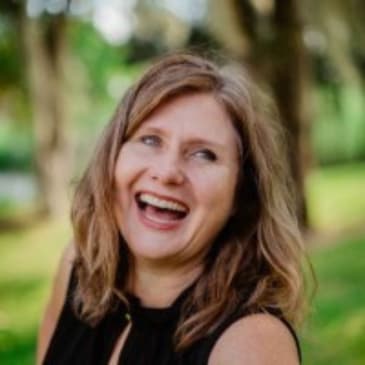
If you’ve ever doubted yourself or undervalued your worth, worried about things like charging too much for what you do, hit play on today’s episode! Psychologist and host of the Never Perfect Podcast, Dr. Beth Capecchi, is here to give you a pep talk and share powerful insights into how you can see yourself from a more authentic, and potentially more profitable, perspective. She’s seen too many people overestimate their challenges and underestimate themselves and she’s here to remind you to stop overthinking and start valuing what you bring to the table, so you actually achieve the big goals you’ve been dreaming of.
Website: https://neverperfect.org
[00:00:03] Deborah, with her 30 years of being an entrepreneur and creating over seven companies, knows exactly what it means to accept the mission. When you make that decision, when you accept the mission to become a solopreneur, to take yourself and your talents to market, then you embrace a life of not only unlimited possibilities, but also the unknown. It's an elixir of fear and bravery that only someone who's taken the leap really understands.
[00:00:28] On our show, Deb digs deep with her guests to highlight what you, the listener, wants to know. The stories, the whys and the hows to navigate the journey to success. Get ready to hear from some of the most incredible mission takers from Generation Z to boomers. So sit up, perk up and get ready to be blown away. Now here is your host, Deborah Drummond.
[00:01:14] Welcome back. We are together again. I'm so excited. I'm I love this podcast. I love this podcast that I need to meet. I get to meet very cool people like Dr. Beth Capecchi, who's the best today, but I also get to learn things. And so do you. There's nothing better than digging behind the surface. Right. And just digging deep into what people think and how they think and the advice that they can give us and giving us perspectives. I absolutely love it.
[00:01:42] And we have been doing a shout out from the rooftop. Thank you so much for supporting the show and the amount of countries that are showing up on our show. Beth, I got to tell you, it's been incredible. We've been very excited to know that we are reaching globally and not only reaching globally, making an impact globally. So very excited. Today, we are going to talk, like I said, with Dr. Beth Capecchi. We've known each other for a while. We met in a cool entrepreneurial group.
[00:02:10] And you know, when you're in a group or you're, you know, there's lots of people there. You walk into a conference and somehow you walk out with a new friend and you never saw them before and you never met them before. And we all know how energy works. You're going to meet each other eventually. It's just that you've met them there. And that's what's happened with myself and Beth. She has been on our stage with 262. I know that you're all such great 262 fans and you show up and you cheer and you listen. And a lot of our viewers have been on our 262 stage and many things of the sort.
[00:02:39] So she talks about something that's really, really needed. But I think I just love your approach to mental wellness. I love your approach and relationship too, because you know, we're all about empowerment over at 262 and empowering entrepreneurs and empowering people to move forward and go big and say yes, then take yourself with you. But when you go through that process, I always say, where you go, you follow. Right? Oh my gosh, I'm just so done with this. I'm just going to move.
[00:03:07] I go, where you go, you follow. You know what I mean? So you can pack your bags, you can move to another, you know, part of the world if you want to, but eventually you get to come back to you. Which is a great thing because we're all great people. But just the psychology of success. We talk about that a lot on the show because it comes back to us as entrepreneurs.
[00:03:26] I always say that when we choose to be an entrepreneur, you basically are creating a business with a personal development program because it requires you to do things like standing up and speaking up and showing up. We talk a lot about that. But what does it take to stand up? It takes courage. And what can come up when you're going to be, you know, courageous, maybe some voices in your head or maybe some messages that you got when you were younger about being courage or maybe you were raised in a house, you know, shouldn't you be seen and not heard.
[00:03:53] And now you're trying to speak about your business because you have all this passion and you don't know why you have fear, right? But you know all that stuff because you've been doing psychology and all of that for a very, very long time. You've had a very strong running podcast and it is called Never Perfect, which is great because as we go along the journey of life and we discover new things, we have to learn before we accomplish and all of that. So it was just so great. I love you.
[00:04:20] You talk about everything from self-esteem to accomplishment to not feeling great about yourself to learning how to feel great about yourself. So I'm going to stop talking. I think that's a good long intro. Is that great? I just adore you. It's great. I love the green that you're wearing today. Thank you. I texted a girlfriend of mine last night, Cheryl, Cheryl Rafter, and we were in Ireland together while we did a boat climb. I was just saying to her yesterday, I was like, I need to go back.
[00:04:47] And because she had sent me some Celtic singers from a festival, she was like, I need to go back. And she's like, well, and then you show up today in this gorgeous green dress. And I'm like, OK, I want to take that from a side from the universe that I just need to go get myself a ticket. That's right. Lush green grass everywhere. I know. Anyways, welcome to the show. How are you doing? Thank you. I'm doing well. I feel the same exact way.
[00:05:17] I feel the same talents and gifts that I don't have. I think we have some overlapping talents, but I am not a great planner. And ADHD is something that is technically part of the longer title of my podcast. Most people think of it as never perfect, Dr. Beth. But it's actually the long title is never perfect with an ADHD psychologist.
[00:05:36] So I think that's a really neat part of life is knowing who you need in your team and on your team and to coach you and to offset the struggles you have to elevate and empower you. So it's just so nice to find people like you who have those abilities to plan and really make things more clear and not overthink everything.
[00:06:02] You know, I think that after you've been in business for a while, you start to understand or at least for me, I understand the cost of overthinking. Yeah. I always told my team and, you know, sometimes I've had to eat it. I'm like, I would rather you make a bad decision than no decision. And if you can't around me, pretend to be and embody me as much as you can and roll the dice.
[00:06:28] And there's been times where, but it's been very few times where I was like, well, I told them to make a decision. So here we are. Very, very few over the many years. So I think that the cost of indecision. Yes. It's timely. And it takes time. Now, if you need to think out a decision, that's different. You get some advice, you do your thing. But even at then, like you don't need to ask 15 people on certain things. It's like, right.
[00:06:53] Go to your experts, the people that you trust in that sector, get a couple of opinions. It's like when you ask for references, right? But I hire somebody. I'm still the person that calls your references. You know, I don't go to a testimonial on a website and consider it valid. I'm like, I want to talk to somebody. But after a certain amount of references, you know, which let's face it, most of them are saying good things because you wouldn't have given them to meet through that.
[00:07:20] So it's really, anyways, overthinking. Yeah. Yeah. What's going on? Like, you know, you have this great show. This is your sector. You're in it. You've got clients. You're doing this. Where's the barometer? Where are we at in terms of culture and what's going on for people on the inside? You know, I think that obviously I've been doing private practice for 22 years and I've been doing counseling for closer to 27.
[00:07:50] And I've heard just thousands and thousands of stories and people's innermost struggles and secrets and just so many inspiring stories. And I just really part of what I want is for people to really value themselves and to know their worth and, you know, their package deal strengths and weaknesses, which is part of that user's guide to yourself that I like to refer to a lot.
[00:08:14] But it's just developing this user's manual and becoming very knowledgeable and comfortable and accepting and celebrating of your unique package deal. And there's no need to be embarrassed. Like, I often think about this if I'm interviewing someone for a job. You know, if I said, what are some of your strengths and weaknesses? I would be so impressed by someone that was comfortable sharing their weaknesses as well as their strength.
[00:08:39] And this probably won't surprise you, but it sometimes surprises me how often people are reluctant to sort of toot their own horn, so to speak, or to really they can undersell themselves. And it makes me so sad because sometimes the best candidate is not really great at selling themselves because either they're too modest, too humble. And I love modesty.
[00:09:03] I love humility, but to really you're doing the world a disservice by making yourself smaller and not like just it's a fact. I tell people you're not bragging. You're sharing actual facts. And then, you know, I think it's a sign of security and self-esteem to actually be OK with saying I have struggles or I have weaknesses because I think we're all just made to be unique.
[00:09:27] And we have special talents, but we also can't be everything like I use cars and flowers as examples a lot. Like the pickup truck is nothing like a little Porsche. You know, a minivan is nothing like, you know, a Hummer, you know, or whatever. Yeah, yeah, yeah. But so just trying to help people realize they're not alone and to share their story, sharing their stories makes us realize we're not alone. It makes other people more comfortable.
[00:09:57] And I think the stigma around mental health is is getting better and better, at least, you know, in a lot of countries. And that's one of the reasons I'm like, yeah, I have ADHD. I also have anxiety. I've had depression before, you know. And so just I think there'll be a lot less suicide, a lot less loneliness if we would just realize that we have a lot to offer people and we don't need to be ashamed of our struggles.
[00:10:25] And so I think that, you know, that's why my podcast is a little all over the place like I am. And I'm OK with that. I know that a little bit, but I also like most of it, you know, and I like variety. It helps me not get bored. So my podcast is sometimes it's me interviewing clients who have inspired me. Sometimes it's experts. Sometimes it's me alone.
[00:10:50] One of my top four episodes was called Vulnerable Narcissism, and it was just me 30 minutes just rattling off about some stuff I learned about narcissism after a very interesting counseling session. And that's been in the top four episodes for probably the last year. And so it's just you never know what is really going to hit home with people.
[00:11:11] But also one thing, actually, this is something that's really a hot topic in my counseling practice right now that is kind of popping into my mind. So I'll share it. But how many people, even just young adults or students, but this can be for people middle age that are in their careers, too. They hit a wall of I'm overwhelmed, I'm paralyzed, I'm kind of incapacitated, I'm flooded. You know, their nervous system kind of starts shutting down.
[00:11:41] They overthink things. They make things harder than they have to be. And then they start missing things or getting behind and then it snowballs. And so the amount of students I've seen drop out of classes, make poor grades because they're overestimating the stressor and underestimating themselves, which is a common anxiety trait, which is the number one mental health disorder is anxiety. The number one most common one.
[00:12:09] But just seeing people kind of try to crawl out from that and realize, think differently, even the strategy you mentioned earlier, don't overthink decisions. That's a really just profound thought, sometimes really simple, like you're probably torn because they're both great options. You don't have crystal ball. You don't know exactly which one might be a little better, but they're both probably good enough. So just commit to one and it'll work out. Yeah. Yeah. That was great.
[00:12:39] Thank you so much. I think that what I'm seeing and I don't see it from the same perspective as you because I don't do what you do. Yeah. But what I'm seeing is people are starting to get more comfortable with transparency. It's interesting. The two things that you talked about, one is transparency, you know, for example, the name of your podcast and letting people know that ADHD is part of your life. Right. Yeah.
[00:13:04] So people are getting more comfortable, which I think is like what you said, going to save a lot of people from having those alone conversations, which is why probably people spend a lot of time on YouTube and social social channels trying to find a virtual friend who's sharing information to make them feel better before they go to work in the morning, before they go to that meeting, before they get on that stage. Right.
[00:14:00] Right.
[00:14:32] Maybe clients. Maybe you're doing shows, maybe you're doing whatever. So you wake up with some alone thoughts. You haven't really had an opportunity to have community. Right. Even if it's work community. And so I think at the end of the night, you're still with yourself, maybe, you know, having those same conversations. And I think that that's part of it, too.
[00:14:53] When you say that, you know, the rate of anxiety or the heightened of anxiety, it's like we're not in those, you know, you're not walking by Patricia's desk and she's like, love that shirt. But those little things, I think. So why feel better about self? Right. Yes. Yes. Yeah. Isolation is so difficult.
[00:15:15] And, you know, that was probably at its height, at least in my lifetime during COVID, where everybody was so like isolated and separated. And so I do think that's another important thing is how can people really be deliberate, intentional and finding ways to connect. And whether it's podcast, even just hearing other stories and saying, wow, I'm not alone. I'm comfortable with sharing my story.
[00:15:41] And it helps so many other people, you know, start to realize like, wow, I'm not the only one that dropped out of college five times or that was unemployed or laid off because of AI. You know, I mean, there is a lot of fear. And, you know, imposter syndrome is really almost universal for people at some point where they just have this self-doubt. And like, am I really good enough? Am I really as good as people think I am?
[00:16:08] And but just finding peace in your own self with saying, I know my value. I don't have to pretend that I have no struggles or no downsides. But, you know, just saying I'm going to do the best I can. I know I have value and it's going to work out. You know, let's talk about that a little bit. Let's talk about value because you have conversations with people about value on all all levels. I have conversations with people in terms of value in terms of their work.
[00:16:38] And predominantly, I think they have a relationship that, you know, it's like the ball goes back and forth from self to work and self to work as you take yourself to work. And it's about having value for who you are and what you bring to the table. And where it shows up a lot in terms of my world is when people go to put themselves out in the world. Like, yes, we all have nervousness getting on stage and getting on. And, you know, the guest that we were talking before with, he's like, do you get nervous when you speak still?
[00:17:06] I go, yeah, a little bit, a little bit. I test myself a little bit and change, you know, my topics and things like that. But yeah, I and I think it's a good thing. I think it's a good thing. Not a wanted thing, but it's a good thing. The other part of it is the value comes up in terms of when you talk about imposter syndrome or whatever.
[00:17:26] I think that when people start comparing themselves in the room, you know, maybe the same thing as so-and-so, but so-and-so has been doing it for, you know, 12 days longer. And all of a sudden that twigles in, you know what I mean? The other thing is when it comes to charging, charging for services. Yeah. I think for services, I think the value and that really almost falls in your category where you're not feeling good enough.
[00:17:55] It's one thing to not be, I've not only been studying this for a long time or what have you, but you see, I see women and men that have been doing their business for long enough that their prices don't reflect that. I think that that falls back into some psychology and where they would be sitting across the table from you in relationship to value.
[00:18:15] What are some of the things that you can share with our audience today about how to stabilize your value or how to, I call it business, business esteem and self-esteem. I call it business esteem and self-esteem. They have a relationship with each other and they show up in each other's world. What are some of the things that you can tell our audience today to help have more value or more?
[00:18:39] Well, you know, sometimes I compare this to art like or beauty or, you know, like different people have different types of art they like or different types of beauty. I mean, there have been people that I've known that my husband doesn't think are attractive and I'm like, are you kidding? They're gorgeous. And I'm like, what's wrong with you? You know, but it's similar to art, you know, and so with the package deal type of thing, I do think like, for instance, using myself as a therapist.
[00:19:07] I know that I am a well-respected and pretty successful in the sense of having good client outcomes and good reports from clients. But I know that there are clients that probably won't like me, certain types, if because I don't, if they want someone that's going to be really methodical and be like, here's a game plan every week. We're sticking to that game plan. And I'm going to tell you that what you have to do in this homework is very strict.
[00:19:36] And I do give a lot of assignments, but they're very loosey goosey. It's like, here's a thought. I think this would be great. But they know that if they don't follow up, I'm not going to probably. I may loosely say, did you write that letter, you know, to help with your grief? And, you know, a lot of them don't do it, you know.
[00:19:53] But if somebody wants a real kind of organized structure that's not that's a little bit rigid, like a teacher, I'm probably not going to be their type therapist or a really confrontational therapist. So there are things I know that just are hard for me that I'm not great at. And so I think of it a little bit like a flavor, like what's your flavor of your style?
[00:20:20] And but I think so many people have been with therapists that just parrot everything they say. They just sit there and they I have a lot of people that come in. I want to be there, but they struggle to just talk nonstop for 30 minutes or not that it's nonstop. But I'm a very interactive, involved. You know, I brainstorm with clients and I'm really trying. And if they're not using the time, I'll I'll come up with topics. You know, I may try too hard, you know.
[00:20:47] But that's been one thing that my clients really have always appreciated is they'll say, you've given me more like suggestions in one session that I got in a whole year. You know, and so it's kind of like I do know what my superpowers are and I want all the listeners to know that they definitely have gifts and superpowers. And so many people demean their own strengths. They take them for granted. They think they're not smart. That's one of my pet peeves is when people say, oh, they're smarter than I am.
[00:21:14] I'm like, you got to be careful there because you really haven't measured every type of intelligence. There's so many variables, things you're not considering, you know, but so I guess just going to imposter syndrome likes really just saying, yeah, I'm probably not your best bet here or I don't have a lot of experience with that. There's nothing to be ashamed of. Just say that's not one of my great strong points is to be really confrontational with clients. But I know what I am good at.
[00:21:44] And so I think you could take that in the imposter syndrome area or the self value of just saying you've got a unique perspective that is very useful and needed in the world. And everyone is needed, you know, whether it's you're a different personality and I need someone with that personality on my team or whether it's you're going to find your tribe.
[00:22:05] You might think you're kind of weird, but like be your weirdest, fullest self and you will find all these people that are like, thank God, I didn't think there was anybody else like that out there. Yeah. You know. So it sounds like. It's interesting, right, because when you say like the whole compare the comparison thing is so multiplexed when when someone goes to say, well, you know, they've been speaking for five or five years and I've been speaking for two.
[00:22:33] What makes you think that they are better than you? You might be a natural. They may have been trained. It's like people don't take it that next step and think about the dynamics, you know, like they're smarter than me. I love that response that you said. Based on what? Yeah. Based on what? What's your what's your criteria? Yeah. One presentation that you heard that they said, how do you know that they're smarter than you? Yeah. You know, I know it's great for people just to question themselves. It happens so fast, right?
[00:23:01] Like when people aren't feeling great about themselves or valuing themselves or that self-esteem part gets hit, it's hard to regroup yourself. Right. Right. Yeah. And I also like to say we're not supposed to be good at everything. And it's a little bit like the flavor or the taste I was talking about. Yeah. You know, there can be podcasts that someone is like, that is way too boring. It's way too just serious. And others are like, that one's too chaotic.
[00:23:30] You know, there are people that I'm sure listen to my podcast and they're like, oh, this is just too all over the place. And I never know what she's going to talk about this week or that week. And others are like, I love it. I get nuggets out of every single one. And that's okay. Like it kind of goes back to being yourself. And I'm like, I'm just trying to be as real as I can. And I know I have something to offer. And that's what I want people to.
[00:23:55] Part of what I really want people to get is just be your realist, fullest self and know that you have so much to value. It doesn't have to be for everybody. Just like music. Not every music genre is for everybody. Not every piece of art. Like that's just not how it's such an unrealistic expectation to feel like everyone has to love you and you're their favorite. Like, yeah, I love that. That's a that's a make drop. That's my drop. The unrealistic expectations that we have of ourselves.
[00:24:25] I don't even know if it's about being perfect as much as it's about satisfying everybody. Yeah. Yeah. And where did that come from? We had to we had to be everybody's cup of tea. That's right. Speaking or thinking or writing or our book or like, where did that come from? I mean, I'm sure. I'm sure it came from somewhere because it's kind of a global thought, right?
[00:24:52] It's kind of a global thought where, you know, because we get all tweaked up or someone doesn't like us. I mean, what is it that schoolyard stuff where someone didn't like that? And we focus on the person that doesn't like us. And, you know, I love Brene Brown when she's like, you know, you have this arena of people that are watching you. You don't know if they're lovers or haters yet because, you know, they're watching you and you forget to put the people in the room. The ones that, you know, that you're a cheerleader. So I get like, yeah, I love it if you want to, not if you want.
[00:25:19] And then, like, you know, we care more about the person walking in the mall. Right. Then these people that have showed up for us and I go, oh, my gosh, what is it about us that focuses on the lack instead of the what we have? And what is it about that that really wires us out to think and then to take it personally and a little, yeah, we do with ourselves. And then we have to build ourselves back up and it makes you more nervous next time.
[00:25:45] And I mean, I think that's why the room like practically stands up and cheers when she is like, and if you're not in the arena, I don't know if you've seen the video. It's the man in the arena. Oh, my gosh. Love it. Right. And so she's like, does she know she, you know, she had this revelation and it's about that. If they're not in the arena and getting their butts kicked, you know, done, then she's not going to take their opinion. And what an epiphany it was for her that day.
[00:26:12] And again, kind of the epiphany that we get to and you're talking about how like loving yourself and valuing yourself, those kind of things that fall to the wayside and the understanding that you're not going to be everything to everybody and you're not going to, you know. Yeah. Yeah. Yeah. Like you're uniquely made and wired to bring something special and different. And not everybody is going to enjoy that. I mean, like I don't really enjoy politics.
[00:26:39] So I might not like, you know, hanging out with a person that talks about politics a lot. It's not that I dislike them. I'm just not really interested in politics. So, you know, that's another thing I say. You know, there might be people that don't click with you because you're different, but it's not that they dislike you. You know, I think we do this polar kind of idea of all or nothing. Like they either want to be my best friend or they don't like me. And it's like, that doesn't mean they don't like you. You're just not their cup of tea. Like I love your phrase there.
[00:27:09] It's like, that's okay. And that's how we kind of find our tribe. I think that term is supposedly outdated. I don't know what the right term is now, but. Yeah. I'm sure. I'm sure it's very outdated. You know. Find your pimple. I don't know what people. I say to me, like, what do you say? Yeah. Yeah. No, I like I like cup of tea. But but yeah, it's it all just goes together.
[00:27:31] And I think that so many people would just be happier if they could be at peace with who they are and just comfortable in their skin and not so worried about, you know. And that was the thing he triggered is one of the three hallmarks of the ADHD nervous system is called rejection sensitive dysphoria. So we get a little more depressed if we feel rejected than just the average person.
[00:27:55] And so that is, you know, that idea of being rejected is a big hot topic in the ADHD world. And so getting over that is important. But yeah. Yeah. I'm sure there's I mean, I know we're coming close to time here and we have this great audience of people that love to listen about psychology because I mean, first of all, it's part of every part of our lives.
[00:28:22] I mean, it's in your role as a parent and in your role as an entrepreneur and is a role as a leader and and authors and speakers and entrepreneurs and all of it plays such a big role. How we think about ourselves, how we present ourselves helps in the area of everything from sales to creating branding to hiring people when you need them, because a lot of us will go like I can handle it. I can hear my life. I can hear my life. I can hear my life. And then what's wrong with you?
[00:28:51] So like entrepreneurship was supposed to be, you know, like you're supposed to be doing everything, all of these things that we think about. And I think that we get through that with some sense of maturity. I think that we get through that while we're in the right community as well. I mean, what would you say about the the experience of being in a community? What does that do for people psychologically?
[00:29:17] Well, for sure, knowing they're not alone and they have people in their corner and life giving relationships, people who see them. You know, some people will say the greatest human need is for emotional safety, which is feeling understood and accepted unconditionally. And I think, you know, I would guess that no matter, you know, your podcast or any the listeners, probably at least half, if not more, what would have a lot of deep wounds from one parent.
[00:29:45] At least one parent that didn't see them, didn't value them. They felt like a disappointment, too. And it's I mean, it's nearly universal. I mean, honestly, I would I would even say that, you know, at least one parent that they just felt like, oh, I feel some deep hurt or not being known or valued or, you know. So, in fact, my first client this morning at 8 a.m., I mean, she's about 40 and her dad just was a narcissist and she knew it and he passed away pretty recently.
[00:30:14] And she just still has these echoing things that he said to her. And she's a very giving person. And he told her she was selfish. And it's like she can't seem to shake that like she knows she's not selfish. But then it's sort of that gaslight effect. So that's part of, I think, coming to peace and just being truly honest. Yes, we do have struggles we need to work on. Some people are domineering. They're rigid. They are selfish. They are a bit lazy. You know, we all have growth edges.
[00:30:44] We all, you know, with with my ADHD, I'm very chaotic. I have trouble making decisions and my kids tease me about it. But but I think that just really healing from that, knowing your truth and being at peace with that and forgiving, but also venting. Like, you know, we need to sometimes really release our anger and write angry letters and then write forgiving letters and write grief letters and or talk to people.
[00:31:11] And then you start finding out, you know, my mother was cruel to me or she never appreciated me or. So just knowing that people aren't alone. And if you don't share those stories, you don't realize how not alone you are. Yeah, true, true. And we're coming close to the end of our time in our conversation. We could have so many conversations. So bad. I know. No bad.
[00:31:36] Is there anything that you've got going on that you want to share about is what's happening in Dr. Beth's world? Well, I know you have another podcast that we didn't mention. Maybe put us in the right direction where people can find you. And then I have a question for you. OK, well, so they can everyone can find my website, never perfect dot org. And then never perfect. Dr. Beth is a very easy way to find my five year old podcast, which is my mental health podcast.
[00:32:03] Never perfect faith is the easiest way to find my faith. It's a Christian faith podcast. It's very real and like vulnerable, just kind of like I am. I mean, I think and just like a little bit raw, but in, you know, just not having to act like we have it all together, like invite people over when your house is messy. I've done that so many times, even thinking my house looked pretty good. And they're like, I'm so glad your house is messy like mine.
[00:32:31] And I'm like, you should have seen it three hours ago, you know. But I think that's symbolic of just life, like invite people over when your house is a mess. You know, let them know you're struggling with parenting or marriage or friendship or loneliness. Like everybody's struggling with something, at least one thing. So but yeah, and I do just one quick thing. I do have one in college and now another one going to college. And I have also a 16 and a half year old. So I'm kind of nearing the empty nest syndrome.
[00:33:01] A year from now, I'll have three high school graduates and three in college. So it's it's an interesting. Oh, and I'll tell you just for humor before you ask the last question. We were just in California last week. Yeah, yeah, yeah. My daughter. Don't have a glass of white. Yes. And my daughter yesterday on the way to church, my she goes, Mom, Dad's been getting on my nerves. And then she goes, actually, the whole family has been getting on my nerves. And I was just like, that's so classic.
[00:33:30] I mean, we just got over like 12 days of vacation and togetherness. And she's like, everybody irritates me. So that's what 12 days of being with the ones that you love and love you the most will do. That's right. Oh, my goodness. Okay, so I'm going to ask a question. And the question that I'm going to ask, not only ask a question about music, but I know that we've talked quite a bit about it. I'm going to ask you a completely different question. Who's the question that comes up? So lots of things.
[00:33:59] You have accomplished many things. And sometimes we have to write them down. We do so many cool things just to remember how great life has been. And some of the things that we've overcome ourselves. I'm sure you talk about overcoming a lot in your work. What is something that is on your bucket list? You may not have ever put it there. You may not have ever done a treasure map and cut the magazines and done all the thing, which is very therapeutic. I love it.
[00:34:26] But what's something that you still want to call in that you have not done or haven't gotten? Or what's something that Dr. Beth would like on her yet? That's hard because I really have FOMO and I'm an Enneagram 7, which the fear, the core fear of an Enneagram 7 is a fear of being deprived and missing out. And I have really bad FOMO. So even with questions like this, I'm like, oh.
[00:34:53] So I mean, one thing on this list, it could be, you know, if you had a treasure map, like I, you know, I had like a nice gray blanket. I'm fine. And we can take it off. Like one thing that just would be like, that's cool. I mean, I'm going to cheat by saying, you know, I want to write a book. We've talked about this. But the more interesting thing is that I wish I could live in like 10 countries for six months at a time. That would be the most amazing thing to me. You know, right. All right.
[00:35:23] So the universe heard that one. That's amazing. Thank you for being with us today. Audience, I'm going to talk to you. Thank you so much for being with us. And thank you for everything that you do. So please go over and listen to her podcast. Have some fun. Send some questions in if you can. Connect on social. Do all those great things. I am going to tell you to be well. And I am going to tell you to stay groovy.
[00:35:47] But I'm also going to tell you that if you want to be here, if you have something to say, if you want to be sitting where Beth is sitting today, then please reach out. Because I'm going to encourage you. And we're going to fill you up today. And what you say is important. If you want to speak on our stages, if you're an author and you have written things down on pages and you want to talk from there, you want to take your book and you want your book to be turned into a movie. All these things are possible.
[00:36:14] We've got all sorts of things for the entrepreneur to be seen and to be heard and to stand up and speak up and show up. This platform is just one of them. So if you want to get more visible and you want to have what I call some business esteem and some business success, sharing about who you are and what's passionate to you, it's really important to have platforms like podcasts that you have, podcasts that we have here, and other places for you to meet the one to many that are waiting to hear what you have to say.
[00:36:42] So with that, I'm going to encourage you to go to the website. You know what it is? It's the same as my name. This is not tough. You just go to www.dowfairwood.com and drop to most pages are going to have a contact page. And you're going to reach out. We're going to have a great conversation. And I'm going to get to know you because you know what? I don't know. It's not fair, right? All of our people get to know us, Beth. And we need to get to know what's going on for you. So thank you for being here again. Be well. Stay groovy. Beth, thank you so much for sharing with us today. I'm looking brilliant in green. It's definitely a good show to you.
[00:37:10] That being said, we are going to say goodbye. We will see you all again next week. Bye for now. Loved it. Thank you.