
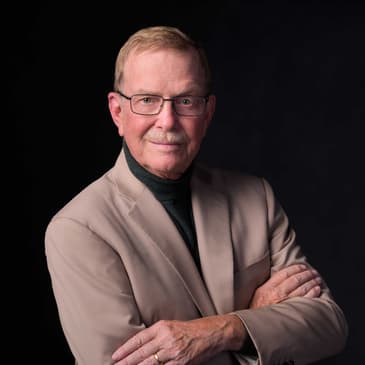
What helps kids become confident, capable adults who thrive? According to today’s guest, Dr. Randolph Schiffer, it’s facing their fears in childhood, and he’s just released a book to help them do that. “Bedtime Stories That Will Terrify Children” was born out of Dr. Schiffer’s efforts to help his son face his leukemia journey as a child. Stories are a great way to help kids understand their fears and develop courage, says Dr. Schiffer. He believes many parents today try to shield their children from fear, anxiety and other negative emotions and that’s doing their kids a disservice. Listen to Deb’s conversation with Dr. Schiffer and find out why he thinks helping children face their fears benefits them, their parents, and society as a whole.
Website: https://randolphbschiffer.com
Instagram: @RandolphBSchiffer
LinkedIn: /RandolphBSchiffer
Facebook: RandolphBSchiffer
[00:00:02] Debra, with her 30 years of being an entrepreneur and creating over seven companies, knows exactly what it means to accept the mission. When you make that decision, when you accept the mission to become a solopreneur, to take yourself and your talents to market, then you embrace a life of not only unlimited possibilities, but also the unknown. It's an elixir of fear and bravery that only someone who's taken the leap really understands.
[00:00:28] On our show, Deb digs deep with her guests to highlight what you, the listener, wants to know. The stories, the whys and the hows to navigate the journey to success. Get ready to hear from some of the most incredible mission takers from Generation Z to Boomers. So sit up, perk up and get ready to be blown away. Now here is your host, Deborah Drummond.
[00:01:14] Welcome back. We so appreciate you. Thank you. Thank you. Thank you. You know, I say it every single time because every single time it's true. And we have just been getting so many incredible reports from all the different places in the world that you viewers and listeners are tuning in. And we are so appreciative. And thank you for the questions. And thank you for the cheering on. And thank you for following the guests and going on to their socials and doing all the things. They are here to help you.
[00:01:42] And today, I always tell you how you're going to feel. I know, who am I to tell you how you're going to feel today? But you know, at the end of this show today, you're going to feel inquisitive. You are going to maybe think about things. You're going to decide differently. That's how I project that you are going to feel. But you are going to send me a message and tell me whether I was right or not. All right. Today, we have a very special guest. You are going to love this man.
[00:02:10] I have been reading up on this man for this week because that's what I do. And there's been some there's very interesting discoveries. And I love that. That's why I say you're going to be very inquisitive. First of all, when I tell you the name of his book, you're going to go, I need to know more. That is not that is not a typical title for what would maybe be considered a children's book, maybe be considered a psychology book. I don't know what he's going to tell us.
[00:02:35] So listen, Dr. Randolph Schiffer is going to be here today, and he is with me right now to talk to you about a different perspective. And I'm going to tell you the name of this book, bedtime stories that will terrify children. If this helps you feel a little better, it's eight tales to help parents and children navigate through fear.
[00:02:57] And not only has he had his own personal experience and he's going to share a little bit about that, but we're going to expand and talk about this conceptually and actually, because he also had a story which took this to action. I'm going to leave it there. So, Randolph, thank you so much for joining the Mission Accepted podcast today. Our listeners are very inquisitive. They love to learn. They love authors and they kind of like to dig in deep when we have a conversation. So thank you for joining us.
[00:03:27] Thank you for having me. Absolutely. Where are you coming in from today? On a mountaintop in northeastern New Mexico, looking down on the Rio Grande Valley. Oh. You can see the you can see the timbers and the roof there that they built the Pueblos from and our villa, too. Wow. Gorgeous. That's why I asked. I thought, oh, my God, you look like you're in Colorado or something.
[00:03:53] So, well, thank you for coming to the show. And I've just dropped this incredible name now. So those of you that don't know and have not been digging a little deep like I have. Randolph is a former neurologist and a psychiatrist, and he's a lifelong observer of the human mind. And I think that's really incredible. I think that the whole world in relationship to neurology and psychology and neurology has gotten deeper and it got vaster and got more mainstream.
[00:04:22] I think people are questioning and learning more. As someone who has loved brain health for a very long time, even when I'm talking to a group of entrepreneurs, they're having these conversations around the amount of times they can remember and and where we come from when we're having responses and reactions.
[00:04:44] And how many years ago did that come from and triggers and boundaries and all these conversations are starting to happen around our well-being and positive mindedness. So tell us a little bit about yourself. Tell us what took you to that incredible title of this children's book. And so my friend is Dave Deshores. I was always interested in behavior and wanted to be a psychiatrist from a very early age. And I became one. There were detours.
[00:05:14] But it was something in my personal life, my wife and I, that led to these stories. 35 years ago, we had two boys. We still have them, but they're big now. We had two boys ages three and one. And the one who was three was diagnosed with ALL, acute lymphocytic leukemia.
[00:05:38] Now, I was always in pediatrics doing medical and psychiatric care. I knew this disease. At that time in 1990, ALL was 50% fatal. But I also knew that of the 50% of the children who died, they didn't all die from the biology of the disease. Many of them died because they, or their families, were not able to take the treatments, which were arduous and prolonged.
[00:06:08] So I decided to design and tell in serial fashion a number of bedtime stories to both boys, which would toughen them up, especially the older one, and inure them to the older one, to what lay ahead. And then a few years ago, I remembered them and wrote them down. Wow.
[00:06:36] I want to ask, what were people's responses to that? Were they, I can't imagine, and I don't know why you'd ever say that, to, wow, that's such an incredible idea? Was that part of how he and you as a family were able to make it? Like, there must have been some people on both sides of that. Well, it was very private at the time.
[00:07:00] When you or your core family members developed a terrible disease, you all of a sudden find that your social circles have contracted considerably. Probably that's adaptive so that all of our energy and as much time as we can is internal to deal with the disease in this case.
[00:07:28] But other people didn't know about this until I wrote the stories and published the book a couple years ago. Ah, okay. And what was the response then? The response to the book has been mixed. Some knowledgeable people in children's literature are outraged. Some bookstores won't put it in the window. I can tell you this.
[00:07:50] If you look at the books that are lit, that are, sit there in the window of children's bookstores, which I do now and for the last couple of years, most of them are pretty swishy and banal. There's a small lamb who has had a complete nervous breakdown because she was separated from her flock. There's a choo-choo train, totally neurotic and sleepless because he's not sure he can do his run the next day.
[00:08:15] Well, let me tell you, if they put my book with the dramatic moon-shrouded window in the two boys and let the children pick, they'd all pick my book. However, the parents wouldn't. Now, some parents would. Some parents would, but some parents wouldn't. So there's some controversy. Yes. Well, as par, right? As far and are. Yep.
[00:08:39] So what is it when I was doing some great reading about you earlier this week, and so I really got the sense that there's a different perspective on shielding children from fear and how that sometimes can not be to their advantage, that it can do more harm than good. Yes.
[00:09:03] Let me start and be brief at a downstream juncture and tell you a story or two about my concern that we have raised a couple of generations now of timid, fearful, and ineffective children. The area I know the best is the major university medical centers, and I was up at one of them a couple of years ago, and the dean was complaining to me. I had no official business. I was just there, whatever, socially. He was complaining to me.
[00:09:32] They had just hired a fully trained general surgeon from one of the Ivy League surgery programs, five years of general surgery at a prestigious place, glowing letters of recommendation, just excellent performance reviews. But this guy got to the medical center I was at, and he was afraid to be on call. He had never operated alone at night, and so he was afraid to try.
[00:09:59] Now, during my five years as a resident in these university hospitals, I worked mostly with neurosurge. The neurosurgery residents operated alone every night. So something has changed and not for the better. Very interesting. Well, talk this stuff about it, the psychology behind storytelling, like conceptually storytelling. Where does that come from? What is it meant to do? What is that?
[00:10:28] I think that storytelling is important for childhood development with regard to, let's call it courage. We're born with fears and anxieties to some varying degree, but all children are potentially and easily frightened. But there are no courageous children or toddlers. That has to be learned, and I think it's learned in a number of ways, including storytelling.
[00:10:56] Storytelling is very powerful, not just for toddler-aged children, to help them understand fear, courage, and other cultural values. But it's also important for us until we're very old.
[00:11:11] And at the end of our lives, many of us, if you're a psychotherapist, which I was for 30 years, you'll find older people are committed to developing, putting the story of their lives into a narrative form that's acceptable, that they can live with. This is extremely important to them.
[00:11:30] So I think we like stories from the beginning to the end, but in early childhood, I believe the stories are a tool to help with the development of what I call courage. By the way, courage, not the absence of fear, but the demonstrated ability to think, act, or speak correctly in spite of our fears.
[00:11:55] In spite of, Adam, your son was three when you were sharing stories. And did you see that it helped him be more educated in relationship to what was happening or to have an understanding? Like, what did you see as the positive to the experience for him? It's hard to know.
[00:12:20] There are controlled studies of bedtime stories, but he and the little boy, too, even though the little boy was only one or 18 months. They were fascinated by these stories, gripped by them because the stories, the stories aren't really as scary as the title suggests. But the animals in the stories are different from the animals in most of the children's books that I see. These animals can snap at you.
[00:12:47] They can think and do evil things. They can bite you if you grab them. They commune with evil spirits. There's drama. There's suspense in these stories. It turns out pretty well. You can't overdo.
[00:13:01] But the stories really pick up these greater dramas, I think, about the need to live with courage, to take responsibility, to have positive regard for others and many other things like that. But each one of the stories picks up one of those, what I call cardinal virtues of Western civilization. So anyway, the children loved it.
[00:13:31] It was the high point of their day. I had to make up a chapter each evening for a year. It lasted for a year. And it certainly didn't harm them. And our son survived. So there's something. Now, absolutely. You are. What made you decide? Because you said that it was only a few years ago that this became, you know, you became an author of this book. What made you decide after these years that it was time to put it to paper? Of course, I've been a writer since I was a child.
[00:14:01] So it wasn't anything new. I knew it was time for me to reinvent myself, become a new person. And after 35 years in the big universities, toward the end, I would sit down to work on my science papers. And out would come texts and pieces of the stories of my life from Vietnam, from medicine, children's books.
[00:14:27] So I realized that I was done with medical science and I would have to find out how far I could go with narrative fiction. Wow. Very interesting. So tell us what it's been like. You know, there's a lot of our audience. We're big fans of Words on Paper. We, too, put ourselves through that process here. We've been on very different styles of book tours.
[00:14:56] So now that this book is getting known and you're doing shows and you're being heard, what's that like? I mean, it must be different. Now, Deborah, do you think many of your viewers are writers themselves? Oh, absolutely. Then they know there's something very satisfying about it. It's solitary. It's selfish in a way. And there's suspense about it. Each morning now and for 16 years, I've been doing this.
[00:15:26] It's the favorite part of my day. I'm not ever 100% sure what will come out. But the greatest thing I was thinking of earlier, but before we started the recording was I spent my whole life managing other people who more or less would not do what I said. And now as a writer, the characters do what I want them to do. And that's wonderful, except it's not entirely true.
[00:15:53] And when the writing is really going well, your viewers probably say you can tell the writer, the writing is going really well when some of the characters won't do what you want them to do. Very good. Well said. Well said. You talk a lot about how fear is more manageable. I imagine other emotions as well. What is being shared?
[00:16:18] And as do you feel like that with us, when you're when you're writing about what you wrote about, and that obviously there was fear behind the situation that you that you were in your family and the set. But as a blanket statement, do you feel that when there's stories about things or readings about things that may not be the lamb, you know, jumping through the hoop and all of that, that there's something very powerful about sharing those?
[00:16:47] Yes, the sharing is key. But I'm going to just segue a little bit to make it clear that I'm not against fear. People who fear is a core and constructive part of our identities. I'll give an example or two. People who have no fear are dangerous at the worst and unsuccessful at the best. In the two areas that I know the most about, fear is an essential construct.
[00:17:15] In combat, if you as a combat commander cannot feel that you're in a dangerous place, bad things happen. So you have to be able to feel that. And in medicine, medicine is still very lonely art, very singular if you're the doctor.
[00:17:42] And in medicine, you have to be able to feel that fear that I'm getting into something I don't understand now. So you can get help. Doctors who don't have that sensation of fear or who don't who refuse to recognize it also are dangerous.
[00:18:00] But getting back to the development of this kind of instructive internalization of fear and concern, which is essential. I think with the small children, with the children, the way to do that is to involve them in the stories. And if the stories are well told, the small children are in it anyway. They will tell you what they want. They will interrupt and say, we don't want the dog to die.
[00:18:30] Or they'll interrupt and say, what happened to the ghost from the first story? Is that ghost going to come here? And so they will participate like that. It will be wrapped in their attention to it. And from time to time, it's constructive to involve them in the story by having them tell a part of it just to see what they do. I think if you do those things as the teller of the stories, you don't have to worry about the stories being harmful.
[00:19:00] So that's a read together, work together. And of course, later development about the more constructive identifications with fear I was telling you about, especially like in the teenage years. Those come from other processes. I'm not writing about those. We're not talking about those much. But that comes from their, as teenagers, their identifications with us. And I believe as a group, as we're failing, we grownups are.
[00:19:25] And those of you who have children and everybody has a child in some way or other, except for maybe a few. And that's a question. What I say sometimes about this is, how many times did you tell your teenage child about your fears? How many times did you use the words, I am afraid? And the answer is low. Low. Yeah. Or zero. So why is that?
[00:19:54] It's because we're afraid of our fears and we're afraid of letting the children see us too clearly as we are. But that's a failure. They learn who we are anyway. Okay. Yeah, that's really interesting when you say that, because I think back to myself. I think back that, you know, you do have a bit of it as a parent, you have an arloin that you're supposed to have it together because these people are learning from you.
[00:20:21] And you're almost like when I talk to some of my colleagues that are leaders of teams and companies, and there is this concern about if people really know or you talk about how you really feel that day before the meeting. I mean, there's a lack of, not respect, because I think it actually goes the opposite way when someone gets transparent. I think people get more respect. But maybe it's an old paradigm where you think you have to have it together.
[00:20:50] You're the one who's in the director position. They need to listen to your lead. And I think that there might be some of that that goes on. But when you say that, that's quite interesting on expressing your feelings. Maybe it's happening more and more. But I still think, as a parent, you've got yourself in a teacher mode, right?
[00:21:10] Parenting is the most difficult thing we do, more difficult than relationships, marriage, work, because in parenting, we must be always and ever attentive to the needs of the child and putting those above our own personal needs or what we want to do. And what they need develops and changes across their time with us. It's so difficult. I don't think anyone does it well. We just do the best we can.
[00:21:41] And every era has a different set of rules. Things change. You know, things change. Right? Right. But I'll say, you know, what you were talking about, I think we have, we the grownups, I think my book, I'm not saying it's a children's book. I think it's more a book for grownups who want to think about their legacy with their children. We have myths about how we feel we must be when we relate to our children or people like children.
[00:22:10] Another one of these, and they're clumsy. Another one of these is, how many times has the grownup or the parent to a child's question ever said, I don't know? Almost zero. But it should be once a day. It should be once a day that you say, I don't know, to the children, whether they're three or 30. Right. Yeah.
[00:22:36] I guess you're just so much in, you know, you're embedded with being solution oriented, that when there are three or four or six, you think that you need to, you know, you need to make things right. You need to, you need to have the answers. And I'm sure that just continues. It's probably. Yeah.
[00:22:56] I was going to say, it's like being exhausted, like being exhausted parent at home is crying in the bathroom, not letting their kids see that they're crying because they're so exhausted because they don't think that it's okay to say I'm tired. Right. And so we try to protect them from failure, disappointment, fearfulness, anxiety. And the result is we get a general surgeon who can't operate alone at night.
[00:23:25] Well, right. There it is. Well, for our authors that are listening and for people that are thinking about writing a book and goodness knows we have a lot of entrepreneurs in many different sectors that listen to Mission Accepted for you stepping out into the world of authorship.
[00:23:47] What's it been like for you to, I mean, you really shifted, you know, you shifted careers, you definitely shifted sectors. What's it like for you now talking about your book, being an author, being at bookstores, having conversations like this? Was that an easy step for you? Did it just come along with the package? You asking me or the viewers? I'm asking you.
[00:24:17] You know, I didn't think about it like easy or hard. Some of my medical science papers were controversial and generated divisiveness. You know, I didn't think about it. It's all come from inside me. As my earlier careers, I can't really tell you why or how, but for me, I knew it was timing. There are epics and stages in life.
[00:24:46] I had done my duty to the country, I thought. I had done medical science to a standard that I had hoped for. And I was just done with them. The fiction stories were just coming out. It wasn't up to me. Yeah. Well, that's beautiful. Some people might almost say divine. Can we go there? Can we go there?
[00:25:17] Can we go there? What was your... Tell us about your first book launch. Tell us about the first time that you saw your book in a store or... Well, this only happened just recently. I know. That's why I'm asking. So I wrote for 15 or 16 years and nobody cared a thing about it, nor thought about it, nor anything. I've written three other non-medical books, which I haven't even shown.
[00:25:45] Anyway, so I met Angela McKenna of Omeripress in Canada. She's a children's book. She was just fascinated with what I call the children's book, the bedtime stories book. And sometimes when I see the cover, you know, like in a store, I have a little dissociation experience. Also, I have that sometimes occasionally if someone introduces me to give a talk.
[00:26:11] Like, you know, even a hint of it, like at the beginning here today, I hear about this person and I'm thinking, wow, like I want to look around and see where he is. Like it's not me. That's fair. That's fair. I don't think that's unusual coming from the world of speaking, right? I have the speaker and someone who has spoken to few and many who also talks to speakers all day.
[00:26:37] I mean, we we we have about I don't know when you're from 22 to 250 speakers that we put on stages, our stages every year. And the conversations that I have with them when they're thinking about speaking to when we're doing a media sheet to them getting prepared to speak. Sometimes there is a who is speaking and then it's almost like you're speaking about yourself, but you're right here. You know, you're right there. Yeah.
[00:27:04] Now, Deborah, if I may, do you get anxious now before you speak? So isn't this interesting to this day? And I have spoke. A couple of decades. I've spoke a couple of decades. I will still feel the flutters will be different if I'm doing a training or a teaching, like a training or a teaching or I'm running a class or I'm no. Right.
[00:27:31] When I'm speaking, there's a little like, oh, you know, I add crack at the practice. I like to be fresh, you know, someone could call me in 10 minutes and go, come teach, you know, come, come teach, you know, the evolution of TB and the accessibility. I mean, I can you could throw me into something in 10 minutes and I'll do it. And I'll more than likely nail it. It's my work. It's what I do. It would be the same thing for yourself.
[00:27:57] But when I'm speaking, I like to change my presentations a little bit each time, because for me, it brings variety. It probably would be less nerve wracking if I do that. But I write like I'm a writer. So I will write out all of my questions, all of my presentation the night before. I really sit with it. I reread it a couple of times. So I would say that there's still a little bit of angst for me and there's still a little bit of flavor, I guess I would say.
[00:28:25] And every time I speak, even on my own stage, even on my own stage, there is a little vibration of and it might be because I put myself through a new presentation. It might be that for me, I I choose to and think it's a professional way of me running my own speaking business to write everything out on paper that works for me. It just satisfies the part of my brain that says, OK, we've done everything we've done. Let's go.
[00:28:54] Now, do you think that we heard I'll call it rehearsal behavior that you do the night before. Do you think that diminishes the performance anxiety makes you more effective? A hundred percent. Yeah. Well, see, there that's now we're talking about fear is a constructive construct in public speaking. I gave one hundred and fifty medical science lectures in my career. I'm defining them as things I was paid to do.
[00:29:21] And I was nervous before the first one. And I was nervous before the last one. And I'm not a hundred percent sure why this is. But people who don't have any anxiety or fearfulness before they speak, I don't think they're good speakers. They become repetitive and dull. That's a very common conversation that we have. Obviously, it's my field. So there's a lot of conversation.
[00:29:44] I would say it's the rare it's it's very rare to find someone who doesn't have some kind of angst. I always say if you're it might feel like a plateau or I might change some of the information or go rewrite it in a different way. Like you might. I encourage people not to get nervous or anxious. That's not something that I encourage people to do. But is it still passionate? Does it still fuel you? Are you talking to the same audience? Do you need to?
[00:30:13] And honestly, I've been I've had that angst talking to five people and I've been on stage of 20,000 people. Now, the 20,000 people, I have to say the angst was a little higher. Just saying there's been situations where I've been teaching and there's been people in the audience that make me nervous just knowing they're in the audience. And for me, when there's people in the audience that I know and I care about what they think, that raises the anxiety for me.
[00:30:43] Yeah. Yeah. Yeah. That I'm not quite sure what that's about, but that's definitely true. Who is out there and how many of them. But getting to back to how I came, I left medicine 16 years ago, about two years before that, I knew I was going to have to leave because in front of these audiences at whatever the American Neurological Association, American Psych, whatever.
[00:31:08] If I got to a part that was emotionally moving or dramatic and it's always there. I mean, we put up numbers and they're dry, but these are real people. I would start to cry. And so I couldn't at least smoothly or artistically finish the talk. So that's when I knew I got to get I got to get a new self. Okay. And here's a great thing about writing.
[00:31:36] You can cry as much as you want when you're writing a book. Nobody knows. Right. Right. They get a book and there it is. There it is. All right. Here's one more tip for your viewer writers. Every I see. If when you're writing now and then you don't start to weep. It's not good enough. There you go. You go to a bar has been set. My friends, a bar has been set. I know that we're wrapping to time. I want to tap into two things.
[00:32:07] One is first of all, you know, congratulations on your careers. Second is we talked a little pre show. I was like, what's on your mind these days? And you've been having conversations with yourself, I imagine maybe other people about the difference between it affecting the approach of fear or the approach of how you have conversation with the difference between boys and girls. Right. Time is short.
[00:32:35] I'll be brief and not finish these thoughts. But we only had two boys. We never had a girl. Well, we had a third child who was an imaginary child who was a girl. And so she would she was difficult to deal with, too, at times. But we never had a real girl. So now that some people are saying these stories could be harmful or frighten people, I've come to wonder. Are boy children different from girl children?
[00:33:03] Are they different as to the type of stories? There are susceptibilities to harm from stories. There's no question stories can harm children. I could tell you a couple of stories about that. On the other hand, there's no question stories and words can make children well. So I've been turning these things over in my mind lately. I can't tell you why. I don't have an answer to them. But these issues I'm thinking about. Yeah. Well, that's the part of discovery, right? That's the discovery part.
[00:33:33] So I'm going to ask you a completely different question. We're going to just go. We're going to go off script. Not that we were on one. But before I do, I wanted to just give you an opportunity to share with our audience. I know in the show notes, we're going to have all of your information. Where can people find your book? Where can people find you? I have a website.
[00:33:57] I didn't make it, but it's Randolph, R-A-N-D-O-L-P-H-B-S-H-I-F-E-R dot com. And there's all kinds of tremendous pictures and aphorisms about this person. And it's just, I wish I'd met this guy. But that's where all this stuff, you can do whatever you want there. There you go. Thank you so much. All right. So we're going to completely shift. I'm a true believer in the power of music.
[00:34:25] Some people might say that I'm a little addicted to music. And I always say if there was a 12-step program for music, I wouldn't go. And if I'm ever late for a meeting, if I have a meeting with you, Randolph, and I'm a few minutes late, you know, I'm listening to a song. I just can't cut off. But if you are on your way to a desert island, it's you and you. And you're going to go for an extended period of time. And you have a suitcase. And there's only one album that you can get into that suitcase.
[00:34:52] And of course, we'll have a record player on this private island for you. Maybe a few things to go along with it, like a nice drink or something like that, lounge chair. But if you were to listen to one song or one album or one artist, who would you be putting into that suitcase? I'll answer it a little off to the side. But on the topic, when I, my creativity in writing, such as it may be, it comes through
[00:35:21] listening to music in my pickup truck when I drive around the country. And when I listen to, there's a neurology to that. The creativity in writing and from music itself, subcortical, temporal, the diencephalon type creativity. But the music, I listen, I'm from Detroit. So I listened to the Motown music, all of it from 1960 till 1967 when they moved to California. And there's almost none I don't like. And it's creative for me.
[00:35:52] Nice. That sounds great. Motown gets everybody dancing. Good old wedding. Good. Yeah. And everybody's up and they're singing the songs because they know the words. It's not just me, but that passed away. And now we have music they call rap. And don't get me started on that. Okay. Well, we're going to finish off with, you know, uh, some, oh my gosh, there's so many. There's so, I mean, I remember the temptation.
[00:36:19] And they're just so, but so in relationship to Motown, but we'll leave it there. Thank you so much at her sharing behind the pages with us today. It was so great to get a sense of yourself and a sense of your process and the thoughts. And I'm so happy that you have two healthy children that are, you know, do we ever stop being parents? Randolph? I don't know. Do we ever stop being parents? Oh, you can't divorce your children.
[00:36:50] And we don't want to because they're fabulous. They're fabulous. Um, so thank you for being with us today. Thanks for sharing your words with mission accepted. I am going to just remind you, you incredible audience that look, if you have something to share, if there's something on your heart, if there's something in the pages, if there's something that you're speaking about, if there's something that is, that's filled your life, you have a passion and you need a stage to have a conversation about it. Then you want to be sitting around office, you know, where we are. This is not difficult.
[00:37:20] I made it super easy for one Randolph. My name is Deb Drummond. And you can go to debdrummond.com and drop pretty well to any of the pages. And there is a contact page that you can reach out to us and tell us what it is and how to what you would want to share. We want to thank our audiences from all around the world. We are so appreciative for you to be here. I know that you just listened to this incredible show with Randolph. Please send it to anyone that crossed your mind as you were listening to it. Oh, I think they would love it. I think they would love it.
[00:37:47] I believe that that is an indication that someone that you know needs to hear what we had today. So thank you so much for being here. Thank you audience for being here. And as always, we're going to close out the exact same way. And if you are new to our show, no matter what show you come on to, you're going to hear these exact words that I want you to be well and I want you to stay groovy and I want to see you next week. So until then, be good. Bye for now.