
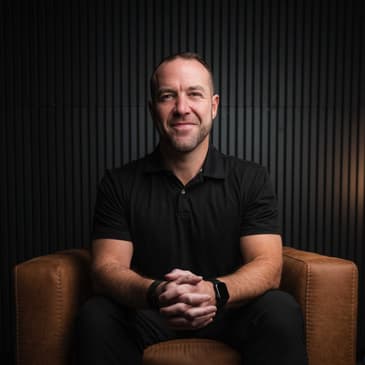
Want to build a business that employees and clients are excited to be part of? It starts with a strong company culture. But what, exactly, does that look like? Today’s guest, podcast host, keynote speaker and author TJ Sweet, is here to tell you what makes a great culture and how to leverage it to give your business an unshakeable foundation. This conversation is all about leadership, the privilege of pressure and the willingness to learn. Listen in and find out why an authentic culture is the secret sauce to successful organizations and profitable businesses.
Website: https://tjsweet.com/
[00:00:02] Deborah, with her 30 years of being an entrepreneur and creating over seven companies, knows exactly what it means to accept the mission. When you make that decision, when you accept the mission to become a solopreneur, to take yourself and your talents to market, then you embrace a life of not only unlimited possibilities, but also the unknown. It's an elixir of fear and bravery that only someone who's taken the leap really understands.
[00:00:28] On our show, Deb digs deep with her guests to highlight what you, the listener, wants to know. The stories, the whys and the hows to navigate the journey to success. Get ready to hear from some of the most incredible mission takers from Generation Z to Boomers. So sit up, perk up and get ready to be blown away. Now here is your host, Deborah Drummond.
[00:00:51] Oh my goodness. Thank you so much for coming back.
[00:01:17] And why wouldn't you? The guests have been insanely sensational. And I don't know, I don't usually put those two words together, but today they are. And we are no short of extending that for you. So look, audience, you know, I love you, you know, I adore you. And you know, it's unfortunate when other people come on the show and they're a podcast host too, because they feel the same way about their audience that I feel about you.
[00:01:41] And you're the best audience ever because you play, you let us know what you want, you cheer on, you contact our guests. That's what it's all about. So it's called mission accepted. These are people that have taken the mission, been a little cray cray enough to stay in the mission. I always say it's messy in the middle. And sometimes we talk about the messy. And I know that you know what I'm talking about because you are more than likely an entrepreneur or someone that wants to sit back and laugh at us. Either way, we're here for your enjoyment.
[00:02:09] But you are going to feel something today. So if you're listening, awesome. If you're watching, even better. If you're driving, we are glad that you're listening. But at the end of today, you are going to feel so cultural. You're going to feel comfortable with yourself. You're going to feel hopeful and grateful. That's how you're going to feel after today's show. So let me introduce you to TJ Sweet. Isn't that a nice name? Like you must see so many people that go, wow, maybe I'll use maybe I'll name my children that because it's it.
[00:02:39] And it just leaves you feeling happy. And I know that's what you do with your audience. So let me introduce my audience to you. We are talking to a very proficient keynote speaker. He is also an author and graciously. He is the podcast host of living the sweet life. Sounds good. I know that a lot of audience wants to do exactly that. So let's kick it off. And welcome to Mission Accepted. We're so happy that you're here and made some time in your schedule to come share some of your, as you say, wisdom. I call it middle with us today.
[00:03:37] Yeah. We're so happy that you're here.
[00:03:47] We're so happy that you're here. Absolutely.
[00:04:08] So one of the things that I wanted to ask you, because our audience is very entrepreneurial minded, they're building teams, they're building businesses, they're they're more than likely outside of themselves or they're growing in vast areas. So they're farming things out. So they're farming things out. And even from a hiring a service provider. I know that that creates culture, like your interaction is communication. And I don't want to say what your expert is.
[00:04:34] So I'd love to ask you when someone is starting to build or has built or looking to build more people. That's an interesting dynamic, right? When you all have this and you're bringing someone in. What's your opinion on it? What's your position on that? And how can people make that as seamless as possible? Yeah, I know. That's such a great question. Most people don't ask that level of intention and depth on culture. So I'm here for that.
[00:05:00] But I'll tell you, so I've been unique and I've had a unique leadership experience. I have 23 years of leadership experience across across health care, across different industries. And the one thing I'll say about culture, oftentimes it's it gets rooted as the words that we say and the things that we believe in, which is a starting point. It's part of it. It's part of the recipe.
[00:05:25] But really, an authentic culture is how your people feel when they're not at work about where they work. And then the culture, if you really want to dig in as far as is somebody aligned with our culture? You have to think about how the consumers, no matter who it is, your customers, your clients, whatever, how they feel when they're with you. That is like the best representation of culture, not your mission statement of saying we want to serve all all people on the world in the world.
[00:05:54] That's that's that's that's for you. It's not for them, but it's a matter of how somebody feels when you actually work with them and how somebody feels with you when they're when they're on your team. And so my biggest thing for me, so building cultures, I get to lead and be a direct leader for 20 and 40 and 60 people, some remote, some with me. Very, very different backgrounds, 22 different job titles while I was leading them. So they weren't all doing the same thing, kind of marching the same border. But I let them be them as much as possible.
[00:06:22] But we made every decision and every conversation was aligned through the cultural lens of who we are, not just what we do, but also why we do it in the first place. And so when it came time to hiring somebody, it wasn't can they do the job? It's would they love doing the job to serve the people that we're going to serve? Because the can you do the job, you can typically kind of tease out. But what is the heart of which they're going to give?
[00:06:47] That's when you either I would say exponentially grow a culture or you question it. Because if you hire somebody who isn't in it for the same reasons, culturally, in the sense of feeling, it could be psychological safety. Even it could be grace. It could be trust. It could be purpose. It could be a lot of those different big words that we say. But whenever people look forward to coming to work with a team, that in itself is a culture.
[00:07:14] And, you know, you can look across every industry and they're all seeking a culture. And really what that means is predictability so that people can operate out of a place of joy and excitement instead of fear they're going to lose their job or performance all the time. So my biggest thing, my stance on culture is really not just what you say, but it's more about what you do and how the people feel while you do it. Well said, as I would expect.
[00:07:42] I know that you have some different pillars that you work with, particularly as a keynote speaker. I think you can give a little bit of a highlight on those because I think our audience who's listening to us right now are probably the people that are hiring a supplier. So, for example, if you've got someone that you need their services or you need that in your business, what I'm hearing back is not only is it are you capable of doing that, but long term. I think most of us are looking for long term.
[00:08:12] Long term, do we have enough similar pieces in place that you know that you're serving us and serving them? That could be a little difficult, right? That's a hard one to nail right away. Maybe you can share. I know you've got pillars and I know you've got ideas, but one of the things that really intrigued me about your work is just that deep sense of gratitude that you have for all.
[00:08:34] And then how do you formulate that into what we actually know is ROIs and the CFO meeting on Tuesday and the marketing team talking to this person and, you know, all of those dynamics. Yeah. Yeah. Yeah. One. And, you know, when you're coming, when you're looking at hiring somebody, I not that I'm black and white, but I'm I'm pretty close to that.
[00:08:56] When it comes to I try to figure out one of two things. Are there somebody running from the job that they just had? Are they running towards mine? Because that tells me everything, because the same person who's running away from the job, probably. And again, this isn't it. And this is why I'm saying it's not black and white. Right. But if it's somebody who's unwilling to be led differently, if it's somebody who's unwilling to meet a growing culture, there are a lot of reasons why people leave jobs.
[00:09:25] Sometimes it's a leader that they tried and it didn't work. And so I'm saying it's not perfect. But I can tell pretty quick on whether or not they just don't want to do what they were doing or they really want to do and believe in and support what we're doing. And when we talk about gratitude, gratitude, like who they are in their personal life and who they are in the previous jobs, this same person they're bringing in to the new one and to your team, to your culture, to your heartbeat.
[00:09:54] And so when I talk about the three pillars that you're referencing, it's really gratitude, purpose and connection. So I really try to tease out how connected are they to themselves, self-awareness, because that's really what gratitude is kind of rooted in being present in the moment. And then whenever I lean in and I ask questions about purpose and I talk about impact and I talk about what brings you joy, what do you do on the tougher days?
[00:10:18] How do you communicate effectively some of that, but then also the connection piece of how do you create psychological safety for your team, for your peers, for what do you need from a leader? What kind of communication style? So I really dived a little bit deeper into more of teasing out those three things. And the reason why those three things is it really is the most human conditions that then lead to performance, like you talked about, the ROI.
[00:10:43] And yes, there's things out there talking about happy employees make happy patients or happy customers or all these different things. I wasn't ever really interested. I'm trained in that and certified in that through Gallup and all these different strength finders. But I'm not really interested in happiness. It's engaged employees, engaged team members create engaged customers. Valued team members create valued scene, create scene, right?
[00:11:12] Like there's so much more that when you just go through the lens of gratitude purpose and connection, it automatically, it's like the outcome measure is the ROI. But we stare at the ROI so much that we forget the process and who we need to become along the way to actually achieve it with intention as opposed to accidentally achieve it because something in the market shifted. And, you know, there's so much to be to be said about customer loyalty more than customer happiness.
[00:11:41] You know, happiness is very transactional. It's very performance based. But loyalty is like, I feel like I belong there. And that's really what you try to get going authentically in a culture whenever it comes to building a team like that. Well, let's go back a little bit and tell people a little bit of who you are. I know they have a sense of who you are now and that's fantastic. So what got you into this? What was the draw for you?
[00:12:07] Not everybody says, hey, I'm in the business of building culture. That's what I talk about. You've been very successful in what you do. So maybe give some insight to who you are so our audience has got some perspective. Yeah, yeah. Thank you for that opportunity. So basically the heart of the work that I do has always been helping people remember and reconnect with what matters most. And some of that came early on in my 20s.
[00:12:35] And, you know, gratitude kind of transformed my heart when I was 30. But I was a health care leader at 23. I was the newest person on my team on the Friday. And then Monday I was the leader of the team because I had the degree and I had some of these things. But but and that my short sighted vision at the time was, I don't know, I'm just energetic and optimistic and I love to do this job and I'll do whatever it takes. And, you know, I'll work all the hours I need to. And, you know, it was more effort based.
[00:13:03] But really, what I recognized the most about the teams that I got to work with and the people I got to lead and the people that I got to serve in health care. It was more my heart to help people fulfill their potential. It was my heart to help them remember that every single thing that they do matters. And at the time, I wasn't doing this with this much intentionality. It was just like what I recognized gave me energy.
[00:13:29] And then speaking is kind of my sweet spot. It's it's where my heart slows down when I'm up on stage. My heart rate slows down. My brain becomes clear. It's it's more what I'm meant to be doing. And that's like with the books and the podcast and all that stuff, like it's different ways, different hows of doing the same why.
[00:13:50] And and so being a health care leader for 23 years, leading in different types of environments, you know, trauma centers to rural centers to, you know, just different different groups. It really taught me about why I'm here and what I love to do. And it really is bringing out the best in people, helping people remember that they matter, but also making them feel seen, valued, heard and appreciated. And I'm just doing it in every single way that I possibly can now.
[00:14:17] And it just so happens to be that whenever I'm speaking, you know, there's opportunity in a culture. It's one to many. And, you know, it's it. But again, the goal is not the sugar high that most people get whenever they hear somebody speak. It's not that. It's about like sharing personal storytelling. It's about recognizing like you've already referenced the wisdom piece, but it's the wound to wisdom, the pain to purpose. How did I turn the things that easily could have distracted me? How did I turn those things into things that fueled me?
[00:14:47] And, you know, even from gratitude, the most simple one that we talked about, I used to live in the place of scarcity of which I don't know. Sometimes the listeners, whenever you're a business owner and you're an entrepreneur, you're looking at everything like I don't have enough. I'm not enough. I don't know enough. I don't I don't have enough money. And my team's that big enough, all these things. And some of those things may be true, but I don't live in that space. And that's really through my journey.
[00:15:09] What gratitude has really taught me is being in alignment with recognizing all that I have, which is enough to pursue everything that I want. So I'm growing and intentionally doing everything that I'm doing through the lens of gratitude. But it's really more in alignment with abundance more than scarcity.
[00:15:30] There's a lot in there that I know that our glorious producer, Carmelo, is going to be putting into the show notes because those are there's some really great hashtag T-shirt moments that you talked about in there. And I love how you talk about really how your message comes across. We have this thing about rock the stage, rock your page, rock the strain, rock your life.
[00:15:49] So whether you read about it, that we're doing it or hear about it or see it or watch it or podcast or whatever, it's really still that same place where you're sharing the most important things that you know and how it's received or where it's received doesn't really matter. But it is a nice form for one to many because everybody has their has their way of receiving just like, you know, I learned early on with my son was in school and he was learning differently.
[00:16:14] And they're like, oh, he has that. I go, don't say that word. He learned us differently. There's 27 different ways to learn. So let's just figure out his. And I think that that's really important. And I love that that we are sharing in that way, that there's so many different places for people to find message because in the message comes the hope and the solution. We're in a place where I talk about it often. It's part of what I talk about in relationship to when I'm in these gorgeous conversations with other entrepreneurs.
[00:16:42] And, you know, there's people that wanted to be a leader. There's people that were born to be leaders. There was people that were put in leadership. Right. It was not what they thought that they saw what they sought. But they started a business and now they have people and now they have staff and now they have this and now they have higher level responsibilities and they want to grow. And so they've grown into this leadership. But what kind of leadership becomes a lot of pressure per se.
[00:17:10] That's a perception. But it's also an experience where when you are a leader, you are responsible for maybe the other people's paychecks, other people's synergy. You have dynamics. There's a certain expectation that people may think that leaders should come across.
[00:17:26] So transparency might reduce or vulnerability might reduce where you'd be sitting with, you know, colleagues and you talk a little different around the lunch table or the speaker forum that you would when you're in a group of people that look up to you to say different things. So there's all these sorts of little different pressures that come on in relationship to to, I don't know, holding the container of leadership. Do you have anything to say about that or suggestions about that? You're smiling really intensely.
[00:17:53] You're like, yeah, OK, I'm going to stop talking. It's your show. You go ahead and take it and save us all, please. No, honestly, my my smile is just alignment with you. And just hearing you say that it brings me joy. It obviously gives me goosebumps, too. But but yeah, honestly, the way I see pressure is pressure is a privilege. And and it's that simple in my heart and in my brain. But it then becomes a so what? So what does the privilege mean?
[00:18:22] And it's I'm grateful for the chance to be doing something that means something. I'm grateful for the chance to have people rely on me. I'm also the the pressure of learning and growing. And oftentimes as leaders, we we sometimes sometimes other people put it on us, too, but we have the pressure of being a finished product. But as a leader, I'm never going to be a finished product. And I just shared somebody else the other day just said something about being a work in progress.
[00:18:51] And I just said, what if we shifted that to a masterpiece in progress? And that's the thing that I look for on a team. That's the thing I will always say to every culture, to everyone. A team of learning. A team of growing is is more valuable to me. It's more promising to me than a team of knowing.
[00:19:14] Like a team that thinks they know everything about it, about anything is a team that's falling behind already because something new is coming out and everybody changes every day. Our consumers change every day. Us as leaders. I had an experience yesterday that changed my heart today. So I think as leaders, if I can give some sort of like oxygen right back into their lungs, it's it's not about being. It's about becoming the right leader for your team every day. Not the one they needed six months ago, not the one that was there before you.
[00:19:44] And they want you to be that person. And it's just kind of showing up with this growth mindset with this. I'm fortunate to lead this team. And so maybe if you are feeling pressure in those moments, you think, OK, you know what? That just means it means something to me. It means it means something to other people that I care about. And it's a privilege. And that's the lens I'm going to see it through. Yeah. Well, look at that. I'm going to be buying T-shirt after T-shirt after T-shirt. We did the same thing we did.
[00:20:09] You know, I don't use that, you know, starts with P and the T anymore, the whole pivot thing. But that's what we do a lot of. And then that word obviously got very heightened. So don't use it. But we were just on a trade show. You know, we were we are we've done 10 trade shows, I think, for Ocean's business. And it was an epiphany the night before I left. I'm like, we're going to position the art differently. We're just going to position it differently. We're going to lay it on the table and let them hand sign it instead of sell it in hand signed tubes.
[00:20:40] And, well, I know 10 X. I was like, oh, so at the end, you know, I'm a you know, I have one of those brains that likes to analyze. Then what do we do? What did we do? Was it sunny outside or not sunny or, you know, how is it all? And I go, wow, only took us 10 trade shows to do that. That pasta, you know, and it's so interesting. But like you said, you grow and you change and you learn and you try and you test. All right. Yeah. Well, can I can I share like a quick example?
[00:21:09] So I love to reframe and I quickly do it. Like even when I'm doing a keynote or a workshop, I do it live. I just say, tell me what you do. And then somebody tells me what they do. And then I talk about the impact they have. And then I reframe it quickly as when somebody asks you what you do, tell them the impact you have. And then say, I do that by having my job title and just that little simple reframe. And just even today, like I do a blood test to do a monthly blood test.
[00:21:35] And I took my my sample to FedEx this morning and I know I can set it on the counter. I know I don't need to speak to anybody. It's already addressed. It's already labeled. I don't need to do anything. There was somebody else in line. She was the person working was on the phone and she I stood there for probably 10 minutes. And she came over to I didn't know this person, but she came over. She hung up the phone and she's like, oh, I'm still waiting on something for you. What can I help you with? I said, I'm just dropping this off. She goes, you know, you can leave it on the counter. And I said, I didn't come here for the transaction.
[00:22:04] It was about the human connection. I appreciate everything you're doing. And she stopped. She said, I needed that. And the customer looked at me and said, I don't know who you are, but I needed that. Right on. Right. So it's like taking a simple moment of if you live through this lens of valuing human connection more than convenience. It is. And just as you were saying, T-shirts and stuff like that's where my brain works too. I can't help but think about reframe to reclaim. Yeah.
[00:22:34] Reclaim the importance of what matters the most and all these different things. So anyway, I just want to share that quick little story that was authentically that's happened this morning about human connection is so much more enriching than being in and out. So I love that you shared that example because we talk a lot. Obviously, a lot of my work is top performance. And we share with whether we're doing media, whatever we're doing. And we're looking to not achieve that top performance data, one to three percent, because I get a little bold badge. That's not it.
[00:23:03] When you talk about impact, and it's hard sometimes for me to get people to pull in to that top performance mindset in relationship to not ROI, but into relationship to what it allows you to make that impact quicker or faster or more impactful. Or how can you not sink in the swim, I call it.
[00:23:28] And to be able to, yes, have an ROI, but the ROI doesn't have to be income. It doesn't have to be about money. It could be personal growth. It could be, wow, I just set a boundary with someone I never thought I was going to set a boundary with. Right. I just taught my son that we just had a meeting before here with someone that wanted to show up and wear their clothes during their work and they're an interviewer and stuff like that.
[00:23:56] And at the end of the conversation, I left it and I thought, so what do you think? Right now, I knew it wasn't a match. It wasn't a match. Right. And they're like, you know, and a person's like, well, I'm like, do you feel like it's in your mind? Take away. Do you feel? He's like, no, I go, there you go. Right. So sometimes that decision of no, it's the best decision of yes.
[00:24:21] All of that 1% or 1 to 3% that people talk about, it's difficult to know that that was a top performance move. Like that was, and it was a natural state for you because this is what you live and this is who you are. Right. Yeah. So I'm just, yeah, well, that, and that top performance that I'm glad you brought that up too, because there's so two things can, can be aligned.
[00:24:45] You can achieve every single possible thing you want and, and still maintain meaningful relationships, not see everybody as somebody who's either helping you or hurting you get to where you want to go. So, and in through the lens of impact, because another one of my favorite things that I, that came into my life early is how we treat the few is how we're going to treat the many. Oh yeah.
[00:25:09] So if making an impact on one customer, one client, one, whatever, isn't enough, a million won't either. So when you're talking about, I want to make a million dollars and you make $900,999 and you know, whatever the thing is, and you fall short of that. And you think we failed there. There's, there's, you can say we, who did we become to achieve that?
[00:25:38] That is more of the question I ask, not what went wrong, but how, who did we become so that we can sustain it? Not just measure success and failure on some metric that we're hoping for. Or is it at the end of the end of the road? Are there metrics that matter? Absolutely. But even just something that on the front, on the front of your website, it's, it's not built in hours. It's built in moments. So every decision has to be made through the lens of what's the most important thing.
[00:26:04] You can have multiple important things, but if culture and alignment and, and psychological safety and all those things are actually the lens of which you see everything through, you will have a greater ROI than you can even imagine. And oftentimes we create ROIs based on past performance, but we're growing and becoming something new. So it's actually, that's not even the goal that you, all that you could be, if you're making it through that same lens, like you just did.
[00:26:30] So I don't know if it's a gift or not a gift, but I have the ability to hear questions, even though they're not in the audience with us right now with the audience would ask me, I'm just so attuned to you audience. That's so inevitably someone's going to say, that's, that's, that's a tall order. When I'm looking at taking care of the family and taking care of my staff and taking care of this, that where's the middle ground? But as things start to, you know, you see a lot of owners and leaders like keeping their head above the water.
[00:27:00] Maybe not turns, things happening in different countries. There, maybe you're, I don't know, maybe you're a mango store person and mango store. I got like, I talked to a colleague yesterday who had $400,000 worth of clothes stuck out on a container that wasn't going to make it for the Paris Fashion Week.
[00:27:22] So when you're swimming, right, it's, those are sometimes difficult things to hold onto in relationship because ROI becomes all you see. Or when you're in the stretch, when you're in the stretch, you're like, how am I going to take care of everybody, including myself, emotionally, financially? So it's interesting to just at least adopt the concept that you will get rewarded fiscally from what you put out.
[00:27:50] And in there, I hear often, it's not coming soon. Like it's not coming soon enough, right? I think that's a, that's a dance. That's, that's very much a dance. Yeah. Yeah. Yeah. And it is. And that's the thing too, whenever I, especially with your audience, with who they are. And again, I don't know each of them individually, or I don't know all of them, but I'm understanding each of them individually is somebody who wants to do both. I don't think there's people who say that you can't.
[00:28:18] I think it's just a matter of, we're not sure how, because the season of providing for our families and providing for people that we love and achieving our dreams. Sometimes there's a season of that, that sometimes we do have to sacrifice things. And people say either you sacrifice for what you want or you sacrifice what you want. And, and that's the reality of it all too, is I'm not just over here living up in the clouds and, you know, sunshines and rainbows on like, just, you know, find love and joy and gratitude in what you do.
[00:28:44] And you'll achieve all the things like, that's not really, it does sound like that as you just reiterated back to me, but it's really more about staying grounded. Staying present. And if you wake up in the morning, so I'm a very kind of habitual person just because it aligns me so that I move with intention. I may move a little slower, but it's going in the direction that I know I want to be going as opposed to moving fast in any direction.
[00:29:10] And because I've done that, I've done the, let's just push as hard as possible, move as fast as possible, work as many hours as possible. But I wasn't really doing a lot of reflection on, is it the direction I need to be going? Is it the direction I intended to be going? So going in the wrong direction fast doesn't get you to the, you know, to the destination that you're actually going to be in. And, and so for me, it's very much a, what am I doing today that aligns? And even if it's today and say, you know what, I'm in a tough season. Like I have two weeks where I'm pushing.
[00:29:38] That's a very different mindset than this is how I'm going to operate my business from now on. Or I don't know how long I'm going to run my business like this, but I'll do it till it slows down because secrets out. It doesn't slow down. The more you push, the more of the push, the more of the bar, the more of the things, right? There's like more, more, more, more, more. And so it's very much an intentional, like right now I'm doing this by choice, not because I'm out of control, but because I'm taking control. No, that's great. That's awesome. I love that.
[00:30:08] Oh my gosh. Okay. So I'm going to shift this a little bit because I know that our audience will want more and they'll go to your show and they'll go to your book. And I know that Carmel is going to put all those really great things in there before we end. Please tell people the name of the book because not everyone's watching, they're listening and they may not want to wait because, you know, who would? But I'm going to ask you something different. So you're speaking, you're offering, you're teaching, all of that you've done.
[00:30:31] And what was one of the most coolest, unforeseen, couldn't have seen it happen result of being an entrepreneur? You're like, oh man, never saw that coming, but that was super cool. What was one of the worth it moments? Yeah. So my, my worth it moment and my, um, I didn't know this was going to be a, such a fulfilling moment for me.
[00:30:56] Was having other people think it was possible for them because I went first. It gives me the chills even thinking about it. I may even get emotional thinking about it, but like people that not because I did so they can, but if just applying some of these things about who we are and what we are as a person.
[00:31:18] And people saw my journey and people saw the authentic version of all of it, you know, I wasn't just trying to post the highlight reels, but when people said, I saw you do it. And then I believed I could, that was the most powerful thing anybody could ever see me now to see my friends who've achieved more than they ever could have thought quickly. And, and they even have said to me, because you're going after it, because you're doing it, because you're believing in yourself, because you are these things.
[00:31:49] I believe in myself too. That, that was the thing that I'm going to carry with me for the rest of my life. And that's why I was meant to do what I'm doing right now. Right on. So I believe that words matter. And I believe what we put out, you know, people here, obviously, it may change us in people's lives by them watching and just the way you answered that last question. So I would love for you to share because you never know if it's listening. You never know who knows, who knows.
[00:32:17] And we all know that that's, that's a lot of how this works. So what is something that is still on your must do list? What is something that you, I don't know, maybe you have it on a treasure map. I don't know what you have about four double-sided. I'm supposed to look at them a lot more than I do. You know, there's transparency. But what's one of the things that we can put out to the universe for you today? Yeah, I appreciate that. I'm a big fan of manifesting too. So the more we talk about it, the more. Yeah. New York Times bestseller.
[00:32:48] That's something. I have another book coming. I have three books out right now. I have another book coming, another children's book coming. And again, it's not about, it's about who I need to become in order for that to be a New York Times bestseller. Which means reach and impact. Not the title, not the thing, not the number next to it. But more reach and impact. And as a speaker, obviously, you know, at TED Talks, obviously always my, that's been my goal for the last three years.
[00:33:15] Is to really, to land on a stage that is the right stage and aligned with my message as well. But again, I believe in God's timing with that. And obviously, you know, the three things I shared with you about peace earlier. So, but yeah. So thank you for giving me the opportunity to shout that out. Yeah, no worries. We'll look forward to it. I expect my first copy signed. 100%. When you do your big party in New York, I'll come. The, but it is true. I said that, again, my son is an artist.
[00:33:44] And of course, he's done a lot of stuff in the tattoo world for a TV show for tattoos. And he did all of these pictures for a TV, for the thumbnails for a TV show that talks about how people heal themselves emotionally through tattoos. And he was talking to a really cool woman. I mean, honestly, she's cool. I'm going to have her, I'm going to do a women's tattoo panel on the show. And so just looking for someone to understudy and who I worked with in tattoos. He's like, so guru that he doesn't really understudy anymore. He's like, as much as I love you.
[00:34:14] So he was talking to her and I could overhear this intense conversation going on. And she was like, yeah, it's super hard to find a, you know, a master to work under and blah, blah, blah. And so he sat there at the day. And then I heard him call his father at the end of the day. And he was like, yeah, you know, it's kind of really hard. And I go, I'm going to interrupt that right now. I go, when the master is ready, the students appear. So the master that needs to teach you just hasn't shown up yet. And when the student's ready, the master will appear.
[00:34:43] And of course, you know, mom. And I'm like, no, it's really true. If you believe her words, even though she's a master, you believe that it's hard. You're going to wire that and you've done it in about 10 hours. It's not about that. It's not about that. Right. When you're ready, it'll appear. And then you break up and ask or do whatever you need to do. Yeah. I feel like I'm the student right now. I'm the student right now. And Deb, the master just showed up.
[00:35:11] Honestly, it's, oh my gosh. Yeah. Yeah. No, that's incredible. So the, the, whatever it is, doesn't mean you don't do the work. Doesn't mean we're there 15 hours a day on the trade show. Doesn't mean that our feet didn't hurt at the end of the night. Doesn't mean, doesn't mean, doesn't mean, um, doesn't mean you don't feel the stretch or whatever it is. But there is something to that as frustrating as that can be. But it was interesting for me to watch and observe the neuronal process of someone saying it's hard.
[00:35:40] And then because they knew more, you know, my son adopted her philosophy in mix enough to repeat it to someone else as a truth. It was very interesting to be self-observant or observant of that process. And I was like, how many times has someone said, oh, you'll never get da da da. Or it takes a long time to be a keynote speaker. Or, you know, you've got to earn your wings.
[00:36:07] And there is something beautiful about earning your way. But it doesn't mean you have to wait. So it was just very interesting on all the things that we've heard throughout. I watched, I watched it in 10 hours. So I can mean to interrupt this conversation is that we're all in a hotel room, right? And I'm like, yo, you know, so, um, yeah, they kind of thought it was funny. But I, you know, I said it again, and I'll say it again today. This one I'm right on. This one I'm right on. So let it go.
[00:36:36] Okay, we're going to wrap up this show. We're going to wrap up this show. First of all, I'm going to ask you to please share the name of the book that you would like to share with us today. And then I have a very special question for you. Very special. So if there's anything that you want our audience to know, please tell them now. Yeah, absolutely. So the book, again, I have three of them. But the one I'll highlight today is called Practice Gratitude, Find Joy. It's a journaling book, a self-reflection book. Do you get to know yourself better? Do you get to know your life better? You can find it on Amazon.
[00:37:04] It's called Practice Gratitude, Find Joy. It was published back in 2019. It was the first one that I put out there in the world. So thank you for the opportunity to share that. And then, you know, obviously, you can get all that through my website. My website is tjsuite.com. Luckily, it's pretty easy to remember. But the last thing I want to share is the thing I shared with you that I still remember the impact and what you said back to me about finding peace through this journey. And as an entrepreneur and business owner and all these high achievers, there's so much that we're pursuing.
[00:37:35] And these three phrases captured and changed my heart. So the first one is there's not a single thing meant for you that'll pass you by. The second one is you're being prepared for what's been prepared for you. And the third one is amor fati, which is a Latin phrase, A-M-O-R-F-A-T-I, which means love of one's fate. And so as you go through your journey, just understanding the bumps, the turns, the yeses, the nos. If you can settle in, I'm being prepared for what's been prepared for me.
[00:38:03] If it's in my life, it's been meant for me. If I didn't do it, if it didn't work, it wasn't meant for me. And then obviously loving one's fate just means no matter what happens, I'm going to love the life that I get to live while I pursue and create everything that I want. Wow. Ta-da. Okay. I'm going to ask this question still. Okay. Thank you. Thank you. Thank you. And I'm sure those are going to be in the show notes and they're going to be, I say that in my office, which looks really great here.
[00:38:33] It's not messy, but it looks like a Renee Brown, Tony Robbins, you know, all of the garage sale. So it'll, it'll, it'll hit my, you know, my desk. You know? So, okay. I'm a U-N. We, we say in Mission Accepted, I have a podcast that's saying it's safe, never made history. I love those comments that you just shared because I believe it gives people access. We give access. We believe in access.
[00:39:02] Access is permission because if you can't get in the room, it's kind of hard to keep knocking on that door. And so we encourage people to make history, whatever that looks like to them. So I love that because it's very pursuant. But if you were going to go onto a desert island, just you and you, we don't know how long it's going to be, but you're, you're going to be there a while. And you had one suitcase because you know, now it's hard to get a suitcase underneath,
[00:39:27] but you've got one suitcase and you could slide a record in to that, to that suitcase. And we're going to put a record player for you on this private island. It's just you and you. What elbow would you take? I'm a big Frank Sinatra fan. So I would take probably Frank's greatest hits because I couldn't just pick one album. So I'd probably just try to take all of his greatest hits. And I actually do have multiple of his albums and CDs and albums that I've purchased as well. So Frank's coming with me.
[00:39:58] Frank Sinatra. Is there a song that pops to mind? My Way. Okay. We love to give the audience something to listen to, right? So go listen to My Way by Frank Sinatra. Thank you so much for being here. It's been such a pleasure. I'm going to talk to the audience right now. But there's many of you, many of you out there that are looking for a place to talk about your passion or your message. We have stages. You know that. You've been hanging out with us for a while. It's not difficult. It's the same as my name.
[00:40:25] Just go to devdrowman.com and you're going to drop to most pages. And there's a place that you can put your information and someone's going to get back to you. Absolutely. So if you want to be on the stage, if you want to be on the podcast, if you want to be on the TV, if you want to have a conversation, it's worth doing. So call on to the show. We're looking forward to hearing about what you have to say, just like TJ Sleek did today. And with that said, I always share and I always will. I want you to be well and I want you to stay groovy until next week. We will see you again. Bye for now.