
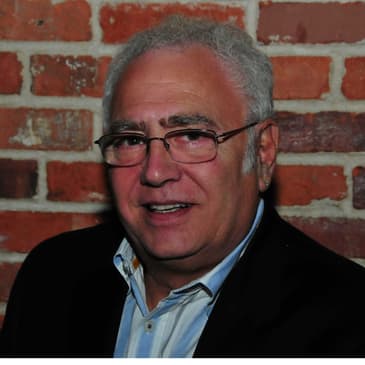
If you’re in business and not giving your health full attention, listen up! Today’s guest, a National Fitness Hall of Fame inductee, is going to tell you the top 2 things you must do to make sure your body can keep up with where your brain and your business are going. Dr. Bob Weil, a sports podiatrist who has counted Olympic Gold medalists among his patients, is blunt about this truth: If you’re serious about business, you need to pay attention to your health and fitness. He says that your body is, unequivocally, the most important piece of real estate you have. Hear his top lessons from 40 years in sports medicine in this engaging conversation with your host, Deb Drummond.
Website: https://thesportsdoctorradio.com
[00:00:02] Deborah, with her 30 years of being an entrepreneur and creating over seven companies, knows exactly what it means to accept the mission. When you make that decision, when you accept the mission to become a solopreneur, to take yourself and your talents to market, then you embrace a life of not only unlimited possibilities, but also the unknown. It's an elixir of fear and bravery that only someone who's taken the leap really understands.
[00:00:28] On our show, Deb digs deep with her guests to highlight what you, the listener, wants to know. The stories, the whys and the hows to navigate the journey to success. Get ready to hear from some of the most incredible mission takers from Generation Z to Boomers. So sit up, perk up and get ready to be blown away. Now here is your host, Deborah Drummond.
[00:00:51] Come back. Absolutely love and adore you.
[00:01:17] And shall I tell you again just how incredible of an audience that you are? Thank you for sharing. Thank you for talking. Thank you for the emails. Don't stop telling me what you want to hear. And I tell you, I can say that you are the best podcast audience, but we do have someone who has an incredible radio show audience sitting with us today. Let me tell you who we have on this show. You know that we talk about mission accepted and starting the mission and staying on the mission. Well, let me tell you, 80 is the new 50.
[00:01:45] And this gentleman who is sitting across from me today has been doing his work for a solid 40 years plus. And he's loving it and living it. And that's a whole big deal. And I want to ask in and dig in a little bit when we get to know him together on what it is that makes him continue to play at the level that he plays in. Because this guy plays ball. And ironically, when I say that, this is Dr. Bob Whipple and he is a sports doctor. He is the sports doctor.
[00:02:13] He's been inducted into the Hall of Fame. The National Fitness Hall of Fame. The National Fitness Hall of Fame. You know what? I wrote down Arnold because you were talking about Arnold Schwarzenegger. He was one of the first members. Yes. And some great champions in all sorts of different areas. Health and wellness is a big deal. And the sports podiatry, of course, is my profession, the role of the foot. So in many instances, they meet in the middle.
[00:02:43] They meet in the middle. Well, look, you also are some you also co-authored in a pretty considerable book. Hashtag Sports Parents. Now, isn't that a conversation around the table? You know, the youth sports is a very, very big deal on the sports doctor. I have been very fortunate in the world of figure skating. You know, you and I were just talking about Vancouver. You were mentioning 2010. And I was saying to you, I just celebrated 16 years ago that this young kid,
[00:03:10] 10 years old from neighborhood, Illinois, went on to be the gold medalist figure skating champion. And I just had another one again, the role of orthotics, the role of preventing injuries. But today, anti-aging, longevity, functional medicine are a very, very big deal. There are some great directions we're going in. And I've been involved in that field, whether it was on the physical side or very importantly, the mental side.
[00:03:39] Think about that overzealous parent on the sidelines or the abusive coach. This is a big deal. The kids are supposed to be having fun. The more talented your son or daughter is, the more the pressure's on. So these are some of the topics we cover when we're talking about youth sports, which is a hundred billion dollars a year business. That's before they started paying the athletes them. And you know what? It's important because it's not only I mean, we did.
[00:04:08] We were talking about the 2010 Olympics. And for those who don't know me, you don't know that I live in Vancouver. But if you do know me, you know that we're coming to you live from Vancouver. And my daughter was we were talking about sports parents and what kind of sport parents and what's the attitude of sports parents. And my daughter was a dancer in the opening and closing Olympics of where one of your clients took a beautiful medal. And when you talk about sports parents, you can see it like just sit at the pub, sit at the dinner, sit with some friends and go. So what do you think about sports parents?
[00:04:38] And the probably the biggest reaction people get is they talk about the ones that are the loudest, right? Those parents that you talked about that. Well, we all mean well, and I'll tell you. Yeah, have a lot of pressure. They have a lot of pressure. Well, here, I'll give you some pearls. The late great sports psychologist, Jim Vickery, who shared my radio show for about five years in the 90s, had some bullet points for sports parents. And number one was don't be a critic.
[00:05:05] Don't be analyzing your son or daughter's game on the way home in the car. Number two was be a good listener. A lot of these kids are hurting. There's a lot of overkill in youth sports. It's too much. Overuse injuries are very, very common. And when you start specializing, I see figure skaters that are 10 or 11 years old. That's all they want to do. And in tennis, soccer, we see it very, very early. One of my famous articles called the Prodigy Sports, what if your son or daughter's a dancer?
[00:05:35] They don't want to play other sports. They want to do it 10 days a week. And we pay big attention to those kids. And then we absolutely talk communication with the parents at all of these levels, whether again, it's Little League. You know, Little League woke up 25 years ago, Dev. They said, holy cow, 40% of the kids aren't coming back. What's going on? What's going on?
[00:06:03] And they realized pressure was going on, the pressure to win and all this. We're all familiar with that stuff. And that's a big part of youth sports, which is I'll tell you a real quick funny story. LeBron James is in the crowd with his mother rooting on Bronny, LeBron's son, who must be 13 at the time. And again, he's getting a little much. And LeBron's mom says to him, would you calm down already?
[00:06:28] And we would talk about that story for so many years about, my son would say to me, hey, Dad, how can I only hear your voice? So, we, but before you know it, it's over. Yeah. And you could really miss it. So, there's a lot of side to that. And it's no different than when we pay attention to seniors. You know, I wrote an article in 2020. It was called Pickleball is Physical.
[00:06:54] Now, this was before, Deb, anybody knew how to spell pickleball and what it was. Now you got injuries coming out of the woodwork with people that don't realize you better be in shape if you're going to be playing pickleball, let alone even the upper extremity. So, the sports doctor, we deal with all sides of these things, which are very, very important to that comment you made, which is 80 is a new 50.
[00:07:20] People, you know, anti-aging, whoever heard of the word biohacking? Right. Before I started playing around with all my friends. Hey, hello everybody to the T1 network. Friends out there with C-Rock. He was my first guest. Oh, wow. With you guys. And he's coming back on April Fool's. So, maybe we'll have some fun. But the point is, is that biohacking is lifestyle medicine. It is paying attention to diet.
[00:07:49] So, I want to bring this up for you and your audience. It's a big detail. It's very simple, everybody. It's called the new medicine. Number one, eat smarter. Write it down. We could talk all day about that. We all know what that means. Eat smarter. Number two, keep moving. You want to go to Pilates. You want to run. You want to do yoga. See something you love. Keep it up very early. The earlier the better. This is why we're buried with juvenile diabetes. Got to get these kids active.
[00:08:19] Number three, reduce stress. Pay attention to rest and recovery. It's very simple. And when I see the new science, you know, my old friend, Bob Goldman, gosh, he invented anti-aging like 40 years ago with his National Association of Youth Sports and take a look at like our friends, the lollies and the biohacking media. And the.
[00:08:45] But you tell me, is there an actor or actress or individual who's not paying big attention to their health and wellness today? It's true. You know what I used to say to people because I obviously as I was graciously on your show this week, last week. Yes. Is that I tell people like this is the most in your body, the most. Big deal. Real estate you'll ever own. Yes.
[00:09:13] But I'll tell you something, Deb, which is a big deal that we talked about a few years ago. And again, I met the late great sports therapist, Bob Guida, late 70s. He was a Mr. America, Mr. Universe in the 60s. He went on to become one of the most learned people in high performance. The Walter Paytons, the Jimmy Connors, the John McEnroes. That's who came to see him besides the rest of us clowns. But he had a tremendous regards for the role of the foot.
[00:09:42] He paid big attention to the role of the foot. And he also paid very, very big attention to balance. He had every athlete he had balancing on mini trims. He said, think about it, Bob. If you're coming down for a rebound or you're changing direction or you are taking off, it's all about stability and alignment and power. So he was talking about it.
[00:10:08] When he talked about the core, nobody heard of it in late. So we started with rubber bands and balance boards. And one of my favorite pieces of equipment today is called the sand dune stepper. As a matter of fact, I have it on my sword. It simulates being on the beach. Oh, wow. Bob Guido would say, the Bosu, you could do it or if you're on his phone.
[00:10:35] But he'd say, you know, do you remember the famous pianist, Von Clyburn? Do you remember that name? I'm too old. He was a fan. No, I mean, I think, you know, Bach, Chekhov. But he was a very famous pianist. Okay. And Guido said, I want to train your feet if you were a great athlete, like your feet or your hands. Like your hands. And he paid a big deal out of sand training and running barefoot and really getting involved in alignment.
[00:11:05] And orthotics became a very, very big deal, whether you're a grandma or a superstar or a six, seven year old, because foot type is inherited. In my surgical career, it's very important for you women with bunions, hammer toes, and you still jam your feet in dress shoes. I guess we do. Yes, we do. Well, here's number one for all you gals. If you want to wear heels, and I won't fight with you forever, strengthen your feet.
[00:11:32] Pay attention to your feet and pay attention to the toe box, especially if you've had toe problems. Bunion deformity, the enlargement of the big toe, develops. It's involved with a foot type that's inherited, mostly a flat type foot. Mm-hmm. But usually we'll see in my surgical career, I did surgery on the 77-year-old grandma, for example.
[00:11:55] I did surgery on her 48, 50-year-old daughter, and I was dealing with bunions in the 16-year-old. This is when we started saying orthotics very early. As a rule, an orthotics is like the Wild West, but when done properly, mostly by podiatry, you're talking optimum alignment for the joints of your feet and ankles.
[00:12:18] This is a big deal whether you're a 70-year-old with knee arthritis or you've had chronic lower extremity problems. It's still a secret though. Mm-hmm. That's why I wanted to talk to all you gals. 50% of all the girls I've seen, whether they were top 10 tennis players, whether they were superstar figure skaters, whether they were track and field, ass, would knee trouble. But I, you're a foot specialist. What are you talking about?
[00:12:47] But talking about, think about the wider hips in a woman. And as you develop those hips, the angle down to your knee, it's called the chew angle, is enlarged. So the torque, the twist. You know, why do we see 5-to-1 ACL injuries, females to males? Still, we always have. Wow. Wow.
[00:13:09] So we, and we know that there's hormone involvement, there's the development of puberty, where we start to see a lot of flexibility issues. So orthotics were magic. When we added them to all the strengthening, you know, the ACL programs today of old girl, girl athletes today, I'm impressed. Stop. You watch a WNBA girls' women's basketball. Mm-hmm. My girls at Louisville just got beat.
[00:13:38] And you take a look at some of these athletes, these young girls. It's just unbelievable. And it's brought along. Again, it's a series of challenges. A lot of it due to overuse. That's why I co-authored the book, hashtag a sports parents we brought together. My co-author was a superstar volleyball player, grew up on the sand on the West Coast, became a great coach and a national team player.
[00:14:08] So she wrote the first part of the book, which is called Sports Parenting 101. What kind of program do you want your kid in? How serious should you be? Et cetera, et cetera. What about abuse with the coaches? She really, you know, it was four years ago. Section two is the sports doctor's in. I'm talking about everything, about all this overuse, shoes, orthotics. I'm also dealing with concussions. I have experts on from around the world. There is no, is everybody listening?
[00:14:37] There is no safe tackle football. There isn't. That's why I'm excited about FLAG for girls. Mm-hmm. It's fabulous. Football's great. But when you're going to play that kind of collision, then you're going to see what you're going to see. And I've been in the middle of the brain injury. I've had brain experts on for 20 years. Before brains were really being paid attention to, concussion is a huge area.
[00:15:05] The NFL used to laugh at them all those years ago. And they used to laugh at mental training. Yeah. You know, when I had experts on, you know, Eric Sadaholm was a great Yankee, Chicago White Sox. In 1978, he was my first baseball player. I put orthotics in his spikes. He had a hypnotist with the White Sox. They thought it was nuts. They thought he was nuts. Yeah. They said that's voodoo. You know, psychology today.
[00:15:34] Again, one of my famous guests is Sue Williams is a sports hypnotist expert from Australia, works with the best athletes in the world. Mental training is no longer voodoo. It is a big deal. And this is why we pay big attention to it when it comes again to those kinds of pressures. You know how many youth kids live on pain medicine to keep up? I. Way, way, way too many.
[00:16:04] Way too many. I'm sure. Dr. Weil, my daughter, my daughter doesn't take two adults twice a day. Her ankles are killing me. Yes, she plays 10 games a week. Yes, she's on three traveling teams. So I am part of a very, very big educational challenge, even in the area, again, of juvenile type 2 diabetes.
[00:16:24] Do you know that medicine had to rename adult behavioral diabetes decades ago because of the explosion of diabetes in adolescence? No. And let alone the amputations that are done way, way down the line. So again, if you are a sports parent and your son or daughter is very, very serious, you want to know what their history is. If you are an athlete, you're a runner. The reason we had Christine on the show with you, with the show Run With It. Yeah.
[00:16:54] Once a month I show up and I do about eight, ten minutes and we talked about getting ready for spring running a couple of weeks ago. We talked about is less better in running shoes. It's a big topic. The shoes, they change all its time. It is a big topic. Are you inheriting high arches or are you inheriting flat feet?
[00:17:21] It's a totally different mechanics and flat foot is very common. Wow. So the, we, and in women athletes, just who are active, foot and arch are very, very common problems, the plantar fasciitis. But again, it's a, it's a wild west. So we want to include, you know, people who have a lot of influence like yourself, who have a tremendous following, who are very involved.
[00:17:50] You know, do you have a serious business person who's not all about health and fitness? Are you kidding? No. It's a big deal. We've had many of that conversation and look at even when we're talking. So first of all, it's really funny when not funny, but it takes me back to some days when we used to train. So I used to box. Now I never boxed anyone in the ring other than my, other than my trainer, but we would run off in the sand. And my, my thought process is that they were just trying to build up our endurance. So that was really interesting because I have. Yeah, you're, you're straightening.
[00:18:20] If you, if you include, we call it instability in the late part by instability training. Imagine you're standing on a mini trampoline and you're barefoot and you are a baseball player and you have a glove on and you're moving to different parts of the tram and someone's playing catch with you.
[00:18:37] And when you, when you include imbalance, every motor in your body goes on, all your balance systems light up, uh, your stabilizers that stabilize all your joints. Every time if you stand on one foot, if you start balancing on a, on a tilt boards, your whole body lights up. So one of the chapters of the book that I pay big attention to is there's two exercises.
[00:19:02] Every one of your listeners, whether you are the best athlete in the country or their grandmother or their kid, parent. Number one, straighten your feet and ankles. Rubber bands are fabulous. I don't care what your sport it is. It's a number one injury. Always ankles. Once it's a weak link, it's a nightmare. And number two, introduce balance. Work balance. And there's so many fun ways to do it.
[00:19:29] Again, when you're standing on the sand, uh, you are straightening from your toes to your nose. Uh, and again, any sport you play, once you start running and jumping, you start making a big difference. The concern with the growing body or the aging body is a lot overuse. The terrible twos. Too much. Too aggressive. Too soon. I'm injured. Now I got a stress fracture. Now I'm off for a month.
[00:20:00] Now my kid, damn it. What do you mean you're still injured? You know, I told you to 10 doctors. So a lot of times we see that the pressure's on when you do watch the Olympics. Wasn't that exciting? Danny O'Shea, my patient from 13 years old, he was the gold medal winner with the USA team in pairs, throwing her up, you know, with triple jumps. Unbelievable. So, so exciting.
[00:20:25] When you see an Olympian who's 22, 23 years old, they're doing it since they're seven. Yeah. What's that like? Good luck to them. It's a very special breed and we really, really need to pay attention to number one, it's not for everybody. Mm-hmm. This is why Dr. Vickery would say, don't be a critic. Kids quit Little League because they were fed up with the pressure. Now there's a lot of attention.
[00:20:50] We have a documentary coming out called Where Our Children Play with the great Joel Franco with Chesapeake Films and it's all about this stuff. I've had them on the radio over five years while we're developing in these things with this. I said, is your son or daughter having fun or are they doing it because of you? Mm-hmm. After the Olympics when Evan won the gold medal, I had his mom, Tanya, on as a guest, Deb.
[00:21:17] I asked her, Deb, I said, Tanya, how did you know it wasn't your goal that it was Evan's goal? He said, Dr. Bob, we had ice time at 6.15. I never had to wake the kid up. There he was in the car with his gloves on. What a great answer. He had his hat on, ready to go. But that wasn't for everybody, but that's why we celebrated 15, I can't believe, 15 years.
[00:21:44] These are special kids and there's a lot of great information out there. The National Association of Youth Sports is for 40 years working with Park District and military families on this stuff. Yeah. And he's coaching the coaching. Yeah. So, Bob, we're going to be wrapping up in a few minutes and I want to kind of encapsulate so that our listeners and viewers can take some action because the most important thing about information is being able to know what to do after.
[00:22:13] First of all, you have a radio show where you talk about this and other things related to the body on a regular basis. So, we know that that's going to be in the show notes and where people can listen to your radio show. The second thing that I heard is that we all know it, but to engage with it and to align with the fabric. The new medicine. The new medicine. The new medicine is keep it simple salesman. Number one, eat smarter. Educate yourself. Yeah. Number two, keep moving. A lot of choices.
[00:22:43] Number three, you must pay attention to rest and recovery. We're all burning the candle on the night ends, let alone without the pandemic or social media, which is another 10 shows. Every expert I had in my book, I had eight experts. Yeah. And you know, sports psychology, sports fitness talking. Social medicine was a big concern of the psychologist, Dr. Victor Nermitt and go with what's going on.
[00:23:09] So, the new medicine is very, very simple and it fits wherever you are. Yeah. And if you'll pay attention, I think that we're making a lot of, what disappoints me is, you know what, Deb, every expert I have on, when I really ask them how we're doing, they roll their eyes. Yeah. They're still rolling their eyes. You know, whether it's. It's a big, it's big. It's very big.
[00:23:34] But, let's say this, because I'm a very big believer that when you have something that you're looking to tackle or to change, that has so many tentacles. It's like, where, you know, where is the problem start? Where, where, where, where we come. Gotta be, if it's something you enjoy. Mm-hmm. You must include, there's so many choices as far as activity. You know, every kid in elementary school makes a team. By junior high school, it's one out of 10. By high school, it's 99 out of 100 are on a team.
[00:24:04] Yeah. What are they doing? Yeah. Gotta learn very, very early to do something they love. Walking with the family, everybody loves being participant in something that's safe. So, look, this is again, wrap up where people are gonna find you. You have a book, we'll have that in the show notes. We're looking forward to hearing about the movie and the documentary. I wanna ask you something completely different out of your sports world. No, out of your sports world, there's lots there.
[00:24:30] And I think that there's some really great information about, you know, keeping it simple of what you shared. Yes. 90% of our show today was out of the sports world. Yeah. Seriously. Yeah. Out of the sports world. It was the mental, mental side of things. But it all missed was good. You touched on the issues that reside in the sports world. Yes. And even if you are your own athlete, whatever that means to you, there's things like your
[00:24:56] feet and your knees and activation and putting your feet in shoes that don't. Hey, you wanna be a step or two fair? I don't wanna love. You wanna be a step or two faster, don't you? Yeah. You wanna reduce your chance of injury? It's, uh, welcome to the sports star. So, Bob, I'm gonna ask you something. Okay. Because there's all that information for everyone. I told you. It's really great when our audience gets to know you and we get to have a conversation. I'm gonna ask you a question. You can't answer in relationship to anything about what you do.
[00:25:24] And I put all of my guests through this. So, I'd love to tell you that you're the only person I'm gonna put through this. But I wanna, I wanted to share what is something, what is something that's still for you on your must do list? What is an experience that you wanna have in life that you are looking to have that you haven't had yet? Well, that I haven't had yet. Again, I, I wanna enjoy what I'm doing. I wanna be healthy. Mm-hmm. I wanna continue being an educator. Mm-hmm.
[00:25:53] I am very privileged in the fact that I've learned from so many different guests. I wanna continue to expand the umbrella of topics that, again, I had a Taoist on from 2,500 years ago. We were talking about the topic, again, on the mental training side. I wanna continue to grow in a lot of these different areas and be a step or two faster. Okay. Be a step or two faster. I know that's gonna make the show notes. That's gonna make Carmel excited. Hang on with me for a minute.
[00:26:23] I'm gonna talk to our audience. Thank you so much for being with us today. Now, look, we always say if you have a message inside you and you need a place to talk about your message, well, you just heard someone's message today. We'd love to hear from you. This is not difficult. I make it really easy. Just go to Deb Drummond dot com and drop down to the contact. And if you think that you've got something that the world needs to hear and you want to share, we're here for that to happen. If you wanna hit this stage, if you wanna hit our stages, right?
[00:26:51] We've got lots of ways that you can share your word, whether it's in publication or print or podcast or live stages or seminars. Just come and share because that is really the new world, the new world of education. Isn't it nice when you get to hear it from somebody that you're watching on a podcast that you get to expand, just expand your knowledge in this 20 minutes or 25 minutes we spent today with Dr. Bob.
[00:27:17] That could completely change the rest of your years of how you treat your body and how you recognize others in your family. That's the power of having conversations. Don't keep the goodness that you have inside. Let's hear it on the show. So I'm looking forward to hearing from you. Dr. Bob, we are so happy that you were here with us today and you filled us full of things to do and be inspired by. I love that 80 is the new 50.
[00:27:43] There isn't anyone that listens to this show that even would think, even without you doing what you're doing, obviously, I think one of the most beautiful things about taking care of your body is that it gives you a sense of energy. Your eyes glow, you're radiant and you're raring to go. I mean, my God, you are raring to go. You have so much to share with the world. So thank you for sharing it with us today. And audience, as always, we always sign up with this and we always will. I want you to be well and stay groovy and we will see you next week. Bye for now.