
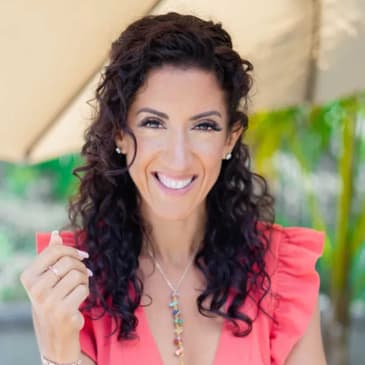
Feel like there’s something blocking you from the success you’re so very capable of? There’s a way to remove it so you can have the business and relationships you desire. Today’s guest, Inner Child Expert Anat Peri, teaches people to see their unhelpful behaviour patterns, unlearn them and begin to write a fresh new story. We all have childhood experiences that we may not realize impact our current decisions and actions, she says. The only way to stop that from happening is to explore what you’ve been ignoring. Listen to Deb and Anat’s conversation as they shine a light on what it really takes to overcome your inner obstacles.
Website: https://trainingcampforthesoul.com
[00:00:03] Deborah, with her 30 years of being an entrepreneur and creating over seven companies, knows exactly what it means to accept the mission. When you make that decision, when you accept the mission to become a solopreneur, to take yourself and your talents to market, then you embrace a life of not only unlimited possibilities, but also the unknown. It's an elixir of fear and bravery that only someone who's taken the leap really understands. On our show, Deb digs deep with her guests to highlight what you, the
[00:00:32] listener wants to know the stories, the whys and the hows to navigate the journey to success. Get ready to hear from some of the most incredible mission takers from generation Z to boomers. So sit up, perk up and get ready to be blown away. Now here is your host, Deborah Drummond.
[00:01:14] Welcome back, friend. Thank you so much. I adore you. I adore you. And if you've been hanging out with me for a while, like you're like, this is my first time I've been with you. Well, you'll come to know that we're going to be friends. Because we've been doing this for a while. And you guys are absolutely fantastic. Please reach out to our speakers and reach out to our guests and tell them how you got impressed upon today by their information.
[00:01:38] We want to welcome you to the Mission Accepted podcast. And we also want to welcome Ed Perry into the podcast today. We're going to have a really great exploratory conversation. And you are going to feel mentored. You're going to feel embodied. You're going to feel like you've been expanded today. So those are your words for today. You're like, man, the cool thing about popping on to our show every week is that you get to feel and experience something different.
[00:02:07] So we go to a lot of work. We appreciate the time that our experts come on and share with us. And so what now is an inner child expert. And she does these powerful coaching programs, these sessions, these retreats. She does all sorts of really cool things that helps you tap in to being, I don't know, better regulated, learn how to deal with people's deregulation.
[00:02:32] I mean, she's going to go into it. We were talking a little bit pre-show about some of the stuff that she does. And she's just come off a pretty cool retreat. So she's been inspiring people, rejuvenated a little bit. And here she is with us today. So, Annette, thanks for coming on to Mission Accepted. Thank you so much for having me. Good to be on.
[00:02:51] Yeah, absolutely. So, you know, inner child expert, it's going to be interesting to be able to sit in a room and hear the little light bulbs that go off for people on what that is. Do you know, right? Some people have heard of your child. Some people are like, you know, daycare program. You know what I mean? But we talk about regulating and coaching and tell us what that is in relationship to what you do.
[00:03:21] So, yeah, I agree with you. If we listen to a bunch of people right now talk about what is inner child work, they might be like, am I staring in the mirror and saying, I love myself? I love myself. Yeah, I think it's still a little taboo and a little vague and not enough people have gone into it. But to experience like the depths of the work and the depths of the healing that's available. But to me, the inner child is your is the part of you that feels it's your emotions.
[00:03:49] And as humans, we have emotions and we have unfortunately learned to not honor our emotions to, so to speak, put that inner child in the trunk of the car and just start driving. We have learned to think about our feelings, talk about our feelings, stuff our feelings, do anything but actually feel them.
[00:04:14] And so part of when I say like inner child, what that is, is learning to reconnect to your feelings, to reconnect and learn to validate and acknowledge whatever you're feeling as valid and okay for you to, for your body to actually energetically express. Because emotions are just energy in motion.
[00:04:42] Your inner child is also the part of you that holds all the beliefs and learnings that an experience is, some that weren't so supportive or pleasant, that you experienced in your formative years from your birth all the way to age seven. So understanding that it's not who you are, it's what you learned. And if you learned that you can unlearn it.
[00:05:10] So exploring and understanding what did you inherit? What did you learn and thought that like, this is who I am, as opposed to this is who I learned to be. And going through that exploration journey, there's that word, exploration, going through that exploration journey and learning to reparent yourself.
[00:05:33] To unlearn what no longer serves, to hold yourself through things and to rewire and reparent and really take ownership of yourself as the creator of your life. As opposed to where most people are, is still surviving whatever happened to them and living in fear or unprocessed emotions and operating from how do I make sure this doesn't happen in the future?
[00:06:02] Which is still survival and not creation. So really empowering people to get in the driver's seat again. So let's, you know, drop the mic there for a minute. In relationship to, I'm sure as people are listening, they're like, oh, okay, yeah. That makes sense. But how does that show up for people? Do you know what I mean? Like, what's some of the eye opening? Oh my gosh.
[00:06:29] What is, what is it when someone before they calls you or realizes, like, I'm not running off my own way of thinking. You know, it's interesting. I was watching a clip because my daughter's in child education, right? She sent me this clip and it's like completely innocent, right? Sometimes the, the not acknowledging your feelings didn't have to come from trauma, even though sometimes it came from trauma.
[00:06:55] But sometimes, so she just showed me this clip and it was this guy and this little girl, you know, this little girl on the playground and she fell down. And he's like, as a parent, you run to go, it's okay. It's okay. You're going to be okay. Instead of going, wow, that's really like, and she's sad, like letting her be sad and go, oh my God, that must hurt. And I'm so sorry that happened to you. And what do you want me to do?
[00:07:20] Instead of like, and you know, it's an, it's an innocent misstep maybe to say, oh my gosh, it's going to be okay. You're going to be okay. You know, I love you. It's good. And then this child's a little perplexed of it's okay, but I feel like crying. Even those little subtle things. I was watching that and I thought how interesting the imprint of that, of you're okay, even though you're not okay. And I'm listening to you talk about like validating your feelings and, and all of that. So how does someone know they're coming from survival?
[00:07:52] But so to me, survival is when you don't know how to tend to something, when you feel overwhelmed and you don't know how to actually regulate yourself and identify what you're feeling and, and validate and acknowledge and express it. And it happened so quick. Yeah. Then what takes over is your bodyguards.
[00:08:22] Everyone has two bodyguards. So you want to think of like you're in the driver's seat and suddenly something triggers you or you get overwhelmed. And you don't know how to tend to it. And I'll say this, that it's not a, it's, it's a nervous system thing. This is all like deeply based in like retraining our nervous system to have range, to have capacity.
[00:08:50] So your nervous system responds in 0.2 seconds. Your conscious mind responds in two seconds. So 10 times faster. So here you are, you're in the driver's seat of your life. Something overwhelms your system and you haven't, you don't have capacity for that. Your bodyguards take over and they throw you in the backseat. Yeah. Hmm.
[00:09:15] And these bodyguards, as I like to call them, are, are, are, are personality patterns that a lot of people are operating, operating successfully in at least one area, in one area of their life, but usually not across the board with this pattern or this bodyguard being the one in the driver's seat, not their higher self. So to me, that is survival. Like, like when do people need bodyguards when they're not safe?
[00:09:45] Right. Right. That's well set. Okay. So I know that we were talking a little pre-show and I know some of your work, lucky me, and you do a lot. And I was asking you beforehand. So you work with a lot of coaches, right? Because these coaches coach people. Um, we know there's lots of coaches out there. We know that the world of, you know, falling in love with passion and learning what you do and what your gift is and sharing with others is on a rise.
[00:10:15] Right. So when a coach comes to you, are they coming to heal themselves? Are they coming to learn how to heal others? What does that look like? They better be coming for both. Because if they're not. Hey, you heard that. Well, you heard that. One way. You can't do one without the other. They better be coming for both. Because if they're just like, I'm already healed. I've already done all my work. I'm good. I'm great. I already know all this. That's a red flag for me.
[00:10:45] If they're just coming to get a method because they see me. Let's say I do a lot of guest teaching and other people's containers and they see me facilitate someone and they're like, whoa, that's what's possible in a, in a coaching session. I need to learn that. And yes, you may be inspired and want to learn that because it's much deeper than anything that you've ever been trained in.
[00:11:11] And I just need them to be open and coachable and curious to explore more about themselves. Yeah. So it's not to say people come into my container and they're all a mess. Yeah. Yeah. No, no, no. That's what I'm afraid. Right. There's definitely people that have done a good amount of work and have awareness. But as long as they're coachable and open and curious to discover more because the same bodyguards I was talking about before, guess who else has them? The coaches. And guess what?
[00:11:41] It impacts how you show up with your clients and how you facilitate them. So I have yet to, and I've had, I've had clinical therapists go through my certification program.
[00:11:54] I've had coaches that have gone through accredited coaching certification programs come into my work and all of them still didn't see how much more there was for them to cultivate safety in their nervous system, to build a relationship with their nervous system where it's okay to ride whatever wave comes up in the ocean of our emotions. And to build that capacity to be in the driver's seat.
[00:12:23] I mean, guys, I'm very much still human. Let me tell you, I had a student that triggered me. Like, I'm, I'm still, there's still more for me to expand my capacity. You're never going to hear me say, I'm good. I'm healed. I've done all the work. Well, that's like a garden. Yeah. Like a garden. If you are a garden. Well, how much longer do I have to tend?
[00:12:48] Like, oh, is it, we can't this garden just like, give me the fruit and the vegetables and the flowers? Like, why do the weeds still come? Yeah. Yeah. Yeah. And, and the garden needs tending till the day you die. And that's cool. That, that's the, that's the long and short of it. Long and short of it. Oh, I will say like some people, yeah, they know, I'd say they better be coming for both. And there is usually something more than the other.
[00:13:16] The clinical therapists that I've had go through my training know they're coming there more for their own healing and embodiment because they've learned so much, but they've never had to really look at themselves and apply it. For some people it's a combination and for some people they're just like, I feel pretty good with myself. I'm still open and curious, but I'm really struggling to enjoy working with my clients. I'm burning and churning with them. I'm lacking confidence, all those things. Yeah.
[00:13:45] It's interesting, right? Student appears, the teacher appears. Sometimes they're the same thing, right? Sometimes they're the same thing. As you start to go on into your growth, you find new places to find, right? Because it's so weird. I love how you use the analogies of bodyguards. Because when people fret for whatever that is, I ever listening to a great song. Well, you know, Brene Brown says like, I'm okay. That's its own gig.
[00:14:15] You know what I mean? Like, I'm okay is its own gig. Like, armor is heavy. Yes. Yes. I'm okay is definitely one of those bodyguards. Exactly. And so, like, exploring those. And, you know, whether you're even, I mean, you don't even have to be a coach. Mm-hmm. Be a manager in a corporation where you have a team of people that you manage.
[00:14:43] And understanding this stuff and be able to know how to read people and know patterns is going to improve how you work with your team, how you manage your team, and therefore is going to impact the bottom line. Yeah. Yeah.
[00:15:12] That the most valuable skill that we could all learn as humans is how to recognize patterns. Mm-hmm.
[00:15:42] Well, I think that, you know, I think that, well, maybe I'm fortunate. And I think I'm probably much like you where people come to me, they come to me for, well, they come to me for certain reasons, but I come to you for certain reasons. But by nature, when people come to me, they're usually pretty hungry and ready. Do you know what I mean? Yeah. Like, the frustration level is higher. It yields openness, right? Mm-hmm.
[00:16:11] And they're more like, tell me, like, how are we going to do this? Like, they're experiencing a piece of frustration. And so, it allows me to ask those questions to find out how they work, how they think. And you know, when you have different clients, they act differently. This person's five minutes early. Even when you talk about, like, the functional things, right? Functional. This one's late. This one's prepared. This one's not. Like, there's all sorts of, like, even one of my clients called me today and she's like, you know me, I'm over analytical.
[00:16:40] I just need to know more data. I'm like, glad that you know yourself. You know what I mean? Yes. Yeah. So, everything you're speaking to right there is actually not their higher self. And it is those patterns that if you learned and understood even just the patterns, you'd be able to probably have them break some of them. And some of them, I imagine, don't bother you. Like, okay, fine. You're analytical. Okay.
[00:17:07] You're this person that's five minutes early. But what about the person that is so, like, almost codependent on you? Like, they'll message you every day. And, but what about this? And I don't know if I could do it. And they just feel a little, like, they can't hold themselves. They can't hold themselves. Yeah. Yeah. Like, you said it really beautifully before.
[00:17:35] It's when people understand holding the container. You know, I'm in a group of people that host communities like I do. Right? So, when you have a plan. And you have to be able to expand and hold container. Right? And I mean, you just had an experience of holding container. Right? So, I think that it's an expansive journey for sure. An expansive journey. But I love that you brought up that you don't need to be a coach.
[00:18:01] I mean, you can do this kind of work just to heal yourself to be a better brother, sister, mom, son, whatever. Like, you know, knowing yourself is such a powerful piece anyways. Even if you did it for no one else but you. Like, just knowing yourself is like walking in the door. You know? You've had a long day. Well, for me, when I had kids that were younger, I'm like, look, I'm going to apologize now. I need to eat. Bye. Yeah.
[00:18:31] I'll be nicer in like half an hour. Like, and that may be a silly example of know yourself. That was crazy. Know yourself. Right? I like know yourself and know your, like, get to know your bodyguards. When you know your patterns, you start to recognize when the pattern takes over, which means, oh, shoot, I'm in overwhelm.
[00:18:55] Like, Deb, you know, one of yours is, um, if my system's overwhelmed because I'm not feeding myself, I'm not going to be very nice. I may be very short. And knowing that that's not you, but that like, that's what takes over. You know that what you need, again, how do I tend to that inner child? How do I support that inner child in regulating? You know, I need to put food in my mouth.
[00:19:21] So I'm not going to, you're not going to override that just because kids are like, mommy, mommy, mommy, play with me, play with me. You're not going to fall into feeling bad and guilty because you've been gone all day soon. You should. You're actually doing the best thing. Like, thumbs up for that. You know, I tell people parenting doesn't come with a manual, but the best manual for learning how to parent is to learn to is to reparent your inner child.
[00:19:51] You will learn that. You were speaking before about the video that your daughter showed you when the, you know, the parent and the child and the playground. And he thought, I think he said it was a father, right? He thought he was doing the best thing. And it's generational learning. It's not always trauma.
[00:20:13] There is big T trauma that creates, you know, the ruptures in our development and in our system. Big T trauma, like abuse, neglect, sometimes divorce, you know, anything like that. But what you're speaking to is developmental trauma is every day that we don't realize we're training our child for this.
[00:20:42] One of my, one of my students when I was, that came to my retreat, he kept messaging me. He's like, so who's going to pick me up at the airport? And how are they going to know where to pick me up? And what time are they going to pick me up? And I was like, wow, he's got something, some fear around being left at the airport and not being picked up.
[00:21:03] So I, so when I, so when we were driving over in, in the, in the car together on the way to the retreat, I asked him, I go, what did this, is there something there for you? Like, does something happen as a kid? And he's like, yeah, my dad forgot a few times to pick me up from baseball practice. Because, you know, back then we didn't have cell phones. Yeah, yeah, that's right. Yeah.
[00:21:24] And even something like that, because there was, because the parent didn't realize what they needed to say, they didn't have the awareness to know that repair needs to happen here. Right. It's still with him today at 30, I don't know, I think he's 38 years old. Yeah. Yeah. Yeah. So. It can be so subtle, right? It can be so subtle. That's all. Very. Absolutely.
[00:21:53] Um, I can talk to you all day. This could be so great. I just said in the beginning of the show, that it's not going to be a workshop. This workshop, people, this is great stuff. This is, you know, oh, let's talk about, you know, I, I don't want to say what some of the feelings might be when you do this kind of work, or you add this kind of work to your work. Like, I would imagine that there's some, at least a minimum, a sense of really great freedom. Um, but what are some of the other sides of that? What are some of the other sides of that?
[00:22:20] And if you can just, uh, you know, encompass it, cause I'm sure it's a beautiful story. It's like, what took you to do this kind of work? Yeah. Yeah. So your first question of like, are you saying like, what, what becomes possible from a perspective of choosing to discover yourself or be a facilitator and guide others? No, no, no. Just no. For people that come at least hop into this and start to, you know. Yeah. Yeah.
[00:22:49] So, uh, as one of my students said this past week, this work is simple and it is not easy. It is transformation. And I've been in the transformational space for 21 years now. Um, transformation is not a walk in the park and a beautiful, sunny San Diego, which is where I live kind of day. It, and, uh, it's, it's a walk through a burning forest and there's dragons to slay.
[00:23:18] Um, meaning, uh, again, because we, for most of, you know, society, we have, um, trained ourselves, uh, been programmed to suppress what we're feeling as opposed to express.
[00:23:37] When you first start feeling again, it's a lot of energy that you're moving and it's foreign to the system. So it could feel like, like a rollercoaster ride. I love using the metaphor of the ocean as like the ocean of your emotions. And if you're learning to surf, you're not going to go to Bali tomorrow and surf the big waves because you would get destroyed.
[00:24:08] You're going to start, you know, with like small little waves and see how you do with that. And so the other thing about healing or, or, or discovering yourself, which requires feeling in order to heal is that I'm not going to throw you into that Bali waves either. Like we have to learn to take baby steps.
[00:24:33] And this is something that is really lacking in the industry as well, is that people are going too fast, too much, too fast. Um, or they're turning to plant medicine, uh, which I'm not against, but I don't think it should be a first step for people. And it's too much for the nervous system to try and learn to hold.
[00:24:57] You know, we have to first learn to, if you're a surfer, you'll see them stretch before they get water. You can put their, um, their wetsuit on. And to me, I call that, that's like cultivating safety. Like you have to first learn to feel safe, to be in your body and to be with your breasts and to name sensations that are there.
[00:25:24] And to form this, uh, relationship again with your nervous system. Cause your nervous system is always working for you. It's listening for safety or threat. And most people are in the relationship with their nervous system of having it as the like protector. And so to reform this relationship of, of, of working with your nervous system is to learn how to breathe properly, to learn how to feel safe in your body.
[00:25:54] And then to learn how to name sensations that you're experiencing. Like, like before we're saying like, I'm angry or I'm sad saying, well, I feel a tightness in my, in my throat. Like it's closing in. Okay. That's probably something that you really want to express, but can't. Usually it's like there's some emotion underneath that. But naming those sensations, we're speaking to our nervous system.
[00:26:19] And speaking to our nervous system is bringing curiosity is saying, Hey, I don't need you to protect me. I need you to come get curious with me. And so to me, that's the let's dip our toes in the water now. And now let's start with smaller waves.
[00:26:38] And what is considered a smaller wave, anything that you want to transform around your relationship with yourself, how you treat yourself, talk to yourself, see yourself, believe in yourself, which was all learned from mom. Because mom represents an extension of self. Mom was your role model for self.
[00:27:05] So addressing all that stuff is like, well, what did mom model to you here? And then learning to give to yourself what you always needed that mom didn't give you. So it's much lighter, much easier, smaller waves. It's more learning to nurture yourself is a lot of it. There are exceptions. If you were abandoned by your mom or there was some big trauma, there's exceptions to that.
[00:27:34] But for the most part, that's where you start. You start with, let me rebuild this relationship with myself and trusting myself. Well, they can wait. I don't know if I say that makes perfect sense when you talk about when people come to you that they need, you know, it's a double deal. Right. They're working on that and working on others. Yeah.
[00:28:00] And even just if they're not learning to facilitate a message and they're just coming for healing, they're still starting with everything related to what mom modeled to them about how to relate to themselves. Even if they say to me, mom was great. Mom was good. Mom was my, you know, was wonderful and the best mom ever. My issues are all with dad. And I'll be like, yeah, let's explore that a little bit more because maybe mom was so loving and attentive to you, but she never took care of herself.
[00:28:29] And you might have learned from that, that others needs are more important than yours and to self-sacrifice. And now you wonder why you work so much and don't take care of yourself. So there's always something. Right. So it's like starting lighter. So we're building capacity, just like building the skill of surfing.
[00:28:52] And then we get to the bigger waves, which are related to father, which are related to everything that's not the self. Where your dad let you down in some way from your first experience of him loving you, where he broke your heart and not showing up as that consistent love. Because he's a role model for love. Mom's our role model for nurturing. Or where the world let you down.
[00:29:19] If anybody else in your upbringing abused you in any way, or there was impact from the world on your family. Like for me, my grandmother's whole side was murdered in Auschwitz. At some point I had to ride that wave. I had to feel that grief that I knew my grandmother did not have capacity to feel for her four siblings and her two parents. Like no way.
[00:29:47] I had to ride that wave. But I didn't do it when I started. I did it like two years ago. Yeah. Those are the bigger waves that bring up emotions like grief and anger and resentment and all that. And so that's what true healing is. We got aha moments and you asked the question of like, what got me into this?
[00:30:17] My relationship with my mom is what got me into the self-development program. Prior to that, I was always a natural. Like friends always came to me as, you know, for advice. God knows what it was, but somehow it made a difference. I think. But my relationship with my mom, which means my relationship to myself. Yeah. In my 20s, I was very codependent. I could not spend time with myself. Anytime I was alone, I was anxious.
[00:30:44] I was always needing to distract myself or merge with others. But that's because what I grew up in was my mom being just like that guy in the playground. You're fine. You're good. Think positive. Everything's good. Everything's great. I did a TED talk on this. Yeah. And, you know, talk about my experience of growing up with a mom that didn't prepare me to, didn't validate and acknowledge what I was feeling.
[00:31:14] Instead, told me like everything good. Everything's fine. You're fine. Let's go. Let's go have fun. Let's go do this. So she was there. She was loving, but she didn't validate me. So she didn't. I never learned how to validate myself. I didn't know what to do when big emotions came up for me as I got older. So I lived in this codependent state, anxious all the time. Didn't love myself.
[00:31:43] Didn't enjoy my own company. And so I had to go through that healing journey and started out with mindset work because that's all that was around 15 years ago. Yeah. Yeah. Absolutely. And was, you know, just scratching the surface and really thought that I was transforming. So there's a lot of people that think just because they have the aha light bulb moments in their head
[00:32:12] that they're healing it because they're understanding it. And understanding and awareness is just stage one. Right. Of five stages of healing. It's trimming weight. Yeah. It wasn't until I hit my rock bottom about 13 years ago and my five-year codependent relationship
[00:32:35] came to a sudden end and I decided to leave New York City with a one-way ticket to California, $2,000 to my name, no job lined up, no car. One friend that said I can stay with her, no self-love. That was me 13 years ago, rock bottom. And then started to see that as much as I thought I knew about myself, I was eight years into self-development. I had so much awareness that I didn't know shit.
[00:33:05] And when I met my mentor who was a body-mind psychologist for 40 years and he introduced me to inner child work and I started to reparent and feel, I was like, oh, oh, this is what transformation is. It's messy. It's like, yeah. If someone's like, oh, I'm good. Everything's great.
[00:33:31] As opposed to calling me and saying, oh my God, my heart is just hurting. I haven't been able to stop crying for an hour. I'm like, that's the real work. You're not feeling it. You're not healing it. Right. But on the other side of that, Deb, on the other side of learning to reparent myself, learning to grieve what I never got from my dad as a little girl that I needed, which is just time with him because he was a workaholic.
[00:34:01] And not big T trauma, but had a huge impact on what I needed and not getting that for my development. On the other side of it, excuse me, getting over cold here. No worries. On the other side of that journey, the inner peace and freedom that I felt.
[00:34:30] I mean, I quit my job and went off and just wanted to travel by myself. Like for the first time, I wanted to be with an aunt. I didn't want to. Right on. Yeah. And there was so much inner peace. There was so much freedom. And that experience, you're talking 10 years into self-development. I was like, I want this for other people. I want other people to get that.
[00:34:58] Like, I've been seeking this for 10 years. Oh my God, it is possible. Right on. Yeah. That's what happened. We start to work with clients. Wow. Well, time for a big deep breath, right? Wow. Yeah. That's such an incredible, I call it a stretch. I don't usually use the word journey. Journey always sounds like you're going to go pick some daisies. And clearly that's not what that is.
[00:35:24] So look, there's so much more to you and so much more to the story. I'm so excited and can't wait for you to be hitting our stages. And everything about you, for anyone who's like, oh, I'm sure you have lots of places for people to find you. And we're going to have all of that in the show notes. And you said that you did a TED Talk. I think that would be a really incredible place for people to meet you again. And I'm going to shift the energy a little bit. And I'm going to, as we wrap up, I'll talk to the audience in a minute.
[00:35:53] But I wanted to ask you, outside of obviously feeling free and feeling contained and doing the right work and you're in your passion and in the, I wanted to, the question I wanted to ask you is like, outside of that, what, like, what rocks your world? What lights you up? Like in your, outside of the impact I make in my business, what lights me up? I mean, it could be that if you want, I mean, I just got that clear as a man.
[00:36:22] I'm like, ask her what lights her up? And then you started to light up. You got very excited. But, um, something on your must-do list. Something like a family. Yeah. Yeah. Starting a family. Experiencing motherhood myself. Knowing what I know, how much I've reparented and held myself. Yeah. Yeah. Yeah.
[00:36:50] I could hear everyone out there like, yeah, I'd want her. And love, you know. Yeah. I'm not sure I could think that at all. Um, you know, being around my nieces and my nephew and having my sister-in-law or my sister call me and be like, I'm struggling with this. And for me to be able to reflect to them, like, here's what, you know, he needs or she needs.
[00:37:13] And, um, you know, seeing, seeing the childlike wonder, like, being around kids and, and, and having the awareness and understanding of what they need. And being able to meet them and how, yeah, that's what lights me up. So I'm excited for motherhood. Right on. Right on. Thank you so much for sharing. Thank you, Create Transparent. Thanks for everything that you do to help others.
[00:37:38] You know, it's a, it's a selected, it's a selected group of people that can hold that level of, you know, like we said, containership. But people don't understand that it's like energy to be able to allow others to go through their process. Right. Yes, absolutely. Thank you. It's been a pleasure. Thank you for letting me share. Absolutely. Absolutely. So look at wonderful audience who I'm sure feels embodied and definitely feels expanded.
[00:38:04] Um, you can connect with Annette in all the ways that you see in the show notes. But look, if you have a passion, if you have a mission, if there's something that you want to share, is there a book? Is there a, is there a program? Is there something that is exciting you in your life and lighting you up and you want to come on to the show? Come on to the show. You want to come on to the stage? Come on to the stage. You want to be interviewed on the TV? Be interviewed on the TV.
[00:38:28] There's nothing more fantastic than having your own experience and being passionate enough of it to want to share with others. So don't be the best kept secret. You can find me. It's very easy. It's my name. It's devdromand.com. Just drop to any page on the website and you will see a nice contact button and it will literally go to my email. It'll bypass my team. Oh, there you go. I know. I was like, what? It'll bypass my team. Thank you for being with us today. Audience, as always, thank you. You know what to do.
[00:38:58] Share, light, love. We will see you here next week. And again, as I do at the end of every show, you be well and you stay groovy. Bye for now.